Catalogue > Faire une recherche
Résultats pour : Tout le catalogue

Aurèle Ferrier
INFRASTRUCTURES
Vidéo | hdv | couleur | 22:38 | Suisse, Islande | 2014
This film involves a journey through a landscape of infrastructures that are common to an everyday reality of routine. Yet here we find these environments are deserted. This allows attention to focus instead on the design and spatial arrangements of the objects, we find the features of these landscapes – which would not usually bear noticing – become centrally present. Infrastructures involves a series of seven tracking shots. A steady flow of objects in various contrived arrangements passes by the eye. The sound design incorporates the subtle noises given off by these ready-to-use sites devoid of users.
Biography Aurèle Ferrier, *1975 in St.Gallen (Switzerland), lives in Zurich. He attained an MA in Fine Arts at Zurich University of the Arts. His video works, actions and interventions explore the limits and connections between nature and civilization. His cinematic works display a calm contemplation and visual precision. Recent shows 2016 Slamdance Film Festival, South Park (US) 2016 Sluice Screens Prize, London (UK) 2015 24th Berkeley Video and Film Festival, Berkeley (US) 2015 Der entfesselte Raum, Gewerbemuseum, Winterthur (CH) 2015 Arquitectura Film Festival, Santiago de Chile (CL) 2015 Reykjavik International Film Festival, Reykjavik, (IS) 2015 Currents, Intlernational New Media Fesival, Santa Fe (US) 2015 Arkipel, Documentary and Experimental Film Festival, Jakarta (ID) 2015 Great Lakes International Film Festival, Erie (US) 2015 Athens Digital Arts Festival, Athens (GR) Studies 2014 MA Fine Arts, Zurich University of the Arts 2004 BA Leading Artist Theatre, Zurich University of the Arts 2003 Experimental Theatre Exchange, Tisch School, NYU Awards 2015 Winner Berkeley Video and Film Festival, Best Foreign Experimental Film, Berkeley (US) 2015 Winner IndieFEST Film Awards, Award of Merit: Experimental Film, La Jolla (US) 2015 Nominated Sluice Screens Prize, Video Art, Southwark London, (UK) 2010 Studio scholarship, Cité Internationale des Arts, Paris (FR)
Aurèle Ferrier
Claws
Doc. expérimental | 4k | couleur | 18:27 | Suisse, Chine | 2025
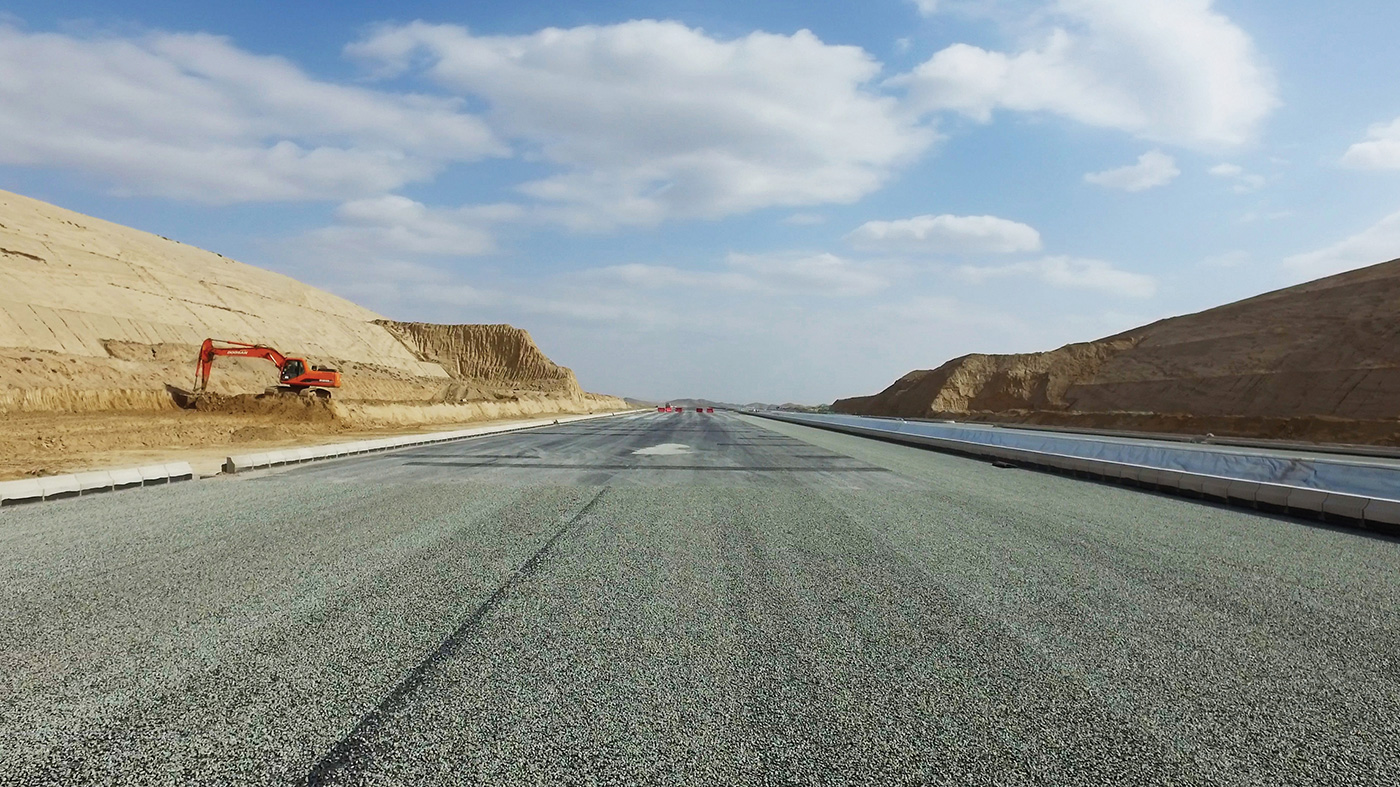
CLAWS est un essai en images mouvantes composé de plans glissés à travers des villes en expansion rapide, dérivant des terrains périphériques vers des noyaux denses avant de s’ouvrir de nouveau sur l’horizon. Dans des cadres largement dépourvus de présence humaine, l’architecture, les matériaux et le son transforment l’expansion urbaine en un champ de perception — un espace où la géométrie persiste, où l’intention vacille, et où la terre se souvient.
Aurèle Ferrier est un artiste visuel suisse travaillant avec le film, explorant les environnements construits et les périphéries urbaines. CLAWS conclut sa trilogie consacrée aux paysages façonnés par l’humain. Ses œuvres en images mouvantes ont été présentées notamment au Hiroshima City Museum of Contemporary Art (Hiroshima), à l’IDFA (Amsterdam), aux Rencontres Internationales (Paris/Berlin), à l’Open City Documentary Festival (Londres), à l’Anthology Film Archives (New York) et à l’Image Forum (Tokyo).

Aurèle Ferrier
Transitions
Vidéo | 4k | couleur | 12:48 | Suisse | 2017
TRANSITIONS is a journey from the civilizing void of the desert to a maximal urban, capitalistic and hedonistic density, which in the case of Las Vegas assumes some bizarre expression. The film is a contemplation without any people or moving machines in it, focussing on the built and designed.
Aurèle Ferrier (*1975 in St.Gallen, CH) lives in Zurich. With his video and cinematic works, actions and interventions he explores the margins of civilization. His works have been presented in more than 30 countries and won, among others, a Grand Jury Award at Slamdance Film Festival.

Simohammed Fettaka
Iqraa
Film expérimental | hdv | couleur | 27:5 | Maroc | 2013
Un âne chargé de pierres blanchies à la chaux gravit avec peine cols et étendues rocailleuses, jusqu’au sommet d’une montagne ; sur les hauteurs, à flanc de colline, des masses de ces mêmes pierres tracent en lettres gigantesques une formule, fameuse au Maroc puisqu’elle constitue le dernier vers de l’hymne national marocain : « Allah, Alwatan, Almalik » (« Dieu, Patrie, Roi »). La violence de cette figure trinitaire dévorant le paysage et surplombant les hommes, se révèle dans la mise en évidence de l’archaïsme brutal de cet « arrière-monde » de l’idéologie au pouvoir : la participation forcée des bêtes de somme à l’élévation d’un monument à la gloire de l’ordre institué et, par extension, de tout ceux qui n’ont pas voix au chapitre.
Né en 1981, Simohammed Fettaka est un artiste multidisciplinaire basé entre Paris et Tanger. Après l`université d`été à La Fémis (Paris), il a produit des documentaires ainsi que des vidéos expérimentales. Il a fondé le festival de cinéma Cinema Nachia à Tanger.

Lorraine Féline
La main vide
Vidéo | hdv | couleur | 11:40 | France | 2023
The title of this video, La Main vide, comes from the etymology of the word karate, composed of the Japanese words kara (“empty”) and te (“hand”). Shot in a Parisian karate club in the 13th arrondissement, the video follows the training of karatekas. We watch as they learn, perfect their technique and strive to master their gestures, making sure they're right and well placed. The camera captures these different movements, isolated or intersecting with others, forming a kind of choreography.
Lorraine Féline creates films, performances, drawings and paintings. Her work is observational: she observes, with a minimum of intervention, gestures and bodies in movement, captured on the spot. She draws and photographs her surroundings, then paints snapshots of everyday life. She also makes films that are portraits of people at work. Her videos are short-format, independently produced, and shot in small teams to immerse herself in the site, as close as possible to the people being filmed.

Markus Fiedler, Stanley Edward, Nanna Katrine Hansen, Thomas Elsted
Cast Away Souls
Documentaire | hdv | couleur | 34:14 | Allemagne | 2019
Cast Away Souls looks at the political structures behind the conditions at the deportation centre Sjælsmark, as well as at the controversial methods used to push the centre's residents to leave Denmark voluntarily. Some call the methods inhumane, while others call them necessary. Through a conversation between the Sjælsmark unit manager Niels Johannessen and one of the residents, Stanley Edward, the film talks about everyday life under constant pressure and about a life where human rights and international conventions are put to the test. Cast Away Souls hits squarely home in one of today's great political discussions, not just about the conditions that children live in at Sjælsmark, but also more generally about human compassion and human rights at centres such as Sjælsmark.
Markus Fiedler, born 1972 in Hamburg/Germany, successfully completed his Studies of Psychology at the University of Hamburg in 2001. In addition he started the Studies of Visual Communication at the University of Fine Arts Hamburg (HfbK) between 1998 and 2003. From 2007 to 2011 he he completed the Postgraduate Studies of Audio-Visual Media / Film & TV at the Academy of Media Arts (KHM) in Cologne/Germany with his graduation film 'Elif's Boys', a 99min documentary about the story of three generations of men of a turkish-kurdish family who migrated to Germany. Since 2002 Fiedler is working as an independent filmmaker, mainly in the field of narrative documentaries. He has been working as screen printer, graphic artist and billsticker.
Liliia Filina
INNER IMMIGRATION
Film expérimental | 35mm | couleur | 3:36 | Russie | 2025
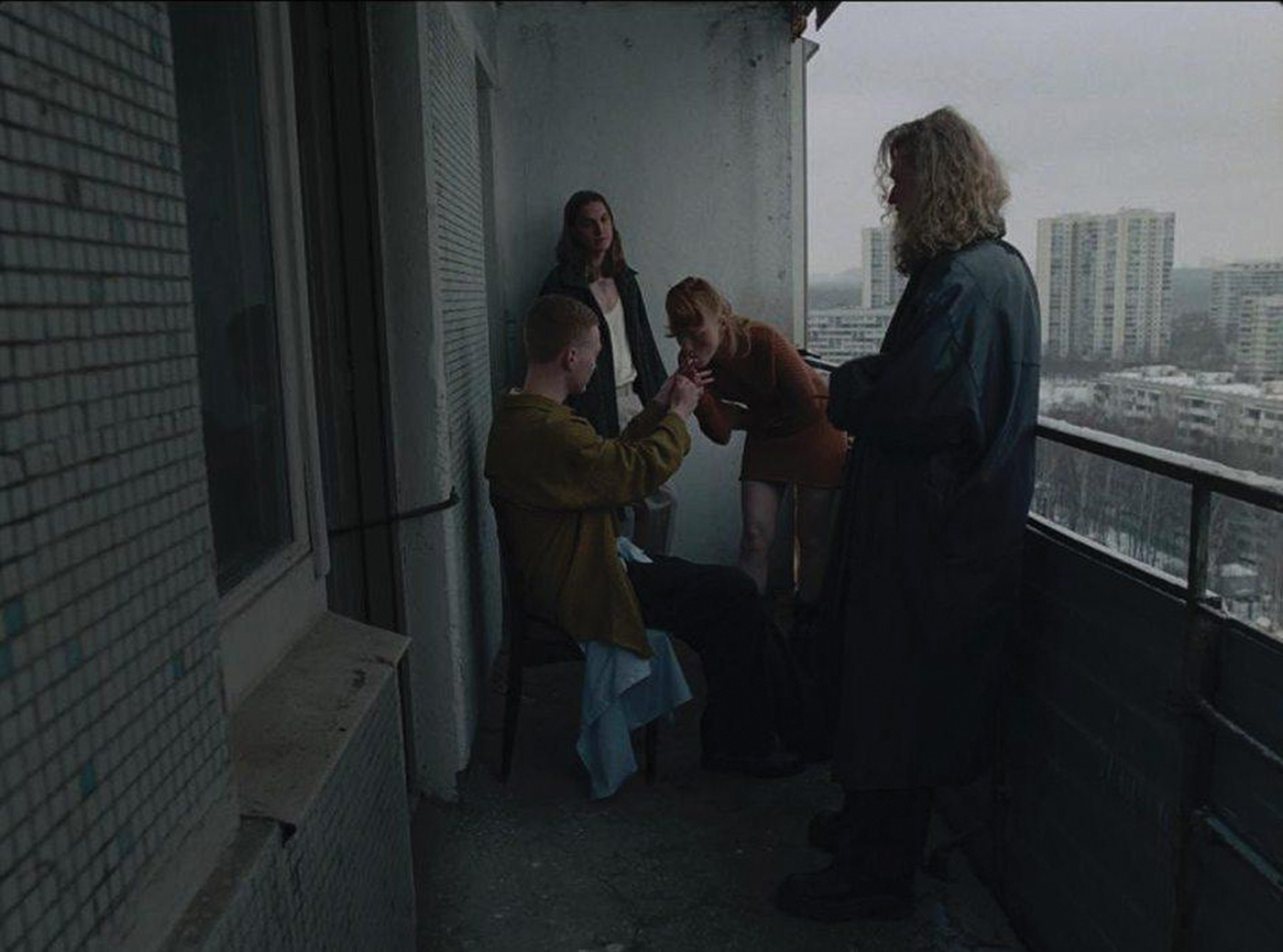
Dans une ville d’Europe de l’Est sans nom, quelques jeunes se retrouvent pris entre une résistance silencieuse et une complicité passive, tandis que leur pays sombre dans la guerre. Les rues de la ville, autrefois familières, deviennent un paysage de peur. Tourné dans un style sobre et d’observation, Inner Emigration est un portrait hanté d’une génération suspendue dans l’immobilité, contrainte de traverser une réalité en ruine qui n’offre plus aucun choix clair.
Lily Filina est une artiste et réalisatrice, née en 1999 à Kaluga, en Russie. Diplômée de la Rodchenko Art School, dans la classe de Sergueï Bratkov, elle travaille comme réalisatrice publicitaire et développe des projets indépendants à l’intersection du cinéma et de la vidéo d’art. En 2024, un film de Liliya a été présenté dans la programmation du Festival international du film de Rotterdam. En 2024 également, son projet "Internal Emigration" a reçu le soutien du programme Yandex360.

Liliia Filina
MAGIC & PROPAGANDA
Film expérimental | 16mm | couleur | 6:6 | Russie | 2022
Film plot based on marginal conspiracy theory that russian political elites are practising magic rites in Siberia to empower. This theory gained traction from 2021 to 2022 across Russian online platforms, mostly through Telegram chanels and investigative publication of opposition journalist. With lack of documentation, author decide to re-imagine this events, and make a film reconstruction of one of the rites. Alchemy, occultism and magic rites become the object of the author's research, forming a semantic contradiction with the everyday image of casual life
Lilia Filina is an artist filmmaker, whose work is situated on the uncertain thresholds of the perceptible and the communicable, organism and environment, and knowledge regimes and power, at the intersection of media and the history of political thought. Born in Kaluga, Russia, 1999, she now lives and works in Istanbul, Turkey. Alumni of the Rodchenko art school, Sergey Bratkov class, she works as director and develops independent project on edge of film and videoart.
Lina Filipovich
So Blue
Vidéo | mp4 | noir et blanc | 2:26 | Biélorussie, France | 2021
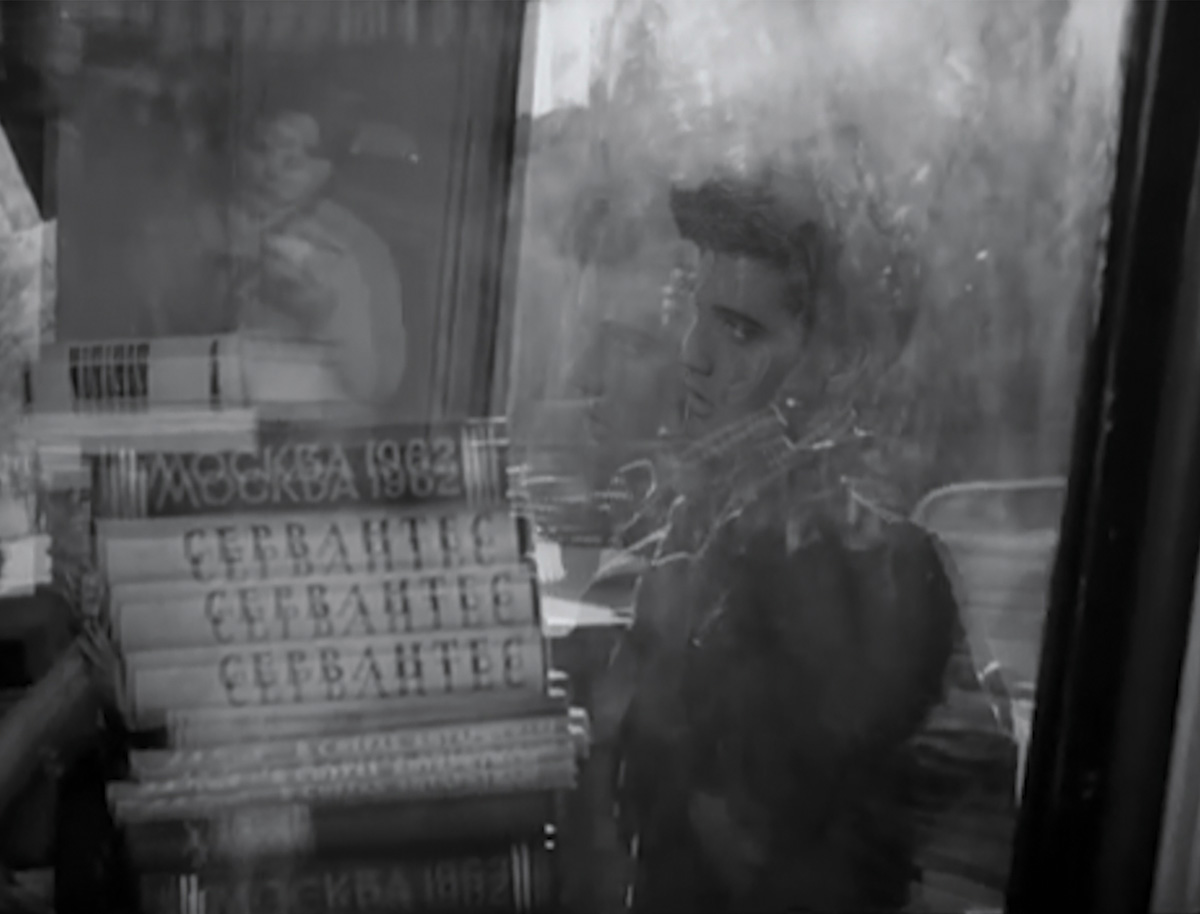
Created in collaboration with IRCAM, « So Blue » represents a false documentary on the trip of Elvis Presley to Minsk, Belarus in the 1960s. The basis and the main element of this video is a song created by me using the sound collage technique. I used a dozen fragments from different Elvis songs, changing the key, working with tempo and harmony to recreate his « unreleased song ». The lyrics were composed by the same method, using archetypal words and phrases, typical for songwriting of the 50 - 60s. The video also presents a collage made from fragments of the fictional film "I'm 20" by Marlen Khutsiev and from frames of documentary films about Minsk. This technique allowed me to create a video mystification about Elvis’s fictional travel to my hometown (Minsk). The cross between fictional and documentary cinema, between a sound collage and a false composition generates a hybrid work that provokes feelings of strangeness, deceiving the viewer about credibility of this work. This confusion gives place to the questioning from the part of the viewer concerning the documentary representation.
Lina Filipovich is an artist and musician based in Paris, France. Her works explore the relationship between audio and visuals and span a variety of media, including found footage films, experimental electronic music, painting, silkscreening and performance. Working with samples and loops, Lina Filipovich uses techniques of sound collage, musical montage, cut-up and appropriation.

Nikolay Filippov
Bulba
Doc. expérimental | hdv | couleur | 3:50 | Russie | 2017
In "Bulba", a group of people is eating in KFC. The camera is a Peeping Tom now staring at everyday unseen: we will see the story of the whole process told by tonal shifts given in change-of-state glances and expressions. Under the rolling sound of spoken lines from "Taras Bulba", en epic novella by Nikolay Gogol, the figures are delicately melting in the expanded cultural background, the background always being neutral. Such projections are about to touch the constraints of natural perception, where the cultural mechanism is the editor-in-chief.
Nikolay Filippov was born and lives in Moscow. During his studies in theoretical and applied linguistics at Lomonosov Moscow State University he got involved in fieldwork project in Northern Udmurtia, studying beserman (a small ethnic group) language and contributed to the creation of beserman grammar and thesaurus. He also studied history and theory of cinema at the High School of Art Practices in RSUH. Being particularly interested in the philosophy of natural language, he has been developing a logical approach to cinematographic means since his debut "The Herbage", foÑusing on fresh and raw areas of habitual speech and dramatic performance.
Filmsaaz
And How Miserable is the Home of Evil
Vidéo | 4k | couleur | 7:30 | Iran | 2023
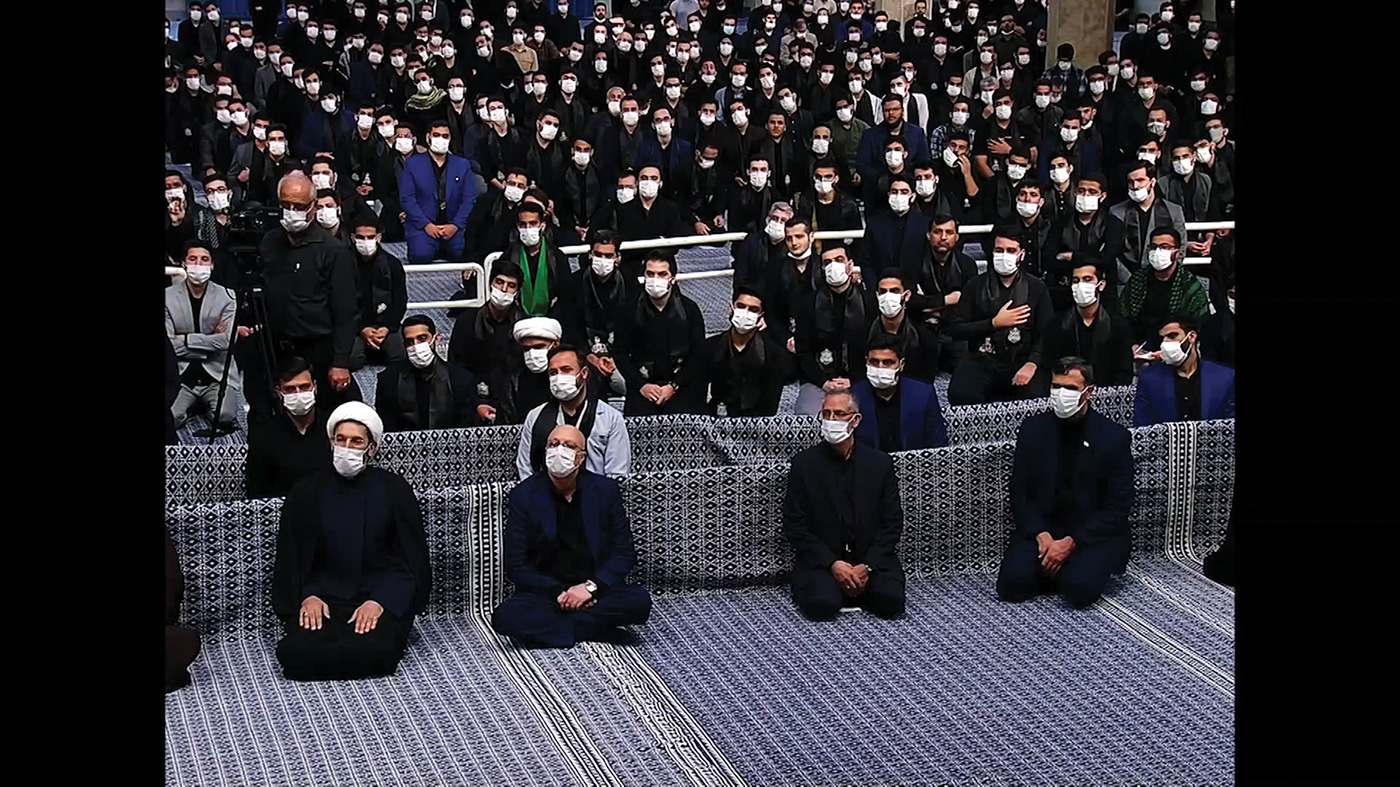
A dictator says his last words in front of his followers before spending the last seconds of his life sitting on a chair as people break into his house to kill him.
Saleh Kashefi also known as Filmsaaz (1999, Tehran) is an audiovisual artist whose works bring a bold lens upon contemporary youth culture, making ‘no-budget’ films which have gone on to be screened with international acclaim. They have been part of festivals like Cannes, Berlinale, Venice, Locarno, Visions du Réel, IDFA and FID. A recipient of Prince Claus Seed Awards, l'Abri associated artist, Master ECAL/HEAD alumni and currently enrolling in Le Fresnoy, Saleh has made 16 short films which have been included in over 200 film festivals around the world and have won 40 awards.

Luciana Fina
Terceiro Andar
Documentaire | hdv | couleur | 27:0 | Italie, Portugal | 2015
Fatumata and Aissato, the mother and the eldest daughter of a large family originally from Guinea-Bissau, discuss love and happiness. At 7pm, from the third to the fifth floor where I live, a regular sound, always the same, like the beating of a heart, reverberates through the building. The installation invites the viewer to the space of the word and the dialogue between the mother and the daughter,and to the physical and acoustic setting of the building where this family and the filmmaker live. As a poem, a story, a letter and a prayer are spoken, words travel from one language to another, from one speaker and one voice to another, creating connections. With the diptych Third Floor, in a migration to the exhibition space, Luciana Fina once again uses cinematography to question cinema’s narrative forms and matter. ------------- TERCEIRO ANDAR is also a documentary film (62min), that had its premiere in october 2016 at DOCLISBOA`16
Luciana Fina has worked in Lisbon since 1991. Following a long collaboration with Cinemateca Portuguesa as an independent programmer, she made her debut as a filmmaker in 1998. Since then she has developed a practice that frequently migrates from the cinema to the exhibition space, as she explores the possibilities and potential of film within the sphere of the arts. In 2003, she began a series of video portraits that came together in the "O Tempo de um Retrato" [Time for a Portrait] project. Her work has been shown internationally at festivals and exhibitions. Her most recent documentary, “In Medias Res” [In the Midst of Things], was awarded an Honourable Mention at the Temps d’Images Films on Art Award and the Best Portuguese Film Prize at the Arquiteturas Film Festival. In 2016 she presents a new installation work, the diptych TERCEIRO ANDAR, at Doclisboa ‘16, section Passages, Museu Calouste Gulbenkian, and she presents once again her first installation, CHANTportraits (2003), at Casa das Artes, Famalicão, and at Festival Temps d’Images, Lisbon. The film premiere of TERCEIRO ANDAR was at Doclisboa 2016, official selection in the portuguese competition.

Jem Finer
The centre of the universe
Vidéo expérimentale | dv | couleur | 5:0 | Royaume-Uni | 2005
En juin 2005, Jem Finer a construit un observatoire sculptural dans le parc de l'Université d'Oxford qu'il a appelé "The Center of the Universe". Cette sculpture en bois et fils de fer a été installée dans une tour spirale de 15 mètres de haut comme une "assiette de radio" (la réunion des anciens et nouveaux observatoires), dans laquelle a vécu Jem Finer. Dans ce bâtiment, les signaux reçus, témoignant de l'expansion du cosmos, ont été recueillis grâce à un équipement électronique dont un vieil enregistreur graphique avant d'être décodés en sons. Le film présenté nous montre une sélection des nombreux films sur la fin du temps que Jem Finer a réalisé pendant sa résidence dans le parc, regardant et filmant les ombres quotidiennes tournant autour de lui.
Jem Finer est un artiste pluridisciplinaire, créant des ?uvres mélangeant la vidéo, la musique, la photographie, la sculpture,... La plupart de son travail traite du temps et de l'espace sur des échelles extrêmes comme "Longplayer", une pièce musicale millénaire, ou "Wave/Particle", un film explorant le monde en gravité zéro. Cette année, Jem Finer a construit deux observatoires sculpturaux explorant également les thèmes du temps et de l'espace mais cette fois-ci sur des échelles cosmologiques : "Landscope" à Lough Neagh en Irlande du Nord et "The Center of the Universe" à Oxford en Angleterre. Récemment, il a reçu le premier prix de la Fondation PRS Pour La Nouvelle Musique pour son projet musical "Score for a Hole in The Ground" dont les instruments principaux dont le vent et la pluie. Jim Finer travaille actuellement sur cette nouvelle composition dans une forêt du sud-est de l'Angleterre.

Emmanuel Finkiel
Félicité
Fiction | 4k | couleur | 123:0 | France | 2016
Félicité, libre et fière, est chanteuse le soir dans un bar de Kinshasa. Sa vie bascule quand son fils de 14 ans est victime d’un accident de moto. Pour le sauver, elle se lance dans une course effrénée à travers les rues d’une Kinshasa électrique, un monde de musique et de rêves. Ses chemins croisent ceux de Tabu.
Alain Gomis est un réalisateur franco – bissau guinéo – sénégalais. Il est né en 1972 en France, où il a grandit. En 2013, son 3ème long-métrage, Tey (« Aujourd’hui »), avec Saul Williams, est sélectionné en compétition au 62ème Festival de Berlin, puis remporte l’Étalon d’Or du Fespaco (festival panafricain du cinéma), une première pour un film sénégalais. Le film, vainqueur de nombreux prix à travers le monde, a été choisi par le Sénégal pour représenter le pays aux Oscars. En 2008, Andalucia, son deuxième long-métrage, était présenté à la Mostra de Venise (Venice Days). En 2002, L’Afrance, son premier long-métrage gagnait le Léopard d’argent du festival de Locarno. Les films d’Alain Gomis ont été sélectionnés dans les festivals internationaux les plus prestigieux : Toronto, Chicago, L.A AFI, San Francisco, Sundance, Seattle, London BFI, Sydney, Dubaï… Titulaire d’un master d’études cinématographique de l’Université de Paris la Sorbonne, en 1993. Associé à Newton Aduaka (réalisateur nigérian de Ezra) et Valérie Osouf (réalisatrice française), il travaille au sein de Granit Films. Alain Gomis collabore également avec Oumar Sall (Produceur chez Cinékap) dans un programme de formation de jeunes cinéastes et techniciens au Sénégal (Up Court-métrages), ainsi qu’à la réouverture d’un centre culturel à Dakar (projet El Mansour).

Andaleeb Firdosy
Threading the needle
Doc. expérimental | 16mm | couleur | 16:30 | USA | 2004
Ce film expérimental tisse les mémoires d'une lignée de femmes racontant l'histoire d'un crue survenue à la fin des années 50 et qui provoqua une actastrophe sur leur village en Inde. Les trois soeurs et leur mère retracent les récits de serpents et de gens agrippés aux arbres, de noyade de leurs animaux piégés, de la peur et de la panique de tous ceux, saints et saufs qui assistaient à la scène du haut des toits de leurs maisons, l'héroïsme de leur père dans un tel chaos et la rescousse de la précieuse machine à coudre de leur mère, la seule chose, outil de création, qu'elle possède. Le sens de la métaphore révèle l'intéraction complexe de l'immortalité, l'amour et la compétition, au sein d'une famille, à travers différentes perspectives sur l'événement à la fois devastateur et irréel. "Threading the Needle" compare les attachements liés aux mémoires personnelles illusoires et la beauté complexe de la mémoire collective faite de métaphores et d'imagination lucide.
Andaleeb Firdosy est une musulmane, Indienne d'Amérique, une artiste basé à Los Angeles qui laisse derrière elle, une traînée de texture et d'idées d'images qui se situent entre le film, la vidéo et le collage, en passant par les médias du digital et le travail de conservatrice. Elle détient un diplôme de l'École de Design et Cal Arts (programmes basés sur des personnages et des animations experimentales) de Rhode Island et a travaillé dans l'industrie du film, de l'imprimerie, du web et de la création d'émission et ce pendant 8 ans, pour des clients qui vont du "Musée de l'art de Los Angeles" en passant par la chaine télévisée "History Channel". Elle est membre- fondatrice de ArtWallah, un festival des arts du multi-média et d'organisations qui nourrissent et mettent en vitrine l'art visuel de différents Diaspora avec l'art visuel provenant de communauté d'Asie du Sud. Les films expérimentaux de Melle Firdosy trace les histoires faites-main et d'objets immobiles animés comme des monuments de mémoire (mémorial). Son oeuvre filmique, créative et artistique a éte présentée à un niveau national et international. Son travail d' aide au public, non-lucrative, continue de s'élargir et développe un sens de la communauté, une célébration de diversité et une sensibilisation quant l'ambiguïté de l'expérience de la diaspora.

Constanze Fischbeck, Daniel Kötter
Desert View
Documentaire | 4k | | 83:0 | Allemagne, Egypte | 2017
The film "Desert View" is dedicated to the study of building and living in the semi - built satellite city Madinaty, located in the desert east of Cairo. Madinaty is a fully privately owned city that, unlike a gated community, claims to be an open but self-contained and secure city. All public services are not provided by the state, but by the Arab real estate company Talaat Mustafa. The movie "Desert View" was made during a four-week residency, to which the filmmakers had invited the three-generation Barakat family from ashweyat (informal residential district) Bashtil as a sort of cinematic diary. The temporary residents of Madinaty, filmmaker and Barakat family, captured their observations and experiences of architecture and their use from their respective perspectives and cameras. Two external perspectives on the desert dreams of the Egyptian middle and upper classes. Also part of the project were discursive evenings, to which filmmakers and the Barakat family invited new and old neighbors, architects, artists and urbanists from Cairo to the living room of the villa. Here the different perspectives on the topic "How do we want to live?" were discussed and documented.
Constanze Fischbeck works as stage designer, filmmaker, curator and lecturer in the context of theatre and art. Her artwork is based on the space and present of specific locations. In her films she investigates the interference of documentary and staged moments in the urban context. Her work was presented at various festivals, art institutes and theatres. She has been working with Daniel Kötter (since 2007 ) collectively conducting research and creating experimental documentaries. Their works include Benzin, a reconstruction of exchange systems in Lagos (2008), Making of History (2012) on reconstructions of history and memory and the work about space and place of theatre: state-theatre (2009-2014). She lives in Berlin.

Ulrich Fischer
4 courtes pièces
Art vidéo | super8 | couleur et n&b | 9:5 | Suisse | 2004
L'oeuvre d'Ulrich Fisher, les 4 courtes pièces, fait suite à une commande de la chaîne suisse alémanique SFDRS pour l`émission philosophique STERNSTUNDEN. Elle se compose de 4 clips: Ballast, Signes d´éconduite, La ville révée des grues et Mi rage. Ballast : Un quadrillage symétrique soutient et fait décoller l?image ? pas de mouvement sans ballast? Signes d´éconduite : Se laisser entraîner par des lignes fuyantes, jusqu?au point où l?espace du voyage se dissout en de multiples pistes : autant de signes qui bouclent le mouvement sur lui-même. La ville révée des grues Entre la ville cartographiée et la ville réelle, les grues ont leur mot à dire. Mirage : Que se passe-t-il quand des objets mouvants gèlent dans leur course et deviennent un solide qui marque l?espace ? On peut alors voir une sorte de mémoire d?un lieu, ce qui nous interpelle à nouer de nouvelles relations au contexte.
Né en 1971 à Genève, Ulrich Fisher réalise entre 1993 et 1996 divers films en super-8 et vidéo. Il obtient en 2000 le diplôme à l'Ecole Supérieure d'Art Visuel de Genève (ESAV). Il devient ensuite permanent au Cinema Spoutnik. Il est aussi producteur, monteur et caméraman pour Perceuse Productions.

Nina Fischer, Maroan el Sani
Appropriation takes you on a weird ride
Doc. expérimental | 4k | couleur | 20:39 | Allemagne | 2020
"Appropriation takes you on a weird ride" étudie l'étrange enthousiasme des Allemands pour les Autochtones d’Amérique, en relation avec le racisme contemporain et ses profondes racines coloniales. Cette fascination, surtout en ce qui a trait à la construction d'une identité allemande, a une chronologie plus effrayante qu'impressionnante. Elle commence avec Arminius, chef de la tribu germanique des Chérusques au premier siècle, et d’étend aux romans d'aventure de Karl May et aux spectacles du Far West de Buffalo Bill au XIXe siècle, en passant par les expositions ethnographiques (Völkerschauen) dans les zoos et les cirques, et la fondation de "clubs indiens" au début du XXe siècle, jusqu’à l'appropriation des identités autochtones par les idéologues nazis, et jusqu’à notre époque, où de nouveaux groupes de droite ont commencé à s’identifier de manière troublante avec les peuples autochtones des Amériques.
Nina Fischer et Maroan el Sani sont artistes visuels et réalisateurs. Ils vivent à Berlin (Allemagne). Ils travaillent ensemble depuis 1995. De 2007 à 2010, ils ont été Maîtres de conférence en cinéma et art médiatique, à l'Université de Sapporo (Japon). Depuis 2015, Nina Fischer est professeure de cinéma expérimental et d'art médiatique à la Universität der Künste Berlin (Allemagne). Ensemble, ils ont participé à des expositions d'art et à des festivals de cinéma à l’international, notamment à la Berlinale – International Filmfestival Berlin (Allemagne); au Festival international du film de Rotterdam (Pays-Bas); au Istanbul Film Festival (Turquie); à la Biennale de Sydney (Australie); à la Biennale de Gwangju (Corée du Sud); à la Liverpool Biennial of Contemporary Art (Royaume-Uni); à Manifesta 4, Francfort-sur-le-Main (Allemagne); à la Media City Seoul Biennale, Séoul (Corée du Sud); et à la Triennale d'Aichi (Japon). Ils ont également participé à des expositions individuelles, notamment au Tokyo Photographic Art Museum (Japon); au Stedelijk Museum Bureau Amsterdam (Pays-Bas); au Museum of Contemporary Art Hiroshima (Japon); à la K21 - Kunstsammlung Nordrhein Westfalen, Düsseldorf (Allemagne); et au MAXXI Museum, Rome (Italie).

Nina Fischer, Maroan EL SANI
I Live in Fear - Record of a Living Being After March 11
Vidéo | hdv | couleur | 32:57 | Allemagne | 2014
For their movie “I Live in Fear After March 11”, Fischer & el Sani invited refugees who escaped from the aftereffects of the nuclear disaster in Fukushima, to a screening of Akira Kurosawa’s film “I live in fear - Record of a living being” (1955) to reevaluate Kurosawa’s concerns after the nuclear weapon tests at the Bikini Atoll in the 50’s. The screening triggered an identification-process of the fugitives with the protagonist of Kurosawas movie, as they recognized their desperate situation. It was followed by an experimental setup of cinematic improvisations with refugees and actors, focusing on the exploration of fears and uncertainties surrounding the nuclear catastrophy and ongoing threat of radiation.
Nina Fischer & Maroan el Sani are visual artists and filmmakers, based in Berlin. From 2007 until 2010 they have been Associate Professors for Film and Media Art at Sapporo City University, Japan. Since 2015 Nina Fischer is Professor for Experimental Film and Media Art at Uninversity of the Arts, Berlin. They have been recipients of the Karl-Hofer-Prize of the University of the Arts, Berlin and were awarded several artist in residence stipends e.g. at German Academy Villa Massimo, Rome, DAAD in Tokyo, Cité des Arts in Paris, Stedelijk Museum in Amsterdam and Villa Kamogawa, Kyoto. International exhibitions they have participated in include Gwangju Biennale 1995, 2002, 2008, Liverpool Biennial of Contemporary Art, 1999, Manifesta 4, Frankfurt 2002, Sydney Biennale 2002, 10th Istanbul Biennial 2007, Media City Seoul Biennale 2012 and 2014, Aichi Triennale, Curitiba Biennale 2013 and solo exhibitions at Metropolitan Museum of Photography, Tokyo, 1998, Yamaguchi Center for Arts and Media, 2005, Stedelijk Museum Bureau Amsterdam, 2007, Kunsthaus Glarus, 2009, Cobra Museum, Amstelveen, Museum of Contemporary Art Hiroshima, 2010, Austin Museum of Art - Arthouse, Austin, 2012, Mamam Recive 2013, MART, Dublin, 2014, Aargauer Kunsthaus, 2015 K21 -Kunstsammlung Nordrhein Westfalen, Düsseldorf, 2016, Maxxi Museum, Rome, 2017 www.fischerelsani.net

Florian Fischer, Johannes Krell
STILL LIFE
Doc. expérimental | 4k | couleur | 12:0 | Allemagne | 2014
The film makers leave the classical nature film behind in order to explore new ways of conceptualising our understanding of nature and ourselves. A hitherto familiar environment develops strange characteristics and meanders between stagnation and movement, realism and hypnosis, naturalness and artificiality.
• Professional Masterclass / Werkleitz, 2013 • M.A. in Image Science (DUK Austria), 2012 • Master Scholar of Arno Fischer (Ostkreuzschule Berlin), 2011 • Photo / Design diploma at FH-Potsdam, 2009
Holly Fisher
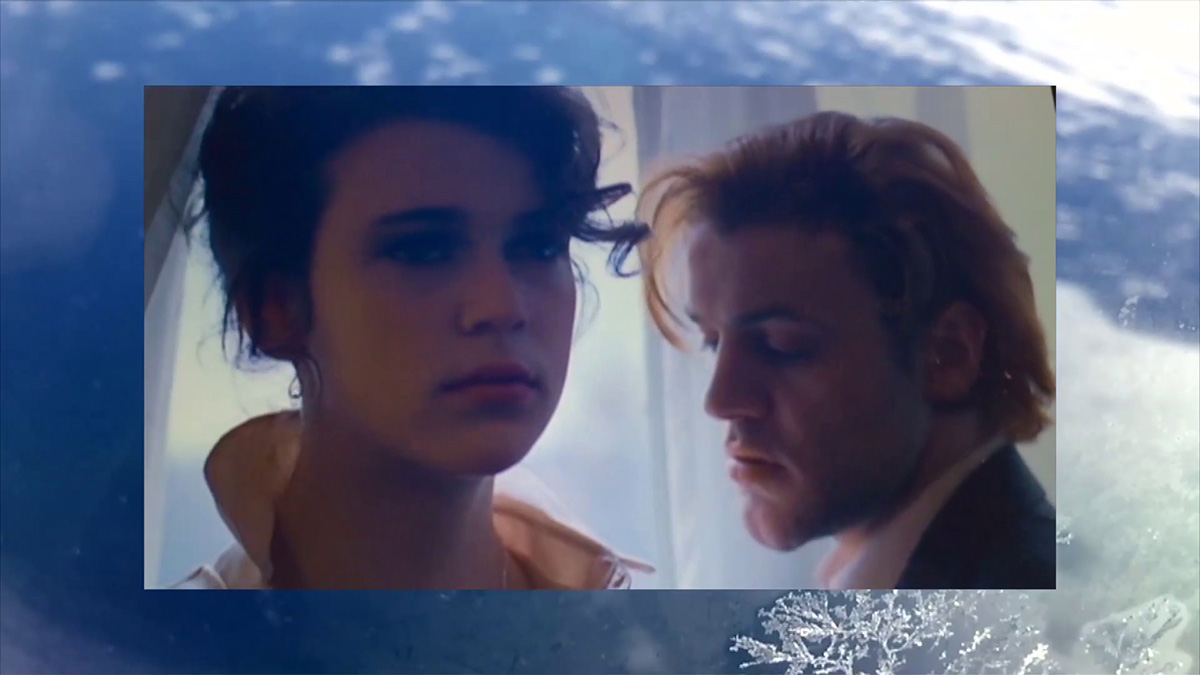
Out Of The Blue
Film expérimental | mp4 | couleur et n&b | 90:0 | USA | 2021
"Out Of The Blue" is a living diary and structural breakthrough in the New York filmmaker's quest for a visual language equal in both thought and expression. Mischievously yet rigorously edited text and images, both Fisher's own plus "borrowed" materials, are laced within infinite blue sky images filmed from the airplane window as the filmmaker travels from Berlin to JFK Airport in NYC. Her passage home links timetravel with mind-journey. Multiple storylines play within conflicting time zones. Memories are juxtaposed with historic disasters (especially the bombing of Hiroshima, and the 9/11 destruction of the World Trade Center) or personal feelings - especially sorrow, since OUT OF THE BLUE took shape within the Coronavirus pandemic lockdown. Featured music is Lois V Vierk's "Words Fail Me", in its entirety, a work inspired by Vierk's eye witness of the World Trade Center towers crashing down, twenty years ago on 9/11.
Holly Fisher received a B.A. in Asian Art History at Columbia University in 1964, and a M.A. in Cinema Studies at New York University in 1982. She lives and works in Tribeca, New York City. Holly Fisher has been active since the mid-sixties as an independent filmmaker, printmaker, teacher, and film editor. She was the editor of Christine Choy and Renee Tajima-Peña’s feature documentary Who Killed Vincent Chin?. This film about a racially motivated Detroit murder case of 1982 was nominated for an Oscar in 1989. Her experimental short works and long-form essay films –– explorations in time, memory, trauma, and perception –– have been screened in museums and film festivals worldwide including Whitney Museum Biennials; Centre Pompidou, Paris; Film Forum, Japan; and two world premieres in The Forum of the Berlinale, Germany. She has received multiple grants from The Jerome Foundation, NYSCA, CAPS, and The American Film Institute, among others. Her silent film Rushlight won the Grand Prize in the 1985 Black Maria Film Festival, and her feature Bullets for Breakfast received “Best Experimental Film Award” at the Ann Arbor Film Festival, 1992. Her solo retrospectives at The Museum of Modern Art (1995) and more recently Anthology Film Archives (2019), were both entitled THE FILMS OF HOLLY FISHER. Fisher completed two new works during the past year of Coronavirus Lockdown, one long-form and one short; Softshoe for Bartok (23 minutes) will be premiered at The Brooklyn Film Festival held in early June 2021; her two feature works Out of the Blue (2021) and Deafening Silence (2012) concerning Burma under dictatorship, will be available for free streaming by Anthology Film Archives, June 16 - 29, 2021. The AFA will also sponsor multiple in-house screenings of Out of the Blue and her feature documentary A Question of Sunlight over the weekend of 9/11. This event has added intrigue since the two films variously frame the creative response of each of us involved –– New York avant-garde composer for both works Lois V Vierk; NY Downtown artist/protagonist José Urbach featured in A Question of Sunlight; and filmmaker Holly Fisher –– because each of us witnessed first hand from our own windows, the attack on the World Trade Towers twenty years ago, Sept 11, 2001.