Catalogue > Faire une recherche
Résultats pour : Tout le catalogue
Lena Maria Thuering
Das Haus
Vidéo | dv | couleur | 11:0 | Suisse | 2008
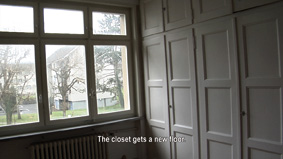
?The father shoots the first wild boar, it is being decomposed and skinned in the basement and hung in the laundry. 20 cents costs a glimpse on the shot animal. The nanny has to clean the wild boar teeth and to put them in a box.? What defines memory and what exactly does it set about? In Lena Maria Thüring?s video work ?The House? half a century of family history is reflected upon a detached house?s empty walls: Slowly and continuously the camera runs through hallways, rooms, and the staircase, while a background voice narrates the past. Thüring?s interaction with time and space in the film consecutively plays with the expectations of the observer and questions the relationship between documentation and fiction. By objectification of word and vision in the formal realisation, Thüring hence confronts the viewer with his own past. Annette Amberg
Lena Maria Thüring is born 1981 in Arlersheim, BL, Switzerland her native place is Basel, BS, Switzerland. She lives and works in Zürich, Switzerland. 2002 Artistic preparatory course at the School of Art Zurich, Zurich 2002?2007 Photography at the School of Art Zurich, Zurich since 2005 partial artistic cooperation with Annette Amberg.

Georg Tiller
Vargtimmen - Nach einer Szene von Igman Bergman
Film expérimental | 16mm | noir et blanc | 6:20 | Autriche | 2010
Vargtimmen?After a Scene by Ingmar Bergman is the exact reconstruction of a scene in Bergman?s 1968 film of the same name. Frame for frame, Georg Tiller and his cameraman Claudio Pfeifer reproduced the same shots?with the crucial difference that no actors are visible. All we see are the ocean and cliffs in black and white, steep rock formations, and with them the quiet surface of the water, ruffled slightly by the breeze. The soundtrack, which had no dialogue in the original either, was taken from the first film and adds narrative structure to the lonely landscape. While in Vargtimmen Bergman concentrated on the faces of people, the focus of Tiller?s film experiment is space, and nature. The camera glides over the barren countryside, and stone slabs with numerous cracks and gaps lie in the sun, providing a stark contrast with the velvety smooth, nearly black water. In Bergman?s film a nightmarish drama plays out before this background: In a frenzy, a man kills a boy, then lets the lifeless body slip into the water. Without human figures, the space itself becomes an actor. The camera examines the section of coastline from a number of different angles, includes the horizon to add a painterly touch, then the cliffs loom threateningly into the sky again. The music gives these images of empty countryside a dramatic arc, the tragedy in the original story can be sensed. At the same time the filmic representation of the landscape enters the foreground, like an empty stage becoming a projection screen. Tiller has created a study, and its conceptual rigor opens up a broad field of associations involving perception, representational forms and the construction of filmic space. (Andrea Pollach) Shot for Shot reconstruction of a scene from the film Vargtimmen (1968) by Ingmar Bergman using the same technical devices - Lenses, Framing, Length of Shots as well as movements of the Camera. The absence of the bodies of the actors opens the room for a complete concentration on the filmic space. This reconstruction is understood as a reenactment by the reconstructeur, a becoming of Ingmar Bergman, thus reenacting a specific style of directing.
Born 1982 in Vienna. Studied Philosophy and Russian at the University of Vienna, since 2000 at the Academy of Fine Arts, Vienna. Studied from 2005-2006 at the University of Music and Performing Arts Vienna, dept. film and television. Studies since 2006 at the Academy of Film and Television, Berlin.

Georg Tiller
White Coal
Doc. expérimental | 16mm | couleur et n&b | 70:0 | Autriche | 2015
A mound of coal, black dust dissipating into the air, a stone statue of a worker: These are the opening images of White Coal. Loosely inspired by Hermann Melville`s "The Confidence Man", the story of a blind passenger aboard a Mississippi steamboat, the first thread of White Coal follows the journey of a Polish coal transport ship and a male figure dressed as in silent movies of the proletarian heyday. Always seeming to appear as if someone had called for him, this man wanders around a disintegrating industrial town aimlessly. We see dogs barking, and the sounds of heavy industry linger in the air. He enters a ship furtively, apparently unaware that it is a coal ship set to travel on down a narrow river. It is as if the boat had the entire crew under a spell cast by its slow but steady motion. Only minimal movements are possible on board this ship, and the "blind passenger" becomes the spectator of this self-contained routine. The film`s second thread portrays the physical structures and environment in which coal is exploited at the world`s largest coal-burning power plant, located in Taychung, Taiwan. Here color enters the film, yet it feels like the present is falling behind the past, industrial landscapes, truck transports, giant chimneys burning coal, monitoring stations following their own beat. Computers out of order and people scooting around in chairs. The drone of the Polish coal ship is mirrored by the crushing din of industry, then cancelled out by an aseptic control room vacuum that swallows whatever might otherwise be a human gesture. This is Melville`s steamboat, chugging slowly and unstoppably down a river with no end, where human beings have no voice with which to speak and exist encapsulated in their own imagined present tense. Although the film uses the material as the primary source of its investigation, White Coal is less a film about coal than an exploration of industrial film motifs from the 1920s to the present.
After unfinished philosophy and theater studies, he studied film studies first with Harun Farocki at the Academy of Fine Arts Vienna, then film directing and cinematography with Michael Haneke and Christian Berger at the Film Academy Vienna and later film directing at the German Film and Television Academy Berlin (dffb). Since early on he has been working as a freelance artist and filmmaker later also as a producer of his own and his friends work, initially with the artist collective naivsuper. His films have been shown at numerous film festivals around the world and he has exhibited his work at the Bienal de Såo Paulo, the Centre Georges Pompidou and the Luleå Vinter Bienal among many other places. He is one of the co-founders of the production company Mengamuk Films and managing director of Subobscura Films. Georg currently lives in Vienna and Berlin.

Georg Tiller, Ranaïvojaona Maéva
Zaho Zay
Fiction expérimentale | 4k | couleur | 98:0 | Autriche | 2020
Une jeune femme travaille comme gardienne dans une prison désespérément surpeuplée à Madagascar. Elle passe son temps à rêver de son père, un meurtrier qui l'a abandonnée enfant, après avoir tué son propre frère. Dans son imagination, son père devient un tueur mythique, errant dans les campagnes et lançant des dés enchantés pour décider du sort de ses victimes. En secret, elle rêve du jour où il pourrait arriver parmi les prisonniers. Lorsqu'un nouveau détenu arrive en prétendant connaître son père, les fantasmes de la jeune femme commencent à tourner au cauchemar.
Maéva Ranaïvojaona est auteure, réalisatrice et productrice. Franco-malgache, elle vit et travaille à Paris (France) et Vienne (Autriche). Suite à l'obtention de diplômes à l'école des beaux-arts de Dijon (France) et de Bourges (France), elle travaille plusieurs années en tant qu'assistante auprès d'artistes comme Ernesto Neto au Brésil et Kristina Solomoukha à Paris (France), puis comme assistante réalisateur auprès de jeunes cinéastes en France et en Allemagne. Entre 2012 et 2016 elle écrit, produit et réalise deux films courts, qui seront sélectionnés dans des festivals tels que le Festival International du Film de Rotterdam (Pays-Bas) et le Short film Corner de Cannes (France). En 2016, Maéva Ranaivojaona remporte en tant que productrice le prix Air France du FIDLab, Marseille (France). En 2017, elle ouvre à Paris (France) la branche française de Subobscura Films avec le producteur et réalisateur Georg Tiller. En 2020, le long-métrage "Zaho Zay", co-produit et co-réalisé par Maéva Ranaïvojaona et Georg Tiller, gagne deux prix au FID Marseille (France), puis le prix MehrWert de la Viennale, Vienne (Autriche). Suite à des études non achevées de philosophie et de théâtre, Georg Tiller étudie le cinéma et la télévision avec Harun Farocki à la Akademie der bildenden Künste Wien, Vienne (Autriche), puis la réalisation et la mise en scène à la Filmakademie Wien, Vienne (Autriche), dans les cours de Michael Haneke et Christian Berger. Il étudie également la réalisation à la DFFB – Deutsche Film- und Fernsehakademie Berlin (Allemagne). Il a travaillé comme artiste et cinéaste indépendant, producteur de ses travaux et de ceux de ses amis, dans le cadre du collectif d'artistes Naivsuper. Il a travaillé comme associé à Mengamuk Films en Allemagne, et est actuellement directeur de la société de production Subobscura Films à Vienne (Autriche) et à Paris (France). Les films produits par Georg Tiller ont été sélectionnés dans des festivals de renommée mondiale, notamment à la Berlinale, Berlin (Allemagne); au Festival international du film de Rotterdam (Pays-Bas); et à la Viennale, Vienne (Autriche). Ses œuvres ont été exposées à la biennale de Sao Paulo (Brésil); au Centre Georges Pompidou, Paris (France); et à la Lulea Winter Bienal, Lulea (Suède).
Aidan Timmer
Tarik en Ik
Doc. expérimental | 4k | couleur | 21:48 | Pays-Bas, Belgique | 2025
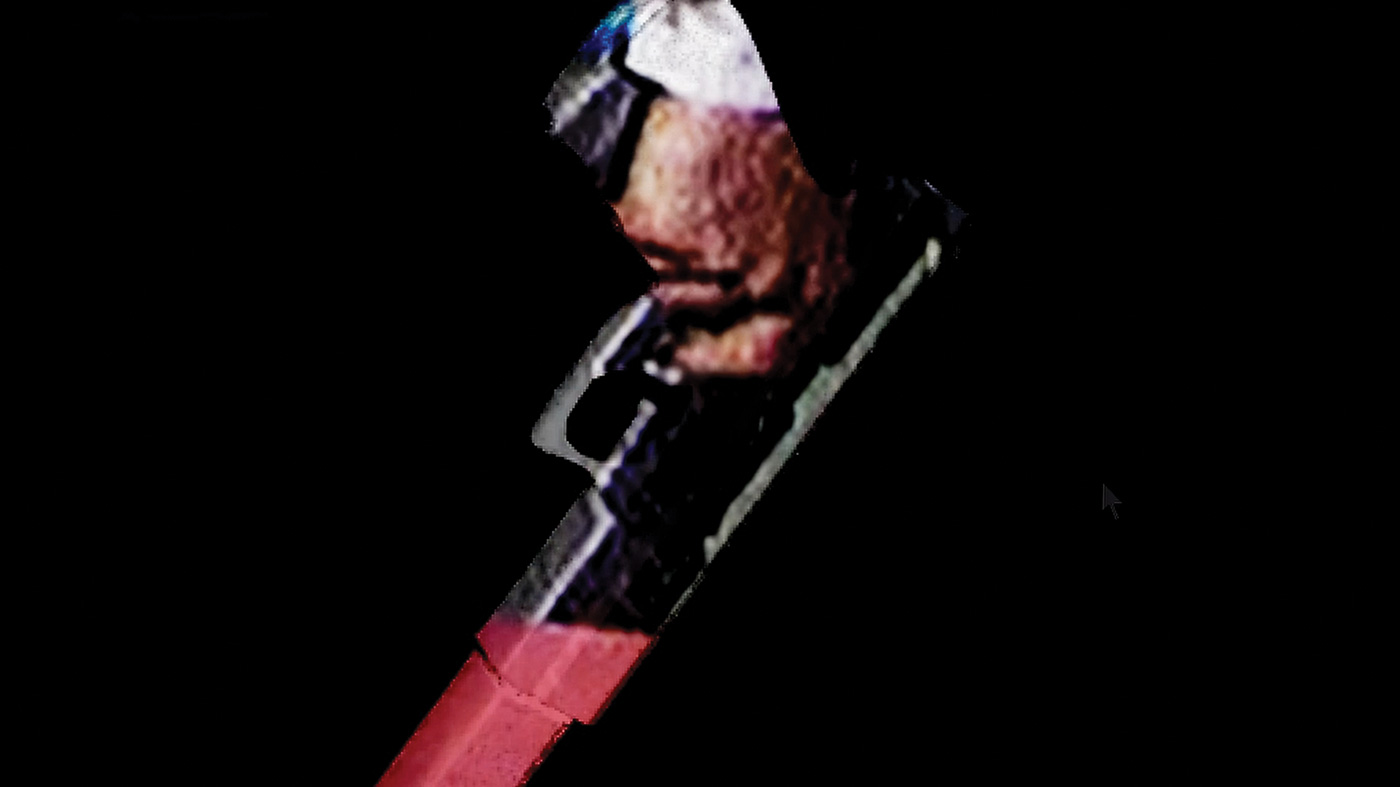
En revisitant les images d’un détournement survenu lors du journal télévisé national néerlandais, en 2015, Aidan Timmer, qui a désormais le même âge que l’auteur des faits, réfléchit à cet événement. En regardant le jeune homme peiner à réciter une lettre en direct à la télévision, Aidan se rapproche émotionnellement du garçon qui avait pris son père en otage.
Aidan Timmer (né à Amsterdam, Pays-Bas) développe un travail principalement ancré dans le champ audiovisuel. Il s’est plongé de plus en plus profondément dans le documentaire, l’essai filmique et les formes hybrides. La plupart de ses films ou de ses œuvres naissent d’une fascination obsessionnelle pour tout ce qui tente de transmettre une vérité ou une forme de véracité. Il envisage ses films comme des explorations essayistiques de l’objectivité et de l’illusion d’impartialité. Tarik en Ik met en scène la relation émotionnelle et obsessionnelle avec une peur issue du passé.

Zanic Tin
Antiotpad
Fiction | dcp | | 18:6 | Croatie | 2020
La voiture de quelqu'un est en feu. Quelqu'un s'est fait défoncer la tête. Quelqu'un s'est fait voler son portable. L'adolescent perturbateur rompra-t-il le cercle vicieux de violence, qu'il a peut-être déclenché lui-même?
Tin Žani? a obtenu un Master en réalisation de fiction à la NFTS - National Film and Television School, Beaconsfield (Royaume-Uni), en tant que boursier du Croatian Audiovisual Centre, Zagreb (Croatie). Avant d’aller à la NFTS, il a complété une Licence en production cinématographique et théâtrale à Zagreb (Croatie). Ses deux premiers films courts, "Komba" (2011) et "Manja?a" (2014), ont reçu des prix et des mentions spéciales, et ont été présentés dans des festivals de cinéma, ainsi que des festivals et marchés du film de premier plan, notamment au Festival international du film de Rotterdam (Pays-Bas); au Festival international du court métrage de Clermont-Ferrand (France); au Tampere Film Festival, Tampere (Finlande); au Sarajevo Film Festival (Bosnie-Herzégovine); au Internationales Kurtzfilm Festival Hamburg, Hambourg (Allemagne); et au Zagreb Film Festival (Croatie).

Thadeusz Tischbein
Schneewittchen (Snow White)
Vidéo | hdv | couleur et n&b | 19:40 | Allemagne | 2017
What role can culture play, when dead bodies are not burried after death, but being used for other purposes “Snow White” examines this question, using stalinist Mausoleums, preparated animals in Natural History Museums and relics in churches. What form of story telling is being used to hide actions and translate them?
Thadeusz Tischbein is a Germany-based video artist. He studied between 2008 and 2016 in Leipzig, Braunschweig (Germany) and Bucharest (Romania) with Candice Breitz, Clemens von Wedemeyer and Günther Selichar. His 2017 video essay SNOW WHITE (2K Cinemascope, 19:40 min) is a journey to the dead bodies in mausoleums, churches and museums. In THE ATLAS OF THE WOUNDED BUILDINGS (HD, 12:56 min, 2016) he is trying to examine narrations written in bullets holes. INVENTORY (HD, 16:9, 5:49 min) from 2015 is talking about the strange living room of so called office plants.
Thadeusz Tischbein
How the wooden structures survived in my mind
Vidéo | mov | couleur | 9:3 | Allemagne | 2022
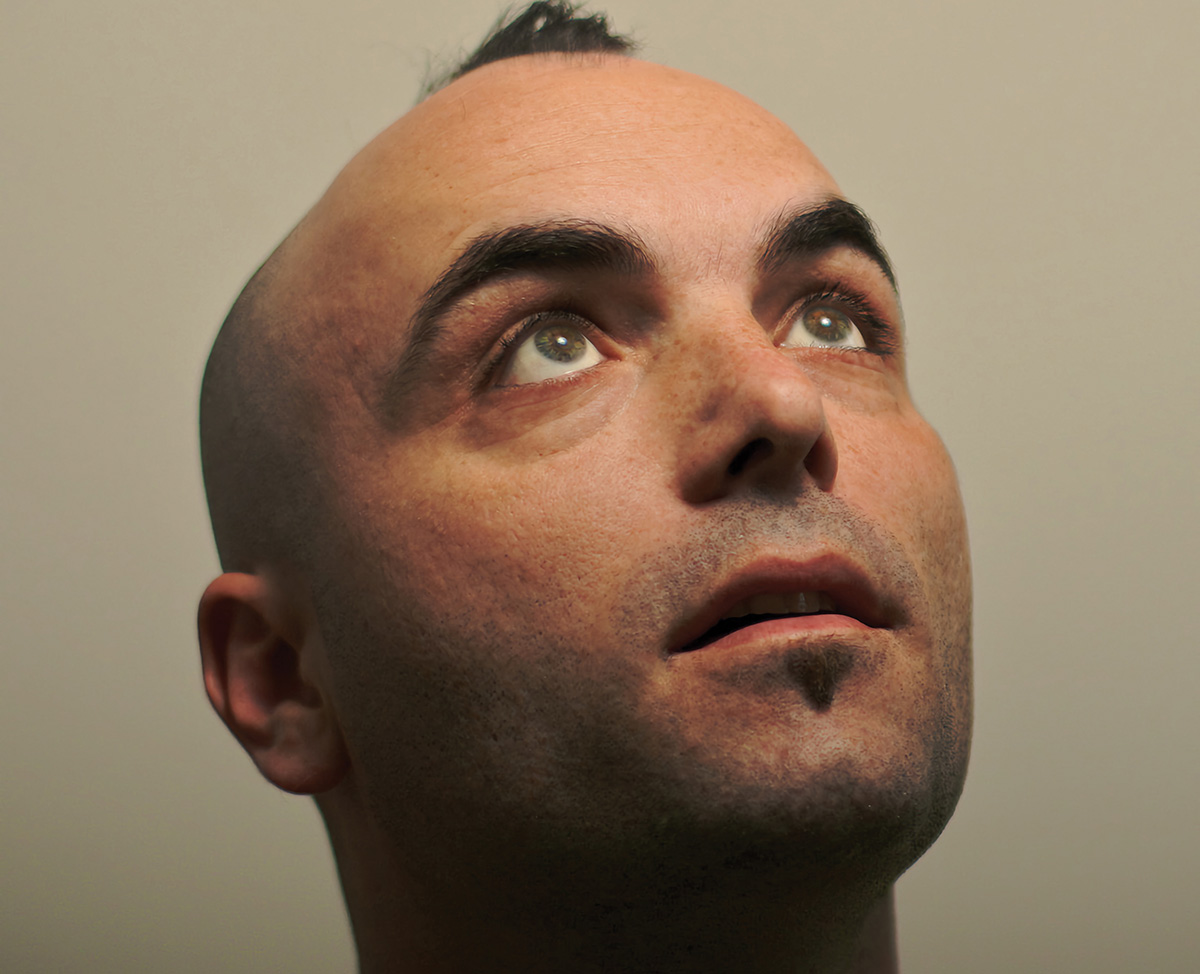
How do memories actually come about? Isn't it a process that involves both – forgetting and reinventing? This construction process of memories is symbolized in the film using architectural fragments. The camera moves through structures reminiscent of film sets as well as abandoned places. We are reminded of places where we’ve been before, we are guessing. The Australian voice actor, heard from somewhere in the dark, remembers details from his way to school in Melbourne, reports on forays through foreign cities and describes these structures from his memories. His voice is fading, but is remembered by tape machines.
Thadeusz Tischbein is a Germany-based video artist. He is interested in cruel intersections of history and everyday live. In his films he uses often documentary footage along with models and archival material to develop a fictionalized version of a documentary, a forensic speculation. HOW THE WOODEN STRUCTURES SURVIVED IN MY MIND (2023) is using architectural leftovers to investigate the (re)construction of memories. In 2021 a series of nine short films using poems by Joseph Brodsky was produced. The 2017 video essay SNOW WHITE (2K Cinemascope, 19:40 min) is a journey to the dead bodies in mausoleums, churches and museums. THE ATLAS OF THE WOUNDED BUILDINGS (HD, 12:56 min, 2016) is an attempt to examine narrations written in bullets holes. Thadeusz Tischbein studied Visual Arts with Candice Breitz in Braunschweig/Germany and Clemens von Wedemeyer in Leipzig/Germany. His films were invited to many German and international film festivals, among others EMAF Osnabrück, IndieLisboa, Manifesta 12 Palermo (collateral event), Rencontres Internationales Paris/Berlin, Stuttgarter Filmwinter, Filmfest Dresden. Most of his films started as multichannel installations and where shown for instance in Teatro Franco Parenti, Milan/Italy or Schaubuehne Lindenfels Leipzig/Germany. He lives and works in Leipzig/Germany.
Benjamin Tiven
A Third Version of the Imaginary
Installation vidéo | | couleur | 12:0 | USA, Kenya | 2012
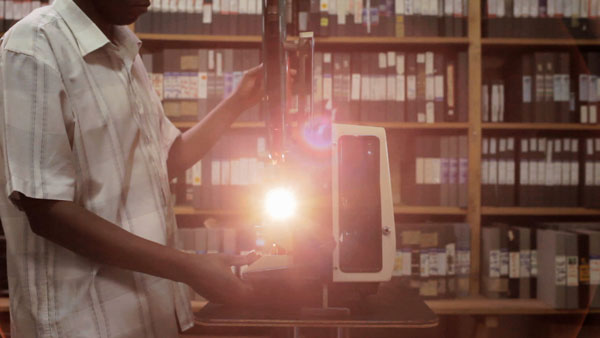
A Third Version of the Imaginary traces an encounter with the video and film library of the Kenya Broadcasting Corporation in Nairobi. We follow the station?s librarian through tightly-packed shelves of video cassettes: he is searching for a specific image, and must sift through the identifying paperwork from a number of tapes. As he methodically moves among the stacks, a Swahili voice-over speaks about the arrival of video technology in Kenya and its impact on the archiving of television images: video may have cheapened production, but its material expense put pressure on storage. Later, the librarian converts a basement storage closet into a makeshift cinema, in order to screen some 16mm film material. The voice-over shifts accordingly, moving from video to film, and to the linguistic problem posed by the very word ?image? in Swahili. A visual and narrative echo chamber, this video addresses video?s address of film: the material facts of these media become the aesthetic facts of the work.
Benjamin Tiven lives and works in Brooklyn, New York, US. Forthcoming exhibitions, 2014: ICA Philadelphia (solo); gallery 1/9 Unosunove, Rome, IT (in collaboration); Courtisane festival, Ghent, Belgium. Recent exhibitions: Henningsen Gallery, Copenhagen, DN; Westfälischer Kunstverein, Münster, DE; Charlottenborg Kunsthal, Copenhagen; Bronx Museum of Art, Bronx, NY; Vivo Media Arts Center, Vancouver; Center for Curatorial Studies at Bard College. Recent film screenings: Rotterdam International Film Festival; Migrating Forms, NY; Museum of the Moving Image, NY; Cinéphémère, FIAC, Paris, FR; Vienna International Film Festival, AT; Arsenal Cinema, Berlin, DE; FID Marseille, FR; RIDM Festival, Montreal, QB; Oberhausen Short Film Festival, DE; 25FPS Festival, Zagreb, HR; Images Festival, Toronto, ON. Journal contributions: Triple Canopy, Nka: Journal of Contemporary African Art, Bidoun, Bulletins of the Serving Library, Roulotte issue #10, ACM, Barcelona, ESP. Public presentations, 2013: the Drawing Center; the Colloquium for Unpopular Culture, Westfälischer Kunstverein.

Benjamin Tiven
The Mirrored Message
Doc. expérimental | hdv | couleur | 12:30 | USA, Suède | 2018
The Mirrored Message documents two scientists as they prototype a new device that transfers data between wireless computer networks and living plants. Observing their work from within a sealed electronics facility near Stockholm, we follow procedural steps in the device's programming and fabrication. The initially alien laboratory space slowly reveals itself as a kind of photographic darkroom, and we watch the light-sensitive production of the device's specialized circuitry. From the artificial air of this controlled lab we move to a coastal forest near the Baltic Sea, where the transmitter is installed for testing. Weather impedes the work. As the humans slowly fade from the scene, a living specimen comes online, finally addressable by a local network.
Benjamin Tiven is a filmmaker and the co-director of Library Stack. His films have screened at FID Marseille, Viennale, Rotterdam, Oberhausen, Courtisane, MUMOK, the Institute of Contemporary Art, Philadelphia, Delfina Foundation, London, Fotografisk, Copenhagen, the Museum of the Moving Image, NYC, and Arsenale Kino, Berlin.
Alain Tjiong
Voyeur
Fiction expérimentale | | couleur | 19:52 | Pays-Bas, Belgique | 2013
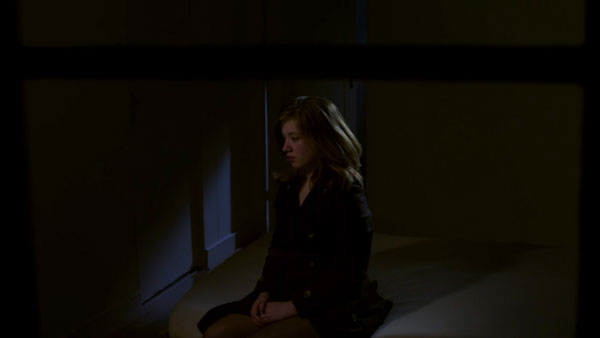
SYNOPSIS Out of the black night she emerges. Her waving soft fair hair reminds the glamour of the Hitchcock blondes. Her pale skin fragile like a china doll. She turns her head and looks at us.
BIOGRAPHY Alain Tjiong (The Netherlands, 1991) is currently a master student film at the School of Arts (KASK) in Ghent, Belgium. His films are first and foremost a means of personal expression, a way to communicate his feelings and his thoughts with a audience. While still operating in the field of narrative fiction, he is always searching for the bounderies of narrative cinema and trying to rediscover its (lost) relevance.

Ali Tnani
Even The Sun Has Rumors
Doc. expérimental | mov | couleur | 18:4 | Tunisie | 2017
Dans la ville minière de Redeyef (Tunisie), un lieu désaffecté mais encore chargé d'affects : l'Economat. Institué et géré par la Compagnie de Phosphate de Gafsa durant la période coloniale, ce lieu vide porte encore en ces murs les strates de l'ambivalence d'une histoire où les surfaces miroitent et racontent la venue, là où il n'y a rien, d'un paradis de confort pour une société accablée par l'enfer du travail de la mine. Mais en deçà des apparences, c'est une réalité plus obscure que l'Economat draine : celle de l'extension commerciale d'une mine qui exploite autant la terre que ses hommes. Lieu-vestige, l'Economat est un lieu d'une mémoire désertée mais qu'un regard vidéographique et poétique investit et remet au jour, par les clairs-obscurs d'un temps qui passe, par la voix d'un enfant vivant encore dans les souvenirs d'un homme de la mine, les espaces, les surfaces et les épaisseurs historiques d'un lieu fait récits.
Born in 1982 in Tunis, Ali Tnani is a Tunisian contemporary artist based in Tunis and Paris. He received his Masters in 2007 from the Institut Supérieur des Beaux-arts of Tunis and has since exhibited widely and participated in international residency programs. Tnani recently completed a two-year residency at the prestigious Cité Internationale des Arts in Paris. A leading practitioner in the field of conceptual art, Tnani is known for his multimedia installation work examining social issues in post-revolutionary Tunisia. With a practice that draws on installation, drawing, and photography, he explores the question of erasure and the negative in narratives of traces, memory and history in an era of hyper-connectivity. He has participated in various solo and group exhibitions internationally, including the 13th Biennial of Dakar, the Musée du Bardo in Tunis, PA the Plateforme de création contemporaine and Cité Internationale des Arts in Paris, La Terrasse Nanterre Art Space and le Château d'Oiron (France), the 5th Marrakech Biennial, the Musée de Carthage in Tunis, the Musée des Beaux-Arts de Mons (Belgium) and the Biennial of young artists from Europe and the Mediterranean in Skopje, Macedonia.
Rob Todd
cabinet
Film expérimental | 16mm | couleur et n&b | 10:0 | USA | 2007
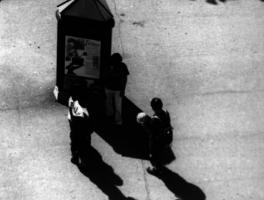
Une salle destinée à l'exposition d'objets ou ?uvres d'art. Une vue dans, à travers, et à partir, d'un ensemble de « cabinets », récipients à la fois actifs et passifs. Le film se penche sur ce qui rend possible l?intimité dans la médiatisation, grâce à une étroite attention aux mouvements, aux contours, aux textures et aux couleurs des objets et des scénarios proches du réalisateur. L?instable sentiment de présence ressenti entre le sujet, le spectateur, l?auteur et la machine est ce qui anime les transformations visuelles de ce film.
Robert Todd réalise des courts-métrages dans la région de Boston depuis 1990. Son corpus d??uvres, visuellement étonnantes et difficilement définissables ou classables, provient d?un lieu très personnel, calme, réfléchi, et curieux. Ses films empruntent diverses approches poétiques pour examiner les manières personnelles, politiques et sociales avec lesquelles nous choisissons de vivre.
Rob Todd
Free-Forms
Film expérimental | 16mm | noir et blanc | 7:0 | USA | 2013
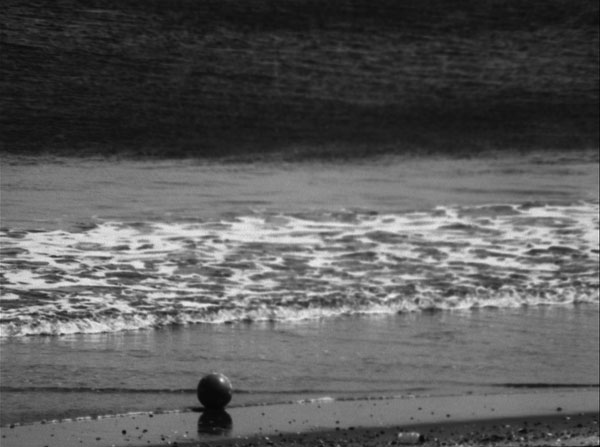
A small universe unbound.
A lyrical filmmaker as well as a sound and visual artist, Robert Todd continually produces short works that resist categorization. His visually stunning body of work, which comes from a deeply personal place, takes a variety of poetic approaches to looking at the personal, political, and social ways in which we choose to live. His large body of short-to-medium format films have been exhibited internationally at a wide variety of venues and festivals.

Brad Todd
dresden.cuba.clouds
Vidéo expérimentale | mp4 | | 3:15 | Canada, 0 | 2018
dresden.cuba.clouds is a generative video which incorporates imagery from the skies above the city of Dresden coupled with footage of clouded ice formations and video from the Museum of the Revolution in Havana. This small database of video is processed in realtime and is sensitive to a number of parameters derived from, and responsive to, an audio recording of the Cuban "sonic attacks" of 2017. The footage of the skies and ice in particular also speak to notions of veracity as they are indistinguishable from one another. As a number of the reported cases of aural and cerebral trauma were inaudible, so too is this work. The choice of imagery from Dresden is a nod to its primacy in the place it occupies in the historical record, most obviously as the site of the devastating aerial bombing campaign during WWII. It is also referencing Dresden`s post-war history as a center of the cold war headquarters of the east German KGB/Stasi security services, notorious for their psyops, whose legacy continues today, largely unseen (and unheard it would seem). As a parable, foil and metaphor for the machinations of power and policy, this work is intended as a mute and disquieting presence, background noise.
Brad Todd is an artist whose works span several fields of inquiry, principally involving the research/creation of responsive environments which implicate technology as a mirror, filter and catalyst for experience writ large in both an individually embodied sense and its attendant broader socio-political context. Having received an M.F.A. from Concordia University (Montréal), he began playing music in the post-punk band Sofa, which released the inaugural album and single on the critically acclaimed Constellation Records label. From the generative and reactive to the composed and performative, audio and sound design continues to play a key role in his works. Brad has received numerous grants and awards and has exhibited his works in galleries and media festivals in North America, South and Central America, Asia and Europe, including the 3rd Beijing International New Media Art Exhibition and Symposium in Beijing, Eyebeam, N.Y., Paços das artes, Sao Paulo, Brazil, The New Museum of Contemporary Art, N.Y., ISEA festivals in Nagoya, Japan, Belfast and Hong Kong and Cynet art in Germany. Presently he is an instructor in the Design and Computation Arts program at Concordia University in Montréal.
Rob Todd
Habitat
Film expérimental | 16mm | noir et blanc | 10:0 | USA | 2012
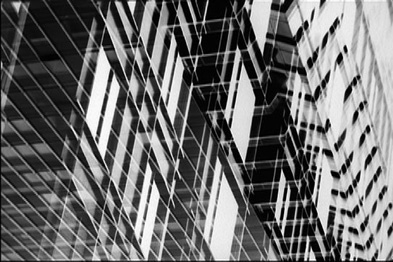
Locations that shift, split and spill over one another like sand in an hour glass. This is my world. A graphically-oriented spatial portrait, an in-camera layered tapestry: inversions and conversions that mark time with the chaos of my waking work-life, diffusing as it moves inward.
A lyrical filmmaker as well as a sound and visual artist, Robert Todd continually produces short works that resist categorization. His visually stunning body of work, which comes from a deeply personal place, takes a variety of poetic approaches to looking at the personal, political, and social ways in which we choose to live. His large body of short-to-medium format films have been exhibited internationally at a wide variety of venues and festivals.

Rob Todd
ICE
Film expérimental | 16mm | noir et blanc | 9:0 | USA | 2015
Following the feel of black and white rising and falling through caverns and across plains.
A lyrical filmmaker as well as a sound and visual artist, Robert Todd continually produces short works that resist categorization. His visually stunning body of work, which comes from a deeply personal place, takes a variety of poetic approaches to looking at the personal, political, and social ways in which we choose to live. His large body of short-to-medium format films have been exhibited internationally at a wide variety of venues and festivals. He teaches film production at Emerson College.
Rob Todd
LoveSong
Film expérimental | 16mm | couleur et n&b | 6:0 | USA | 2014
Threads, strings, love`s touch attuned, rising like the dawn in song.
A lyrical filmmaker as well as a sound and visual artist, Robert Todd continually produces short works that resist categorization. His visually stunning body of work, which comes from a deeply personal place, takes a variety of poetic approaches to looking at the personal, political, and social ways in which we choose to live. His large body of short-to-medium format films have been exhibited internationally at a wide variety of venues and festivals. He teaches film production at Emerson College.

Rob Todd
Phases of Noon
Film expérimental | 16mm | noir et blanc | 11:25 | USA | 2016
Watching four species of paradise perform in four phases of noonlight reflecting on four film rolls, in four acts
A lyrical filmmaker as well as a sound and visual artist, Robert Todd continually produces short works that resist categorization. His visually stunning body of work, which comes from a deeply personal place, takes a variety of poetic approaches to looking at the personal, political, and social ways in which we choose to live. His films have been exhibited internationally at a wide variety of venues and festivals. He teaches film production at Emerson College.

Rob Todd
Rayning
Film expérimental | 16mm | noir et blanc | 6:0 | USA | 2010
Light rayns-rains-reigns across a dream of tranquility that thickens, darkens and evaporates.
A lyrical filmmaker as well as a sound and visual artist, Robert Todd continually produces short works that resist categorization. In the past twenty years he has produced a large body of short-to-medium format films that have been exhibited internationally at a wide variety of venues and festivals and have won numerous festival prizes, grants, and artist?s awards. He teaches film production in the Boston area, and works as editor, sound designer/editor, post-supervisor or music producer on various broadcast and theatrically-released productions.

Robert Todd
Restless
Film expérimental | 16mm | noir et blanc | 0:0 | USA | 2016
Changing winds, shifting moods, stirring, awaiting…
A lyrical filmmaker as well as a sound and visual artist, Robert Todd continually produces short works that resist categorization. In the past twenty years he has produced a large body of short-to-medium format films that have been exhibited internationally at a wide variety of venues and festivals including the Media City Festival, San Francisco International Film Festival, Rotterdam International Film Festival, New York Film Festival, Le Rencontres Internationale, Black Maria Film Festival, Nouveau Cinema in Montreal, Cinematheque Ontario, the Harvard Film Archive, Pacific Film Archive, the Paris Biennial, Slamdance Film Festival, and others. His films have won numerous festival prizes, grants, and artist’s awards. He teaches film production at Emerson College in Boston.