Catalogue > Faire une recherche
Résultats pour : Catalogue 2022
Felipe Esparza
Cortar un arbol en luna verde
Doc. expérimental | 4k | couleur et n&b | 8:0 | Pérou | 2021
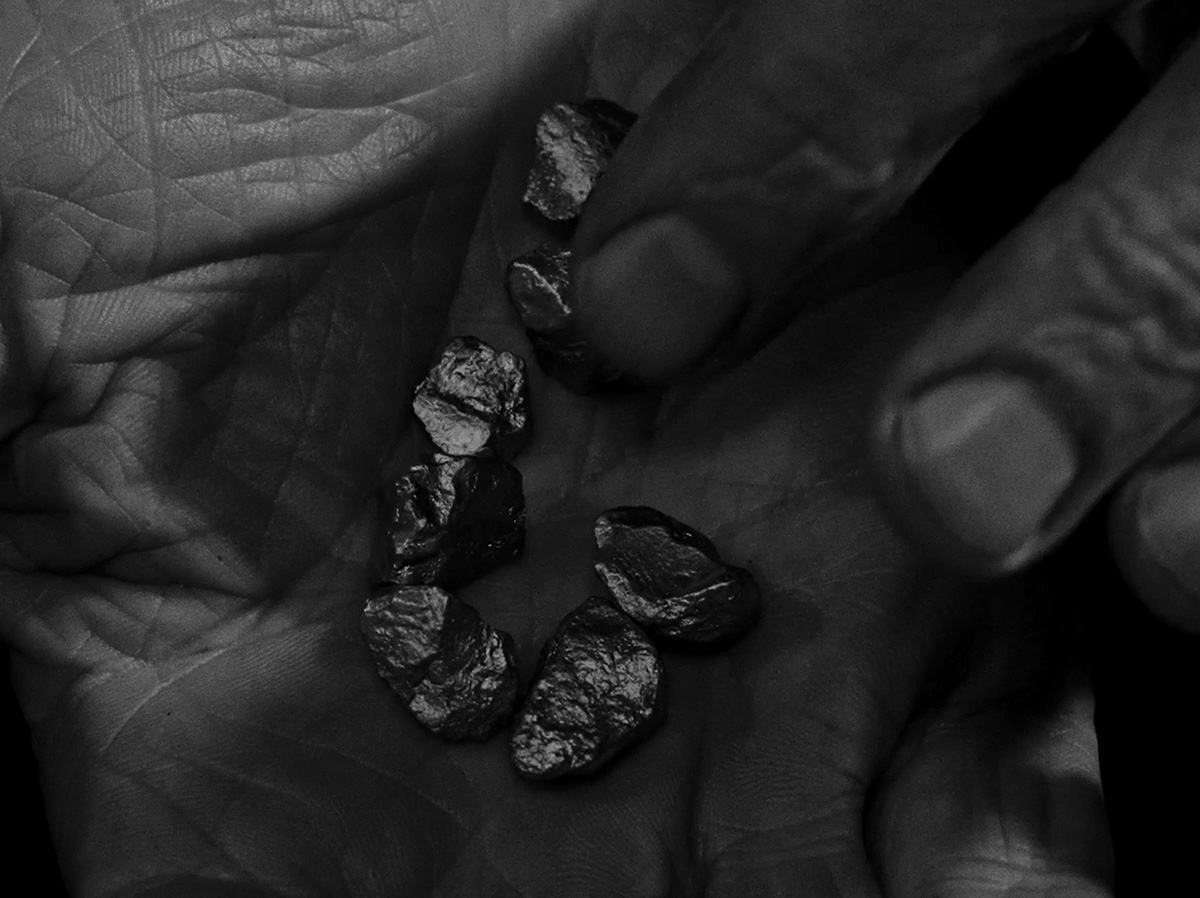
From the diary of Christopher Columbus, October 15, 1492: "And deviated from the land by two lombard shots, there is in all these islands so much depth that one cannot reach it. These islands are very green and fertile and have very sweet airs, and there may be many things that I do not know, because I do not want to stop to go through many islands to find gold". They had only been on land for four days. The gold never existed. It is only possible to suppose the sweetness of the air. The islands are still green.
Felipe Esparza’s work creates dynamic links and tensions between film, visual arts and video creation. In his projects there is an interest in social content coexisting with an exploration of themes such as nature, the sacred, non-verbal communication, its symbolic derivations, and the relationship between image and time, image and history, and image and truth. He approaches the complex representation of these themes by developing visual narratives in which the contemporary visual imagination cohabits with archives and with local and universal cultural codes, to the point of creating pieces of metalanguage. He is currently focusing on rituals, focusing on themes such as post-colonial remains around the sacred and the raw material with which cities are built as a sensitive archaeological gesture. His videos and video installations have been shown in national art centers such as: MALI, Luis Miró Quesada, Lugar de la Memoria, Ministerio de Cultura (Lima), Festival de Lima Independiente, Festival Lima Alterna, and international ones such as: Rencontres Internationales Paris/Berlin - New Cinema and Contemporary Art, Guangzhou Image Triennial (China), Shangyuang Museum of Contemporary Art (Beijing), Videobrasil Festival (Sao Paulo), Cámara Municipal de Lisboa (Portugal), Los Angeles Film Forum, HANGAR Art Production Center (Madrid), Buenos Aires Video Art Festival, Rotterdam International Film Festival, Uppsala, Molodist, Curtocircuíto, among others. Graduated from the Master of Mal de Foco at the Centro de la Imagen (Peru), Director at the Berlinale Talent Campus and selected artist at Le Fresnoy - Studio national des arts contemporains, France.
Ryan Ferko, Parastoo Anoushahpour, Faraz Anoushahpour
Surface Rites
Doc. expérimental | 16mm | couleur et n&b | 24:0 | Canada | 2021
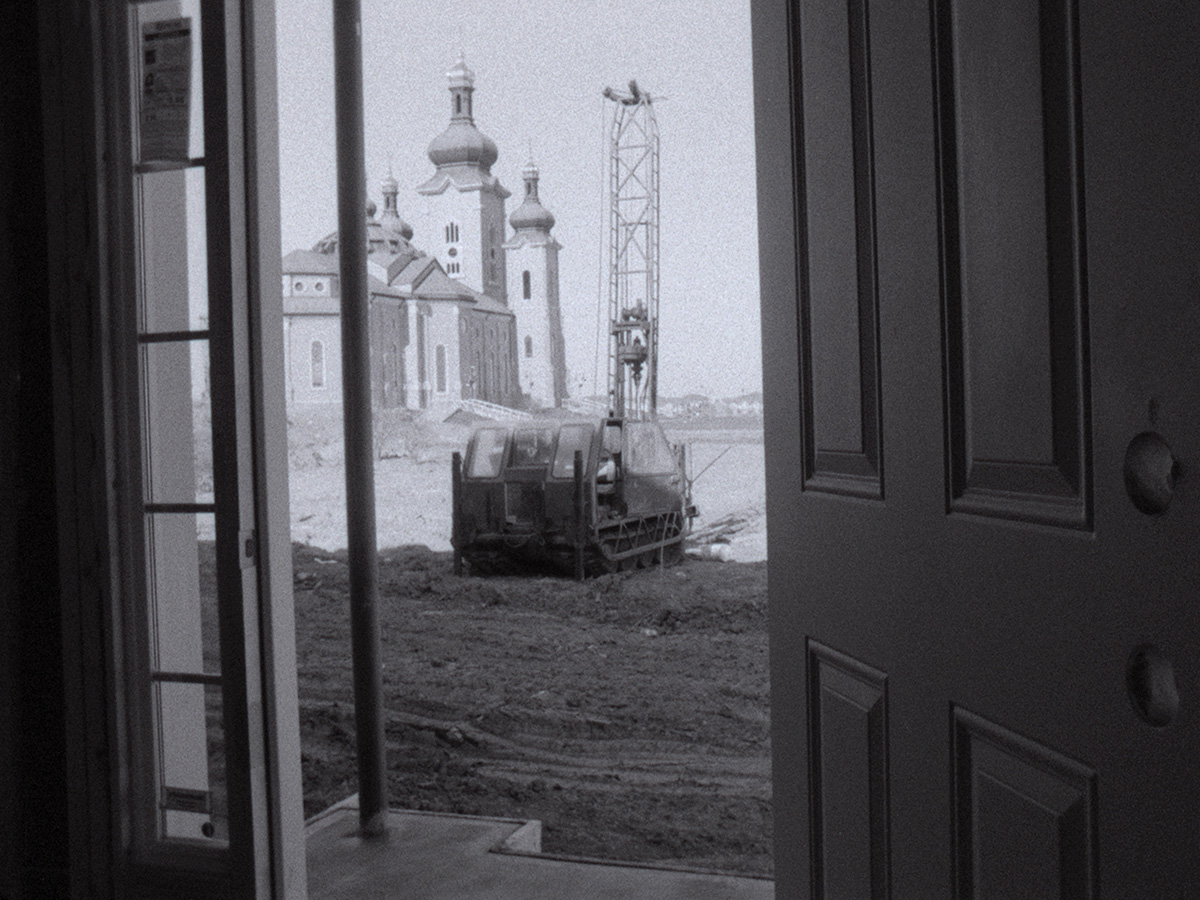
A young Slovakian immigrant opens a uranium mine near Elliot Lake in northern Ontario, and later builds a massive replica of the modest church from his childhood village. Stranded amongst suburban streets named after prize-winning Holstein cows, now sits this monumental cathedral, unfinished and private. Teenage zombies emerge from lakes and rivers around Serpent River First Nation, once poisoned with uranium waste. There is talk of eugenics at a Holstein pageant, and a retired dairy farmer and his wife remember a recurring dream where their work is never done.
Parastoo Anoushahpour, Faraz Anoushahpour and Ryan Ferko have worked in collaboration since 2013. Their shared practice explores the interplay of multiple subjectivities as a strategy to address the power inherent in narrative structures. Foregrounding the idea of place as a central focus, their work seeks to both decode their surroundings and trouble the production of images through speculative narration and dialectical imagery. Shifting between both gallery and cinema contexts, recent projects have been presented at Berlinale, Punto De Vista International Documentary Festival, Viennale, Media City Film Festival, New York Film Festival, Toronto International Film Festival, and others internationally.
Javier Fernández Vázquez
Anunciaron tormenta
Doc. expérimental | hdv | couleur | 87:0 | Espagne, Guinée Equatoriale | 2019
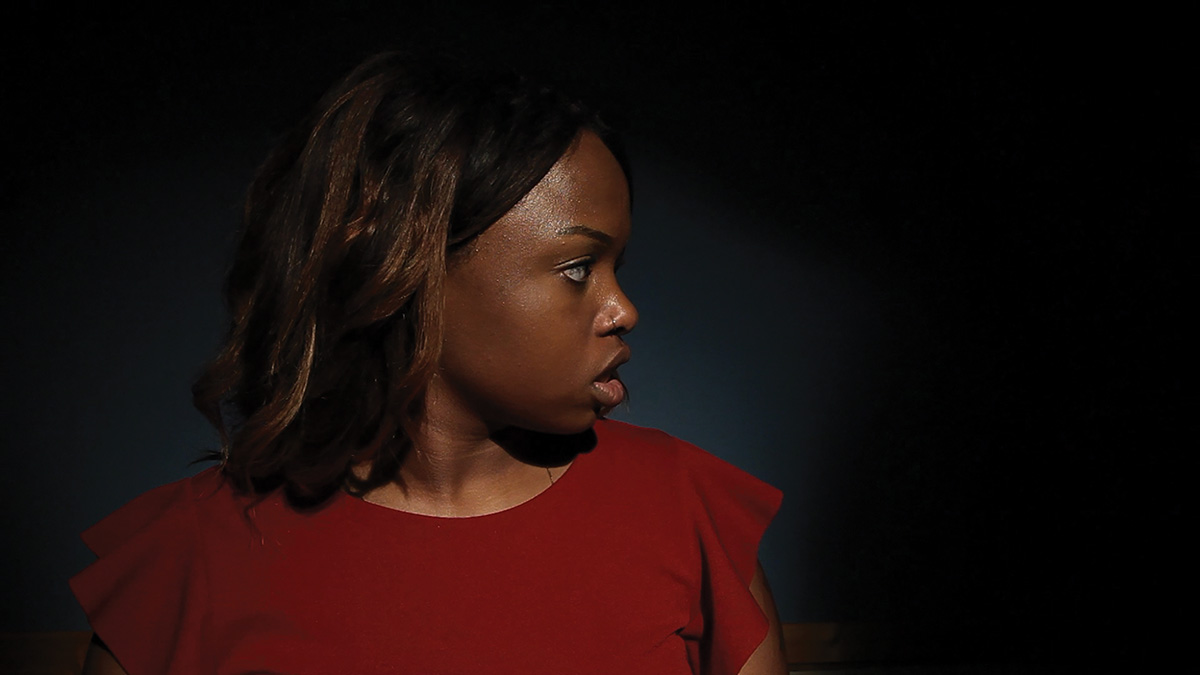
In 1904, Ësáasi Eweera, the last native Bubi leader who opposed the Spanish rule at the current island of Bioko, Equatorial Guinea, was detained by colonial guards and died three days later. By reenacting written texts through voiceovers, taping and studying native oral accounts and identifying historically charged sites, A storm was coming reflects on the gaps, silences, contradictions and falsehoods that colonial history is usually built upon.
Javier Fernández Vázquez is a filmmaker, anthropologist and visual culture researcher. In 2007 he directed his first short film Señales de Indiferencia / Marks of Indifference, which received the award to the best international short film in the Valdivia International Film Festival (Chile). In 2008, he founded with Luis López Carrasco and Natalia Marín Sancho the experimental and documentary film collective, Los Hijos. Their first feature-length film, Los materiales / The Materials (2010), won the Jean Vigo award to the best direction in Punto de Vista Pamplona International Film Festival 2010 and a special mention in FID Marseille 2010. Their next feature-length films as well as several shorts and video installations were selected by international film festivals and exhibited in contemporary art centres. Their work has also received special retrospective sections in Mar del Plata International Film Festival (Argentina) or Distrital (Mexico). In 2015, Javier Fernández Vázquez began an academic career in Film Studies and Visual Culture that has led him to research on issues related to history, memory, and colonialism. Anunciaron tormenta / A storm was coming (2020) is his first solo feature-length film.

Luca Ferri
Thousand Cypresses
Doc. expérimental | 0 | couleur | 13:0 | Italie | 2021
A man, inside his kitchen, is preparing his packed lunch. He has decided to visit The Brion Tomb, a monumental funeral complex, designed and built by the Venetian architect Carlo Scarpa, commissioned by Onorina Brion Tomasin, to honour the memory of the deceased and beloved relative Giuseppe Brion, founder and owner of the Brionvega company, located in the small cemetery of San Vito, in the hamlet of Altivole in the province of Treviso. Placed the food inside a polka dot plastic bag, we will find it walking inside the cemetery, observing with meticulous care the details designed by the Venetian architect, while in its silent head will resound the precious words pronounced by the architect in a conference held in the summer of 1978.
Luca Ferri (Bergamo, italy, 1976), self-taught, since 2011 has been dedicating to the writing, photography and direction of films presented to italian and international festivals, such as atlanta film festival, biografilm festival, curta cinema, documenta madrid, fidocs, filmmaker, gent international film festival, indielisboa, queer lisboa, punto de vista, pesaro film festival, cinemambiente, poff, taipei film festival, thessaloniki documentary festival, vilnius short film festival, filmer le travail, videoex and in museums and art galleries, such as spazio forma meravigli (milan), mambo (bologna), macro (rome) and schusev state museum of architecture (moscow). In 2013 the national film library of Rome organizes a restrospetictive of his works. his first feature film abacuc, released in 2015, was presented at torino film festival and mar del plata festival de cine. In 2016 colombi was presented at 73rd venice festival in the orizzonti section. In 2018 his work dulcinea was selected at 71st locarno film festival in competition in the section signs of life while pierino was presented at 61st dok leipzig. In 2020 the house of love is presented at 70th berlinale in section forum, selected to take part in the competition berlinale documentary award and receives the mention to 34th teddy awards; his work sì is presented at 77th venice international film festival, orizzonti section. In 2021 his last work a thousand cypresses was presented at 67th international short film festival Oberhausen and at the 57th mostra internazionale del nuovo cinema di pesaro. won the award for best film at the 46th laceno d'oro in the section "eyes on the city."
Lina Filipovich
So Blue
Vidéo | mp4 | noir et blanc | 2:26 | Biélorussie, France | 2021
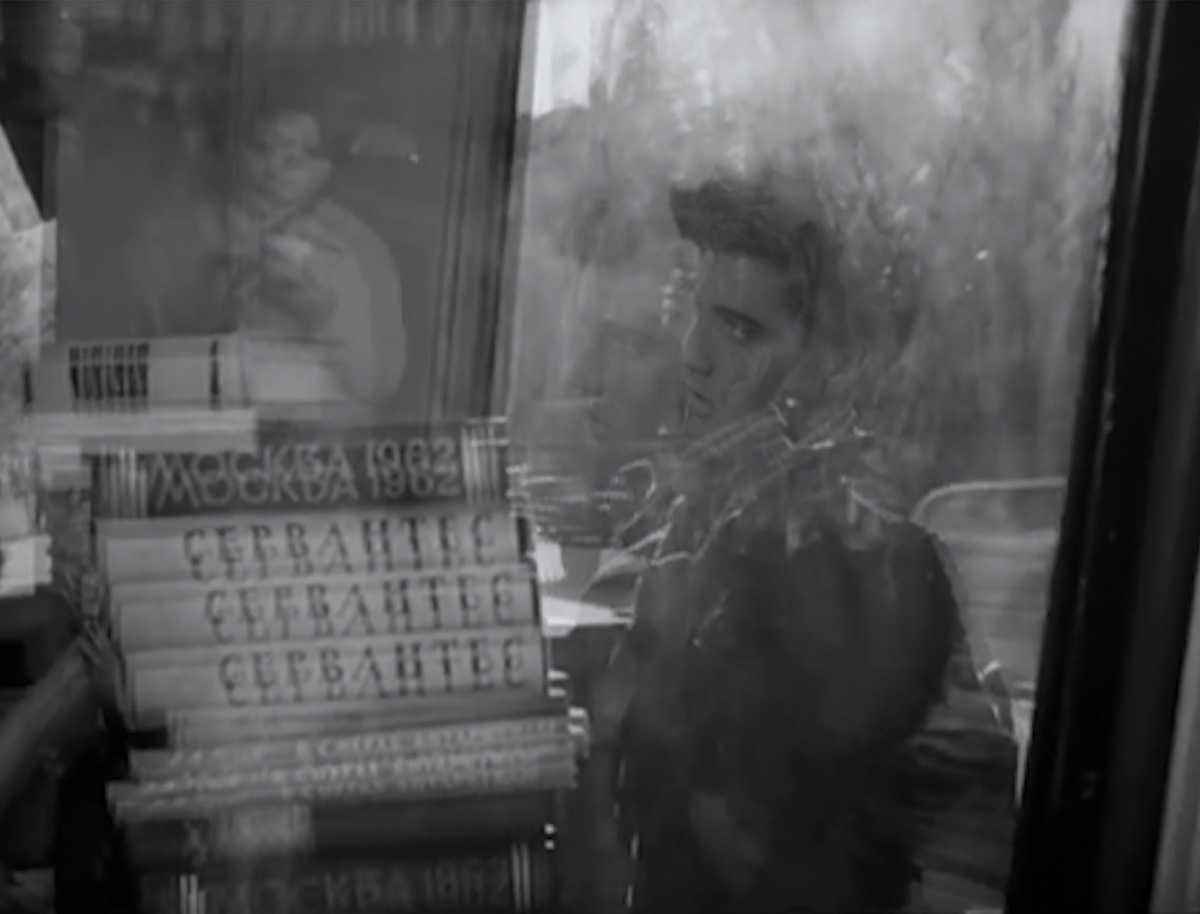
Created in collaboration with IRCAM, « So Blue » represents a false documentary on the trip of Elvis Presley to Minsk, Belarus in the 1960s. The basis and the main element of this video is a song created by me using the sound collage technique. I used a dozen fragments from different Elvis songs, changing the key, working with tempo and harmony to recreate his « unreleased song ». The lyrics were composed by the same method, using archetypal words and phrases, typical for songwriting of the 50 - 60s. The video also presents a collage made from fragments of the fictional film "I'm 20" by Marlen Khutsiev and from frames of documentary films about Minsk. This technique allowed me to create a video mystification about Elvis’s fictional travel to my hometown (Minsk). The cross between fictional and documentary cinema, between a sound collage and a false composition generates a hybrid work that provokes feelings of strangeness, deceiving the viewer about credibility of this work. This confusion gives place to the questioning from the part of the viewer concerning the documentary representation.
Lina Filipovich is an artist and musician based in Paris, France. Her works explore the relationship between audio and visuals and span a variety of media, including found footage films, experimental electronic music, painting, silkscreening and performance. Working with samples and loops, Lina Filipovich uses techniques of sound collage, musical montage, cut-up and appropriation.
Holly Fisher
Out Of The Blue
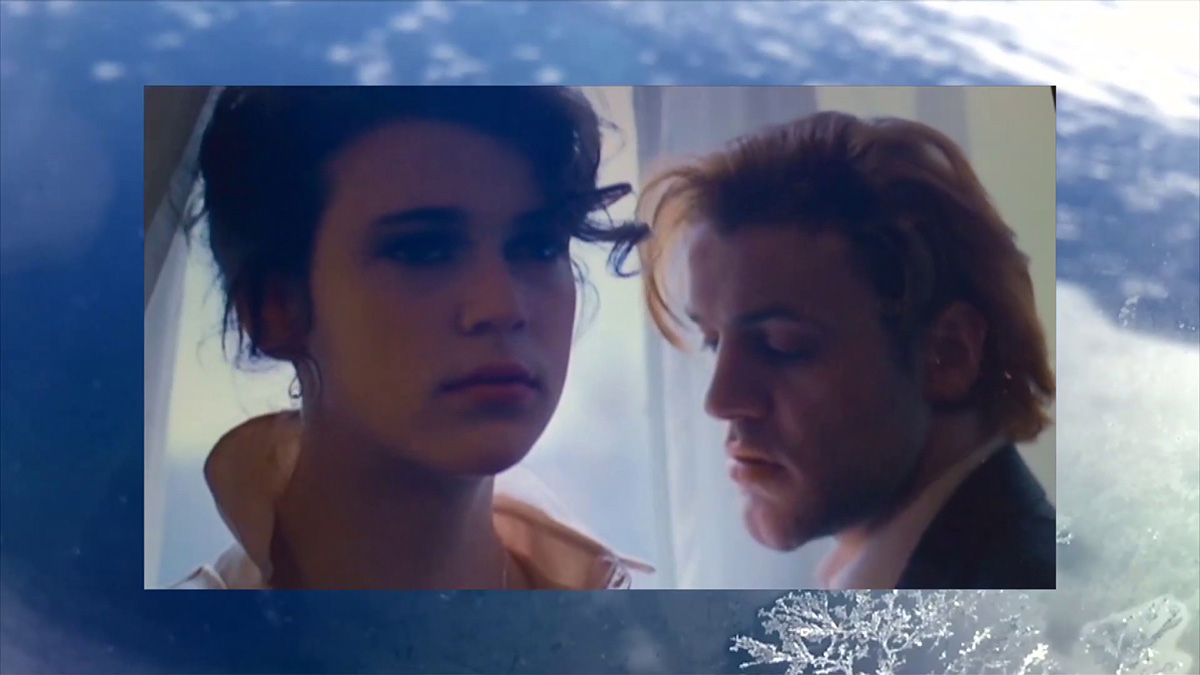
Film expérimental | mp4 | couleur et n&b | 90:0 | USA | 2021
"Out Of The Blue" is a living diary and structural breakthrough in the New York filmmaker's quest for a visual language equal in both thought and expression. Mischievously yet rigorously edited text and images, both Fisher's own plus "borrowed" materials, are laced within infinite blue sky images filmed from the airplane window as the filmmaker travels from Berlin to JFK Airport in NYC. Her passage home links timetravel with mind-journey. Multiple storylines play within conflicting time zones. Memories are juxtaposed with historic disasters (especially the bombing of Hiroshima, and the 9/11 destruction of the World Trade Center) or personal feelings - especially sorrow, since OUT OF THE BLUE took shape within the Coronavirus pandemic lockdown. Featured music is Lois V Vierk's "Words Fail Me", in its entirety, a work inspired by Vierk's eye witness of the World Trade Center towers crashing down, twenty years ago on 9/11.
Holly Fisher received a B.A. in Asian Art History at Columbia University in 1964, and a M.A. in Cinema Studies at New York University in 1982. She lives and works in Tribeca, New York City. Holly Fisher has been active since the mid-sixties as an independent filmmaker, printmaker, teacher, and film editor. She was the editor of Christine Choy and Renee Tajima-Peña’s feature documentary Who Killed Vincent Chin?. This film about a racially motivated Detroit murder case of 1982 was nominated for an Oscar in 1989. Her experimental short works and long-form essay films –– explorations in time, memory, trauma, and perception –– have been screened in museums and film festivals worldwide including Whitney Museum Biennials; Centre Pompidou, Paris; Film Forum, Japan; and two world premieres in The Forum of the Berlinale, Germany. She has received multiple grants from The Jerome Foundation, NYSCA, CAPS, and The American Film Institute, among others. Her silent film Rushlight won the Grand Prize in the 1985 Black Maria Film Festival, and her feature Bullets for Breakfast received “Best Experimental Film Award” at the Ann Arbor Film Festival, 1992. Her solo retrospectives at The Museum of Modern Art (1995) and more recently Anthology Film Archives (2019), were both entitled THE FILMS OF HOLLY FISHER. Fisher completed two new works during the past year of Coronavirus Lockdown, one long-form and one short; Softshoe for Bartok (23 minutes) will be premiered at The Brooklyn Film Festival held in early June 2021; her two feature works Out of the Blue (2021) and Deafening Silence (2012) concerning Burma under dictatorship, will be available for free streaming by Anthology Film Archives, June 16 - 29, 2021. The AFA will also sponsor multiple in-house screenings of Out of the Blue and her feature documentary A Question of Sunlight over the weekend of 9/11. This event has added intrigue since the two films variously frame the creative response of each of us involved –– New York avant-garde composer for both works Lois V Vierk; NY Downtown artist/protagonist José Urbach featured in A Question of Sunlight; and filmmaker Holly Fisher –– because each of us witnessed first hand from our own windows, the attack on the World Trade Towers twenty years ago, Sept 11, 2001.
Tor-finn Malum Fitje, Thomas Anthony Hill
Ad Nauseam: The End of Kitchen Politics
Vidéo | mov | couleur | 5:13 | Norvège | 2019
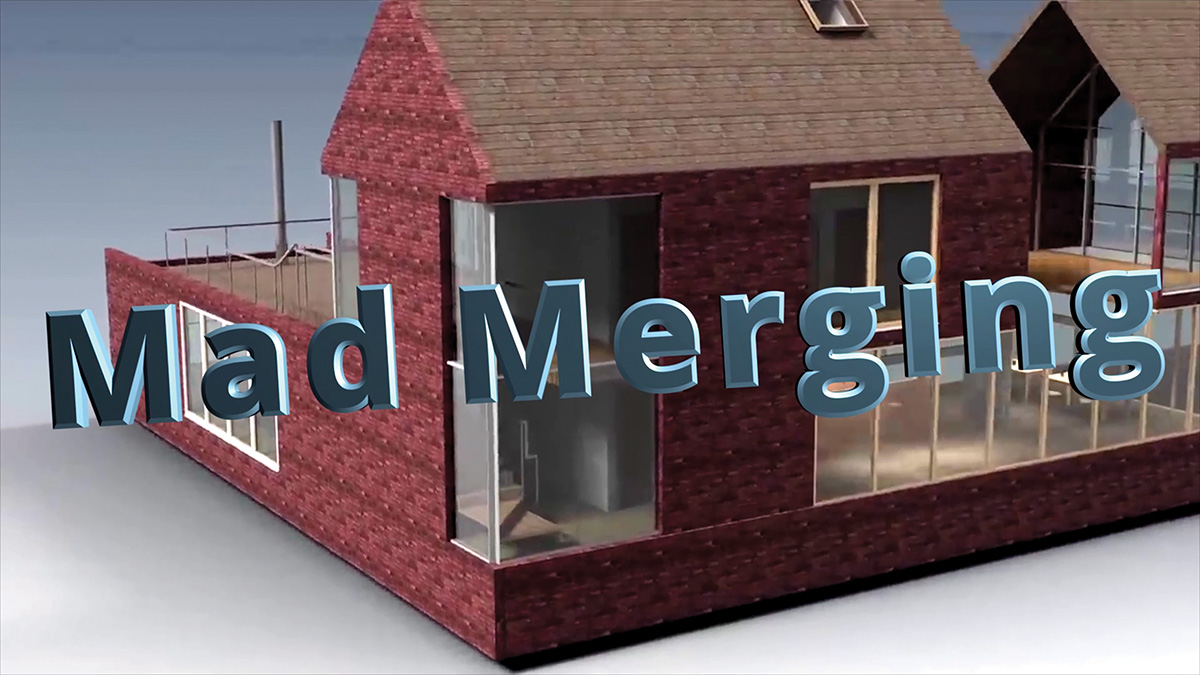
The age-old dispute between the open and the closed kitchen solution have reached a dramatic climax where “The Separatists” face the “The Open Kitchen Radicals” in one final heated battle. From there the film also debates the existential properties of the bar, as in opposition to the conservative breakfast table, and attempt to explain differences in psychological temperament through people’s preferences of kitchen worktop. The End of Kitchen Politics is the second film of the umbrella project Ad Nauseam, a series of essayistic videoss portraying a society where doubt no longer exists. In this day and age, neurologists have discovered the center of consciousness, the open kitchen solution has been ruled mandatory by law, and every new parent follows the hand book How To Raise a Child obediently. While Christianity and Neo-atheism have merged to form The Faitheist Church, a universal understanding of all the rules of football have been reached. And yet, this society is permeated by a chaos so disruptive that it’s hard for people even to breathe. Through hyper stylized 3D animations and what they call “clear-cut narration”, video artist duo Tor-Finn Malum Fitje and Thomas Anthony Hill comment on the current paradigm of truth, and attempt to challenge the post-modern notion that all ways of looking at the world can be equally true.
Tor-Finn Malum Fitje (1989) was born in Porsgrunn and grew up in Bergen, Norway, where he first studied Film Production, specialising with a Bachelor’s degree in Directing. He went on to do a BFA at Konstfack, before earning his Master of Fine Arts at the Royal Institute of Art in Stockholm, graduating in 2016. Currently based in Oslo, Malum Fitjes work comprises essayistic video and audio installations, as well as text-based art. He has screened his films at the Modern Museum in Stockholm, the Gallery of Photography in Oslo and is currently working on three new films called Ad Nauseam: National Treasures Explained, that will be exhibited at the opening of the new National Museum in Oslo. Thomas Anthony Hill (1989) born in Coffs Harbor, Australia, grew up in Bergen, Norway and has lived in Oslo since 2017. In 2014 he graduated with a Master’s degree in Comparative Literature at the University of Bergen and has since then worked as a film critic and translator. Together with Malum Fitje he has created the works Hyphenic (2018) and Ad Nauseam (2020), the latter currently being exhibited at Galleri Golsa in Oslo.
Gwendolyn Audrey Foster
Dreaming in Aspect Ratio
Doc. expérimental | 35mm | couleur | 2:28 | USA | 2021
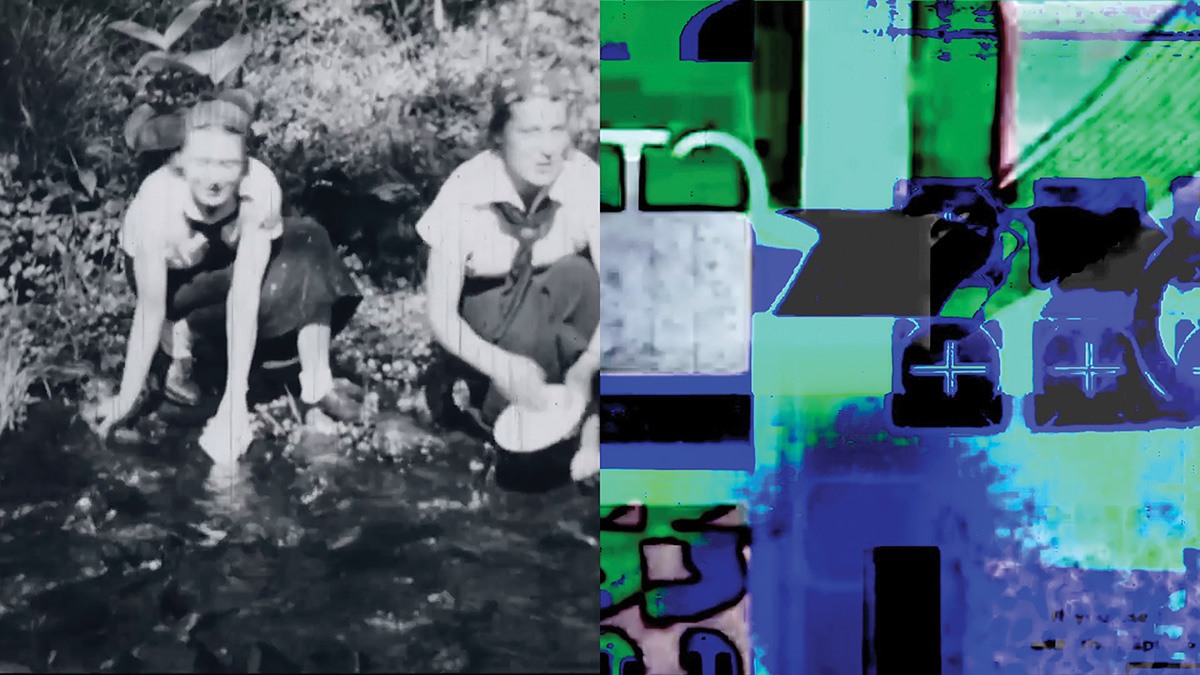
DREAMING IN ASPECT RATIO (2021) is a highly personal hand-made Queer diary film poem and experiment in disrupted stereoscopy; an adopted "found" home movie and film-poem fabricating a lost queer childhood regained. A playful and lyrical self-portrait in found queer memories and a film that subverts traditional norms and expectations. A cinépoem from Surrealist détournement of found footage, DREAMING IN ASPECT RATIO borrows and appropriates queer childhood memories and film diaries in a brazen and alchemical manner that disrupts cis-gendered and straight models of self-portraiture and auto-ethnography. The film asks the question, "Can memories be replaced, queered, and appropriated into an auto-ethnographic work?" The playful manipulation of different aspect ratios nods to a life spent enthralled by the poetry of cinema and film art. Bright colors collaged with black and white imagery of the joy of queer female friendships evoke dreaming and reverie; creating a lost queer childhood regained.
Gwendolyn Audrey Foster is an award-winning filmmaker and author who works in Super 8, 16mm and archival images. Her films have premiered at the Museum of Modern Art (MoMA, in New York) as well as many other museums, art galleries and international film festivals. Foster is Professor Emerita of Film Studies, Queer LGBT+ Studies, Women's/Gender Studies, and the author of “Experimental Cinema: The Film Reader” and numerous volumes in cinema and cultural studies. Foster's experimental and documentary films are archived at the UCLA Film Archive in LA, and the Museum of Modern Art (MoMA) in NY, as well as many other film archives around the world.
Soren Thilo Funder
GAME Engine (Orange Bulletproof Kids)
Vidéo | hdv | couleur | 30:0 | Danemark | 2021
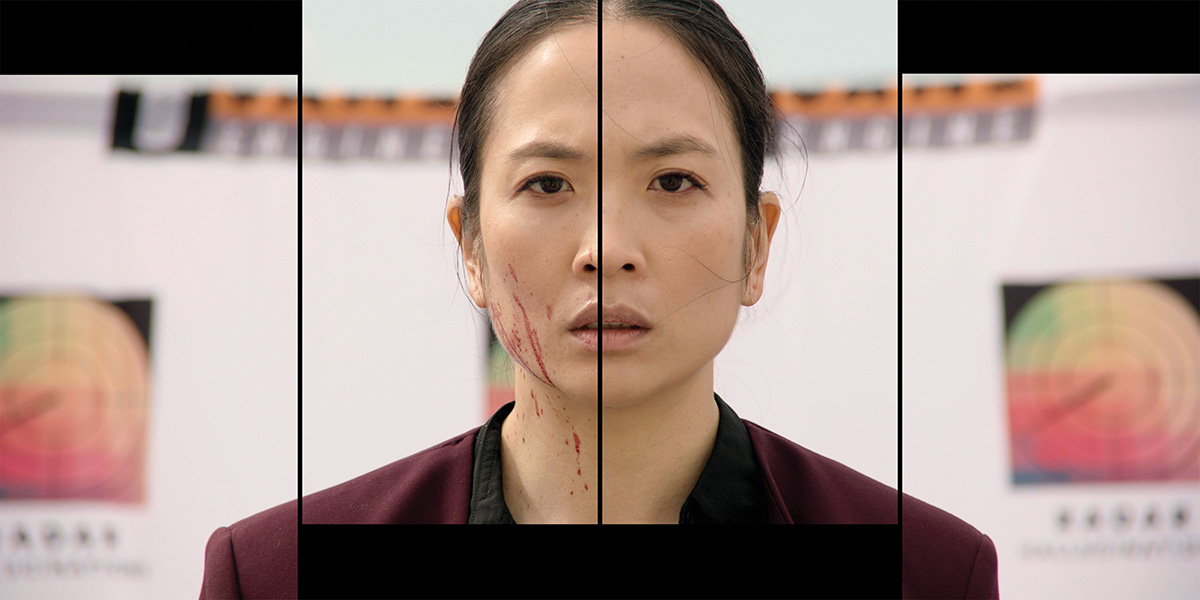
In GAME Engine (Orange Bulletproof Kids) we are invited to an exclusive press meeting at an undisclosed location. Here, the spokesperson of a notorious game developer, presents a brand new game engine. A game engine that promises revolutionary in-game experiences, the layout of which are never fully disclosed in protection of its intellectual property value. This oral evasive manoeuvre leads the spokesperson into complex landscapes in which game and reality, body and avatar, the sensorial and the informational, blend together. Parallel to this fiction scenario, a group of CS:GO athletes are recreating their game experiences, using their bodies as vehicles for motoric and visual memory.
Soren Thilo Funder is a visual artist working primarily with video and installation. His works are mash-ups of popular fictions, cultural tropes and socio-political situations, projections and histories. They are narrative constructions insisting on new meaning forming in the thin membrane negotiating fictions from realities. Invested in written and unwritten histories, the paradoxes of societal engagement, temporal displacements and a need for new nonlinear narratives, Thilo Funder proposes spaces for awry temporal, political and recollective encounters. Soren Thilo Funder’s previous exhibitions include solo presentations at Turku Museum of Art, Museum of Contemporary Art Zagreb, Tranen Contemporary Art Center, Overgaden – Institute for Contemporary Art and Den Frie - Centre for Contemporary Art, Copenhagen. He was furthermore represented at the 19th Biennale of Sydney, eva International Biennial of Visual Art - “After The Future”, 12th Istanbul Biennial, Manifesta 8 – Parallel Events and 6th International Liverpool Biennial. He is currently doing a PhD in Artistic Research at The Art Academy - Department of Contemporary Art, University of Bergen.
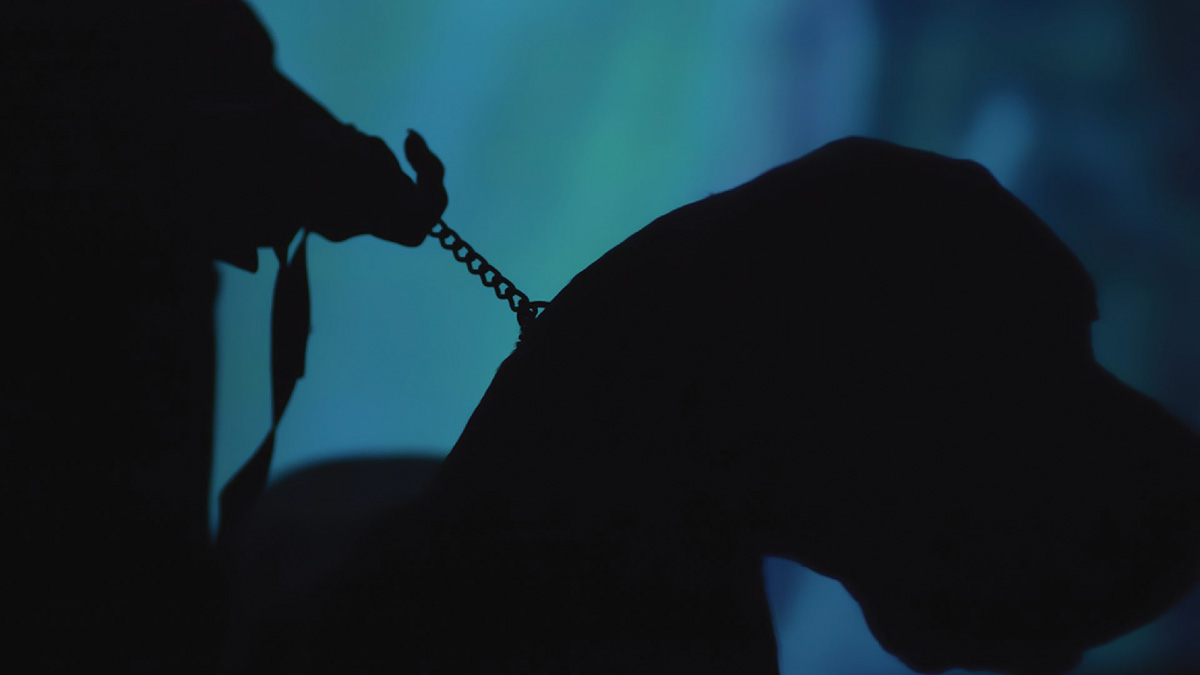
Valentina Furian
Ciacco
Vidéo | hdv | couleur | 6:50 | Italie | 2021
When the day has declined, the night overwhelms us. An unusual bestiality envelops us, it does not belong to us but attracts us to itself. Ciacco develops from a reinterpretation of the sixth canto of the Inferno of the Divine Comedy, where Dante and Virgilio enter the third circle. In the Tartarean circle gluttonous sinners are scourged by a violent rain and tormented by the gigantic and frightening dog Cerberus, feral triad. Ciacco is the gaze through which we are spectators and actors, as well as dogs: the eyes of a damned incessantly hit by a cyclical storm of images, instincts, rain. A damned who lies beneath the beastly torment inflicted by Cerberus, a gigantic, frightening three-headed dog. Three, the number is repeated: triple is the beast, triple the setting in which it navigates. As if we were in the amphitheatre of Dante’s hell, sitting on Ciacco’s lap, we observe the spectacle from the third tier of benches. On stage, the torture of the damned is revealed by the staging itself and by the epic character of the natural environment. The sequences in the film become the viewer’s exploration in “this long night of the world” that we are experiencing.
Valentina Furian (b. 1989, IT) is an Italian visual artist based in Milan, Italy. She is working mainly with moving images. She studied Visual Arts at University Iuav of Venice. Her research investigates the relationship between human and nature. She is particularly interested in exploring animal domestication as a form of human domination as well as human domestication in relation to social rules. Her films have been exhibited in institutional and indipendent spaces such as: Pearl Art Museum, Shanghai, CN; VISIO - European Programme on Artists’ Moving Images; Collezione FARNESINA, Mattatoio, MAXXI - Museo nazionale delle arti del XXI secolo, Rome; MUSE - Science Museum of Trento; UNA galleria, Piacenza; Fondazione Francesco Fabbri, Treviso; MAMbo - Museo d’Arte Moderna di Bologna; The Blank Contemporary Art, Bergamo; Museo Civico di Bassano del Grappa; Case chiuse, Careof and ViaFarini, Milan; Fondazione Bevilacqua la Masa and Microclima, Venice, IT; Sunaparanta Center for Contemporary Art, Goa; Italian Cultural Institute in Mumbai, IND; Goyki3 Art Incubator, Sopot, PL.

Inti Gallardo
Mnemoc(y)ne
VR expérimental | super8 | couleur | 0:0 | Argentine, Chili | 2019
In a black cubic space of virtual reality based on panels of ATLAS MENOSYNE created by Aby Warburg, the user will be able to activate different fragments of a personal memory filmed in Super8mm, generating his own montage and relations between the sequences that are projected in the space. The exterior limit of the physical space is defined by the same films exposed in their original materiality. The project pretends to expand with time, adding images to an atlas in motion, that reports Nomadic life of the fragmented time-space and the no existence of digital borders. Programer: Lucian A. Meister. Sound design: Sonoscopia.
Inti Gallardo has a degree in Cinema (University of Córdoba), and a Master in Media Art (University of Chile / Polytechnic University of Valencia). It is part of the ANCORA AV work cooperative and the CEIS8 group (Experimentation in analog film formats). Her work is linked to the use of materialities, archives, memory and the crossing between analog and digital media in different aesthetic and political configurations.
Dora García
Si Pudiera Desear Algo
Doc. expérimental | hdv | couleur | 68:0 | Espagne, Belgique | 2021
If I could wish for something takes its title from a Friedrich Holländer's Weimar song. The lyrics of ‘Wenn ich mir was wünschen dürfte’ are sung from the perspective of a woman who seeks to be happy, but not too happy, because sadness has become a refuge for her. This feeling is typical of the fraught ‘love story’ between feminism and socialism, between love and revolution. ‘The woman question’ has been tiptoed around by every revolutionary movement since the nineteenth century. These decades of disillusionment are part and parcel of feminist history.
Dora García lives and works in Oslo. She currently teaches at Oslo National Academy of the Arts, Norway. She has represented Spain at the Venice Biennale in 2011 and was present again in the Venice Biennale 2013. She took part in the 56th Venice International Art Exhibition, dOCUMENTA(13) and other international events such as Münster Sculpture Projects in 2007, Sydney Biennale 2008 and Sao Paulo Biennale 2010. Her work is largely performative and deals with issues related to community and individuality in contemporary society, exploring the political potential of marginal positions, paying homage to eccentric characters and antiheroes. These eccentric characters have often been the center of her film projects, such as The Deviant Majority (2010), The Joycean Society (2013) and Segunda Vez (2018).
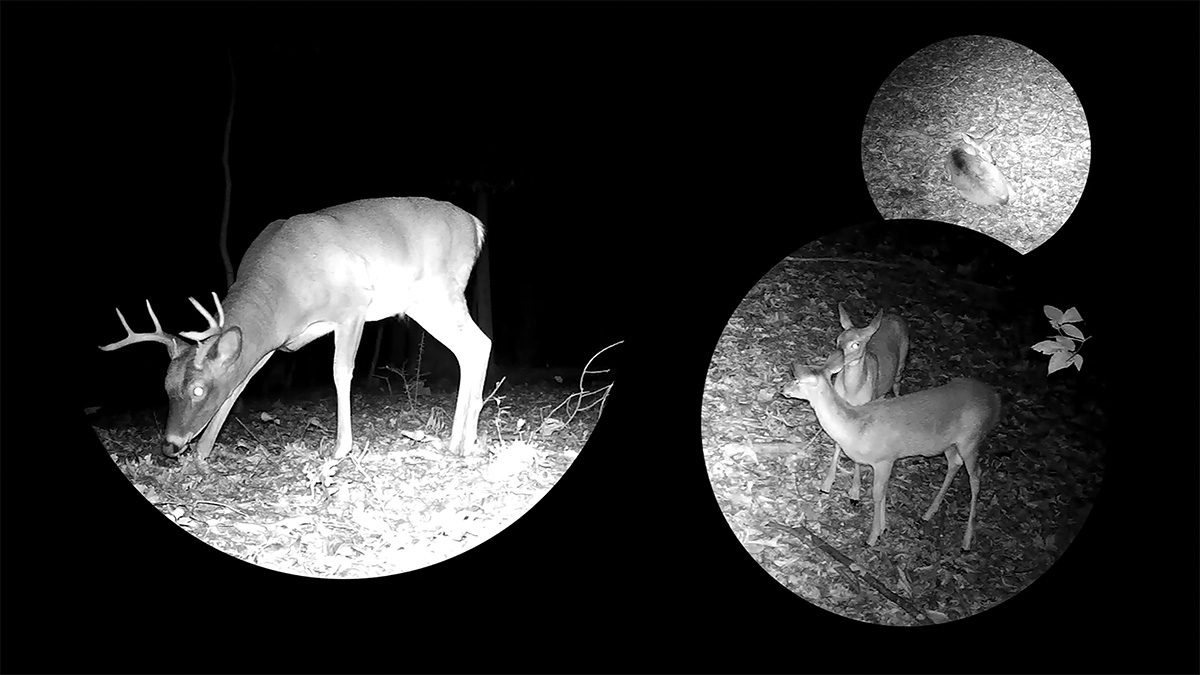
Matthew Garrison
Night Life
Vidéo | hdv | noir et blanc | 14:23 | USA | 2021
"Night Life" provides a glimpse into the behavior of wildlife after dark and serves as a reminder of the unwitting persistence of nature. For this piece a trail camera was moved periodically to capture various angles and shots at night throughout the seasons. The animals (mostly deer) were then framed within circles against a black background and choreographed into compositions that follow their relationships with one another while creating new interactions by compressing a year’s worth of footage into fourteen minutes. "Night Life" is a meditative portal through which a nocturnal world parallel to ours reveals the resolve of its inhabitants within an everchanging environment. In the process, our relationship to the rhythms of nature is linked to personal associations, memories and metaphors.
Matthew Garrison was born in Albany, NY, and grew up in Chicago. After living and working in New York City for eleven years, he moved to Pennsylvania to teach art and technology at Albright College. His work is exhibited and screened internationally including New York City, Korea, India, Panama, Brazil and Singapore. Garrison's art explores a dialog among intimate space, landscape and the environment.
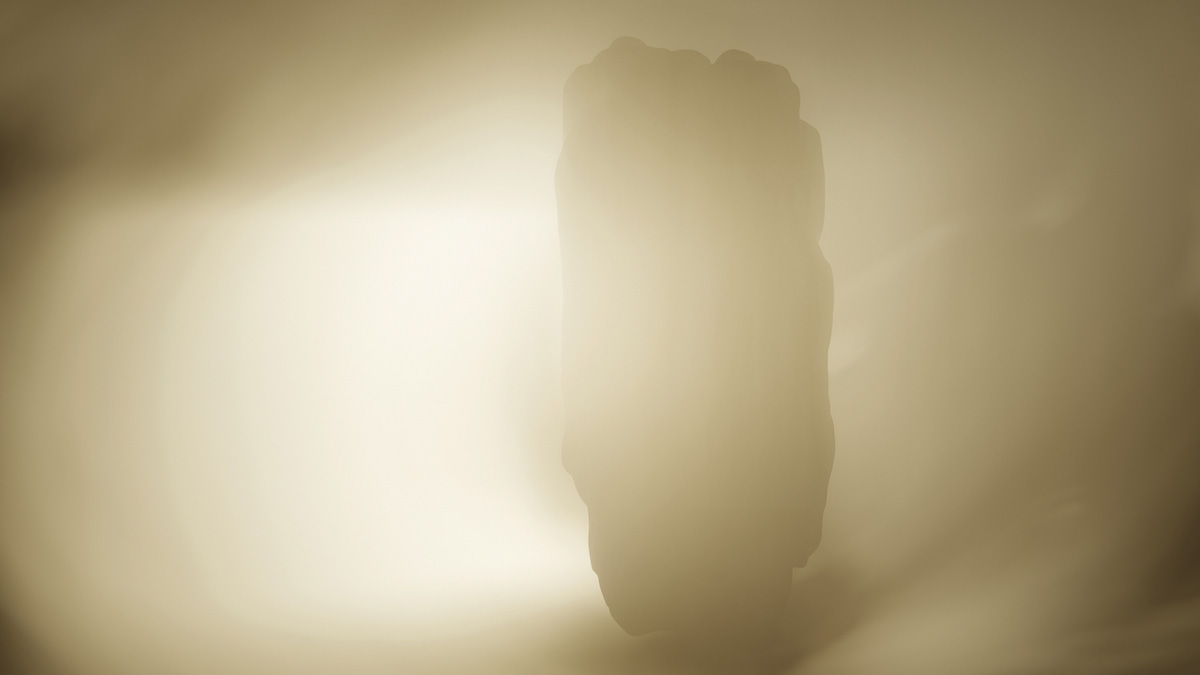
Philippe-aubert Gauthier, Tanya St-Pierre
Modabe: mod stream
Vidéo | hdv | couleur | 15:0 | Canada | 2021
« Modabe: mod stream » est une animation basée sur une performance sonore de Philippe-Aubert Gauthier produite en temps réel par synthèse modulaire matérielle. En plaçant la performance sonore dans un environnement virtuel et dans un monde imaginaire, l'animation propose un montage vidéo-sonore hétérogène par jump-cut peuplé de références populaires et bruitistes. Initialement créées et produites dans le contexte particulier que l’on connaît de 2021, la performance en studio, sans audience, et la construction virtuelle vidéographique sont non sans rappeler les salles de concerts et de cinéma désertes de 2021.
Philippe-Aubert Gauthier se penche sur les interactions entre arts, cultures, sciences et technologies. Ses œuvres explorent la construction sociale et culturelle des technologies : techno-fiction ou archéologie des médias qui sondent les passés et futurs technologiques. Il s’intéresse au matérialisme numérique, à la spéculation comme méthode. Les formes qu’il déploie appartiennent aux arts sonores et numériques. Il est professeur à l’École des arts visuels et médiatiques de l’Université du Québec à Montréal et directeur de la recherche artistique du Centre for Interdisciplinary Research in Music, Media and Technology. Tanya St-Pierre est artiste en arts visuels, sonores et numériques. En explorant les relations possibles entre les arts visuels ou numériques et la narration, elle transforme divers systèmes d'altération de la narration en propositions poétiques et conceptuelles. Propositions qui, s'inscrivant dans un schéma plus général, déjouent et questionnent les notions de représentation et d’artefacts culturels. On trouve dans ses œuvres des traces déchirées de narrations et de fictions. Gauthier et Saint-Pierre travaillent souvent en duo pour créer des installations et des vidéos, ou même des performances. Ils vivent et travaillent à Montréal (Canada).

Saurav Ghimire
Barking Dogs
Fiction | 4k | couleur et n&b | 14:0 | Népal | 2020
A guy, who is alone but has free time, has trouble deciding what to do. Serendipitously, he finds an escape. Its company brings a sense of relief in his life. But one always has to find something to do next.
My name Saurav Ghimire and I am from Nepal. I have been pursuing my career in filmmaking as a director since last three years. I studied B.A. in Psychology (2017) from Tribhuvan University (Nepal). Then I completed a diploma course in Film Direction (2020) from Everest Film Academy (Nepal). During this period I made 3 short films and a graduating film. After completing my film degree, I started working in the feature length project “Gau Ayeko Bato” as an assistant director. In-between I also worked as an assistant director in a medium length project “Dolma” made under the banner of Simal Cinema. Previously, I had worked as a PR/ Social media manager (2017) for Kathmandu International Mountain Film Festival (Nepal).
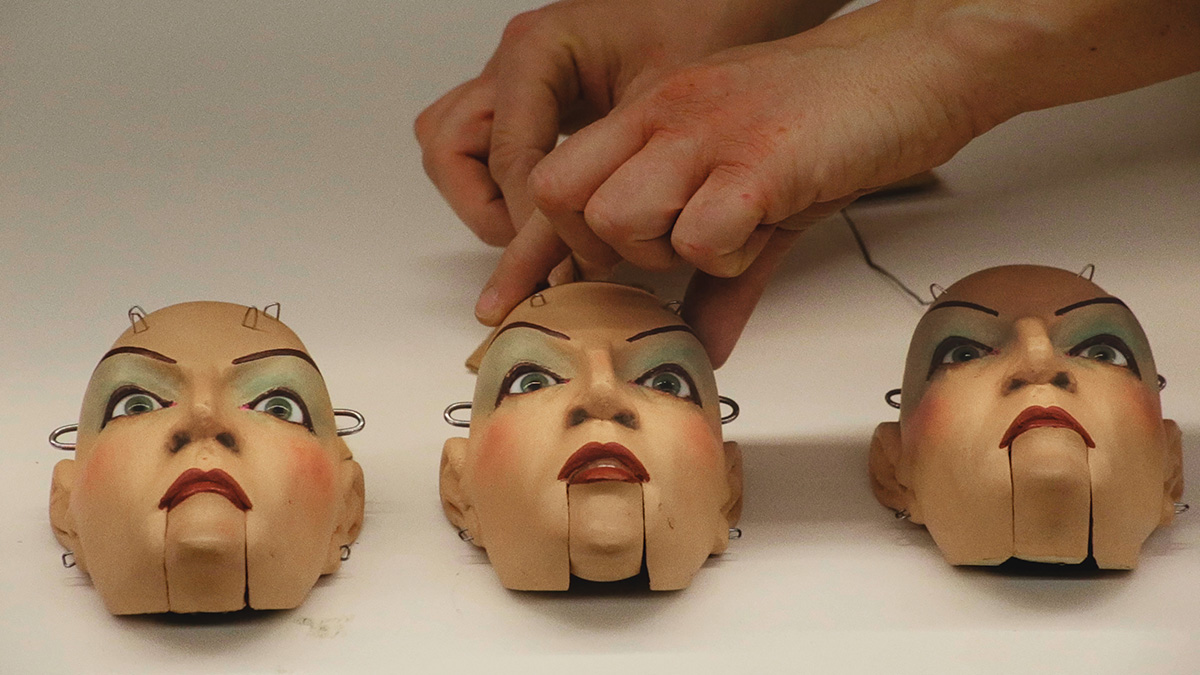
Riccardo Giacconi
Diteggiatura
Doc. expérimental | hdv | couleur | 16:55 | Italie | 2021
The "Carlo Colla & Figli Puppet Company" is one of the most ancient and famous puppet companies in the world. The Company's Atelier in Milan houses more than three thousand puppets. "Diteggiatura" recounts, in a reverse chronology, a year spent in the Atelier of the Colla Company, following the rituals of a community called upon to accompany the life of anthropomorphic objects. The film is based on a text, performed by actress and director Silvia Costa and written by an artificial neural network.
Riccardo Giacconi has studied fine arts at the IUAV University of Venezia. His work has been exhibited in various institutions, such as Grazer Kunstverein (Graz), ar/ge kunst (Bolzano), MAC (Belfast), WUK Kunsthalle Exnergasse (Vienna), FRAC Champagne-Ardenne (Reims), tranzitdisplay (Prague), Fondazione Sandretto Re Rebaudengo (Turin) and the 6. Moscow International Biennale for Young Art. He was artist-in-residence at the Centre international d'art et du paysage (Vassivière, France), lugar a dudas (Cali, Colombia), MACRO Museum of Contemporary Art of Rome, La Box (Bourges, France) and Künstlerhaus Büchsenhausen (Innsbruck, Austria). He presented his films at several festivals, including the New York Film Festival, Venice International Film Festival, International Film Festival Rotterdam, Visions du Réel and FID Marseille, where he won the Grand Prix of the International Competition in 2015. He co-founded the collective listening festival ‘Helicotrema’ and the audio storytelling studio ‘Botafuego’.
Eva Giolo
Flowers blooming in our throats
Film expérimental | 16mm | couleur | 8:37 | Belgique, Italie | 2020
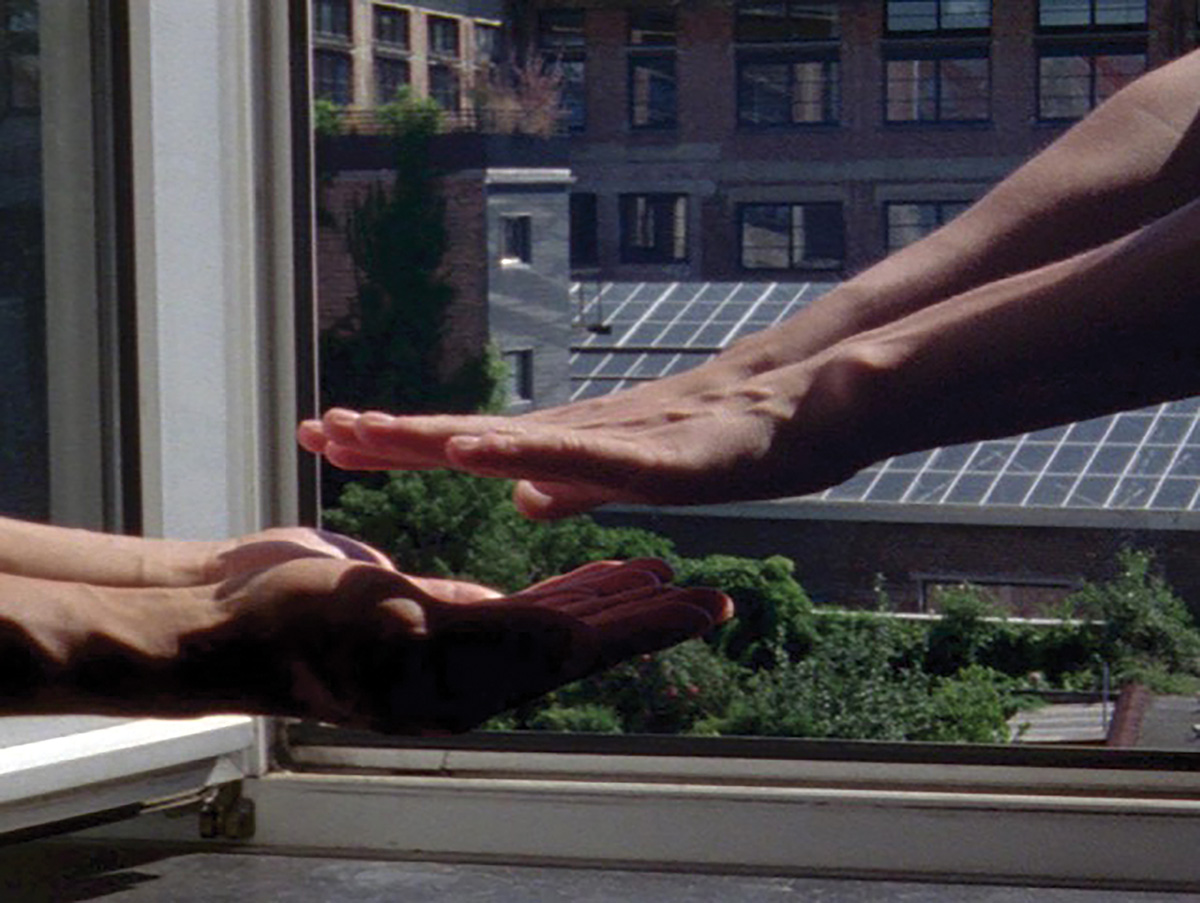
Everyday occupations, some domestic tools, fruits, light, rope and many hands. Hands that dig in the earth, that cut, that cook, that touch, rip, wash, squeeze, erase, press, push. The sound of domestic spaces and its silence. Red flowers one summer. Flowers blooming in our throat is a cinematic poem in response to the worldwide pandemic of 2020. Commissioned and produced by in between art films for the project Mascarilla 19 – Codes of Domestic Violence. Filmed in 16mm just after the lockdown caused by COVID-19, Flowers blooming in our throats is an intimate, poetic portrait of the fragile balances that govern everyday life in a domestic setting. The artist films a group of her friends in their own homes, performing various small actions in accordance with her instructions. Giolo chooses to walk a shifting line where gestures remain symbolically ambiguous, expressing a kind of violence that is not immediately recognizable. Hands try to support or escape, but also to grip or strike, in a subtle interweaving of sounds and references that adds to the viewer’s sense of tension and unease. A dialogue of gestures, made up of repeated visual sequences where time is marked by the spinning of a small toy top, as unstable and precarious as the balance of a relationship.The artist repeatedly uses a red filter on her lens, creating a conceptual device that relies on an element of abstraction to conceal and transfigure the image. The mechanical insertion of the filter over the lens thus becomes the simulation of a violent act, immediately changing the way we perceive and remember an action we have seen before.This coexistence of opposites can also be found in the title, which metaphorically suggests how the beauty of a natural phenomenon—and implicitly, love – can turn into a suffocating force. Leonardo Bigazzi
Eva Giolo (Belgium) is an audio-visual artist working in film, video, and installation, born in Brussels in 1991. Her work places particular focus on the female experience, employing experimental and documentary strategies to explore themes of intimacy, permanence and memory, along with the analysis of language and semiotics. Giolo uses her camera to capture the “mundane” moments of the everyday to reveal their hidden depth. After pursuing music at East London University (2011), she received her BA in Media Arts (2015), and MA in Fine Arts, Royal Academy Fine Arts Ghent (2016). Her films, installations and other projects have been widely exhibited at festivals, museums and galleries internationally, including Sadie Coles HQ, WIELS, MAXXI–National Museum of 21st Century Art, BOZAR Centre for Fine Arts, Palazzo Strozzi, Festival Internacional de Cine Independiente de La Plata Buenos Aires, Viennale, Museum of Contemporary Art Antwerp, Kunsthalle Wien, International Film Festival Rotterdam, Kunstmuseum Den Haag, Lago Film Festival, Viennale, FIDMarseille, Courtisane Film Festival, Rencontres International Paris Berlin, Cinéma du Réel and Punto de Vista among others. Giolo’s work is in the permanent collections of Fondazione In Between Art Film (Rome) and Het Huis Van Alijn (Ghent), Museum M (Leuven). Her film Flowers Blooming in Our Throats (2020) was nominated for the European Film Awards (2020), and received Grand Prize from This Is Short, a collaborative online event co-presented by the International Short Film Festival Oberhausen, Vienna Short Film Festival, and other European organizations. She is the recipient of a VAF Wildcard Prize (2016), the Cedric Willemen Award (2019) and special recognition from the Vordemberge – Gildewart Foundation (2020). She was an artist in residence at the Higher Institute for Fine Arts (2018–2020), SeMA NANJI in Korea and WIELS Centre for Contemporary Art (2020) and the CASTRO studio program (2021). In 2022, Eva will be an art resident at Fogo Island Arts in Canada. Eva is co-founder of the Moving Image Atelier (Belgium) and co-founder and Artistic Director of Elephy, a production and distribution organization for film and media art, with Rebecca Jane Arthur, Chloë Delanghe, and Christina Stuhlberger. She lives and works in Brussels, Belgium.
Christoph Girardet, Matthias Müller
Misty Picture
Film expérimental | 4k | couleur | 16:32 | Allemagne | 2021
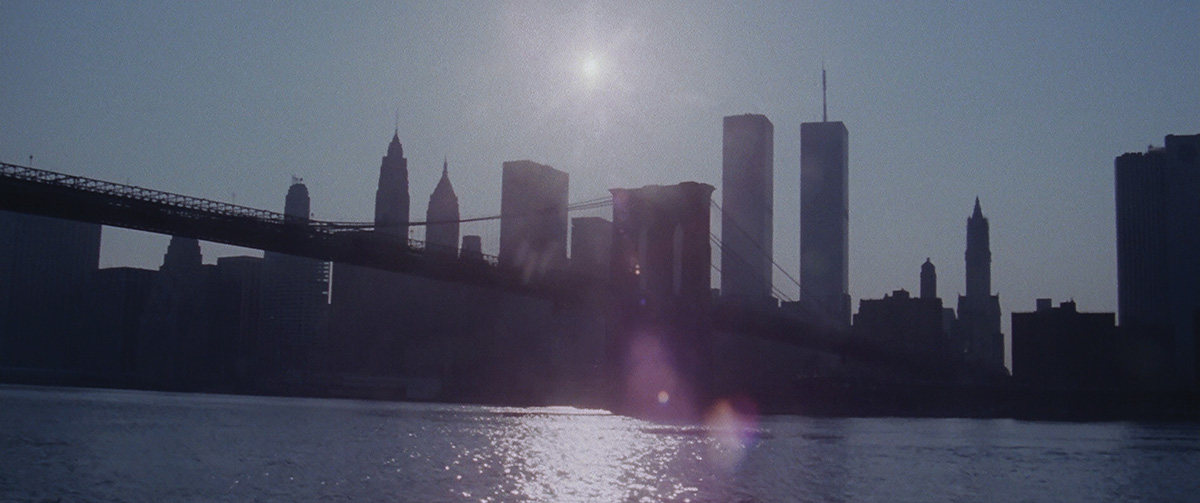
Twenty years ago, the towers of the New York World Trade Center collapsed. The endlessly repeating television images of this event were preceded by manyfold stagings of the building, either as a highly symbolic icon, a speculative destruction fantasy or merely as a spectacular backdrop. In Misty Picture, such fictional motifs string together: city symphony, disaster movie and medial trauma therapy become one.
Christoph Girardet, born in Langenhagen, Germany, in 1966. Lives in Hannover. Studied at the Braunschweig HBK. Matthias Müller, born in Bielefeld, Germany, in 1961. Lives in Bielefeld and Cologne. Studied at the Bielefeld University and at the Braunschweig HBK. Collaborative works since 1999
Helidon Gjergji, Fatos Qerimi
Info Jazz
Performance multimédia | mp4 | couleur | 26:49 | Albanie | 2019
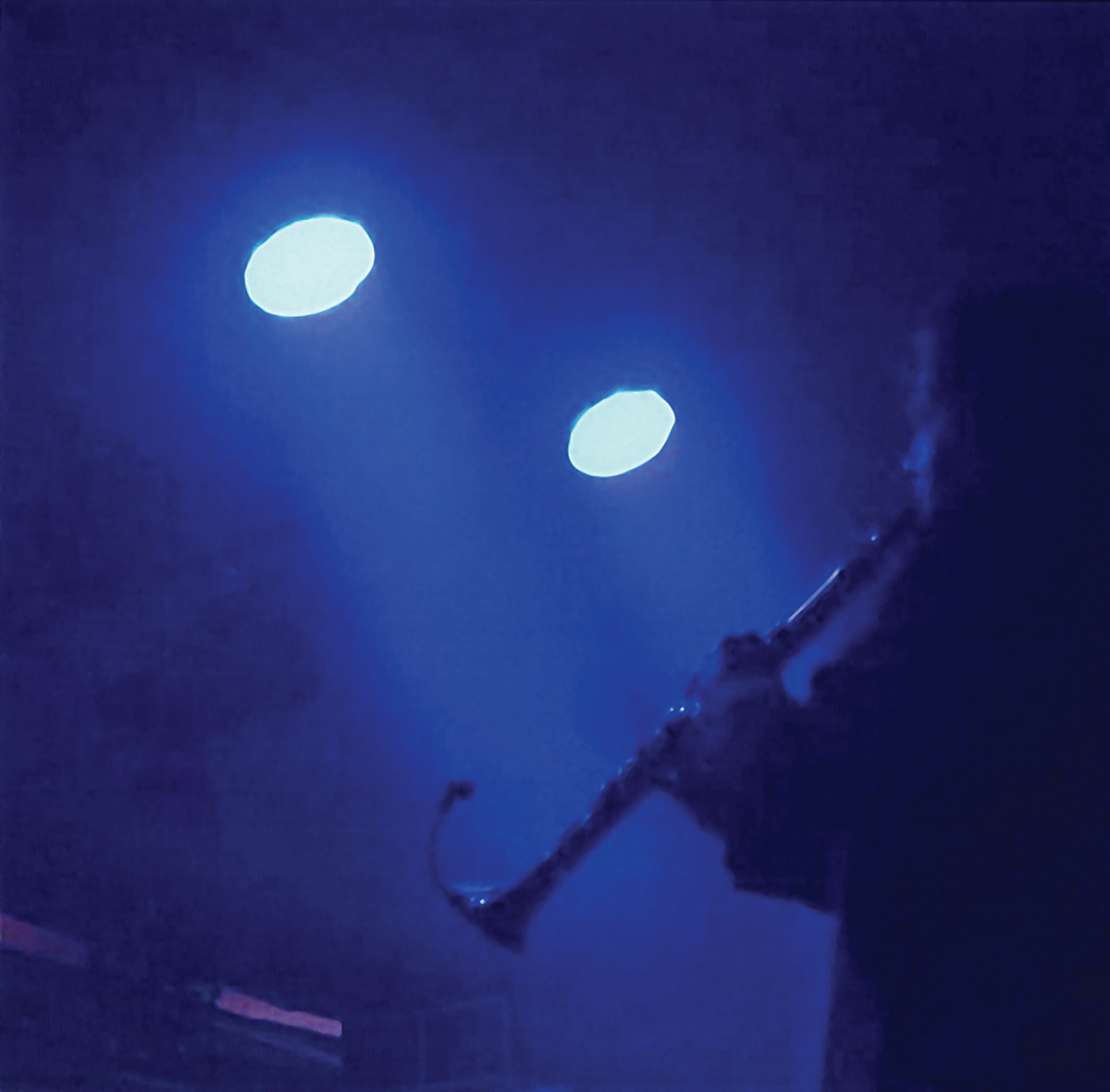
This project is a sound and visual performance that has its origins in the ubiquitous digital tones of the cell phones comprising the soundtrack of our contemporary life. These sound waves provide the raw material for this piece, which recreates an urban space saturated with an ever-changing cacophony of electronic alerts. In order to add an appropriately surreal dimension to this soundscape, the space is filled with theatrical smoke that creates an atmosphere, which, like the public, is trapped between the physical and digital realities. In this performance Fatos Qerimaj, a contemporary musician, plays the clarinet in a jazz-like dialogue with the ring tones, turning the mobile phones into avatar-instrumentalists of an unpredictable cyborg ensemble. If jazz once responded spontaneously to the rhythms and beat of life, in this piece it still does, with the rhythm of our lives now being the sounds of our digital devices.
Helidon is a contemporary artist, who was born in Albania and currently lives in NYC. He studied art at the Academies of Fine Arts of Tirana and Naples as well as Northwestern University. Over the course of his career he has worked in a variety of mediums, and has shown his work internationally, in venues such as Venice Biennale, Manifesta, Tirana Biennale, Festival of Ideas of the New Museum, and Ludwig Museum. He has taught in several universities and lectured about his work at Harvard, Columbia and Parsons. His work has been reviewed in Artforum and Flash Art. Qerimaj is a distinguished contemporary Albanian musician who plays the clarinet, composes, conducts, and serves as an artistic director and university professor. Born in Albania, he graduated in clarinet and composition from the Academy of Fine Arts in Tirana, where he now works as a professor. He has performed in many concerts throughout Europe and beyond. He is the artistic director of a few festivals in Tirana, such as the Jazz Festival, Clarimpro Festival, and the Magic Flute Festival. Among other prizes, in 2005 he was awarded the Kult Prize for the best Albanian musician of the year.
Jean-luc Godard, Jean-Pierre Gorin
Letter to Jane: An Investigation About a Still
Doc. expérimental | 16mm | couleur et n&b | 52:0 | France | 1972
Lettre à Jane (Letter to Jane: An Investigation About a Still) est un film de Jean-Luc Godard et de Jean-Pierre Gorin, réalisé sous les auspices du Groupe Dziga Vertov, datant de 1972 et qui constitue en quelque sorte un pendant à Tout va bien. Par l'utilisation de retours en arrière, ce film expérimental de 52 minutes condense un ensemble de réflexions sur la force de l'image à partir d'une seule et même photographie de Jane Fonda prise pendant la guerre du Viêt Nam. Ce fut la dernière collaboration entre Godard et Gorin.
Niklas Goldbach
1550 San Remo Drive
Vidéo expérimentale | mov | couleur | 18:0 | Allemagne | 2017
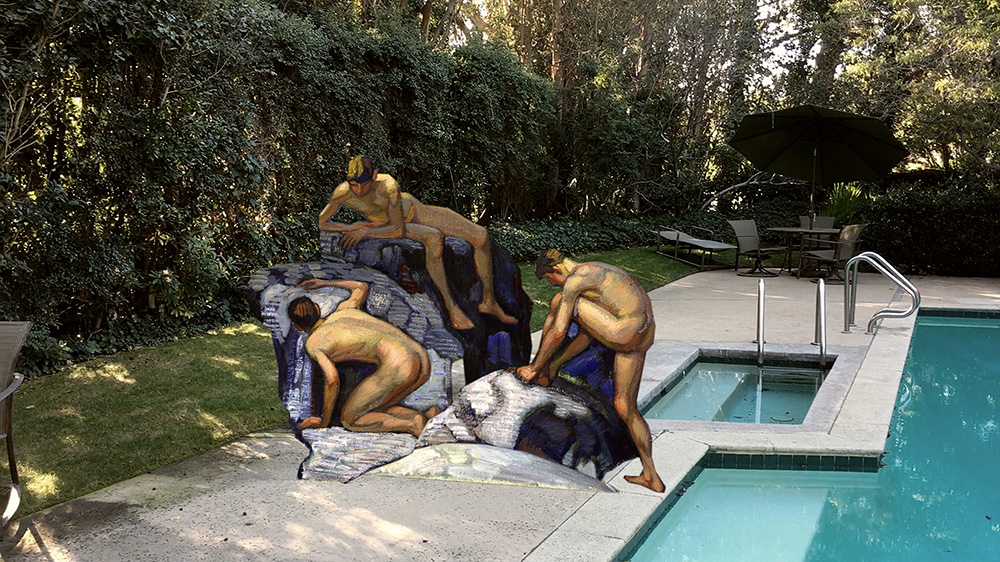
"1550 San Remo Drive" was filmed in February 2017 on the premises of the Thomas Mann House in Pacific Palisades, California, USA. The video features quotes from Thomas Manns diaries (1940-1943), architect JR Davidson and advertisements from the real estate companies which marketed the house, before it was bought by the German government in November 2016 for $13.25 million. The video features detailed shots of the uninhabited house before its recent renovation, quotes from Thomas Manns diaries (1940-1943) and advertisements from the real estate companies which marketed the house. "1550 San Remo Drive" reflects on personal, economical and representational desires and aspirations.
Niklas Goldbach, born in Witten, Germany, lives and works in Berlin. After studying Sociology at Bielefeld University and "Photography and Video" at the Unversity of Applied Sciences Bielefeld, he was awarded with the "Meisterschüler" degree at the University of the Arts Berlin in 2006. In 2005 he received the Fulbright Grant New York and majored in the MFA program of Hunter College, New York City. In his videos, photographies and installations Goldbach is involved in the relation between architecture and ethics within modernist traditions and postmodern cities. Established between reality and fiction, Goldbach's works use architectural concepts and elements to create ambiguous perceptions of man-made environments. In his recent videos and photographs, he appropriates urban environments as stages to examine the relationship between subjectivity and hierarchical societal structures within and beyond the nation state through the lens of a globally expanding interconnectivity of these sites. In his earlier film works, his often duplicated protagonists have colonized epic stages of modern architectural complexes, postmodern urban environments or alleged paradises defying civilisation, all finding their commonality as places oscillating between utopia and dystopia. Niklas Goldbach received several scholarships (among others Stiftung Kunstfonds Bonn 2010, Arbeitsstipendium Bildende Kunst des Berliner Senats 2013, Projektförderung des Berliner Senats 2014, Dresdener Stipendium für Fotografie 2016, Villa Aurora Los Angeles 2017) and presented his works in numerous solo shows, group exhibitions, and festivals in venues such as the Museum der Moderne, Salzburg, Museo Reina Sofia, Madrid, Mori-Art Museum, Tokyo, Neuer Berliner Kunstverein n.b.k., documenta 14 public programs, Berlinische Galerie - Museum of Modern Art Berlin, Cornerhouse, Manchester, National Taiwan Museum of Fine Arts, Centre Pompidou, Paris, Houston FotoFest Biennial 2016 and the Short Film Festival Oberhausen.