Catalogue > Faire une recherche
Résultats pour : Tout le catalogue
Kyoko Kasuya
Diary of Eve's Land
Documentaire | 4k | couleur | 40:5 | Japon | 2025
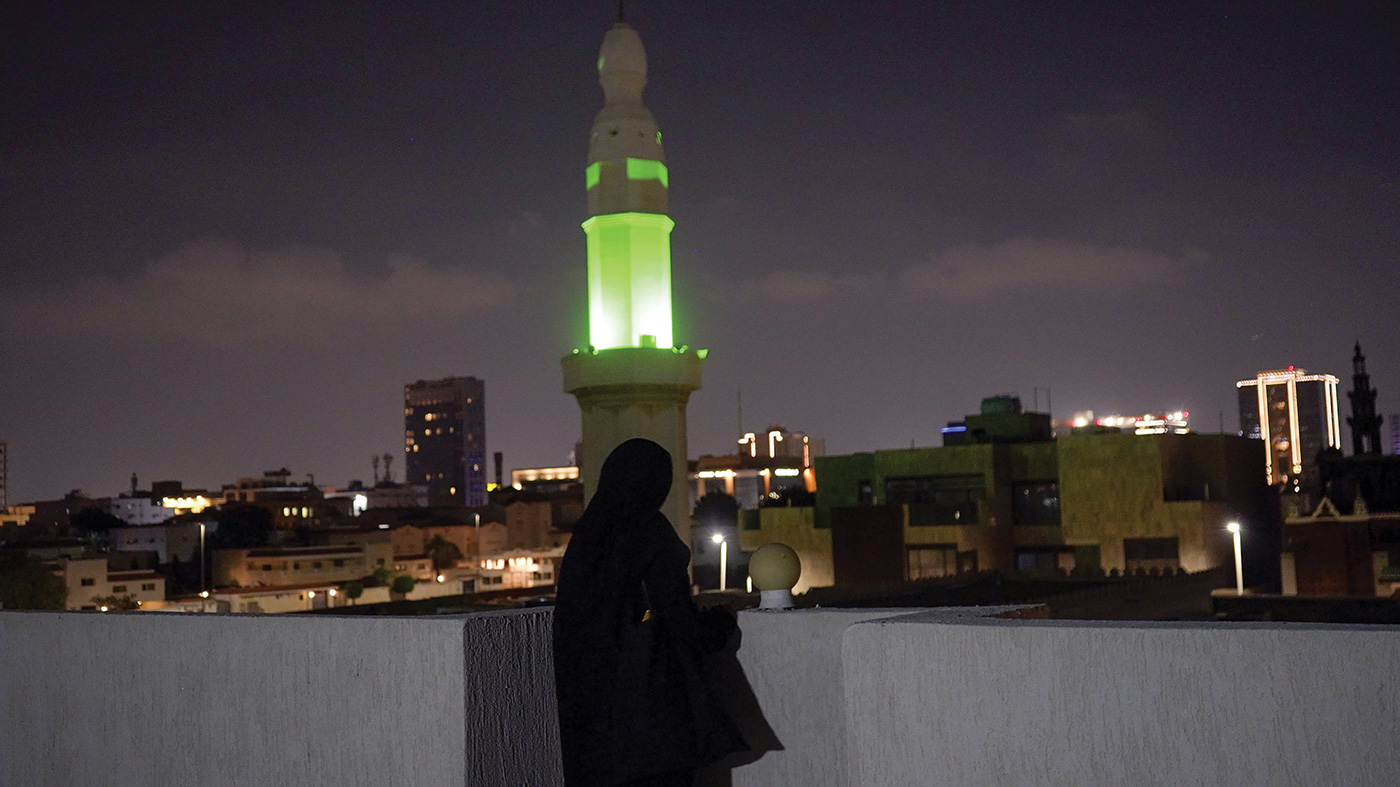
Diary of Eve's Land s'inspire d'une série d'entretiens vidéo que Kyoko Kasuya, artiste-réalisatrice japonaise a effectué à Djeddah, en Arabie saoudite, en 2023. Par le biais des réseaux sociaux, elle a invité des femmes à participer au projet, réunissant finalement cinq personnes d'horizons divers : une médecin, une psychologue, une étudiante en BTS medical, une professionnelle de l'informatique et une immigrée poursuivant des etudes dans une université en ligne. Sur fond de transformation sociétale radicale de l'Arabie saoudite, portée par l’initiative gouvernementale Vision 2030, ce film capture des témoignages candides et des scènes du quotidien de femmes naviguant entre les attentes sociale et leurs aspirations personnelles. Parallèlement, le regard de Kasuya en tant que femme japonaise—forme? par ses propres confrontations avec la société—suit les silhouettes des femmes saoudiennes par derrière, créant un documentaire de regards croisés.
Kyoko Kasuya est une artiste visuelle et réalisatrice japonaise basée entre Paris (France) et Tokyo (Japon). Après des études de littérature afro-américaine à l’université Aoyama Gakuin à Tokyo et une brève expérience dans le domaine de l’entreprise, elle s’installe en France. Marquée par les récits de son grand-père sur la Seconde Guerre mondiale, elle s’intéresse aux journaux de guerre de deux étudiants-soldats, Hachir? Sasaki et Tokumitsu Takushima, publiés dans Listen to the Voices from the Sea (Kike Wadatsumi no Koe). Cette recherche nourrit ses films Listen to the Voices of the Sea (2019) et Silence Bleu (2022), projetés notamment au WIELS à Bruxelles et au Kino 35 de l’Institut Français de Prague. Pendant le premier confinement en France en 2020, Kasuya rejoint The Crown Letter, un collectif international d’artistes femmes, avec lequel elle expose à Paris, à la BIENALSUR en Argentine et en Uruguay, à KYOTOGRAPHIE (KG+) à Kyoto. En 2023, elle reçoit le Grand Prix Allotment Travel Award pour son film Diary of Eve’s Land, tourné à Djeddah et présenté en avant-première à la galerie MEM à Tokyo avant le Festival international Yebisu pour l’art et les visions alternatives 2025.

Eszter Katalin
Mária Vörösben
Vidéo expérimentale | hdcam | couleur | 28:39 | Hongrie, Autriche | 2018
A woman visits a prison in the village of Márianosztra (Hungary) to find out more about the ongoing production of barbed wire by the inmates of the institution for various European border fences. Subsequently, she engages in a research about those women who were imprisoned there for being communists and antifascists between 1920 and 1944 at a time when it was run by nuns as a place to "re-discipline" the sentenced person through labor and prayer. The voice of a ghost belonging to a female political prisoner follows her as she is trying to connect past and present through gestures of mourning.
Eszter Katalin (born 1991, Budapest) is an artist based in Vienna. She has recently finished her master`s degree in Critical Studies at the Academy of Fine Arts in Vienna (2015-2018). In her works she focuses on the tensions between political struggles and their representation within a so-called critical artistic practice, departing frequently, but not solely, from Hungary’s social context as marked through its politics of memory and exclusion. Her latest works include her film MEGSZAKÍTÁS* Civil Aktivizmus Magyarországon (MEGSZAKÍTÁS* Civil Activism in Hungary, video in four parts, 76 min, 2017), Versammlung (Coming together, audio piece, 9 min, 2017) and Mária Vörösben (Mary in Red, video, 28:39 min, 2018).

Julia Kater
Breu
Vidéo | hdv | couleur | 4:0 | Brésil | 2016
In Breu (Pitch black), the recorded images present, in a non-linear montage, the semi-artisanal paving process of a rectangle arbitrarily drawn in the middle of a vacant lawn. The soundtrack brings a circular text that overflows in modal adverbial adjuncts (mainly right and wrong),without defining any clear object, the text builds the speech in an endless cycle, onto which the ideas of progress and evolution cannot be applied.
JULIA KATER | 1980 ‘ Paris, France Lives and works in Sao Paulo, Brazil. Graduated in Photography from the School of Advertising and Marketing - ESPM (Sao Paulo - Brazil). The research of the artist Julia Kater is guided in the elaboration of a body of work that can treat it from its visual improbability. Whether by the collage brought about by different overlaid photographic prints, which announces a watchful sky ‘ despite its invisible character ‘ or by videos that bring about the rearrangement of a set of actions and phrases, each work in its own way prioritizes the elaboration of bodies from everyday scenes that suggest simultaneous shared experiences with the persistent memory together with its struggle with forgetfulness, its ally and the cause of the gradual loss of a large part of the truths. Kater regularly participates in exhibitions in Brazil and abroad, in countries like France, USA, Belgium and Portugal.

Vytautas Katkus
Kolektyviniai sodai
Fiction | 16mm | couleur | 15:0 | Lituanie | 2019
La masculinité patriarcale semble pousser son dernier souffle au soleil. L'histoire de la relation glaciale entre un père et son fils. Leur lien, rongé par l'indifférence, se désagrège complètement.
Vytautas Katkus est né en 1991 à Vilnius, en Lituanie. Il a obtenu une licence en cinéma à la Lithuanian Academy of Music and Theatre. Il travaille comme directeur de la photographie pour des films et des projets d'art vidéo. Il a remporté le prix du meilleur jeune directeur de la photographie décerné par la Lithuanian Association of Cinematographers en 2014 et 2015. Depuis 2016, il est membre de la Lithuanian Association of Cinematographers. "Kolektyviniai sodai (Community Gardens)", son premier film court, a été sélectionné pour la 58e Semaine de la Critique, Cannes (France).
Timo Katz
Whirr
Vidéo expérimentale | dv | couleur | 3:0 | Allemagne | 2006
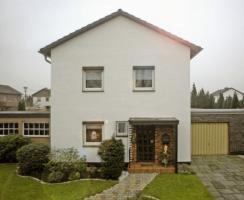
C'est de façon rythmée que se révèlent les variations que les habitants d'un lotissement ont apportées au modèle standardisé de leur maison. La caméra ouvre, sur l'organisation schématique des bâtiments, un espace de pluralité et de constante variabilité. Les transformations de la surface architecturale apparaissent par oscillations. Le concret danse - sur la piste de l'abstrait.
Timo Katz est né en 1977 à Siegen. De 1999 à 2006 il étudie la photographie et le design de films à l'Ecole Supérieure de Bielefeld et obtient son diplôme de designer en Février 2006. Il vit à Bielefeld et travaille sur des projets de films expérimentaux ainsi que sur des commandes.
Timo & Jan Katz & Fuchs
die Welt
Installation vidéo | dv | couleur | 5:0 | Allemagne | 2008
Le travail vidéo expérimental ?Die Welt? porte sur la perception spatio-temporelle dans notre expérience visuelle du monde. Notre perception est non seulement définie par la photographie, mais surtout par les règles de la perspective centrale. Celle-ci montre et explique le monde visible à travers une simplification schématique. Le travail présenté s?intéresse à l?utilisation élargie de la caméra comme prothèse d?observation pour la découverte et la reconnaissance du visible. La perspective centrale est ici éventrée et déstructurée. L?espace visuel, s?appuyant sur le panorama d?un paysage urbain, est transcrit en une multiperspective parallèle, que l?on atteint en séparant l?image de la caméra en tranches ordonnées à la verticale, et qui ressemble ainsi à la perspective de prise de vue d?un scanner. La pièce, envisagée à travers ce procédé de destructuration, subit un décalage autant spatial que temporel. Le montage, et seulement le montage, permet ainsi de rendre visible un Espace-Temps-Vision alterné. Il se pose la question de la signification, pour notre perspective visuelle, de l?élargissement technique croissant de notre outil d?observation, et de ses conséquences au présent et à l?avenir. Il souligne en outre notre tendance à nous appuyer de plus en plus sur des modèles de perception déjà construits.
Timo Katz est né en 1977 à Siegen. Il étudie le design photo- et filmographique à l?Ecole Supérieure de Bielefeld où il obtient son diplôme en 2006. Il travaille depuis 2002 dans le domaine des vidéos et films expérimentaux. Il vit et travaille actuellement à Leipzig. Il forme avec Jan Fuchs le groupe indépendant de recherches visuelles Katz&Fuchs. Jan Fuchs est né en 1976 à Hamburg. Il étudie le design photo-et filmographique à l?Ecole Bielefeld et obtient son diplôme en 2004. Il travaille depuis 2002 dans le domaine des vidéos et films expérimentaux. Il vit et travaille à Kassel. Il forme avec Timo Katz le groupe indépendant de recherches visuelles Katz&Fuchs.
Yuki Kawamura
Sekainoaté
Fiction | dv | couleur | 53:0 | France | 2005
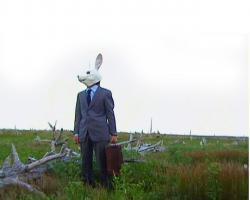
Haruto conduit au hasard sur les routes désertes d?Hokkaido et prend en stop un homme lapin qui lui offre un masque. Tetsu recherche la part de lui-même qu?il a perdue. Sona se désintéresse du mal-être de Tetsu. Miwa hésite à suivre l?homme lapin dans un monde qui lui est inconnu? Des lignes de vie encore incertaines qui se connectent et se déconnectent entre réel et imaginaire..
Yuki Kawamura est né à Kyoto au Japon. Après des études de cinéma, il réalise en 1999 son premier film NUMERO 2 qui est toujours distribué au Centre Georges Pompidou à Paris et au musée Hara à Tokyo. Il commence alors un véritable travail sur la lumière, le réel et l`imaginaire mais aussi sur les couleurs et l`image.
Naomi Kawase
Naissance et maternité
Documentaire | dv | couleur | 60:0 | Japon | 2005
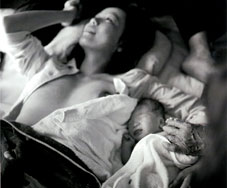
Naissance et maternité Réalisatrice : Naomi Kawase Producteur : Sento Inc. Naomi Kawase 60? La cinéaste Naomi Kawase, devenue mère, poursuit dans ce nouveau film documentaire, son ?uvre personnelle d?interrogation du monde. En effet, le 24 avril 2004 à 10h40, naissait son fils Mitsouki. La naissance a eu lieu, de manière traditionnelle, sans médecin, avec la seule assistance d?une sage-femme, dans une vieille maison japonaise, sur un tatami. Naomi Kawase y était entourée des membres de sa famille. Quand le cordon ombilical a été coupé, Naomi a pris la caméra et enregistré ce moment hautement symbolique, de même qu?elle a filmé toutes les personnes qui l?ont affectueusement assistée. Depuis, Naomi Kawase vit et filme au jour le jour son fils et sa grand-mère de 90 ans dans leur vieille maison de Nara. Le film se développe sur deux dimensions : celle de l?enfant grandissant sous le regard attentif de sa mère et de son arrière grand-mère et celle de la propre enfance de Naomi Kawase racontée à la première personne.

Shoichiro Kawashima
You Must Believe in Spring
Fiction | mov | couleur | 51:0 | Japon, 0 | 2024
Hiver, un samedi apre?s-midi. Alors que Tania avance difficilement dans la pre?paration de son exposition de fin d’e?tudes, elle rec?oit la visite de Michael, son amant marie?; Kylian, son petit ami qu’elle veut quitter; Nathalie, la veuve de son fre?re; et Yann, le nouveau compagnon de Nathalie. Leur visite est l’occasion pour Tania de refaire face aux moments de sa vie qu'elle avait laisse?s en suspens.
Né en 1993 à Miyazaki, Japon, vit et travaille à Tokyo. Diplômé de l’École Nationale Supérieure des Beaux-Arts, sous l’enseignement de Clément Cogitore et Angelica Mesiti, Shoichiro Kawashima travaille depuis 2023 en tant que producteur et réalisateur au Japon.
George Kazazis
Mickey, Mickey where are you?
Art vidéo | dv | couleur | 3:25 | Grèce | 2004
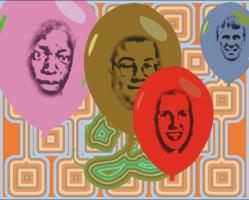
Nous sommes constamment inondés par des images de violence, et en même temps par des images de styles de vie. Le contraste est sans conteste énorme. Les sentiments variant, mais, de n?importe quelle manière nous les regardons, les deux genres existent avec tellement de vie qu?ils en sont indispensables. Le matin du 20 avril 1999, deux jeunes américains, Eric Harris, âgé de 15 ans et Dylan Klebal, âgé de 18 ans, vinrent à leur collège de Colombia dans la ville de Littletown aux Etats-Unis, emportant avec eux des armes à feu et des grenades à main. Ils tuèrent 14 de leurs camarades et un professeur. La plupart des victimes se trouvèrent dans la cafétéria de l?école. L?incident dans son ensemble fut enregistré par les caméras de sécurité de l?établissement. L?évènement est si important en lui-même qu?il a même éclipsé la lumière d?un symbole national. La vidéo commence avec Mickey et Minnie Mouse dans différentes poses, courant, virevoltant dans un nuage de couleurs vives. Est-ce que c?est une fête ou un bain de sang ? La musique qui vient de la chanson "My Cat Fell In The Well" (1983) par Manhattan Transfer les accompagne, néanmoins insouciant et à la fois persistant. La chanson raconte d?une manière douve une histoire dramatique d?un beau chat-star qui est tombé dans un puit et la détresse de son propriétaire quand il l?a retrouvé. Soudain, la musique s?arrête et la vidéo montre des visages d?enfants tués sans foi ni loi, les mêmes enfants qui croyaient en l?innocence de ce Mickey Mouse ou n?importe quel autre Mickey Mouse. Pour notre salut, ces images stoppent et Mickey réapparaît, la musique recommence. La fin ne nous concerne plus. Cela ne pourrait jamais nous arriver.
Georges Kazazis est né à Atlanta en 1958 où il travaille et vit. Il est allé enseigner à l?école des Beaux-Arts d?Athènes à partir de 1990. Il fut aussi membre du Project Sapce Athènes (un espace pour plusieurs artistes fondé en 2000-2001)
Leonie Kellein
Stupor
Fiction expérimentale | 4k | couleur | 16:35 | Allemagne | 2024
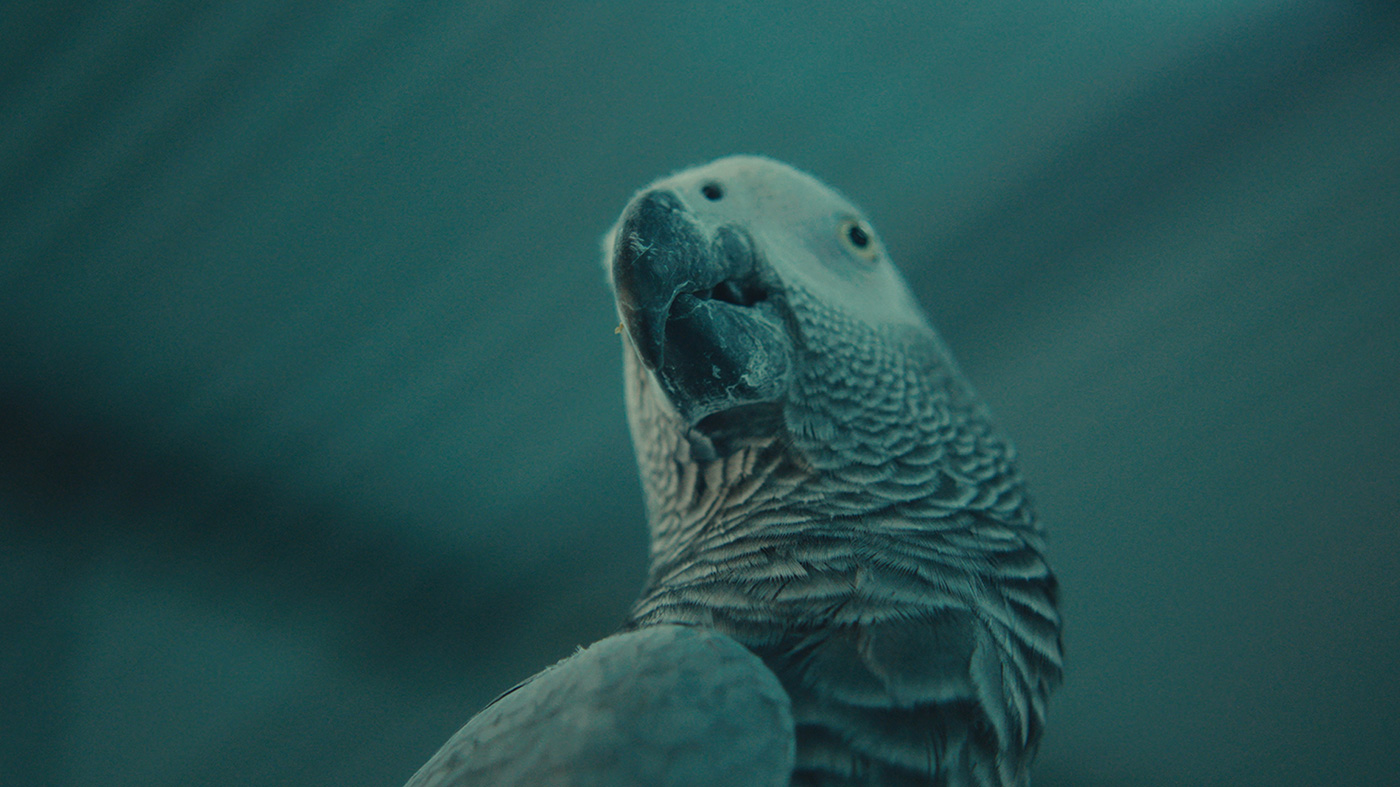
In the short film Stupor a traumatizing attack —recounted by a voice off-scree — is anticipated and thereby narrowly averted. The film is set in a dark, eerie ice rink where several people come into view via slow-motion camera movements. Video and audio seem to run on separate tracks.
Berlin-based artist and filmmaker Leonie Kellein works across moving image, sculpture and installation to explore how perception is shaped, and at times unsettled, by the technologies that frame it. Her practice examines the tension between bodily awareness and mechanical recording, creating moments where seeing becomes an embodied and uncertain act. Through this focus on the filmic gaze, she investigates how acts of looking reveal the politics and material operations of the image itself. Kellein’s current research extends into the areas of trauma, memory and spatial disorientation. Her recent works consider how the body registers imbalance, translating psychological and sensory states into cinematic form. Using techniques such as the Vertigo effect, she transforms optical distortion into a means of sensing the unstable connections between body, machine and world. Leonie Kellein holds an MA Artists’ Film and Moving Image degree from Goldsmiths, University of London (2022), as a DAAD scholarship holder, as well as a BA in Fine Art (2020) from the Academy of Fine Arts Hamburg. She has recently presented her work at the Falckenberg Collection of the Deichtorhallen Hamburg, Kunsthalle Basel, Art Basel, Kunsthalle Wilhelmshafen, Kunstverein Freiburg and the International Filmfestival FID Marseille, amongst others.

David Kelley, Patty Chang
Spiritual Myopia
Film expérimental | hdv | couleur | 15:0 | USA | 2018
Spiritual Myopia is a film dealing with the invisible labor and desire of the residents of the oil industry boom towns of Fort McMurray in the Canadian Tar Sands and the refining town of Port Arthur Texas. The two cities are terminal nodes of the proposed Keystone XL oil pipeline which would span the United States. Fort McMurray is the third largest oil deposit in the world. Its rapid pace of growth has meant a dearth of housing for its migrant workers. Port Arthur boasts the world’s largest concentration of oil refineries and its town center has nearly disintegrated from economic decline. These twin cities are related spatially as nodes in the same energy infrastructure, and temporally in their different stages of a boom or bust economy. Borrowing its title from Alfred Stieglitz’s photo Spiritual America, Spiritual Myopia speaks to the nearsightedness innate to hypercapitalism.
Spiritual Myopia is a collaboration between artists David Kelley and Patty Chang Patty Chang (Lives and works in Los Angeles, CA) Patty Chang is an artist working in performance, video, writing, and installation. Her work has a capacity to explore complex subjects nearly simultaneously, as does life. Her work has been exhibited nationwide and internationally at such institutions as the Museum of Modern Art, New York; Solomon R. Guggenheim Museum, New York; New Museum, New York; BAK, Basis voor actuele Kunst, Utrecht, the Netherlands; the Hammer Museum, Los Angeles; Fri Art Centre d’Art de Freibourg, Fribourg, Switzerland; Chinese Arts Centre, Manchester, England David Kelley (Lives in Los Angeles California, CA.) David Kelley’s work is a hybrid of experimental documentary and ethnographic practices that make use of imaginary, choreographic and performative strategies. His work has been shown in galleries throughout the world. Recently, he has had exhibitions at the Museum of Modern Art in New York, White Box in Portland Oregon, and Commonwealth and Council in Los Angeles. Other recent exhibitions include The Bank in Shanghai, New Art Center, the de Cordova Biennial in Boston, BAK in Utrecht, MAAP space in Brisbane Australia.
David Kelley
The Book of the Dead
Doc. expérimental | 4k | couleur | 19:42 | USA | 2023
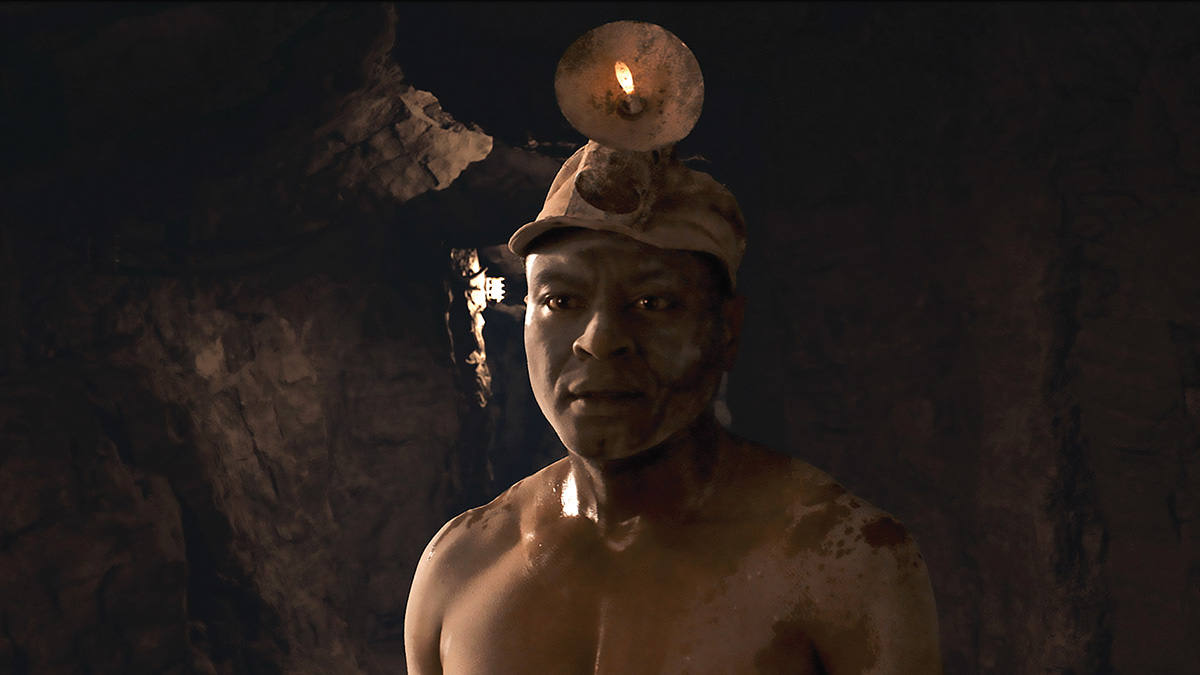
The Book of the Dead is an experimental documentary meditating on the American poet Muriel Rukeyser’s poem about the Gauley Tunnel tragedy. In the 1930s in West Virginia, nearly 2,000 primarily Black migrant workers were sickened or killed by silicosis, a lung disease caused by breathing silica dust. Rukeyser travelled to West Virginia to meet workers and their families, in some cases, appropriating their words directly. The film revises her white characters to a predominately Black cast — more accurately reflecting the insidious racism prevalent in American society at the time. The film appropriates interviews with the poet, her unfinished screenplay, and worker’s testimony to U.S. Congress. Using actors, theatrical sets, and 3D generated backgrounds, the film produces a multisensory experience of Rukeyser’s process and the industrial tragedy. Unable to travel during the Covid-19 pandemic, Kelley designed the West Virginia mining sets in Unreal, a 3D gaming software and filmed actors at a green screen studio near his home in Los Angeles. The work's theme of failure to breathe poignantly resonates with the Covid-19 pandemic, and the final words turned protest chant of George Floyd: I can't breathe.
David Kelley (Born in Portland Oregon. Lives in Los Angeles California.) Kelley is an artist working with photography, video, and installation. His recent projects draw attention to the effects of global capitalism, resource extraction, and shifting physical and political landscapes. Influenced by a range of visual traditions, Kelley draws upon elements of experimental documentary, ethnography, performance, and avant-garde cinema. By working at the intersection of these strategies, he encourages an understanding of his subjects that is simultaneously direct and speculative. His work has been shown in galleries and museums nationally and internationally. Recent exhibitions include the Museum of Modern Art in New York and Fotofest Biennial, Houston. Other exhibitions include Commonwealth and Council in Los Angeles, The Bank in Shanghai, the de Cordova Biennial in Boston, BAK in Utrecht, MAAP space in Australia, and the Jim Thompson Art Center in Bangkok. Kelley received a Master of Fine Art from the University of California, Irvine, and was a 2010 -11 resident at the Whitney Museum of American Art Independent Study Program. He is currently based in Los Angeles, California, and is an Associate Professor of the Practice at the Roski School of Art and Design, University of Southern California.

David Kelley
Non Human
Vidéo | 4k | couleur | 10:34 | USA | 2022
NON HUMAN is a film made from poems written in collaboration with an Artificial Intelligence (recurrent neural network) and five artists — York Chang, Marcus Civin, Tia-Simone Gardner, Viet Le, and Yvonne Rainer. Inspired by poet Muriel Rukeyser’s technique for writing The Book of the Dead (1937), a poem in which she directly quotes workers’ voices from congressional testimony about the Hawk’s Nest mining catastrophe that killed nearly 2000 miners, 80% of whom were Black workers. NON HUMAN was filmed in rural Vermont in disused marble, quarries, hospitals, and local artists’ studios and it presents leisure time and creative space as conditions to excavate the unwritten histories of labor, racism, and environmental destruction in local American communities. The generative AI used to write the script was trained with Rukeyser’s Collected Poems, the congressional testimony of workers that she quoted, and contemporary critical race and eco-feminist theories of Kathryn Yussof, Tavia Nyong’o, Saidiya Hartman, and Hortense Spillers. In Hartman’s essay The Dead Book Revisited she asks “how do we attend to black death? How do we find life where only the traces of destruction remain?” NON HUMAN’s critical AI writing machine, fed by historic documentary materials, poetry that witnesses to extractive capitalism and anti-black racism, speculates on Hartman’s question. Live performers in NON HUMAN include: sound engineer Ben Arindell, singer/song-writer Patrick Sargent, physician Jeffrey Yucht, critic Marcus Civin, sculptor Fred X Brownstein, and sound technician Jack Schlandt.
David Kelley is an artist working in photography, video, and installation. His recent projects explore the impacts of global capitalism, resource extraction, and evolving landscapes, combining elements of experimental documentary, ethnography, and avant-garde cinema to offer a perspective that is both grounded and speculative. His work has been shown nationally and internationally at venues such as the Museum of Modern Art in New York, Rencontres Internationales Paris/Berlin, Fotofest Biennial in Houston, Commonwealth and Council in Los Angeles, The Bank in Shanghai, and the Jim Thompson Art Center in Bangkok. Kelley holds an MFA from the University of California, Irvine, and was a resident of the Whitney Museum Independent Study Program. He is based in Los Angeles, where he is an Associate Professor of Fine Arts at the University of Southern California.

David Kelley
African Union
Film expérimental | mp4 | couleur | 4:4 | USA | 2025
African Union répond aux révélations de 2018 concernant la surveillance chinoise au siège de l’Union africaine à Addis-Abeba. Réalisé à partir d’IA générative, d’images commerciales issues de banques d’images et de séquences documentaires, le film explore l’impérialisme numérique, l’extraction des données, et les enchevêtrements idéologiques de l’intelligence artificielle au sein des dynamiques politiques et technologiques en constante évolution entre la Chine et l’Afrique.
David Kelley explore les écologies cachées de l’infrastructure globale — de l’extraction minière en eaux profondes et la route de la soie aux sables bitumineux de l’Alberta et à l’extraction des terres rares en Chine. Travaillant entre film, photographie, installation et sculpture, il examine comment la technologie, la modernité, l’écologie et la mémoire opèrent comme des systèmes de médiation interdépendants. Sa pratique s’inspire du film-essai, de l’ethnographie expérimentale et du théâtre expérimental, utilisant la forme comme un espace d’expérience affective, d’ambiguïté et de transgression. Kelley envisage la recherche comme un processus esthétique, privilégiant les modes sensoriels et spéculatifs plutôt que purement discursifs. Ses projets impliquent souvent des productions in situ, des recherches d’archives et l’intégration d’objets du quotidien ou de constructions théâtrales au sein d’environnements immersifs. Des spécimens scientifiques — empruntés à des collections d’histoire naturelle ou réinterprétés en verre, céramique ou pierre — ancrent ses installations dans une histoire matérielle tout en ouvrant la voie à des rencontres surréelles et spéculatives. Son travail a été exposé à l’international, notamment au Museum of Modern Art de New York, aux Rencontres Internationales Paris/Berlin et à The Bank, Shanghai. Ses prochaines présentations incluent le LACMA à Los Angeles et la Global Visions FotoFest Biennial 2026 à Houston. Kelley est titulaire d’un MFA de l’UC Irvine et a été boursier du Whitney Independent Study Program en 2010–2011.

Kevin Kelly
Some acts around rocks and stones. (Part 1)
Doc. expérimental | hdv | couleur et n&b | 16:2 | USA | 2017
Marcel Duchamp talks about an absurd 'readymade'. An art dealer creates a discourse using the idea of the 'readymade'. An art historian talks about her long time relationship observing Robert Smithson's Spiral Jetty. These personal micro-histories around paradigm shifting artists offers hidden knowledge around the common art historical narrative. While the artist turns over the rocks of the Spiral Jetty, bringing back the experiential quality to an artwork that is mostly known through images.

Graham Kelly
Skull Island
Doc. expérimental | hdv | couleur et n&b | 18:7 | Royaume-Uni, Pays-Bas | 2016
Skull Island is an ongoing series of video works, lectures and installations that use the fictional island from the various versions of King Kong as analogies for hypothetical image environments. Each island provides a means of manifesting and examining an introspective image space that reflects the sociopolitical contexts of its audience. The cultural and technological developments displayed within each version of the film define relative positions from which the viewer can question their current perceived surroundings. After being captured by a camera crew within this otherwise inaccessible territory, Kong escapes into the physical context to confront the audience with their internal fears and shared cultural constructs.
Graham Kelly (b. 1982, Ayr, Scotland) is an artist and writer based in Rotterdam and Brussels. Previous exhibitions, screenings and lectures include: Transmission Gallery (Glasgow), Intermedia (Glasgow), Generator Projects (Dundee), Kino der Kunst (Munich), TENT (Rotterdam), EYE Film Museum (Amsterdam) and the 2016 Moscow International Biennale for Young Art. He graduated from the Glasgow School of Art in 2009 with a Masters in Research and with a Masters in Fine Art in 2014 from the Piet Zwart Institute, Rotterdam. He was a resident at the Jan van Eyck Academy in Maastricht between 2015 and 2016 and is the recipient of the Mondriaan Fonds Werkbijdrage Jong Talent and Centrum Beeldende Kunst O&O subsidies and a Scottish Arts Council Creative and Professional Development Award.

Jean-paul Kelly
The Lie in Wait
Vidéo expérimentale | dv | couleur | 30:56 | Canada | 2005
"The Lie in Wait" comprend une composition digitale et un documentaire vidéo personnel formant et examinant des histoires familiales dont les épisodes sont liés. L´oeuvre contient des scénarios animés et des interviews avec les parents de l´artiste qui, combinés, presentent souvent des convergences entre mythologies issues des traditions vernaculaires d´histoires familiales et mythes transmis par des moyens cinématiques mieux reconnus. Beaucoup des anecdotes utilisées dans la narration de ces histoires utilisent la métaphore pour créer du sens et partager une histoire. Ces histoires sont là pour être racontées et répétées, observées et regardées à nouveau. Au cours du processus, la narration de ces contes prend un sens métaphorique. Entre chaque épisode de la vidéo, des métaphores visuelles et linguistiques se répètent et se révèlent être les symptômes des répressions des conteurs. Caché derrière ces symptômes, il y a souvent un traumatisme latent. Quand ces métaphores deviennent non identifiables dans "The Lie in Wait", grâce à l´effet conjugué de ces incursions dans la mémoires des conteurs et de l´étrangeté de l´animation, le traumatisme remonte à la surface et réapparaît.
Jean-Paul Kelly (né en 1977, Londres, Ontario, Canada) est un artiste basé à Toronto, Ontario, Canada. Il se concentre essentiellement sur des installations basées sur la vidéo, mais son travail comprend aussi du dessin, de la photographie et des moyens d´impression. Ses vidéos les plus récentes, "Give Up the Ghost" (2004) et "the Lie in Wait" (2005), intègrent un langage hybride de compositions digitales, animation, performance vidéo et documents vidéo personnels qui se penchent sur l´anticipation, l´anxiété et la disparitions des contes oraux. son oeuvre a déjà été exposée dans des festivals et galleries d´Amérique du Nord, d´Europe et du Japon.

Graham Kelly
Skull Island Part III
Vidéo | 4k | couleur | 34:46 | Royaume-Uni, Pays-Bas | 2020
Skull Island is an ongoing series of lectures, films and installations that examine a hypothetical image environment as an introspective space that reflects the sociopolitical contexts of its audience. Using the fictional island from King Kong as an analogy, cultural and technological developments define a relative position from which the viewer can view and question their surroundings. Part III is structured around two artefacts found in the visual effects archive of Berlin’s Deutsche Kinemathek Museum of Film and Television. A cast of the skull of the original armature for the stop-motion model of King Kong (Merian C. Cooper and Ernest B. Schoedsack, 1933) and a silicone mask constructed for Kevin Bacon’s computer-generated invisible character in Hollow Man (Paul Verhoeven, 2000) create a framework in which to discuss the surfaces and armatures or the skin and bones of moving images. The film examines the inherent hidden material and socio-political properties of moving images, the perpetuation of insidious ideological constructs in cinematic remakes or reboots, and traumas encapsulated in the sites and systems of moving image production.
Graham Kelly is a visual artist and filmmaker. His practice is situated in the interfaces between contemporary forms of images, physical bodies, and environments. By considering these interactions as engulfing and continuous states or effects, his work seeks to expose and dissect power structures that are cast, distorted or enforced within them. His works have been screened and exhibited in a number of international contexts that include: Haus der Kulturen der Welt, Kino der Kunst, EYE Filmmuseum, TENT, Transmission, NEST, Recontres Internationales, and LUX. He was a resident at the Jan van Eyck Academy in 2015/16 and at AIR Berlin Alexanderplatz in 2018.

Graham Kelly
Hello Joe
Vidéo | hdv | couleur | 18:40 | Royaume-Uni, Pays-Bas | 2017
Hello Joe was covertly produced overnight in a series of rented Airbnb accommodations. It is constructed entirely from elements found and filmed within a number of private homes that were accessed through the online service. Furnishings, ornaments and extracts from various personal book, CD and DVD collections act as a singular workable archive. The resulting film is comprised of a series of vignettes that examine the objects and media that we intimately live with and the ideologies that they preserve. Domestic spaces are merged together in this portrait of an emerging corporate territory within the declining value of privacy.
Graham Kelly is an artist, filmmaker and writer. His practice is situated in the interface between contemporary forms of image, the physical body and environment. By considering this interaction as an engulfing and continuous state or effect, his work seeks to expose and dissect power structures that are cast, distorted or enforced within it. His works have been screened and exhibited in a number of international contexts that include: Recontres Internationales, Kino der Kunst, Lo schermo dell’arte, EYE Filmmuseum, TENT, Transmission, Intermedia, Generator Projects and The Moscow Biennale for Young Art. He was a resident at the Jan van Eyck Academy in 2015/16.

Eva Rocco Kenell
Trail
Vidéo | hdv | couleur | 24:6 | Suède | 2015
In this film about a falsified InterRail ticket, a chain of events and links arise which leads the filmmaker on a journey. Where fiction in a performative manner seems to materialize itself and create a piece of reality that seems to imitate fiction. The protagonist in the film is never to be seen, instead we follow her voice through staging and documents while the story is being mediated.
Eva Rocco Kenell (b. 1982 Växjö, Sweden) holds a BFA from Gerrit Rietveld Academy in Amsterdam and a MFA from Konstfack University of Arts and Craft, Stockholm where she graduated with the honorable Principal scholarship. Kenell’s artistic practice is based on a documentary ground, even though the intentions are rather to break down classical narratives and normative storytelling. Not only concepts surrounding fiction and reality are central, but also questions around which one of the two is creating the other. Kenell`s methodology consists of a research based practice with a focus on micro-histories, where she explores single events and where details in a story can become the new center and the place which the focus is transferred to. Kenell`s practice brings up notions concerning the role of the documentary, storytelling, concept of truth and imitation. And at the same time it opens up for questions around freedom of movement and counter-strategies.