Catalogue > Liste par artiste
Parcourez la liste complète des artistes présentés dans le cadre des Rencontres Internationales depuis 2004. Utilisez le filtre alphabétique pour affiner vos recherches.
Akram Zataari, GIRAUDON, Liliane
Catalogue : 2010Les arabes aiment les chats | Film expérimental | super8 | couleur et n&b | 8:0 | USA, Maroc | 2009

Akram Zaatari, GIRAUDON, Liliane
Les arabes aiment les chats
Film expérimental | super8 | couleur et n&b | 8:0 | USA, Maroc | 2009
THE TANGIER 8 In June 2009, Tamaas, an international non-profit arts organization, invited eight poets and filmmakers coming from France, Lebanon, Mexico, Morocco, and the United States, to Tangier, Morocco. These four poet-filmmaker pairs collaborated using Super 8 film and writing original text to create these experimental ?film-poems.? Working under tight time constraints-they had just four days to film, four days for sound, and four days for editing, the artists took inspiration from the city of Tangier-its history, architecture, people, politics, as well as from each other, to produce these short film-poems. Here are the finished film-poems, along with a "making of" documentary about the artists who created them. Each work is independent and can be viewed alone or otherwise shown as a whole. Ivan Boccara (France/Morocco) + Carla Faesler (Mexico) Akram Zataari (Lebanon) + Liliane Giraudon (France) Natalia Almada (Mexico)+ Peter Gizzi (USA) Jem Cohen (USA) + Luc Sante (Belgium/USA) Running time: :41 minutes (not including ?Making Of?) Languages: English, Spanish, French + Arabic with English, French, Arabic subtitles Sound, Script, Editing and Filming all done by the 8 Artists A Tamaas production Hosted by the Cinémathèque de Tanger www.tamaas.org
1. Ivan Boccara (France/Morocco) He studied Berber history and civilization and some of his work has focused on the lives of Berbers, and the environment of the Atlas Mountains. AND Carla Faesler (Mexico) She is the author of such works as Anábasis Maqueta, 2004 (Awarded the National Prize in Literature Gilberto Owen?), No Tú sino la Piedra, 1999) and the collection, Ríos sagrados que la herejía navega, 1996). 2. Akram Zataari (Lebanon) is an artist preoccupied with the production, collection and study of documents. His work reflects on the shifting nature of borders particularly in the Middle East. AND: Liliane Giraudon (France) Projects have included, co-founder of the Journal, Banana Split (1980-1990), with J.J. Viton; Co-founder of the revue If, (1992), co-editor of Action Poétique. 3. Natalia Almada (Mexico). Directing credits include Al Otro Lado, her award winning debut feature documentary about immigration, drug trafficking and corrido music; and EL GENERAL, a family memoir and portrait of Mexico past and present. AND Peter Gizzi (USA) Attended Brown University, NYC and SUNY Buffalo. His books include The Outernationale (Wesleyan, 2007), Some Values of Landscape and Weather (Wesleyan, 2003), Artificial Heart (Burning Deck, 1998), and Periplum (Avec Books, 1992). 4. Jem Cohen (USA) His films are usually built from his own archive of images and sounds, combine documentary, narrative, and experimental approaches. AND Luc Sante (Belgium/USA) is a writer and a cultural critic with a focus on art, films, photography, books, cities. He teaches writing and the history of photography at Bard College, in the Hudson Valley in New York.
Cynthia Zaven
Catalogue : 2012Dear Victoria | Vidéo | | | 8:0 | Liban, Arménie | 2011
Cynthia Zaven
Dear Victoria
Vidéo | | | 8:0 | Liban, Arménie | 2011
Based on the 8mm footage my grandmother shot during a trip to Armenia and the images I took during my journey there 36 years later, Dear Victoria investigates notions of belonging and alienation through an encounter between two worlds. I only recently discovered my grandmother?s footage and never thought we would be exchanging views across temporalities one day.
Silvia Zayas
Catalogue : 2025ruido ê (the film) | Film expérimental | 4k | couleur | 36:46 | Espagne | 2023
Silvia Zayas
ruido ê (the film)
Film expérimental | 4k | couleur | 36:46 | Espagne | 2023
'Ruido ê (the film)' is a musical documentary with thriller overtones that is interrupted and shattered. The noise (ruido), beyond acoustic impact, becomes a difficulty of readability and narrative purity, a shock between languages, it is a synesthetic hum that hacks vision and makes it erotic. All the underwater sequences have been filmed in underwater urban areas where, paradoxically, the electric rays Torpedo torpedo live. These areas, which the artist calls 'postpunk', are in constant urban transformation. From the maritime works for the extension of the breakwater of San Sebastián beach in Barcelona, ??with a metal crane that launches concrete buckets, passing through the entire post-industrial area between the mouth of the Besós river, Sant Adrià, until reaching the Pont del Petroli in Badalona, ??whose pillars were knocked down by the storm Gloria. Waste and underwater architecture reappropriated by different beings. The film has been an alibi to weave networks of work and methodological research with scientists, divers and other artists around issues of somatic attention, perception, vulnerability and resistance.
SILVIA ZAYAS (León, Spain 1978). She is a luso-spanish artist. Her work is situated at the limits of live arts, video and choreography. She investigates the creation of homemade, rudimentary and low-tech devices for making live films. Her work questions ways of filming “from a distance.” For this she moves away from the usual “hand-eye” relationship and tries to legitimize the sensitive possibilities of an amateur, vulnerable, sick, thuggish, hidden, punk and also z-series body... Her most relevant works are: the live film São Tomé Revisitado (2012) in collaboration with her mother Isabel Serra; Parallax (2016), a stage piece for light and sound; the circular films The Boogie-Woogie Ghost (2018) and Puebla (2021) together with María Jerez; Talking pictures (2018) with Esperanza Collado; the "cinema without film" projects Brilliant Corners (2020) and Brillante (2020-2022), both within the Orquestina de Pigmeos collective; the solo exhibition ê (2021), or the recent film ruido ê (the film) (2023). She belongs to the collective office of research in live arts Dorothy Michaels. Recently finishes the doctoral thesis Counterdispositives between cinema and the performing arts: ghosts, diffractions, holes and other creatures (2023). UCLM, Cuenca (Spain). Her work has been shown in national and international biennials, festivals and institutions and also in non-institutional places, markets, squares, schools...
Zeitguised
Catalogue : 2006The Zoo | Animation | betaSP | couleur | 1:3 | Allemagne | 2004
Zeitguised
The Zoo
Animation | betaSP | couleur | 1:3 | Allemagne | 2004
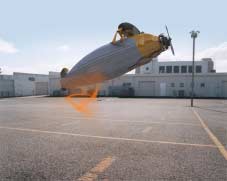
Familièrement terne et générique, l'environnement des lieux peu appréciés offrent des décors parfaits pour un zoo d'idées, d'artefacts et de machines. Ils inhibent un monde technologiquement de plus en plus explicite où le transport des Hommes semble être leur dernier objectif. À la place, elles sont une partie d'un flux de devenir, de développement, d'accident, de recombinaison et de prolifération distordue en évolution constante. Leur auto-perpétration chargée créée une gentille monstruosité et de la poésie monstrueuse. Cela montre alors que le mélange du nano -du bio- et des technologies de l'information a rendu les concepts d'originalité et d'authenticité humaine obsolète, que cette substance artificielle créée ses propres artefacts et leur forme future. Demanderont-ils bientôt leur droit de (trans-) humains ? S'ils ont déjà signé ce nouveau Magna Carta, serions-nous les derniers à le savoir ?
Zeitguised fut fondé en 2001 par Jamie Raap et Henrik Mauler à Stuttgart en Allemagne, où ils sont toujours basés aujourd'hui. Jamie, qui possède un diplôme en Beaux Arts et un master en Arts Médias, a travaillé à Chicago comme sculpteur et styliste dans la mode. Henrik a un diplôme d?architecture et il enseigne le design numérique expérimental à l?université de Stuttgart. Il avait travaillé auparavant pour Segura/T26 à Chicago. Quand ils ont rassemblé pour la première fois leurs talents, leur dénominateur commun fut l?animation dimensionnelle et graphique. Quelques expositions internationales, festivals, publications, nominations et récompenses plus tard, l?animation est devenu leur principal domaine d?occupation. Tandis que l?architecture et la mode restent toujours des intérêts majeurs et des sources d?inspirations, des clients très connus sont tout spécialement intéressés par leurs graphiques en mouvement. Ils ont fini des travaux récemment pour MTFG Plazza Bank et TV Asahi au Japon, PTV Europe, Toonami Cartoon network au Royaume-Uni, German Electronic musique duo Funkst?rung and Popular Mechanics magazine aux États-Unis.
Andrius Zemaitis
Catalogue : 2021Tavo Kraujas Kitu Gyvybe | Fiction expérimentale | mov | couleur | 9:34 | Lituanie | 2019
Andrius Zemaitis
Tavo Kraujas Kitu Gyvybe
Fiction expérimentale | mov | couleur | 9:34 | Lituanie | 2019
Le protagoniste, Faust, - un garçon ascétique, déconnecté de la société - vit près d'un lac sur le point de s’assécher. Il mange une variété spéciale de crevettes qui a un effet hallucinogène sur lui et l’entraîne dans le monde bizarre de son imagination.
À partir de 2007, j'ai étudié le design graphique et industriel à la Vilnius Academy of Arts (Lituanie), d'abord à l’Université de Kaunas (diplômé en 2011), puis, pour un Master en design produit, à l’Université de Vilnius (diplômé en 2013). Depuis mes premières années d'école, je me suis toujours impliqué activement dans les arts audiovisuels. En 2010, un collègue et moi avons créé le duo audiovisuel "BrainMonk". En dix ans, nous avons enregistré et publié 24 albums d'improvisation musicale, très expérimentale et éclectique. Travailler le son m’a également conduit à une compréhension plus profonde des expériences visuelles. Ainsi, les improvisations sonores se sont transformées en créations audiovisuelles, qui ont ensuite ouvert la voie à des projets de films plus complexes et abstraits.
Colectivo Zemos98
Zemos98
Catalogue : 2008El tenista | Vidéo expérimentale | dv | couleur et n&b | 3:0 | Espagne | 2006
Zemos98
El tenista
Vidéo expérimentale | dv | couleur et n&b | 3:0 | Espagne | 2006
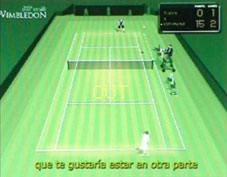
"El Tenista" (Le Tennis) utilise des images d'un jeu vidéo de tennis comme reflet de la réalité actuelle. Près de remporter la partie, le joueur ? le narrateur ? sent que quelque chose ne va pas et s'interroge sur son existence. La métaphore ludique du Gagnant et du Perdant apparaît alors comme un pur produit de la crise que subit le modèle politico-social de compétition prédominant dans la société. "El Tenista", une vidéo du collectif Zemos98, recourt à cette métaphore pour dénoncer un système qui force les gens à se travestir, à être ce qu'ils ne sont pas, et qui les poussent à l'inertie, à perdre leur contrôle sur le présent. A la fin de la vidéo, le joueur décide de sortir du champ. La partie est-elle perdue ou gagnée ?
Le collectif Zemos98, l'organisateur de l'un des festivals audiovisuels les plus innovants d'Espagne, apprenant de ses réalisations et de ses erreurs, se renouvelle jour après jour dans ses structures et ses approches. Un groupe ouvert à de multiples modalités narratives ? courts métrages, documentaires, créations vidéo? - mais qui présentent toutes un point commun, ce sont toutes des microhistoires. Au fil des ans, Zemos 98 a intégré et développé une série d'activités parallèles qui ont gagné en présence et en importance.
Conny Zenk
Catalogue : 2023CARGO CARRIERS | Doc. expérimental | 4k | couleur et n&b | 10:56 | Autriche | 2022
Conny Zenk
CARGO CARRIERS
Doc. expérimental | 4k | couleur et n&b | 10:56 | Autriche | 2022
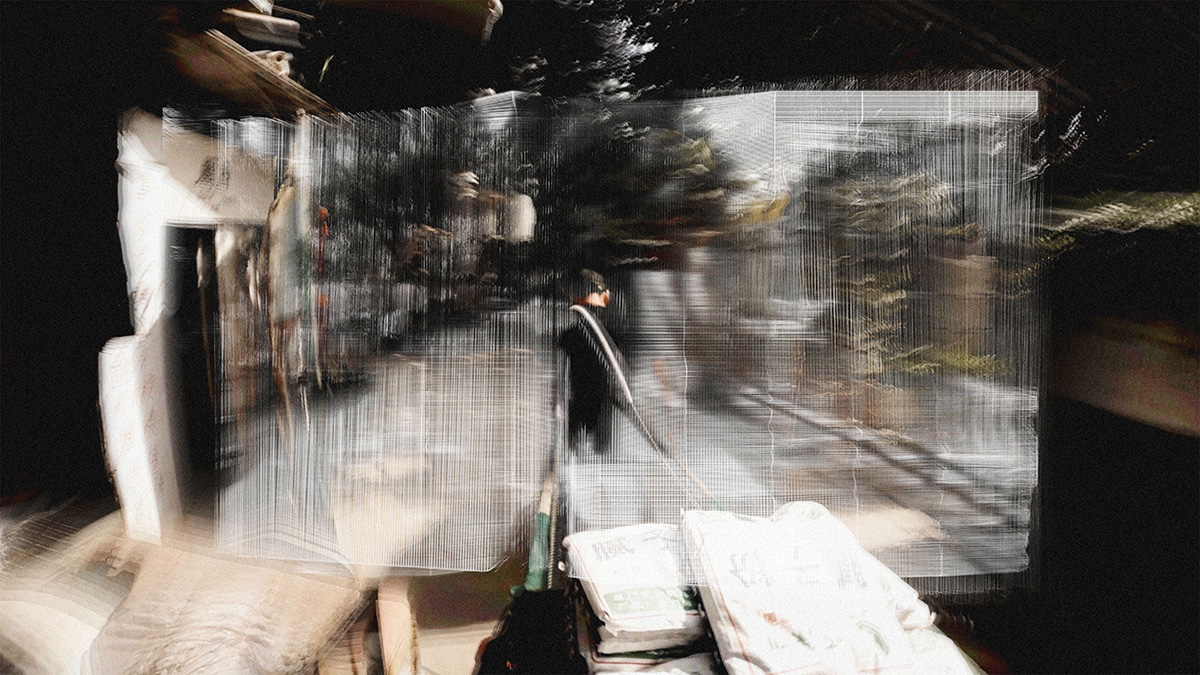
CARGO CARRIERS is a story about a dreamy landscape and well-known architecture: in the perfect picture of the scene, noise fields break through the idyllic surroundings. The soundscape of the island is created by the prohibition of any kind of vehicle. For the transport of all goods, "carrying guys", independent workers with special carts, are employed. By means of experimental camera work, field recording and contemporary Chinese poetry, the tension between historical world cultural heritage, tourism, precarious work situations and life is negotiated.
Conny Zenk is media artist and film maker working in the context of social and urban architecture. Her working method is transdisciplinary and artistically explorative using digital and analog interfaces, vehicles and media. She is the initiator of the art project RAD Performance, which focuses on the fusion of performance and sound art with collective practices such as cycling. Since 2007 she has been working in the field of visual music in the context of performance, dance, theatre, and sound art, reflecting on concepts such as space and projection and creating a dialogue of visual music and light architecture. International festivals such as Rencontres Internationales, Vienna Shorts, Festival du Nouveau Cinema Montreal, Animator Film Festival Poznan and more. Conny Zenk lives and works in Vienna, completed her Diploma with distinction in Digital Art (Univ. Prof. Virgil Widrich, Univ. Prof. Ruth Schnell) at the University of Applied Arts Vienna where she is currently in the Ph.D. in Art program. Zenk has taught at the University of Applied Arts Vienna, the University of Music and Performing Arts and the University of Music and Theatre Munich.
Tinne Zenner
Catalogue : 2023Honeycomb Image/Archive Cladding | Film expérimental | 16mm | couleur et n&b | 11:30 | Danemark | 2022
Tinne Zenner, la Cour, Eva
Honeycomb Image/Archive Cladding
Film expérimental | 16mm | couleur et n&b | 11:30 | Danemark | 2022
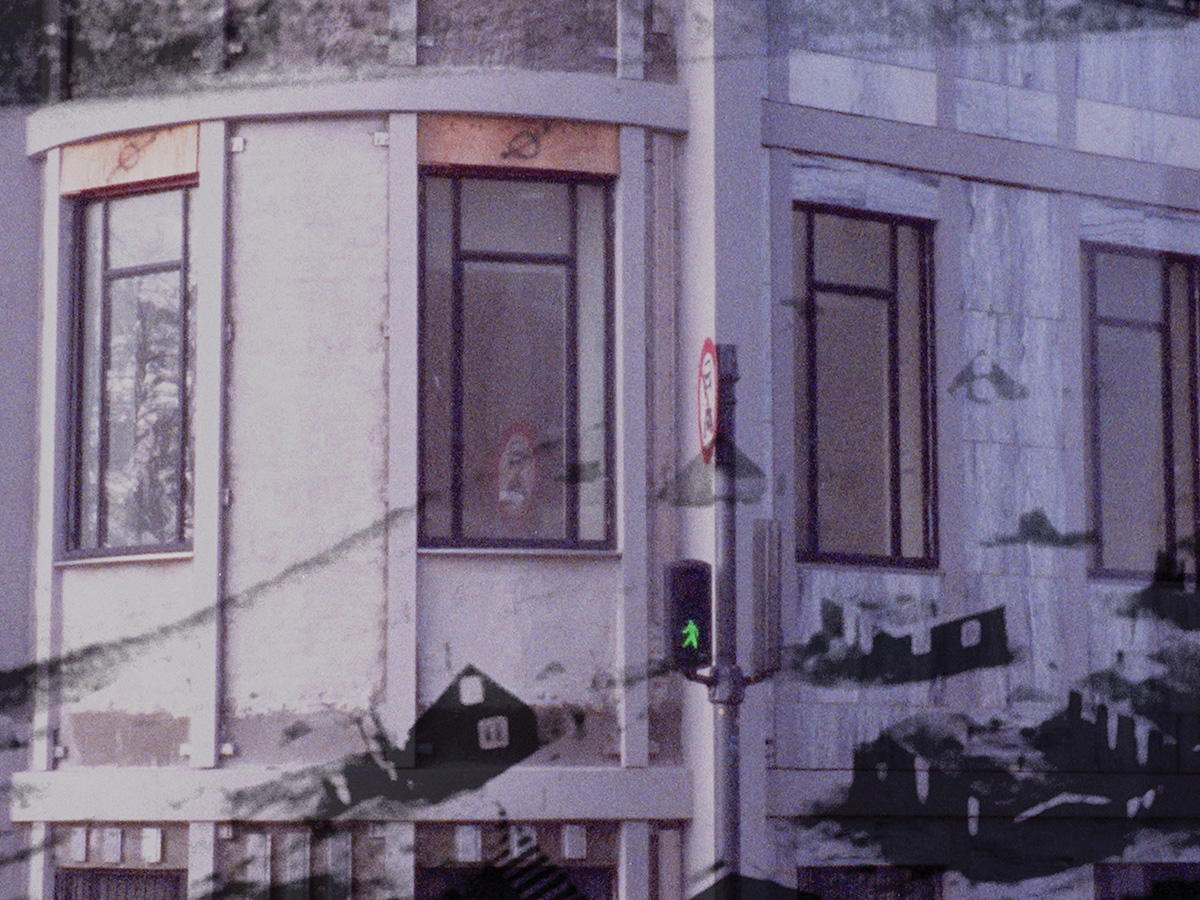
Honeycomb is the name of a technique used in facade restoration of marble. In Denmark several buildings worthy of preservation are covered with marble from Greenland, extracted during the interwar period (1930s). Among other buildings is Overformynderiet in Copenhagen. In the work Honeycomb Image/Archive Cladding, visual artists Eva la Cour and Tinne Zenner juxtapose their own film recordings following the renovation of Overformynderiet in Copenhagen (2019) with Jette Bang’s film recordings from the marble mine in Maarmorilik (1938). The soundscape composed by Alexander Holm, utilises field and contact microphone recordings from the exterior and interior location of Overformynderiet (2021). Through an interplay of image, sound and text, the material facade of Overformynderiet is not simply rendered visible as image. Rather, Honeycomb Image/Archive Cladding speculates on the production of images in general, considered as situated layers of geopolitical relations. Not least historical and colonial relations between Greenland and Denmark.
Tinne Zenner is a visual artist, filmmaker and programmer based in Copenhagen. She holds an MFA from The Royal Danish Academy of Fine Arts (2016). Working with analogue film, 3D renderings and spatial installation, her work moves between the cinema and exhibition space while exploring the structures, in which layers of history, politics and collective memory are embedded. In recent years, her work has been actively and critically engaged with the physical and cultural traces of the Danish colonial past and present in Greenland. Her films have been shown at a number of international film festivals including New York Film Festival, CPH:DOX, Courtisane, Oberhausen, EMAF, Rencontres Internationales Paris/Berlin, Image Forum Tokyo and EXiS, and her installation work exhibited at museums and galleries internationally. Zenner is a member of the film collectives Sharna Pax and Terrassen, both engaging with the social life of film, and works as a programmer for EMAF - European Media Arts Festival. She is currently in production of her upcoming solo-exhibition (Im)material Extraction opening at Vermilion Sands, Copenhagen in November 2023. Eva la Cour is an artist and researcher, interested in temporal and relational forms of the image and image-practices. Drawing inspiration from strategies of montage, while using both analogue film, video, text and display aesthetic elements, her spatial work and performative demonstrations are always effects of lenghty and multifaceted investigative processes. Out of a fundamental dissatisfaction with the representational discourse, and its historical and colonial legacy, la Cour has written the book Geo-Aesthetical Discontent: Svalbard, the Guide and Post-future Essayism - the result of a practice-based artistic PhD project, obtained from HDK-Valand (the Faculty of Fine, Applied and Performing Arts, Gothenburg University, SE). Her individual and collaborative works have been exhibited, screened, and performed internationally, often transgressing spaces of film culture, academic research, and fine art. La Cour holds a MA in Visual and Media Anthropology (Freie Universität Berlin, DE) as well as in Fine Arts (The Jutland Art Academy, DK), and is currently a postdoctoral fellow at Art as Forum, Department of Art and Cultural Studies, University of Copenhagen.
Catalogue : 2019Translations | Doc. expérimental | 16mm | couleur | 20:20 | Danemark, Groenland | 2018
Tinne Zenner
Translations
Doc. expérimental | 16mm | couleur | 20:20 | Danemark, Groenland | 2018
Nutsigassat reflects on the power of language as a colonizer of foreign landscapes. The Danish names imposed on Greenland’s spaces and landscapes have historically been a part of Denmark’s engagement in the vast country in the North. A process, through which the mountains of Sermitsiaq and Kingittorsuaq that surround Nuuk were detached from both their semantic and geographical meaning. But also the physical signs of the fatal interventions of the past are legible in the concrete high-rises that replaced the small communities of the bygds along the coasts which were closed down by the Danish government in the 1960s and 70s. Even the manual mass production of tupilaks (sacred amulettos made of bones and horns) describe a cultural mutation of the mythical figure into a tourist object. Through a complex juxtaposition of text, voice and her beautiful 16mm film imagery, Zenner has created a critical work in which the majestic and vast vistas of Greenland defy the history imposed on them
Tinne Zenner is a visual artist and filmmaker based in Copenhagen. She holds an MFA from The Royal Danish Academy of Fine Arts. Working with analogue film, 3D-animation and spatial installation, her work explores the physical structures, in which layers of history, politics and collective memory are embedded. Her work has been shown at a number of international film festivals including Ann Arbor Film Festival, Projections at New York Film Festival, CPH:DOX, Courtisane, Image Forum Tokyo and EXiS in South Korea, and exhibited internationally at Reykjavik Art Museum, Nuuk Art Museum, Gothenburg Kunsthal, BOZAR Centre for Fine Arts Brussels as well as at Overgaden - Institute of Contemporary Art, Kunsthal Charlottenborg and Fotografisk Center in Copenhagen. Zenner is a co-founder and member of Sharna Pax, a film collective based in London and Copenhagen working between the fields of anthropology, documentary and visual arts.
Catalogue : 2017Arrábida - Há Só Uma Terra | Doc. expérimental | 16mm | couleur | 15:0 | Danemark, Portugal | 2016
Tinne Zenner
Arrábida - Há Só Uma Terra
Doc. expérimental | 16mm | couleur | 15:0 | Danemark, Portugal | 2016
A film centred on the production of landscape and concrete in the Arrábida Natural Park, Portugal. Covering a vast area of coast, caves, mountains and forest, the park is inhabited by a massive concrete factory that branches through the landscape. Documenting the various layers of the sourced material, the factory body and the constructed landscape, the film looks at how time is physically embedded in the matter and how the molecular particles act in a circular re-shaping of the whole. The film merges 16mm footage shot in the area of Arrábida with 3D animation of the topographic landscape as an equal analogue layer.
Tinne Zenner (b. 1986, Denmark) is a visual artist and filmmaker based in Copenhagen. She received her MFA from The Danish Royal Academy of Fine Arts in 2016. Working with analogue film and 3D-animation, her work explores the physical structures, in which layers of history, politics and collective memory are embedded.
Tinne Zenner, la Cour, Eva
Catalogue : 2023Honeycomb Image/Archive Cladding | Film expérimental | 16mm | couleur et n&b | 11:30 | Danemark | 2022
Tinne Zenner, la Cour, Eva
Honeycomb Image/Archive Cladding
Film expérimental | 16mm | couleur et n&b | 11:30 | Danemark | 2022
Honeycomb is the name of a technique used in facade restoration of marble. In Denmark several buildings worthy of preservation are covered with marble from Greenland, extracted during the interwar period (1930s). Among other buildings is Overformynderiet in Copenhagen. In the work Honeycomb Image/Archive Cladding, visual artists Eva la Cour and Tinne Zenner juxtapose their own film recordings following the renovation of Overformynderiet in Copenhagen (2019) with Jette Bang’s film recordings from the marble mine in Maarmorilik (1938). The soundscape composed by Alexander Holm, utilises field and contact microphone recordings from the exterior and interior location of Overformynderiet (2021). Through an interplay of image, sound and text, the material facade of Overformynderiet is not simply rendered visible as image. Rather, Honeycomb Image/Archive Cladding speculates on the production of images in general, considered as situated layers of geopolitical relations. Not least historical and colonial relations between Greenland and Denmark.
Tinne Zenner is a visual artist, filmmaker and programmer based in Copenhagen. She holds an MFA from The Royal Danish Academy of Fine Arts (2016). Working with analogue film, 3D renderings and spatial installation, her work moves between the cinema and exhibition space while exploring the structures, in which layers of history, politics and collective memory are embedded. In recent years, her work has been actively and critically engaged with the physical and cultural traces of the Danish colonial past and present in Greenland. Her films have been shown at a number of international film festivals including New York Film Festival, CPH:DOX, Courtisane, Oberhausen, EMAF, Rencontres Internationales Paris/Berlin, Image Forum Tokyo and EXiS, and her installation work exhibited at museums and galleries internationally. Zenner is a member of the film collectives Sharna Pax and Terrassen, both engaging with the social life of film, and works as a programmer for EMAF - European Media Arts Festival. She is currently in production of her upcoming solo-exhibition (Im)material Extraction opening at Vermilion Sands, Copenhagen in November 2023. Eva la Cour is an artist and researcher, interested in temporal and relational forms of the image and image-practices. Drawing inspiration from strategies of montage, while using both analogue film, video, text and display aesthetic elements, her spatial work and performative demonstrations are always effects of lenghty and multifaceted investigative processes. Out of a fundamental dissatisfaction with the representational discourse, and its historical and colonial legacy, la Cour has written the book Geo-Aesthetical Discontent: Svalbard, the Guide and Post-future Essayism - the result of a practice-based artistic PhD project, obtained from HDK-Valand (the Faculty of Fine, Applied and Performing Arts, Gothenburg University, SE). Her individual and collaborative works have been exhibited, screened, and performed internationally, often transgressing spaces of film culture, academic research, and fine art. La Cour holds a MA in Visual and Media Anthropology (Freie Universität Berlin, DE) as well as in Fine Arts (The Jutland Art Academy, DK), and is currently a postdoctoral fellow at Art as Forum, Department of Art and Cultural Studies, University of Copenhagen.
Catalogue : 2019Translations | Doc. expérimental | 16mm | couleur | 20:20 | Danemark, Groenland | 2018
Tinne Zenner
Translations
Doc. expérimental | 16mm | couleur | 20:20 | Danemark, Groenland | 2018
Nutsigassat reflects on the power of language as a colonizer of foreign landscapes. The Danish names imposed on Greenland’s spaces and landscapes have historically been a part of Denmark’s engagement in the vast country in the North. A process, through which the mountains of Sermitsiaq and Kingittorsuaq that surround Nuuk were detached from both their semantic and geographical meaning. But also the physical signs of the fatal interventions of the past are legible in the concrete high-rises that replaced the small communities of the bygds along the coasts which were closed down by the Danish government in the 1960s and 70s. Even the manual mass production of tupilaks (sacred amulettos made of bones and horns) describe a cultural mutation of the mythical figure into a tourist object. Through a complex juxtaposition of text, voice and her beautiful 16mm film imagery, Zenner has created a critical work in which the majestic and vast vistas of Greenland defy the history imposed on them
Tinne Zenner is a visual artist and filmmaker based in Copenhagen. She holds an MFA from The Royal Danish Academy of Fine Arts. Working with analogue film, 3D-animation and spatial installation, her work explores the physical structures, in which layers of history, politics and collective memory are embedded. Her work has been shown at a number of international film festivals including Ann Arbor Film Festival, Projections at New York Film Festival, CPH:DOX, Courtisane, Image Forum Tokyo and EXiS in South Korea, and exhibited internationally at Reykjavik Art Museum, Nuuk Art Museum, Gothenburg Kunsthal, BOZAR Centre for Fine Arts Brussels as well as at Overgaden - Institute of Contemporary Art, Kunsthal Charlottenborg and Fotografisk Center in Copenhagen. Zenner is a co-founder and member of Sharna Pax, a film collective based in London and Copenhagen working between the fields of anthropology, documentary and visual arts.
Catalogue : 2017Arrábida - Há Só Uma Terra | Doc. expérimental | 16mm | couleur | 15:0 | Danemark, Portugal | 2016
Tinne Zenner
Arrábida - Há Só Uma Terra
Doc. expérimental | 16mm | couleur | 15:0 | Danemark, Portugal | 2016
A film centred on the production of landscape and concrete in the Arrábida Natural Park, Portugal. Covering a vast area of coast, caves, mountains and forest, the park is inhabited by a massive concrete factory that branches through the landscape. Documenting the various layers of the sourced material, the factory body and the constructed landscape, the film looks at how time is physically embedded in the matter and how the molecular particles act in a circular re-shaping of the whole. The film merges 16mm footage shot in the area of Arrábida with 3D animation of the topographic landscape as an equal analogue layer.
Tinne Zenner (b. 1986, Denmark) is a visual artist and filmmaker based in Copenhagen. She received her MFA from The Danish Royal Academy of Fine Arts in 2016. Working with analogue film and 3D-animation, her work explores the physical structures, in which layers of history, politics and collective memory are embedded.
Anna Zett
Catalogue : 2025Es gibt keine Angst | Doc. expérimental | hdv | couleur | 31:29 | Allemagne | 2023
Anna Zett
Es gibt keine Angst
Doc. expérimental | hdv | couleur | 31:29 | Allemagne | 2023
In the GDR Opposition Archive in Berlin, Anna Zett traces known and unknown fears of her childhood. The artist interweaves samizdat and archival footage with a stirring collage of underground music from the late GDR (composed by Matti Gajek). Video recordings by activists from the Environmental Library, the New Forum and the punk scene in East Berlin, fragments of the televised revolution, and highly condensed voices from a poetry cassette recorded in 1986 combine to create an associative and intimate narrative. In ceaseless escalation, the archive thriller leads to the second occupation of the Berlin Stasi headquarters with hunger strike in September 1990 – a political event that is barely known today despite its far-reaching consequences. There is fear. There is anger. There are people who, despite profound experiences of violence, insist on emotional connection and political self-determination. The short film ES GIBT KEINE ANGST opens up a pulsating resonance space that keeps vibrating long after.
Anna Zett is a Berlin-based artist and writer. Rooted in poetry, collage and improvisation, their transmedia practice seeks to host, witness and experience new connections at sites of loss and damage. This work results in films, books, radio plays, installations and live-formats, most recently f.ex. the participatory research ‚Postsocialist Group Improvisation‘. Since their first film release in 2014, Zetts work has been shown in international contexts of contemporary art, film, performance and discourse, such as Berlinale Forum Expanded, Serpentine Gallery London, Whitney Museum New York, Berlinische Galerie, Or Gallery Vancouver, HKW Berlin. Zetts publications include two experimental radio plays for the German public broadcast and the literary text collection ‚Artificial Gut Feeling‘ (Divided Publishing, 2019). Since 2024 Anna Zett co-teaches the class for Performative Arts at HGB Leipzig.
Fani Zguro, -
Catalogue : 2010Broken Threads | Vidéo | dv | noir et blanc | 7:15 | Albanie | 2007
Fani Zguro, -
Broken Threads
Vidéo | dv | noir et blanc | 7:15 | Albanie | 2007
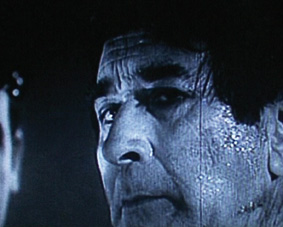
?Broken Threads? is the manipulation of a ?70s Albanian noir movie so as to transform it into its trailer, by collating footage and using as a soundtrack Nick Cave and the Bad Seeds? ?The Curse of Millhaven?, from album Murder Ballads. This project aims at tackling the phenomenon of crime and revolution starting from the earliest jesuit conspirations, showing revolution is nothing but the infamous motto: my work starts when yours is done. For this reason the movie wasn?t digitalized through usual processes, but was instead filmed with a handicam for the whole of its duration, so as to respect the project?s concept. ?Broken Threads? elaborates Cave?s track with Albanian noir movie ?Broken Threads?, revolving around a bunch of Albanian agents ? former nazi collaborators during WWII ? operating against the socialist system, suddendly coming back to their homeland to sabotage and destroy some important objectives in the country?s secret industrial plans. The movie stresses the relationship between memory and actuality, old and new enemies, adding up in a noir spy story showing international plots and conspiration finally failing, as usual, in the best of ways.
Fani Zguro born in 1977 Tirana. Lives and works in Milan EDUCATION 1996-1997: Polytechnic of Athens (Greece - outsider) 1998-2002: Accademia delle Belle Arti di Brera Milano (Italy) 2008-2010: Laurea Specialistica, Accademia delle Belle Arti di Brera Milano (Italy) ART RESIDENCES 2003-2004: Citè International des Arts Paris (France) 2009-2009: Kultur Kontakt, Vienna (Austria) 2009-2009: La Générale en Manufacture, Sèvres Paris (France) 2009-2009: Taller Siete, Medellin (Colombia) WORK EXPERIENCE 2004-2005: Independent Curator, The National Gallery of Arts Tirana (Albania) 2007- : Project Director, Tirana Art Center (Albania)
Charlotte Zhang
Catalogue : 2019The Lining | Fiction expérimentale | hdv | couleur | 21:5 | Canada, USA | 2018
Charlotte Zhang
The Lining
Fiction expérimentale | hdv | couleur | 21:5 | Canada, USA | 2018
An experimental portrait of love and quiet sadness in the corners of Los Angeles. Zhang`s non-linear editing creates an intimate and poetic representation that flows in and out of narrative and documentarian conventions.
Charlotte Zhang (b. 1999) is a filmmaker and occasional writer from Vancouver Island, currently studying Film/Video at California Institute of the Arts.
Charlotte Zhang
Xun Zhang
Catalogue : 2026The Snow to Fall | Fiction expérimentale | dcp | couleur | 7:34 | Chine, Royaume-Uni | 2024

Xun Zhang
The Snow to Fall
Fiction expérimentale | dcp | couleur | 7:34 | Chine, Royaume-Uni | 2024
The Snow to Fall (2024) bears witness to the obscure contours of a heritage site undergoing maintenance. Two voices, whose presence is known through subtitles at the two ends of the screen, discuss in an exhaustive language the interiors of the room, the story of a boulder encountered in a mountain house, and the dust that keeps coming back. They hold on to the conversation to survive the time, but the time does not end. Through a sustained gaze at the often invisible labour of care in memory institutions, the film explores the unruly temporality of care, the elusive shapes of kinship, and what remains of those that fail to become history.
Else/Xun is a researcher and artist who works primarily with moving image and creative-critical writing. Inhabiting chronic times, their practice-based research investigates the politics and potentials of care in the systematic carelessness of neoliberal societies. They fabulate dialogues that attend to the functioning of language and power relations, telling stories to trace alternative modes of belonging and becoming centred around interdependency, care, and radical kinship. Else/Xun is an Artist in Residence at CW+ of Chelsea and Westminster Hospital NHS Foundation Trust (2024-25) and a member of Neighbours Group at Studio Voltaire, London (2025-28). Recent exhibitions and screenings include East Wing Biennial (The Courtauld Institute of Art, London, 2025), European Media Art Festival (Osnabrück, 2025), Sonic Disruption (Tate Modern, London, 2024), and Queer Currents (ROZENSTRAAT, Amsterdam, 2023). As part of the artist collective Hebianhengge ????, they have spoken about their research on Chinese queer language at Manchester China Institute (2022) and Queer China UK (2022). They work and live in London and hold an MRes in Arts & Humanities, followed by an MA in Contemporary Art Practice from the Royal College of Art.
Xianyi Zhang
Catalogue : 2026Walking Dog | Fiction expérimentale | 4k | couleur | 14:24 | Chine, Royaume-Uni | 2024

Xianyi Zhang
Walking Dog
Fiction expérimentale | 4k | couleur | 14:24 | Chine, Royaume-Uni | 2024
In a decaying urban wasteland, a woman’s routine walk with her dog turns into a search when the leash slips. As they move through deserted industrial spaces, both begin to adapt to the absence of control, transforming from domesticated beings into defiant strays. Their shifting relationship unfolds as a quiet study of dependence, rebellion, and autonomy within an oppressive landscape.
Andy Xianyi Zhang is a London-based filmmaker and moving image artist, and a recipient of The FLAMIN Fellowship (2024–2025). Originally from Shanghai, she works at the intersection of experimental film and artists’ moving image, exploring themes of urbanization, alienation, and self-discovery. Her practice employs a restrained yet defiant visual language, investigating the relationship between human presence and space through the aesthetics of slow cinema and non-linear narrative structures. Her work has been exhibited internationally, including at the Beijing International Short Film Festival, Ugly Duck (London), and Punch Gallery (Washington D.C.), and has been featured in NOWNESS Asia and Artist Talk Magazine. Zhang holds an MA in Film from the University of the Arts London.
Yi Zhang, Nu HA
Liang Zhao
Catalogue : 2006City scene | Doc. expérimental | dv | couleur | 31:0 | Chine | 2004
Liang Zhao
City scene
Doc. expérimental | dv | couleur | 31:0 | Chine | 2004
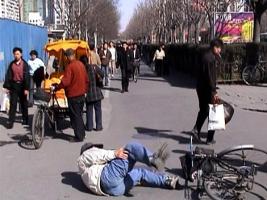
City Scene est composé d'une série d'instantanés tournés dans les rues et les parcs de Pekin, lors de la préparation des Jeux Olympiques. Le réalisateur capture dans des plans fixes la réalité quotidienne: activités de loisirs, scènes de rue, violence latente. Les plans de longue durée, non coupés, soigneusement cadrés, attirent l'attention sur les lieux et certains détails, ainsi que sur la manière dont les gens bougent et intéragissent. Zhao Liang fait ici un usage impressionnant de la capacité du cinéma à rendre la réalité visible en tant que telle.
Zhao Liang est né en Chine en 1971. Il vit et travaille à Pekin. Son travail est régulièrement montré en Europe et aux Etats-Unis, notamment au festival du film d'Oberhausen, à la Haus der Kultur des Welt, à Berlin, au musée d'art contemporain de Monterrey, au Mexique, et au centre international de photographie de New York.
Mikhail Zheleznikov
Catalogue : 2021Revizia | Doc. expérimental | mp4 | couleur et n&b | 4:2 | Russie | 2020
Mikhail Zheleznikov
Revizia
Doc. expérimental | mp4 | couleur et n&b | 4:2 | Russie | 2020
Courte étude d'une vieille photo trouvée chez un antiquaire.
Mikhail Zheleznikov est né à Leningrad en 1972. Il a réalisé des films pour ARTE et YLE, Corona Films et le Studio de films documentaires de Saint-Pétersbourg. Il a été participant et membre du jury de plusieurs festivals internationaux de cinéma. Ses œuvres vidéo ont été exposées au Museum of Contemporary Art Kiasma, Helsinki (Finlande); au Museum of the Moving Image, New York (États-Unis); au National Art Center, Tokyo (Japon); au Kunst Museum Bonn (Allemagne); au Erarta Museum of Contemporary Art, Saint-Pétersbourg (Russie). Depuis 2011, il est le commissaire du concours de films courts expérimentaux In Silico au festival Message To Man, Saint-Pétersbourg (Russie). En 2012, il co-organise le festival de films expérimentaux Kinodot, Saint-Pétersbourg (Russie). Il enseigne depuis 2015 au Saint Petersburg State Institute of Culture, et depuis 2016, à la Saint Petersburg School of New Cinema. En 2019, il a été l'un des commissaires du projet expérimental "Per Forma 2 Stage" au Big Drama Theater.
Mikhail Zheleznikov
Catalogue : 2023The Ritual | Doc. expérimental | 0 | noir et blanc | 13:50 | Russie | 2023

Mikhail Zheleznikov
The Ritual
Doc. expérimental | 0 | noir et blanc | 13:50 | Russie | 2023
Silence is gold. Who needs words in this sea of selfless love.
Mikhail Zheleznikov was born in Leningrad in 1972. Made TV episodes for ARTE and YLE, films for St. Petersburg Documentary Film Studio. Participant and jury member of various international film festivals. His video works have been exhibited at modern art museum Kiasma (Helsinki, Finland), Museum of the Moving Image (New York, USA), The National Art Center (Tokyo, Japan), Kunst Museum Bonn (Germany), Museum of Modern Art Erarta (St. Petersburg, Russia). Since 2011 curates experimental short film competition In Silico at Message To Man film festival. In 2012 co-organized experimental film festival Kinodot. In 2015-2019 was teaching at St. Petersburg State Institute of Culture, in 2016-2021 in St. Petersburg New Cinema School. In 2019 was one of the curators of the experimental project Per Forma 2 Stage at the Big Drama Theater. Since 2019 he has taught documentary filmmaking at St. Petersburg State University of Film and Television.
Liu Zhenchen