Catalogue > Liste par artiste
Parcourez la liste complète des artistes présentés dans le cadre des Rencontres Internationales depuis 2004. Utilisez le filtre alphabétique pour affiner vos recherches.
Romana Schmalisch, Robert Schlicht
Catalogue : 2013Preliminaries | Doc. expérimental | hdv | couleur | 48:0 | Allemagne, Russie | 2011
Romana Schmalisch, Robert Schlicht
Preliminaries
Doc. expérimental | hdv | couleur | 48:0 | Allemagne, Russie | 2011
The film ?Preliminaries? traces the history of the statue ?Worker and Kolkhoz Woman? by Vera Mukhina. This statue was originally designed for the Soviet pavilion at the 1937 World Exhibition in Paris, where it stood opposite the pavilion of Nazi Germany, enacting an antagonism that would result in a catastrophic war. It was later moved to Moscow and erected in front of the Exhibition of National Achievements of the Economy, which to the contemporaries appeared as a promise of a radiant future. After World War II, the statue became the emblem of the biggest film company of the Soviet Union, Mosfilm, and is shown at the beginning of every Mosfilm movie since 1947. In deciphering the statue?s diverse symbolisms and connections to the historical contexts, the film investigates into the notion of future as a central topic in the politics and culture of the Stalinist era. Exploring subjects like the War, Socialist Realism, and show trials, the film attempts to deconstruct a politics of the symbol that results from an ideology of the future, in which the present is neglected since it is considered as nothing but the preliminary future. Images from present-day Moscow ? the statue in front of a post-Communist amusement park, the surroundings of the Mosfilm studios, and the Red Square populated by Party leader doppelgangers ? are combined with stills from Stalinist films as well as with projected interviews (with Naum Kleiman, Gayane Ambartsumyan, Sergei Nikitin) set up in a situation slightly reminiscent of a trial hearing. The film thus enacts a preliminary inquiry on issues inherent in the notion of a future that is taken for granted and hence doesn?t even need to be realised ? a future that is now our past.
Romana Schmalisch studied Fine Arts at the University of the Arts in Berlin. She was a resident artist in several stipend programs, among others as a researcher at the Fine Art Department of Jan Van Eyck Academy, Maastricht, and in the Berlin Senate`s stipend program in London. Robert Schlicht studied philosophy at Humboldt University Berlin. Together they develop projects at the interface of film and theory, investigating cinematic representations and the representability of historical processes and social structures.
Catalogue : 2012Recitando | Fiction expérimentale | hdv | couleur | 35:1 | Allemagne | 2010
Romana Schmalisch, Robert Schlicht
Recitando
Fiction expérimentale | hdv | couleur | 35:1 | Allemagne | 2010
The film ?Recitando? is the documentation of an encounter between workers from the Moscow paper factory ?October? and two filmmakers from abroad. The film experiments with and combines modes of documentary and fiction, and strategies of theatre and film, in order to investigate into and construct models of cinematography. The paper production process which seems to be captured in documentary shots is in fact staged for the camera by the workers, since the factory does not pro¬duce anything at the moment ? and this nonproduction is the condition for their appearance as actors in the film. For at the same time, the workers recount and reflect upon their current situation ? being filmed instead of producing paper ? in choric recitations and two songs, delivered in a manner reminiscent of Brechtian ?Lehrstücke?. The customary contrast of documentary and fictional modes, of reality ?caught unawares? and scripted enactment is thus being twisted and deconstructed. Additionally, the film is continually interrupted by intertitles citing discussions from late 1920s? Soviet cinema ? e. g., about documentarism à la Dziga Vertov and Esfir Shub, about Sergei Eisenstein?s reenactment of the October revolution ten years after the event and the film?s mixed reception, and of the relation between images and text ? thus evoking a friction between early avant-garde cinematography and today?s filmic modes, as well as rendering the question as to who speaks even more uncertain. The two filmmakers may not only come from a different country but even from a different era. The film thus experiments with different cinematographic models. Instead of pur¬porting to present something which could be considered as a finished film, it at¬tempts to create fissures in the cinematographic texture as spaces for the reflection on different filmic modes, on the interrelations of history of film, and on representa¬tion and reality. ?Recitando? was shot in the Moscow paper factory ?October? (formerly ?Red October?), which was founded in 1924. During Soviet times one of Moscow?s largest paper mills, the residual staff only rarely produces paper today. Parts of the com¬plex have been transformed into the art space PROEKT_FABRIKA, where the film premiered in January 2010.
Romana Schmalisch (1974) born and based in Berlin Romana Schmalisch graduated with an MFA from the Universität der Künste, Berlin, in 2002. She focuses on the architectonic urban space, its changes and the accompanying social changes. In her film works, she combines sequences shot by herself with image and film quotations and with text fragments in the form of a collage, juxtaposing different layers of times and imagery. Romana Schmalisch collaborated on various film projects with Robert Schlicht. Robert Schlicht (1975) born and based in Berlin Robert Schlicht has studied philosophy and literature and graduated from the Humboldt University Berlin. His thesis with the title ?Passage au Cinéma? examined the relation of Walter Benjamin?s film theory and his theory of history and historiography. Subsequently, Robert Schlicht was concerned with the interface of theory and film, and collaborated on various film projects with Romana Schmalisch. Recent exhibitions/screenings (selection): National Centre for Contemporary Arts, NCCA, Moscow (2011), centre d?art passerelle, Brest (2010), Proekt_Fabrika, Moscow (2010), Utopiana, Yerevan, Armenia (2009), National Centre for Contemporary Arts, NCCA, Moscow (2009), Centre for Contemporary Art at Ujazdowski Castle, Warsaw (2009), Wilhelm Lehmbruck Museum, Duisburg (2007), STUK Theater, Leuven (2007), Arsenal/Freunde der deutschen Kinemathek, Berlin (2007), Arsenal/Freunde der deutschen Kinemathek, Berlin (2005)
Catalogue : 2011Real Estate Avantgarde | Vidéo expérimentale | dv | couleur et n&b | 5:20 | Allemagne | 2010
Romana Schmalisch
Real Estate Avantgarde
Vidéo expérimentale | dv | couleur et n&b | 5:20 | Allemagne | 2010
Real Estate Avantgarde »Real Estate Avantgarde«, HD, 5:20 min., 2010 ?Real Estate Avantgarde? is a fictitious promotion trailer for a real estate investment project in St Petersburg. The investor Igor Burdinsky has purchased the former textile factory ?Red Banner?, a masterpiece of avantgarde architecture, and is now seeking partners to realise a cultural and/or business centre. While the investor draws on the symbolic power of avantgarde architecture, the film in turn appropriates this business strategy.
Romana Schmalisch is based in Berlin. Recent exhibitions/screenings include: centre d?art passerelle, Brest (2010) Transmission Gallery, Glasgow (2010), Proekt_Fabrika, Moscow (2010) FormContent, London (2009), National Centre for Contemporary Arts, NCCA, Moscow (2009), Contemporary Art Centre, CAC, Vilnius (2009), Centre for Contemporary Art at Ujazdowski Castle, Warsaw (2009), Museum Folkwang, Essen (2008), MuseumKunstPalast, Düsseldorf (2008), Wilhelm Lehmbruck Museum, Duisburg (2007), STUK, Leuven (2007)
Catalogue : 2010Decision of the party | Film expérimental | super8 | couleur | 5:33 | Allemagne | 2008
Romana Schmalisch
Decision of the party
Film expérimental | super8 | couleur | 5:33 | Allemagne | 2008
Decision of the Party (2008) is a film, which combines Super8 material from today?s Volgograd with parts of the sound track from the Soviet propaganda film The Promise (Kliatva, 1946). In this movie, Joseph Stalin plans and realises ?his? city, Stalingrad (now Volgograd). Thus, the real city of today is juxtaposed with its past medial vision, in turn becoming a projection of its own history within the film.
Romana Schmalisch 1974 born in Berlin, Germany lives and works in Berlin, Germany Education 1995 Universität der Künste, Berlin 2000 Hunter College, New York, USA 2001 Surikov-Institut, Moscow 2002 MFA, Universität der Künste, Berlin 2006/2007 Researcher Fine Art, Jan van Eyck Akademie, Maastricht Grants 2009 International Residency, Berlin Senate`s Department of Science, Research and Culture in collaboration with the Whitechapel Gallery and Studio Voltaire, London | 2007 Karl-Hofer-Gesellschaft Art Award, Berlin | Provinzial Förderprojekt 2005 Goldrausch Künstlerinnenprojekt art IT | film grant from the Berlin Senate for Cultural Affairs, Berlin 2004 DAAD stipend, Paris 2003 project grant from the Berlin Senate for Cultural Affairs, Berlin for ?Dom Sovietov? 2002/2003 Kyoung-an Artist-in-Residency, Seoul
Catalogue : 2009Weg zum Klub. Erholung durch Kultur | Vidéo expérimentale | 16mm | couleur | 11:0 | Allemagne | 2007
Romana Schmalisch
Weg zum Klub. Erholung durch Kultur
Vidéo expérimentale | 16mm | couleur | 11:0 | Allemagne | 2007
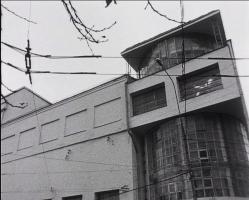
Le film rapproche - sous forme de collage - des bâtiments soviétiques d'avant-garde datant des années 1920 à des films et enregistrements audio de la fin des années 1930, dans lesquels le sujet de l'évolution de Moscou joue un rôle majeur. Ces changements très rapides dans la politique et le paysage architectural deviennent le sujet central du film. Le regard sur le début de l?avant-garde est confronté aux plans mégalomanes staliniens. Le film examine l'image de Moscou telle qu?elle a été rapportée par les médias à un moment de radicaux changements politiques et sociaux.
Romana Schmalisch est née à Berlin en 1974 où elle vit et travaille actuellement. L'artiste a obtenu un diplôme de l'Universität der Künste de Berlin en 2002 (AMF) et a été chercheuse en Beaux-Arts à la Jan van Eyck Akademie de Maastricht (Pays-Bas) en 2006/2007. L??uvre de Schmalisch a été exposée internationalement.
Romana Schmalisch
Catalogue : 2013Preliminaries | Doc. expérimental | hdv | couleur | 48:0 | Allemagne, Russie | 2011
Romana Schmalisch, Robert Schlicht
Preliminaries
Doc. expérimental | hdv | couleur | 48:0 | Allemagne, Russie | 2011
The film ?Preliminaries? traces the history of the statue ?Worker and Kolkhoz Woman? by Vera Mukhina. This statue was originally designed for the Soviet pavilion at the 1937 World Exhibition in Paris, where it stood opposite the pavilion of Nazi Germany, enacting an antagonism that would result in a catastrophic war. It was later moved to Moscow and erected in front of the Exhibition of National Achievements of the Economy, which to the contemporaries appeared as a promise of a radiant future. After World War II, the statue became the emblem of the biggest film company of the Soviet Union, Mosfilm, and is shown at the beginning of every Mosfilm movie since 1947. In deciphering the statue?s diverse symbolisms and connections to the historical contexts, the film investigates into the notion of future as a central topic in the politics and culture of the Stalinist era. Exploring subjects like the War, Socialist Realism, and show trials, the film attempts to deconstruct a politics of the symbol that results from an ideology of the future, in which the present is neglected since it is considered as nothing but the preliminary future. Images from present-day Moscow ? the statue in front of a post-Communist amusement park, the surroundings of the Mosfilm studios, and the Red Square populated by Party leader doppelgangers ? are combined with stills from Stalinist films as well as with projected interviews (with Naum Kleiman, Gayane Ambartsumyan, Sergei Nikitin) set up in a situation slightly reminiscent of a trial hearing. The film thus enacts a preliminary inquiry on issues inherent in the notion of a future that is taken for granted and hence doesn?t even need to be realised ? a future that is now our past.
Romana Schmalisch studied Fine Arts at the University of the Arts in Berlin. She was a resident artist in several stipend programs, among others as a researcher at the Fine Art Department of Jan Van Eyck Academy, Maastricht, and in the Berlin Senate`s stipend program in London. Robert Schlicht studied philosophy at Humboldt University Berlin. Together they develop projects at the interface of film and theory, investigating cinematic representations and the representability of historical processes and social structures.
Catalogue : 2012Recitando | Fiction expérimentale | hdv | couleur | 35:1 | Allemagne | 2010
Romana Schmalisch, Robert Schlicht
Recitando
Fiction expérimentale | hdv | couleur | 35:1 | Allemagne | 2010
The film ?Recitando? is the documentation of an encounter between workers from the Moscow paper factory ?October? and two filmmakers from abroad. The film experiments with and combines modes of documentary and fiction, and strategies of theatre and film, in order to investigate into and construct models of cinematography. The paper production process which seems to be captured in documentary shots is in fact staged for the camera by the workers, since the factory does not pro¬duce anything at the moment ? and this nonproduction is the condition for their appearance as actors in the film. For at the same time, the workers recount and reflect upon their current situation ? being filmed instead of producing paper ? in choric recitations and two songs, delivered in a manner reminiscent of Brechtian ?Lehrstücke?. The customary contrast of documentary and fictional modes, of reality ?caught unawares? and scripted enactment is thus being twisted and deconstructed. Additionally, the film is continually interrupted by intertitles citing discussions from late 1920s? Soviet cinema ? e. g., about documentarism à la Dziga Vertov and Esfir Shub, about Sergei Eisenstein?s reenactment of the October revolution ten years after the event and the film?s mixed reception, and of the relation between images and text ? thus evoking a friction between early avant-garde cinematography and today?s filmic modes, as well as rendering the question as to who speaks even more uncertain. The two filmmakers may not only come from a different country but even from a different era. The film thus experiments with different cinematographic models. Instead of pur¬porting to present something which could be considered as a finished film, it at¬tempts to create fissures in the cinematographic texture as spaces for the reflection on different filmic modes, on the interrelations of history of film, and on representa¬tion and reality. ?Recitando? was shot in the Moscow paper factory ?October? (formerly ?Red October?), which was founded in 1924. During Soviet times one of Moscow?s largest paper mills, the residual staff only rarely produces paper today. Parts of the com¬plex have been transformed into the art space PROEKT_FABRIKA, where the film premiered in January 2010.
Romana Schmalisch (1974) born and based in Berlin Romana Schmalisch graduated with an MFA from the Universität der Künste, Berlin, in 2002. She focuses on the architectonic urban space, its changes and the accompanying social changes. In her film works, she combines sequences shot by herself with image and film quotations and with text fragments in the form of a collage, juxtaposing different layers of times and imagery. Romana Schmalisch collaborated on various film projects with Robert Schlicht. Robert Schlicht (1975) born and based in Berlin Robert Schlicht has studied philosophy and literature and graduated from the Humboldt University Berlin. His thesis with the title ?Passage au Cinéma? examined the relation of Walter Benjamin?s film theory and his theory of history and historiography. Subsequently, Robert Schlicht was concerned with the interface of theory and film, and collaborated on various film projects with Romana Schmalisch. Recent exhibitions/screenings (selection): National Centre for Contemporary Arts, NCCA, Moscow (2011), centre d?art passerelle, Brest (2010), Proekt_Fabrika, Moscow (2010), Utopiana, Yerevan, Armenia (2009), National Centre for Contemporary Arts, NCCA, Moscow (2009), Centre for Contemporary Art at Ujazdowski Castle, Warsaw (2009), Wilhelm Lehmbruck Museum, Duisburg (2007), STUK Theater, Leuven (2007), Arsenal/Freunde der deutschen Kinemathek, Berlin (2007), Arsenal/Freunde der deutschen Kinemathek, Berlin (2005)
Catalogue : 2011Real Estate Avantgarde | Vidéo expérimentale | dv | couleur et n&b | 5:20 | Allemagne | 2010
Romana Schmalisch
Real Estate Avantgarde
Vidéo expérimentale | dv | couleur et n&b | 5:20 | Allemagne | 2010
Real Estate Avantgarde »Real Estate Avantgarde«, HD, 5:20 min., 2010 ?Real Estate Avantgarde? is a fictitious promotion trailer for a real estate investment project in St Petersburg. The investor Igor Burdinsky has purchased the former textile factory ?Red Banner?, a masterpiece of avantgarde architecture, and is now seeking partners to realise a cultural and/or business centre. While the investor draws on the symbolic power of avantgarde architecture, the film in turn appropriates this business strategy.
Romana Schmalisch is based in Berlin. Recent exhibitions/screenings include: centre d?art passerelle, Brest (2010) Transmission Gallery, Glasgow (2010), Proekt_Fabrika, Moscow (2010) FormContent, London (2009), National Centre for Contemporary Arts, NCCA, Moscow (2009), Contemporary Art Centre, CAC, Vilnius (2009), Centre for Contemporary Art at Ujazdowski Castle, Warsaw (2009), Museum Folkwang, Essen (2008), MuseumKunstPalast, Düsseldorf (2008), Wilhelm Lehmbruck Museum, Duisburg (2007), STUK, Leuven (2007)
Catalogue : 2010Decision of the party | Film expérimental | super8 | couleur | 5:33 | Allemagne | 2008
Romana Schmalisch
Decision of the party
Film expérimental | super8 | couleur | 5:33 | Allemagne | 2008
Decision of the Party (2008) is a film, which combines Super8 material from today?s Volgograd with parts of the sound track from the Soviet propaganda film The Promise (Kliatva, 1946). In this movie, Joseph Stalin plans and realises ?his? city, Stalingrad (now Volgograd). Thus, the real city of today is juxtaposed with its past medial vision, in turn becoming a projection of its own history within the film.
Romana Schmalisch 1974 born in Berlin, Germany lives and works in Berlin, Germany Education 1995 Universität der Künste, Berlin 2000 Hunter College, New York, USA 2001 Surikov-Institut, Moscow 2002 MFA, Universität der Künste, Berlin 2006/2007 Researcher Fine Art, Jan van Eyck Akademie, Maastricht Grants 2009 International Residency, Berlin Senate`s Department of Science, Research and Culture in collaboration with the Whitechapel Gallery and Studio Voltaire, London | 2007 Karl-Hofer-Gesellschaft Art Award, Berlin | Provinzial Förderprojekt 2005 Goldrausch Künstlerinnenprojekt art IT | film grant from the Berlin Senate for Cultural Affairs, Berlin 2004 DAAD stipend, Paris 2003 project grant from the Berlin Senate for Cultural Affairs, Berlin for ?Dom Sovietov? 2002/2003 Kyoung-an Artist-in-Residency, Seoul
Catalogue : 2009Weg zum Klub. Erholung durch Kultur | Vidéo expérimentale | 16mm | couleur | 11:0 | Allemagne | 2007
Romana Schmalisch
Weg zum Klub. Erholung durch Kultur
Vidéo expérimentale | 16mm | couleur | 11:0 | Allemagne | 2007
Le film rapproche - sous forme de collage - des bâtiments soviétiques d'avant-garde datant des années 1920 à des films et enregistrements audio de la fin des années 1930, dans lesquels le sujet de l'évolution de Moscou joue un rôle majeur. Ces changements très rapides dans la politique et le paysage architectural deviennent le sujet central du film. Le regard sur le début de l?avant-garde est confronté aux plans mégalomanes staliniens. Le film examine l'image de Moscou telle qu?elle a été rapportée par les médias à un moment de radicaux changements politiques et sociaux.
Romana Schmalisch est née à Berlin en 1974 où elle vit et travaille actuellement. L'artiste a obtenu un diplôme de l'Universität der Künste de Berlin en 2002 (AMF) et a été chercheuse en Beaux-Arts à la Jan van Eyck Akademie de Maastricht (Pays-Bas) en 2006/2007. L??uvre de Schmalisch a été exposée internationalement.
Max Philipp Schmid
Catalogue : 2020Membran | Fiction expérimentale | 0 | couleur | 13:55 | Suisse | 2019
Max Philipp Schmid
Membran
Fiction expérimentale | 0 | couleur | 13:55 | Suisse | 2019
Est-ce que la catastrophe est déjà arrivée ou est-elle sur le point de l'être? Deux hommes et une femme sont assis dans leurs appartements de type bunker, comme s'ils étaient dans une salle d'attente. Ils sont accablés par le flot d'informations et de guides livres replis de parole de sagesse cherchant la stabilité dans le jeu du piano de la classe moyenne éduquée et auprès des techniques d'auto-optimisation de l'extrême-orient. Leur perplexité passive se transforme en activisme frénétique. Maintenant quelque chose doit se passer! Mais rien n’arrive.
Max Philipp Schmid (*1962) studied art history and visual arts. He has devoted himself to creating experimental films, musical films and video installations. His works and installations have been featured in solo and group shows and at numerous festivals worldwide.
Max Philipp Schmid
Catalogue : 2012DAS GESPENST DES GLÜCKS | Vidéo expérimentale | | couleur | 10:20 | Suisse | 2011
Max Philipp Schmid
DAS GESPENST DES GLÜCKS
Vidéo expérimentale | | couleur | 10:20 | Suisse | 2011
A man and a woman practise the great embrace. Ardently they try to simulate the vibrant style of a Hollywood musical ?.
Max Philipp Schmid (geboren 1962) realisiert seit 1990 experimentelle Film- und Videoarbeiten. Diese wurden u.a. im Schweizer Pavillon an der Weltausstellung Zaragoza 08, im plug_in Basel (Einzelausstellungen), im ZKM Karlsruhe, Swiss Institute New York, Museum für Gegenwartskunst Basel, der Kunsthalle BL und an zahlreichen Festivals gezeigt. Er ist Mitglied der VIA, AudioVideoKunst, Basel und unterrichtet an der SfG Basel.
Doris Schmid
Catalogue : 2025I Speak the Night | Vidéo | hdv | couleur | 19:0 | Suisse, Allemagne | 2023
Doris Schmid
I Speak the Night
Vidéo | hdv | couleur | 19:0 | Suisse, Allemagne | 2023
The work begins and ends with a shot of a snowy mountain under a full moon, which renders it into a glowing majestic mountain. As starting and as end point, this image symbolically represents the concerns and leitmotif of I speak the night: A reflection on perception, imagination and on artistic expression of the collective real, external world, in relation to the subjective inner life of each individual. The basic structure of the video rests on three strands, which are poetically interwoven into a singular composition consisting of: Photographic images by the artist, improvised sound by a musician and poetry, by two poets. The visual plane consists of a series of countless cyanotypes constituted by still photographs, supplemented with surreal video sequences. Music sets the rhythm and simultaneously opens up wide sound spaces. The symbolic and enigmatic language of the poems – engraved into text panels – combines in an associative manner, with the images and sound. At the core of the work stands, metaphorically, the darkness of night; one which conceals much, in contrast to the light with the sense imagery of sun and full moon. In the analog cyanotype process, images emerge from darkness (from the night) as it were, into the light, as handmade unique pieces with a characteristic deep blue colouring: dreamlike and in yearning reminiscences of places, spaces, nature, landscapes, animals or human bodies. The pictures bear witness to a physical, presence of being. At the same time, they appear as sublime, multilayered soul-states in connection with natural elements, such as water and fire. In utilising the cynotype in a media based interplay with video, the artist explores experimental aesthetic possibilities. Due to the magical power of the images, in an absorbing combination with music and text, she succeeds in creating an impressive plasticity, sensuality and sense of meaning. The work casts a spell over the viewer and inevitably sets our imagination in motion. Text: Bruno Z`Graggen
Doris SCHMID (b. 1974. Switzerland) is a a visual artist with video, installation and photography. He studied in Basel and Zurich (painting and video/new media). Since 2000 participation in video festivals, exhibitions, art projects, screenings and numerous collaborative audio-visual projects with musicians, sound artists and artist radio projects. Prizes (such as Videotage Basel, NAB, shift Festival Basel, Shortlist Medienkunstpreis SEHNERV). Residencies in Tokyo, Vienna, Berlin, San Francisco, Paris and Nairs. Lives in Berlin and Zürich.
Nicolaas Schmidt
Catalogue : 2023First Time [The Time for All but Sunset - Violet] | Fiction expérimentale | 0 | couleur | 49:0 | Allemagne | 2021
Nicolaas Schmidt
First Time [The Time for All but Sunset - Violet]
Fiction expérimentale | 0 | couleur | 49:0 | Allemagne | 2021
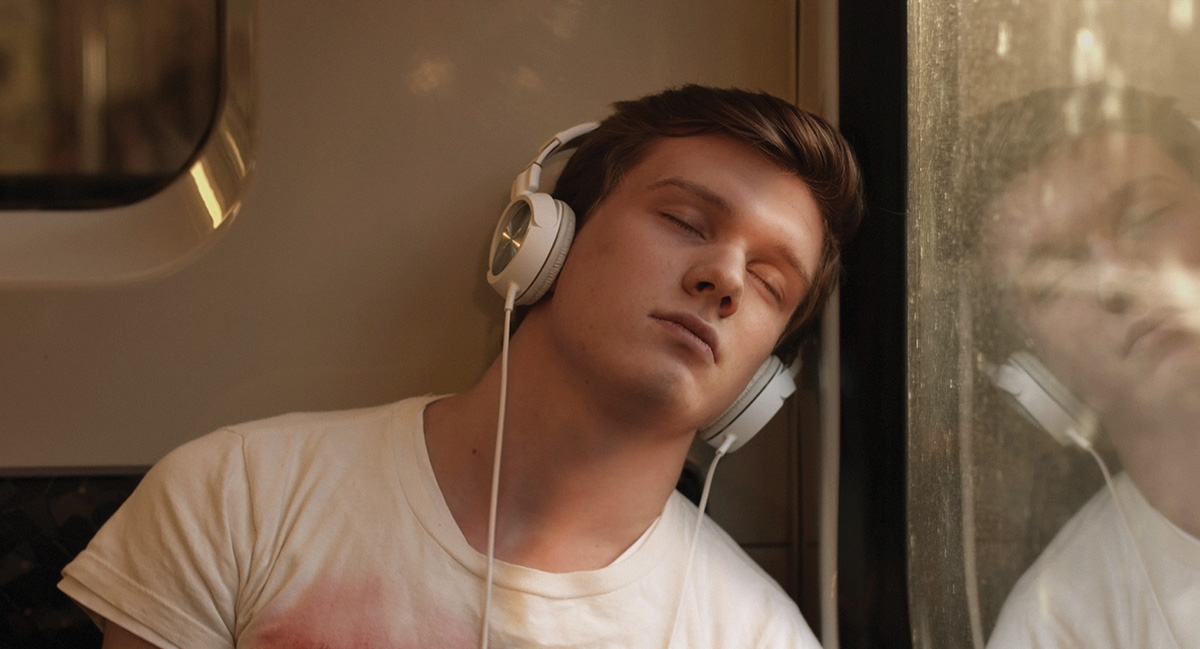
We listen to music and are on the way. In doing so, we see things and the world differently than before. So that things don't always go on like this, but may become better: Two boys meet on a train ride. Something is born – not much and yet everything. Enjoy a Golden Hour Carousel Ride. A Common Sensations Music Movie.
Nicolaas Schmidt lives and works as Filmmaker, Video- and Concept Artist in Hamburg, Europe. He studied Fine Arts, Time Based Media and Visual Communication (Film) at Hamburg Academy of Fine Arts. His works are shown at international film festivals, exhibitions and other contingencies.
Johanna Maj Schmidt, Charlotte Ruppert
Catalogue : 2021My Happiness Depends On You | Performance multimédia | mp4 | couleur | 60:0 | Allemagne | 2020
Johanna Maj Schmidt, Charlotte Ruppert
My Happiness Depends On You
Performance multimédia | mp4 | couleur | 60:0 | Allemagne | 2020
Prenant la forme d'une figure dédoublée inspirée de Dolly Parton, les interprètes sont assises sur une boîte dans laquelle un écran plat est intégré. L'écran montre une vidéo en streaming tirée d'un jeu de tir multijoueur en ligne. Assises au-dessus du personnage du jeu, les deux interprètes portent des robes de mariée, des perruques blondes aux longs cheveux ondulées, un maquillage excentrique et des faux seins gros à en être grotesques (monstruosité féminine). Elles tiennent dans leurs mains des paniers à quête, habituellement utilisés pour la quête dans les églises. De temps en temps, elles s’exclament en chevrotant "My happiness depends on you!" (extrait de la chanson "Jolene" de Dolly Parton, et qui se traduit par "Mon bonheur dépend de toi!") en chœur dans un refrain lancinant. Ce faisant, elles fixent chacune un visiteur dans les yeux avec intensité, une sorte de fureur, des attentes. Alors que la vidéo en streaming met en évidence un désir potentiellement nostalgique de la figure du héros, les deux Dolly remettent en question l'héroïsme en tant que tel. Si la figure du héros revendique traditionnellement une forme de singularité par le sacrifice d'un seul individu (homme) fort au nom d'une idéologie, une réponse (féministe) à l’attention portée au héros exceptionnel pourrait être de revenir à l'interdépendance. Dans ce contexte, la phrase "My happiness depends on you!" pourrait être perçue, positivement, comme une morale anti-héroïque ou, négativement, comme une soumission volontaire. Ainsi, elle fait allusion à la relation ambivalente entre dépendance et indépendance.
Johanna Maj Schmidt a obtenu un Master en art et politique à la Goldsmiths University of London, Londres (Royaume-Uni), en 2015. Depuis 2017, elle étudie les arts médiatiques à la Hochschule für Grafik und Buchkunst Leipzig (Allemagne) dans la classe de Clemens von Wedemeyer. Dans le cadre d'une école doctorale sur le populisme de droite, elle rédige son doctorat sur les représentations de la figure du héros dans les mèmes internet d'extrême droite au sein des sociétés dites post-héroïques. Ses œuvres ont été présentées à la 6e Athens Biennale for Contemporary Art, Athènes (Grèce); à la 3e NSK Folk Art Biennale, Trbovlje (Slovénie); et au Soundcheck Philosophie Festival au LOFFT – Leipziger Off-Theater, Leipzig (Allemagne). Charlotte Ruppert a suivi une formation professionnelle d’assistante de management spécialisée en communication de bureau au Statistisches Bundesamt, Wiesbaden (Allemagne). Ensuite, elle a décidé d'étudier les Beaux-Arts à la Hochschule für Gestaltung, Offenbach-sur-le-Main (Allemagne), où elle a terminé son premier cycle universitaire en peinture. Depuis 2017, elle poursuit ses études à la Hochschule für Grafik und Buchkunst Leipzig (Allemagne) dans la classe de Helmut Mark. Ses dessins et peintures ont été exposés à Rosa Stern, Munich (Allemagne) et à Westpol Airspace, Leipzig (Allemagne). Elle est cofondatrice et directrice artistique de Hitness Club e.v., une chaîne de télévision gérée par les artistes.
Stephana Schmidt
Catalogue : 2008Handy moovie | Vidéo expérimentale | | couleur | 3:15 | Allemagne | 2006
Stephana Schmidt
Handy moovie
Vidéo expérimentale | | couleur | 3:15 | Allemagne | 2006
Arrival, finally again! But where is that? What sort of thing is a piano becoming when being transformed into distorted electronic streams by a mini-microphone? Elevated randomly from the archive, data have been put together into a memory package. This feeling between the places is, whose notion the entire metropolitan community can share. All takes have been shot with "handy devices". Time window: 5 years.
Stephana Schmidt was born 1976 in Halle/S., ex-GDR. After various daydreams, music experiments plus an education on classical piano he studied Philosophy and doing Photographs. He graduated in Visual Arts at Bauhaus Weimar and Fine Arts at Beaux Arts Toulouse. Ever since he lives and works as a "Multipurpose Artist" in Berlin running the "Gedankenschmied-Project".
Kirstin Schmitt
Catalogue : 2020Quítame la sal de encima | Vidéo | hdv | | 3:15 | Allemagne, Cuba | 2019
Kirstin Schmitt
Quítame la sal de encima
Vidéo | hdv | | 3:15 | Allemagne, Cuba | 2019
QUÍTAME LA SAL DE ENCIMA (original Spanish title) The video installation QUÍTAME LA SAL DE ENCIMA (englisch TAKE THE SALT OFF ME) takes a part in a group of works with called „MUNDO POR DELANTE - EL FUTURO NO ES NUESTRO“ which contains photographs, objects and video: THE WORLD AHEAD - The future is not ours; tales of anguish and perhaps some hopes... "And the day arrived that Ikú, the Death, after throwing down so many heads, got tired and did not want to knock down one more. So he went to see Olofi, the Creator, at his foam palace, giving him back his scepter of bone and dried flowers, he said: - „Agé Babá Olofi, since you invented the world and things, I am the one who keeps the last rest of your creatures. Even so, nobody thanks me, and to be honest, I?m tired of everyone running away from me, so I entrust that job to someone else.“ And without letting Olofi reply, he climbed to the top of a mountain and there ecstatic by the contemplation of nature, Ikú forgot the world. At first the Creator did not worry too much about the decision of the Death: „It will not be difficult for someone else to take his place," he told himself. But later he understood that he was wrong ... (Patakí - mythical Afrocuban parables of Yoruba origin) ___________SYNOPSIS - QUÍTAME LA SAL DE ENCIMA Blackout in Havana - Life in the eye of the cyclone ... At the first level, the video deals inductively with the effects of global climate change in the microcosm of everyday life. But basically it's a metaphor that seems to be exposed to circumstances that seem to be beyond our control. ___________KEYFACTS about CITA ME LA SAL DE ENCIMA Installation / video / documentary / dystopia / La Habana, Cuba / Spanish with english subtitles / Cuba 2020 / part of the ongoing exhibition project „MUNDO POR DELANTE“ / 2K / color / unpublished / Video is presented in the exhibition as a loop director & camera: Kirstin Schmitt producer: SAILOR´S YARN collective, Maren Schmitt & Kirstin Schmitt
German documentary filmmaker and photographer lives since 2006 in Berlin and Havana. After studying Visual Anthropology, Mesoamerican Studies and filmmaking in Germany and Cuba, she worked 2010-2014 as filmmaking professor in Luanda, Angola. Schmitt's long-term-projects focusing the impact of transition on individuals. Recurrent topics are premonitions and liminal stages. She captures everyday life miniatures, which she understands as confession of how we are dealing with meaning and meaninglessness of life. Characteristics of her work are the use of the environment as manifestations of inner landscapes and intimate encounters with the strength and vulnerability of her protagonists who often seem to have a presentiment of something, yet it still isn't tangible. Her award-winning photographs (1 place Sony Award, 1place IPA Awards, USA, Px3 etc.) and moving-images have been exhibited internationally at art fairs and festivals (Art Basel Miami-Scop art show, Somerset house London, Shanghai International Film Festival, Dok-Leipzig, SIPF-Singapore international photography festival etc.). She had solo- and collective exhibitions in both Americas, Africa Asia and Europa. Her work got published in a variety of international press like TimeLightbox, the guardian, Spiegel, Zeit online, Huffington Post etc.
Antoine Schmitt
Catalogue : 2010Facade Life | Installation multimédia | | | 0:0 | France | 2010

Antoine Schmitt
Facade Life
Installation multimédia | | | 0:0 | France | 2010
Antoine Schmitt
Catalogue : 2011Systemic | Installation multimédia | | | 0:0 | France | 2010
Antoine Schmitt
Systemic
Installation multimédia | | | 0:0 | France | 2010
Systemic est une installation monumentale interactive in situ qui consiste en la relecture d`un lieu public existant par la vidéoprojection sur ses espaces architecturaux d`une population de vecteurs-flèches blancs extrêmement dynamiques qu`ils habitent ainsi, et qui incarnent les forces invisibles à l`oeuvre au sein des structures du bâtiment. Sensibles aux humains qui y passent, ils réinterprètent aussi les forces de mouvement et d`intention autour et entre des visiteurs, et entre les visiteurs et le bâtiment. Très fluides, dynamiques, autonomes, dotés de comportement individuels et de groupe, ces vecteurs-forces procèdent par attraction, répulsion, curiosité, ennui, désir, volonté propre et psychologie de foule. Grouillants, ils habitent le sol, les mur, le plafond du lieu, qu`ils considèrent comme leur territoire et dont ils connaissent les moindres recoins sur lesquels ils glissent et se frottent de manière physique. Systemic s`inscrit dans une approche artistique personnelle commencée il y a 15 ans et focalisée sur la plastique des forces à l`oeuvre, et dans un processus général de confrontation de cette approche avec des champs de création traditionnels tels la musique, la danse ou l`architecture.
Artiste plasticien, Antoine Schmitt crée des oeuvres sous forme d?objets, d?installations ou de situations à l?esthétique minimale et radicale, pour traiter de la notion de mouvement propre, en tant que forme et en tant que point de vue. Héritier de l?art cinétique et de l?art cybernétique, nourri de science-fiction dans sa dimension philosophique, il révèle et manipule littéralement les forces à l?oeuvre, pour questionner les modalités de l`être libre au sein de systèmes de réalité complexes. Son travail a reçu plusieurs prix dans des festivals internationaux, parmi lesquels transmediale.07 (deuxième prix 2007) et Ars Electronica (deuxième prix 2009). Il a été exposé entre autres au Centre Georges Pompidou (Paris), à Sonar (Barcelone), au CIAC de Sienne (Italie) et dans plusieurs Nuits Blanches (Paris, Bruxelles, Madrid, Metz, Amiens). Il fait partie des collections de l?Espace Gantner (Bourogne, FR) et du fond Digitalarti (Paris, FR).
Justin Schmitz
Catalogue : 2025Mercury Black Magic | Vidéo | 4k | couleur | 13:14 | USA | 2021
Justin Schmitz
Mercury Black Magic
Vidéo | 4k | couleur | 13:14 | USA | 2021
Mercury Black Magic is a meditation on being young and restless. A young man transfers his grief into the reconstruction of a 1980’s muscle car. His description of this restoration parallels the coming to terms with the emotions related to the loss of his father. This piece follows him through the landscape in which he and his friends hangout, together. This work is created amongst the young people of Salina, Kansas. They were hanging out at lookouts, parking spaces, and park shelters, doing seemingly nothing, but to them (and me) everything: listening to music, gossiping, relaxing, being. These moments are often described as nothing or as boredom or as inconsequential, but these are the moments with the most potential. Maybe these instances will not be recounted or thought of as memorable but, to me these moments feel the most intense. Before there is time for reflection these times are over, exhausted without ceremony. This is less a full understanding of a place, but my impression, a trace of a series of moments or an attempt to understand the world. This is an attempt to make something with the participation of the young people I met in Salina.
Justin Schmitz is and photographer and video artist working outside of Chicago, Il USA. He completed his Master of Fine from Yale University in 2013. He is the recipient of the Toby Devan Lewis Fellowship, The Tierney Fellowship, City of Chicago CAAP Grant, Albert P. Weisman Scholarship, and The Union League Civic and Arts Foundation Scholarship. A collection of his work is part of the Mid-West Photographers Project at the Museum of Contemporary Photography. He was runner-up for the Photography Book Now Prize, and a finalist for the Honickman First Book Prize.
Catalogue : 2017Away from Here | Fiction | hdv | couleur | 6:47 | USA | 2013
Justin Schmitz
Away from Here
Fiction | hdv | couleur | 6:47 | USA | 2013
Away From Here is a look at young people growing up in the strip malls, skate parks, back seats, and empty parking lots of the American suburban landscape. This film explores the chasm between childhood and adulthood. In this film a young girl describes a dream in which she can fly. The description of her dream is the basis for exploring the world she and her peers inhabit. This film is a meditation on the reality of dreaming.
Born Peoria, Il 1981 Justin Schmitz is an artist living and working in Chicago, Il USA. He received a MFA from Yale University in 2013 and a BFA from Columbia College Chicago in 2004. He was awarded the Toby Devan Lewis Fellowship by the Yale University School of Art and the Tierney Fellowship for Excellence in Photography by the Tierney Family Foundation. Justin is also the recipient of The City of Chicago Community Artist Assistance Program Grant, The Union Civic and Art League Scholarship, and The Albert P. Wiesman Scholarship. He was a finalist for the Honickman First Book Prize at Duke University’s Center for Documentary Studies and the Photography Book Now Prize. His work has been included in The Museum of Contemporary Photography’s Midwest Photography Project and the Indie Photo Book Library. Schmitz has exhibited throughout Chicago at Johalla Projects, Gardenfresh, Heaven Gallery, the Evanston Biennial, and Version Festival. His work as also been exhibited at M+B Gallery in Los Angeles, The Aperture Foundation in New York, and Les Rencontres Internationales New Cinema and Contemporary Art Festival in Paris and Berlin.
Catalogue : 2015What Else Could This Be | Doc. expérimental | hdv | couleur | 20:9 | USA | 2013
Justin Schmitz
What Else Could This Be
Doc. expérimental | hdv | couleur | 20:9 | USA | 2013
What Else Could This Be is a portrait of a world that exists between childhood and adulthood. This is a view of American youth as seen in the strip malls, the backseats of cars, and the empty parking lots. These youth idly bide their time, waiting to grow up. This film is a meditation on youth, transition, and wanting to connect in the world.
Justin Schmitz is an artist living working in the Midwestern United States. He received a MFA from Yale University in 2013 and a BFA from Columbia College Chicago in 2004. He was awarded the Toby Devan Lewis Fellowship by the Yale University School of Art and the Tierney Fellowship for Excellence in Photography by the Tierney Family Foundation. Justin is also the recipient of The City of Chicago Community Artist Assistance Program Grant, The Union Civic and Art League Scholarship, and The Albert P. Wiesman Scholarship. He was a finalist for the Honickman First Book Prize at Duke University’s Center for Documentary Studies and the Photography Book Now Prize. His work was part of The Museum of Contemporary Photography’s Midwest Photography Project and the Indie Photo Book Library. Schmitz has exhibited around Chicago at C33, The Coat Check Gallery, Gardenfresh, Heaven Gallery, the Evanston Biennial, and Version Festival. His work has been exhibited elsewhere including The Aperture Foundation, Belfast School of Art, and Yale University School of Art. Schmitz is Currently the Photography Fellow at the Lamar Dodd School of Art at the University of Georgia.
Annelore Schneider, Claude Piguet (collectif_fact)
Catalogue : 2023Green Storm | Vidéo | 0 | couleur | 15:5 | Royaume-Uni, Suisse | 2022
Annelore Schneider, Claude Piguet (collectif_fact)
Green Storm
Vidéo | 0 | couleur | 15:5 | Royaume-Uni, Suisse | 2022
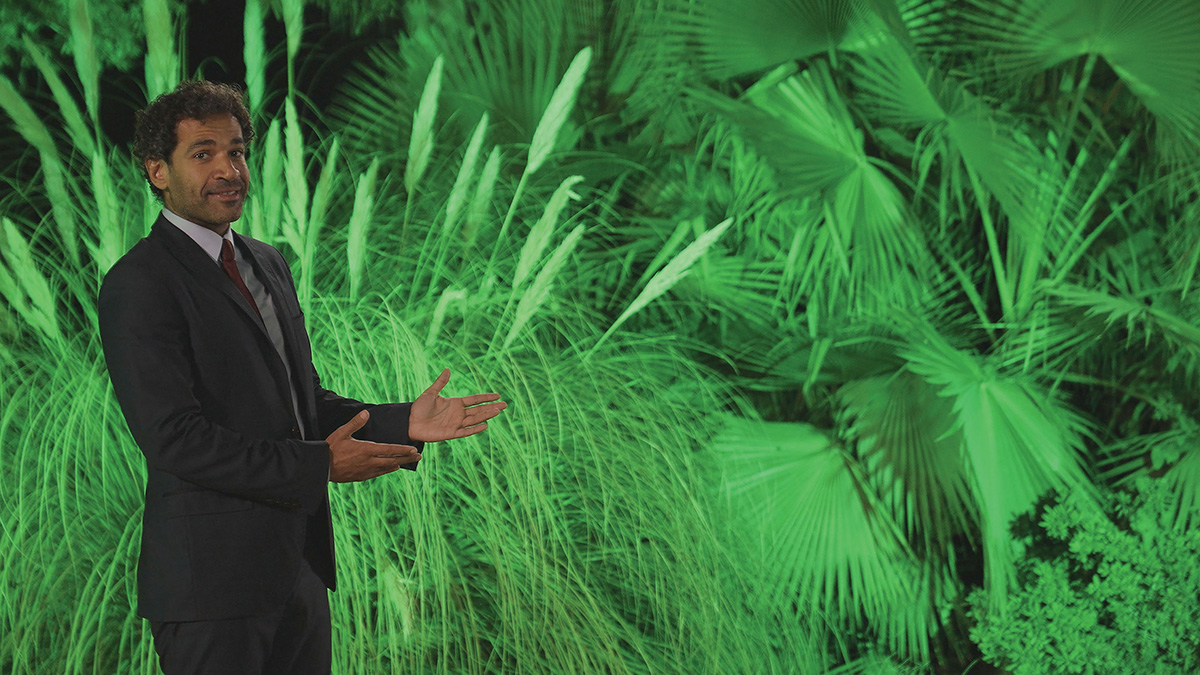
‘Green Storm’ depicts actors and filmmakers rehearsing scenes in a tree nursery situated at the edge of the desert in Egypt. The film’s location is a metaphor for a traditional green screen studio. ‘Green screens’ are primarily used in filmmaking to replace or remove specific backgrounds. While filming in green screen studios, actors can’t directly interact with their surroundings; the consequences of their actions become evident only in post-production. In the film, the ‘green screen’ metaphor is a critique of our relation to nature - one where we don’t immediately see or understand the impact of our interactions. Today, the lush greenery serves as a backdrop of political discourse. This film explores the uncanny green connection to examine the politics of screening and greening. Between natural disaster films announcing dramatic upheavals and the shocking announcement of current climate scientists, the boundaries have become very blurry.
The collectif_fact comprised Annelore Schneider and Claude Piguet. They live and work between London and Geneva. Their projects, mainly video based, are often a deconstruction of what we see as cinematic codes within our visual culture. They are fascinated with the daily repetition, stereotypes and clichés that suffuse our popular culture. They deal mainly with aspects of (anti)spectacle, simulacra, and appropriation. To do so, they investigate the ways that narrative can be appropriated, disrupted, and re-edited to construct different stories and alternative meanings. Their videos frequently use the spectator’s ability to construct stories from ruptured narrative fragments. In fact, their videos weave together a complex mesh of references: fragments of dialogues, citations, and music extracts. A collage of recognizable, familiar images with a multitude of allusions to cinema classics. Collectif_fact play with our desire to be gripped and even deceived by images and stories. By creating works that appropriate cinematic codes and strategies, they encourage the viewer to reflect critically on the habits that condition our perceptions of reality. The artists are represented by Wilde Gallery, Geneva www.collectif-fact.ch
Catalogue : 2022White Shadow | Fiction expérimentale | mov | couleur | 10:24 | Royaume-Uni | 2021
Annelore Schneider, Claude Piguet
White Shadow
Fiction expérimentale | mov | couleur | 10:24 | Royaume-Uni | 2021
In this speculative fiction, all the world’s photographs have suddenly turned into the objects they represent. The video “White Shadow” depicts a vertiginous architecture, so devastating that it created new uncontrollable borders and isolated people. Piles of selfies, cats, and meals are scattered everywhere. Text messages evoke a new society living with limitations and suffering from media saturation, sensory overload, and crushing ecological impact. A world where images have taken over, invading and transforming space. They become the only reality that is still visible, as the whole world is turning inwards.
The collectif_fact comprised Annelore Schneider and Claude Piguet. They live and work between London and Geneva. Their work investigates how narrative and cinematic codes can expand our relation to space and objects. Their research considers storytelling, editing and filming as a tool to speculate and critically reflect on the habits that condition our perception of reality. Their film frequently uses the spectator’s ability to construct stories from ruptured narrative fragments and their desire to be gripped and even deceived by images and stories. collectif_fact’s films have been shown internationally in art festivals and exhibitions, including Maison européenne de la photographie, Paris, Centre d’art contemporain, Geneva Centre Culturel Suisse Paris, Hiroshima Museum of Contemporary Art, Lianzhou Foto Festival, Metropolis Art Center, Beijing, Fotomuseum Winterthur. They received numerous awards such as the Swiss Art Award and recently Grand Prix Culturel Migros, Swiss Art Council Pro Helvetia Production Grant and residency Art + Tech Space Studios, London.
Annelore Schneider, Claude Piguet
Catalogue : 2023Green Storm | Vidéo | 0 | couleur | 15:5 | Royaume-Uni, Suisse | 2022
Annelore Schneider, Claude Piguet (collectif_fact)
Green Storm
Vidéo | 0 | couleur | 15:5 | Royaume-Uni, Suisse | 2022
‘Green Storm’ depicts actors and filmmakers rehearsing scenes in a tree nursery situated at the edge of the desert in Egypt. The film’s location is a metaphor for a traditional green screen studio. ‘Green screens’ are primarily used in filmmaking to replace or remove specific backgrounds. While filming in green screen studios, actors can’t directly interact with their surroundings; the consequences of their actions become evident only in post-production. In the film, the ‘green screen’ metaphor is a critique of our relation to nature - one where we don’t immediately see or understand the impact of our interactions. Today, the lush greenery serves as a backdrop of political discourse. This film explores the uncanny green connection to examine the politics of screening and greening. Between natural disaster films announcing dramatic upheavals and the shocking announcement of current climate scientists, the boundaries have become very blurry.
The collectif_fact comprised Annelore Schneider and Claude Piguet. They live and work between London and Geneva. Their projects, mainly video based, are often a deconstruction of what we see as cinematic codes within our visual culture. They are fascinated with the daily repetition, stereotypes and clichés that suffuse our popular culture. They deal mainly with aspects of (anti)spectacle, simulacra, and appropriation. To do so, they investigate the ways that narrative can be appropriated, disrupted, and re-edited to construct different stories and alternative meanings. Their videos frequently use the spectator’s ability to construct stories from ruptured narrative fragments. In fact, their videos weave together a complex mesh of references: fragments of dialogues, citations, and music extracts. A collage of recognizable, familiar images with a multitude of allusions to cinema classics. Collectif_fact play with our desire to be gripped and even deceived by images and stories. By creating works that appropriate cinematic codes and strategies, they encourage the viewer to reflect critically on the habits that condition our perceptions of reality. The artists are represented by Wilde Gallery, Geneva www.collectif-fact.ch
Catalogue : 2022White Shadow | Fiction expérimentale | mov | couleur | 10:24 | Royaume-Uni | 2021
Annelore Schneider, Claude Piguet
White Shadow
Fiction expérimentale | mov | couleur | 10:24 | Royaume-Uni | 2021
In this speculative fiction, all the world’s photographs have suddenly turned into the objects they represent. The video “White Shadow” depicts a vertiginous architecture, so devastating that it created new uncontrollable borders and isolated people. Piles of selfies, cats, and meals are scattered everywhere. Text messages evoke a new society living with limitations and suffering from media saturation, sensory overload, and crushing ecological impact. A world where images have taken over, invading and transforming space. They become the only reality that is still visible, as the whole world is turning inwards.
The collectif_fact comprised Annelore Schneider and Claude Piguet. They live and work between London and Geneva. Their work investigates how narrative and cinematic codes can expand our relation to space and objects. Their research considers storytelling, editing and filming as a tool to speculate and critically reflect on the habits that condition our perception of reality. Their film frequently uses the spectator’s ability to construct stories from ruptured narrative fragments and their desire to be gripped and even deceived by images and stories. collectif_fact’s films have been shown internationally in art festivals and exhibitions, including Maison européenne de la photographie, Paris, Centre d’art contemporain, Geneva Centre Culturel Suisse Paris, Hiroshima Museum of Contemporary Art, Lianzhou Foto Festival, Metropolis Art Center, Beijing, Fotomuseum Winterthur. They received numerous awards such as the Swiss Art Award and recently Grand Prix Culturel Migros, Swiss Art Council Pro Helvetia Production Grant and residency Art + Tech Space Studios, London.
Ira Schneider
Catalogue : 2011Lost in Cuddihy | Film expérimental | 16mm | couleur et n&b | 12:0 | USA | 2010
Ira Schneider
Lost in Cuddihy
Film expérimental | 16mm | couleur et n&b | 12:0 | USA | 2010
An experimental, non-narrative film and an information collage of experiences in America of the middle 1960. Juxtaposed are the worlds of politics, anti-Vietnam war protests, the Rock`n Roll scene, and transcendental meditational influences from Asia. The film was purchased by the New York Museum of Modern Art Archive in 1967.
Schneider, born in New York, 1939. Lives in Berlin. Between 1962 and 1968 produced 8 short experimental films including "Lost in Cuddihy" and "The Ghost of Wittgenstein". The installation "Wipe Cycle" produced with Frank Gillette presented in the first video art group show, also including Nam June Paik, N.Y. 1969. Schneider was co-originator & editor of the video journal, "Radical Software". Schneider`s "Manhattan is an Island" a video installation was exhibited in the Kitchen, Everson Museum in 1974, and at the Whitney Museum, N.Y. in 1977. In 2006 it was purchased by the Reina Sofia Museum in Madrid & exhibited until April 2007. He co-edited "Video Art, an Anthology", N.Y. 1976, with Beryl Korot. The video installation "Time Zones" (in which one could see all around the earth at the same time) was shown in the Whitney Museum 1981 and over the next years in the Palais de Beaux Arte, Brussels, Kunsthalle Mannheim, Museum of Modern Art, Vienna, Nouvelle Museum, Lyon and the Barbican Center, London. He has had exhibitions at the Museum of Image & Sound, Sao Paulo, ZKM, Karlsruhe and has been the recipient of Guggenheim and Fulbright Fellowships. He is the Hannah Hoech Prize winner for 2006. In 2007 & 2008 he has had solo exhibitions at the Wewerka, Lecoq Galerie and Kunstpunkt, Berlin and at the Emily Harvey Foundation, NYC. In 2009 he had solo screenings at the Anthology Film Archives, NYC and Image Movement, Berlin a one man show Groznjan, Istria, Croatia. 2008 he has participated in group shows at the Les Rencontres Internationales, Pompidou Centre, Paris Caixe, Spain Viva Festival, Spain U.FO, Hamburg, Germany ?Inseln ? Archipelle ? Atolle Symposium?, Mannheim Kunstsalon, Berlin photo edition berlin, Berlin L.A. Center for Digital Art, California. 2009 he has participated in group shows Celeste Prize adjacent to the Venice Biennale Les Rencontres Internationales (also included 2010), Madrid and Hamburg Documentary Film Weeks Festival. 2010 Emily Harvey Foundation, video presentation MUMOK, Vienna featured in the "Changing Channels" video history exhibition "Schuster/Schneider 2" group show, Berlin 2010
Ira Schneider
Catalogue : 2016Somewhere on Orchard Street | Doc. expérimental | 16mm | couleur | 8:6 | USA, Allemagne | 2015
Ira Schneider
Somewhere on Orchard Street
Doc. expérimental | 16mm | couleur | 8:6 | USA, Allemagne | 2015
I was a member of the Max`s Kansas City club 1966-1974.Andy Warhol hung out there until he got shot in 1968.The Velvet Underground continued to go there.Lou Reed & I often said hello.Larry Rivers,Mel Brooks,Janis Joplin, Lauren Hutton,Julian Schnabel sometimes talked.The maitre d`invited me to film an evening with his friends above a bridal gown shop on Orchard St.They somehow got fabrics from the shop. I brought my Bolex.
Ira Schneider made experimental films in the 60s, than independent video in `69, participated in the “First Group Video Art Exhibition” in NYC May `69 with “Wipe Cycle” video installation, makes his own kind of non-narrative videos, video performances, comedies and multi- monitor video installations. Recipient of Guggenheim Fellowship 1977, National Endowment for the Arts 1978, “Time Zones” video installation, Whitney Museum, NYC 1981, Fulbright Advanced Fellowship 1993. One of winners, Mediakunstpreis, ZKM, 2003. Recipient of the Hannah Hoech Prize, 2006, Berlin Exhibitions: “Video Skulptur” Cologne, Berlin 1989; “Max`s Kansas City Club Show”, Nikolaj Gallery, Copenhagen, 2004; Reina Sofia Museum, Madrid 2006 with “Manhattan Is An Island” video installation; Galerie Walden, Berlin 2007; Kunstpunkt, Berlin 2008; Rencontres International Film Festival, Paris, Madrid, Berlin 2008, 2009, 2010, 2011; “Changing Channels”, MuMoK, Vienna 2010; Prima Center and Freies Museum, both Berlin 2011. “Remote Control” ICA London; “The Whole Earth” exhibition, Haus der Kulturen der Welt, Berlin, April - July 2013; Zagreus Gallery, Berlin, 2014 video- and photo installation and cooking exotic menus. Award “Best Short Short Film” at the Paris Short Film Festival 2015 and award “Best Short Film” at the Berlin Short Film Festival 2015,best Experimental short film at the Paris IndependentFilm Festival,2015 Schneider has published two eBooks and two photography books 2014/15 and produced the video H2O #18.
Catalogue : 2010A Weekend at the Beach with Jean-luc Godard | Documentaire | dv | | 9:59 | USA | 2009
Ira Schneider
A Weekend at the Beach with Jean-luc Godard
Documentaire | dv | | 9:59 | USA | 2009
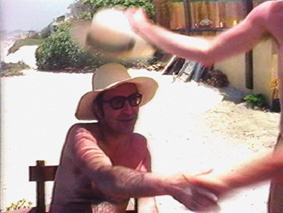
?A Weekend at the Beach, w. Jean-Luc Godard? Del Mar, Calif., USA 1978/1984/2009, 10min. with Godard, Wim Wenders, Heiner Müller and others. In 1978 I shared a house with Jean Pierre Gorin on the beach in Del Mar, California. We were both professors at the University of California, San Diego. Gorin once worked with Godard on a film and invited him to give a lecture at our school. Godard came and stayed at our house. Other filmworld & creative people came to hear Godard. They also stayed at our house. Among them Wim Wenders, Heiner Müller and Jim McBride. I videotaped some of our time at our house on the pacific ocean beach. By 1984 friends who saw it pressured me to make the tape public. Shortly before I edited it, I had seen some Godard political/very wordy films which I couldn?t stand. I therefore spoke a rather cynical narration. In 2009 I was asked to include an introductory verbal statement explaining the above & the sarcastic tone of the ?A Weekend at the Beach, w. Jean-Luc Godard? Del Mar, Calif., USA 1978/1984/2009, 10min. with Godard, Wim Wenders, Heiner Müller and others. In 1978 I shared a house with Jean Pierre Gorin on the beach in Del Mar, California. We were both professors at the University of California, San Diego. Gorin once worked with Godard on a film and invited him to give a lecture at our school. Godard came and stayed at our house. Other filmworld & creative people came to hear Godard. They also stayed at our house. Among them Wim Wenders, Heiner Müller and Jim McBride. I videotaped some of our time at our house on the pacific ocean beach. By 1984 friends who saw it pressured me to make the tape public. Shortly before I edited it, I had seen some Godard political/very wordy films which I couldn?t stand. I therefore spoke a rather cynical narration. In 2009 I was asked to include an introductory verbal statement explaining the above & the sarcastic tone of the video. With it the video now runs 10 minutes.
Schneider, born in New York, 1939. Lives in Berlin. Between 1962 and 1968 produced 8 short experimental films including "Lost in Cuddihy" and "The Ghost of Wittgenstein". The installation "Wipe Cycle" produced with Frank Gillette presented in the first video art group show, also including Nam June Paik, N.Y. 1969. Schneider was co-originator & editor of the video journal, "Radical Software". He co-edited "Video Art, an Anthology", N.Y. 1976, with Beryl Korot. The video installation "Time Zones" (in which one could see all around the earth at the same time) was shown in the Whitney Museum 1981 and over the next years in the Palais de Beaux Arte, Brussels and four other museums in Europe. He has been the recipient of Guggenheim and Fulbright Fellowships. He is the Hannah Hoech Prize winner for 2006, Berlin. His ?Manhattan is an Island? installation was presented at the Reina Sofia Museum, Madrid, 2006/2007. 2008 he has participated in group shows at the Les Rencontres Internationales, Pompidou Centre, Paris & 2009 in Madrid. 2009 he was one of the winners of the Celeste Prize, adjacent to the Venice Biennale and videos and installation were shown at Hamburg Documentary Film Weeks Festival. In 2009 he had solo screenings at the Anthology Film Archives, NYC and a one man show Groznjan, Istria, Croatia.
Catalogue : 2009More or less Related Incidents in Recent History | Vidéo expérimentale | 16mm | couleur et n&b | 37:54 | USA | 2008

Ira Schneider
More or less Related Incidents in Recent History
Vidéo expérimentale | 16mm | couleur et n&b | 37:54 | USA | 2008
« More or Less Related Incidents in Recent History » a commencé en 1968, comme un film sur la peinture d'une boutique de Greenwich Village, à Manhattan, New York, et sur la scène qui gravitait autour d?elle. Le film fait ressortir le contraste entre l'actualité de la guerre du Viet Nam et le monde de la mode de la fin des années 1960. L?artiste a filmé les séquences Rock?n?Roll en 1967 et 1968. Le quartier original de Greenwich Village a été filmé en 1976 et 2004. L?auteur a récupéré une vidéo d?Abbie Hoffman tournée en 1969 et inclue quelques images de George W. Bush dans la dernière édition de juin 2008 réalisée pour Berlin. Tout au long du film, l?auteur confronte la notion de guerre lointaine avec les préoccupations bourgeoises de la vie de tous les jours dans les pays relativement à l'abri.
Ira Schneider est né à New York en 1939 et vit actuellement à Berlin. Entre 1962 et 1968, il a produit huit courts-métrages expérimentaux, notamment « Lost in Cuddihy » et « The Ghost of Wittgenstein». Schneider a été co-auteur et rédacteur en chef du journal vidéo « Radical Software ». Son installation vidéo « Manhattan is an Island » a été exposée à Kitchen, à l?Everson Museum de New York en 1974, et au Whitney Museum de New York en 1977. En 2006, l??uvre a été achetée par le Musée Reina Sofia de Madrid et exposée jusqu'en avril 2007. L?auteur a coédité « Video Art, an Anthology » (New York, 1976) avec Beryl Korot. Plusieurs expositions ont été consacrées à ses ?uvres, notamment au Musée de l'Image et du Son de Sao Paulo, au ZKM de Karlsruhe. L?artiste a reçu plusieurs soutiens financiers, notamment une bourse Fullbright, et une aide de la Fondation Guggenheim.
Catalogue : 2006- + 2005 | Doc. expérimental | dv | couleur et n&b | 28:30 | USA, Allemagne | 2005

Ira Schneider
- + 2005
Doc. expérimental | dv | couleur et n&b | 28:30 | USA, Allemagne | 2005
"- + 2005" a été achevé en février 2005. C'est un collage documentaire, sans dialogues, de personnes, de lieux et de thèmes. Il comprend de courtes scènes de Michael Moore, de Yoko Ono, de Rome et d'Atlanta, et de plus longues séquences tournées à Venise, New York, San Francisco et Berlin. Il fait référence à l'art, la politique, la musique et la littérature. Il comprend des prises de vue de la vie nocturne à Berlin et des canaux de Venise, et induit une réflexion sur la culture du 21ème siècle.
Formation : 1964 - Université du Wisconsin, Madison-M.A./Magister de psychologie physiologique et de philosophie des sciences; 1961 - Université Ludwig Maximilians, Munich- histoire de l'art, philologie, littérature; 1960 - Brown University, Providence, Rhode Island, magna cum laude, phi beta kappa, Licence en Psychologie Experimantale, Littérature Comparative; Subventions & bourses : 2000-02 : Zentrum für Kunst &Medientechnology Video restoration Grant 1993 : Fulbright Senior Research Fellowship, Berlin, Allemagne; 1978 : National Endowment for the Arts; 1977 : John Simon Guggenheim Memorial Fellowship; 1971 ? 1976 : bourses du Creative Artist Program, N.Y., N.Y. State Council on the Arts & National Endowment for the Arts. Publications : 2005 - New York Times, May, 1. 2004 - Berliner Zeitung, by Alexander Osang 2002 - Artforum, May Radical Software 2001 - N.Y.Times /Sunday Art Section 1/21. 2000 - Berliner Zeitung, Berliner Morgen Post 1997 - chapitre dans "Kunst und Zeit", Scaneg Verlag, München, Von H.Paflik-Huber 1982 - Cahier du Cinema, Jean-Paul Farget 1976 ? "Video Art, an Anthology", Harcourt Brace Jovanovich; N.Y., Co-éditeur : Beryl Korot; 1970-1974 - "Radical Software", Raindance Foundation, N.Y., Co-founder, Co-éditeurs : Beryl Korot & Michael Shamberg. Enseignant à : 2002 - Hochschule für Gestaltung, Karlsruhe, Gast Dozent 1994 - Akademie der Künste, Saarbrücken seminar; 1980-1992 - Cooper Union for the Advancement of Science and Art, N.Y.C., Maître de conférences 1988-1992 Maître de conférences, 1980-1987; 1976-1980 ? Professeur associé, University of California, San Diego; 1980 - Artiste invité, Hochschule der Künste, Berlin; 1974 - Production Vidéo, Lehman College, N.Y.
Corinna Schnitt
Catalogue : 2018Vollendete Zukunft (Future Perfect) | Fiction expérimentale | hdv | couleur | 9:0 | Allemagne | 2016
Corinna Schnitt
Vollendete Zukunft (Future Perfect)
Fiction expérimentale | hdv | couleur | 9:0 | Allemagne | 2016
Eight protagonists distributed over Marls central Rathausplatz in front of the Skulpturenmuseum use megaphones to call out everyday phrases to each other as if they were carrying out a conversation: “ Do you think he will have won the Lotto ” or “ You will have told me much about your experiences“. Formulated in future perfect, these shouts play with the expectation that certain events will have happend by a certain time in the future. This construction has a distancing effect on the here and now and on the ease of normal everyday conversation, showing the extent to which a present experience is determined by expectations of the future. The use of megaphones seems antiquated today and thus deals ironically with present-day forms of communication. Like on the Web, banal experiences from one`s own life are communicated to an imaginary public without controls or personal contact. Marl`s Rathausplatz and the Skulpturenmuseum were constructed in the 1970s and document the city`structural rebirth, carried out with the goal of turning the urban core into a vibrant place and optimally combining diverse functions. Previously regarded as amuch lauded model solution, it is now obvious that the utopian promise of a city that radically deviates from traditional urban structures has not been fulfilled in the long run.
Born in Duisburg, Germany, lives and works in Braunschweig. From 1986 to 1989 apprenticeship as a carver (diploma), Michelstadt, from 1989 to 1996 studies at the Hochschule für Gestaltung (Academy for Visual Communication), Offenbach, as well as at the Kunstakademie (Art Academy) in Düsseldorf (1995 Masterstudent). Since 2009 Professor for Film/Video at the University of Art Braunschweig.
Catalogue : 2011Hänschen klein | Vidéo expérimentale | | couleur | 7:0 | Allemagne | 2009
Corinna Schnitt
Hänschen klein
Vidéo expérimentale | | couleur | 7:0 | Allemagne | 2009
In a single shot the film shows different time-periods and creates a fairytaile atmosphere. A stillife is presented in an outside garden in front of a modern architecture, that has a fake- wooden-outside design.The paradox longing for both experiencing adventure and wanting to feel at home is part of the children-song.
CV Corinna Schnitt was born in Duisburg,Germany. From 1989-96 she studied art and film at the Hochschule für Gestaltung, Offenbach and the Kunstakademie Düsseldorf
Catalogue : 2009Von einer Welt | Vidéo expérimentale | 35mm | couleur | 9:34 | Allemagne | 2007
Corinna Schnitt
Von einer Welt
Vidéo expérimentale | 35mm | couleur | 9:34 | Allemagne | 2007
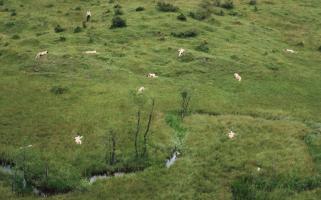
Dans « Von einer Welt » (« À propos d'un monde »), le monde est un idyllique paysage alpin fait de forêts et de prairies. Un homme traverse à grandes enjambées ce paysage, seul, puis, dans la scène suivante, se tient debout sur une prairie, entouré d?une douzaine de femmes nues, couchées dans l'herbe haute ; chacune d?entre elles est drapée. L'homme approche toutes les femmes une à une, tantôt tendrement, tantôt de façon plus ouverte. Ses tentatives de rentrer en contact avec elles restent cependant vaines et ne produisent absolument aucune réaction. Les femmes semblent désormais faire partie de la nature, comme si elles venaient « d'un autre monde ». Avec des dispositifs de mise en scène minimalistes, l'artiste ouvre un débat sur les formes d?aphasie entre les sexes, entre le corps et l'intellect, entre l'émotionnel et le rationnel, entre nature et culture, entre un monde et l?autre.
Corinna Schnitt est née à Duisburg (Allemage) et a étudié l'art et le cinéma à l'Université des Communications Visuelles d?Offenbach ainsi qu?à l?Académie d?Art de Düsseldorf.
Corinna Schnitt
Catalogue : 2007Once Upon a Time | | | couleur | 22:0 | Allemagne | 2006
Corinna Schnitt
Once Upon a Time
| | couleur | 22:0 | Allemagne | 2006
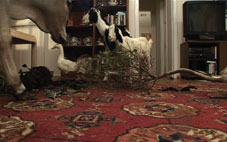
Dans un salon, une caméra tourne lentement sur elle-même, à environ trente centimètres du tapis. On ne voit personne dans la pièce. Un chat apparaît subitement et quelques instant plus tard, un autre entre dans la pièce. Un chien boit l?eau d?un petit aquarium, un oiseau se joint à la compagnie, un lapin arrive en sautillant, une oie se fraie un chemin parmi eux, un cochon fouine quelque part, une chèvre, un lama, il n?y a pas de fin. Petit à petit, la pièce se remplit de plus en plus d?animaux qui se reniflent entre eux, qui se font sursauter entre eux ou bien qui mangent une plante verte ensemble. Dans l?introduction de ?Living a Beautiful Life? (2003), une des ?uvres précédentes de Corinna Schnitt, on voyait toute sorte d?enfants très jeunes assis, allongés, en train de marcher ou de jouer ensemble nus, dans un paysage idyllique. L?association romantique ou religieuse avec un monde primitif dans lequel les créatures auraient autrefois coexisté vient également de ?Once Upon a Time.? L?habitat naturel dans lequel ces animaux vivaient autrefois a été remplacé par l?intérieur d?une maison. Est-ce que le mot ?naturel? a toujours une signification lorsqu?on parle d?animaux qui, dans notre culture, ont pratiquement tous été domestiqués ? Ils ne sont plus que des animaux de compagnie et des animaux domestiques, et sont dons en quelque sorte à leur place ici. Comme c?est souvent le cas dans le travail de Schnitt, là encore, elle semble parler de la qualité artificielle et névropathe du comportement humain et du contraste problématique entre ?nature? et ?culture?. Bien que l?Homme soit absent de cette ?uvre, dans cette absence, il fait tout de même partie de la représentation. L?observation de ces animaux, qu?on ne trouvera pas souvent dans ce genre de décors, nous amène à réfléchir sur le comportement que l?on pourrait avoir dans ce genre de pièce.
Corinna Schnitt est née en 1964. Artiste et réalisatrice, elle évolue dans le milieu artistique tant sur la scène allemande qu'internationale. Après un apprentissage de sculpture sur bois, elle étudie à la Hochschule für Gestaltung à Offenbach et à la Kunstakademie de Düsseldorf. Depuis de nombreuses années elle a recours au médium cinématographique pour ses créations artistiques. Elle a ainsi réalisé une série de court-métrages expérimentaux dans lesquels des phénomènes quotidiens sont poussés jusqu?à l?absurde telle une spirale sans fin, comme en témoigne Raus aus seinen Kleidern. Outre de nombreuses installations vidéo projetées dans des musées et des galeries, Corinna dévoile ses travaux dans le cadre de festivals de films ainsi qu?à la télévision allemande.
Kim Schoen
Catalogue : 2026Pollinator | Vidéo expérimentale | mp4 | couleur | 10:0 | USA | 2025
Kim Schoen
Pollinator
Vidéo expérimentale | mp4 | couleur | 10:0 | USA | 2025
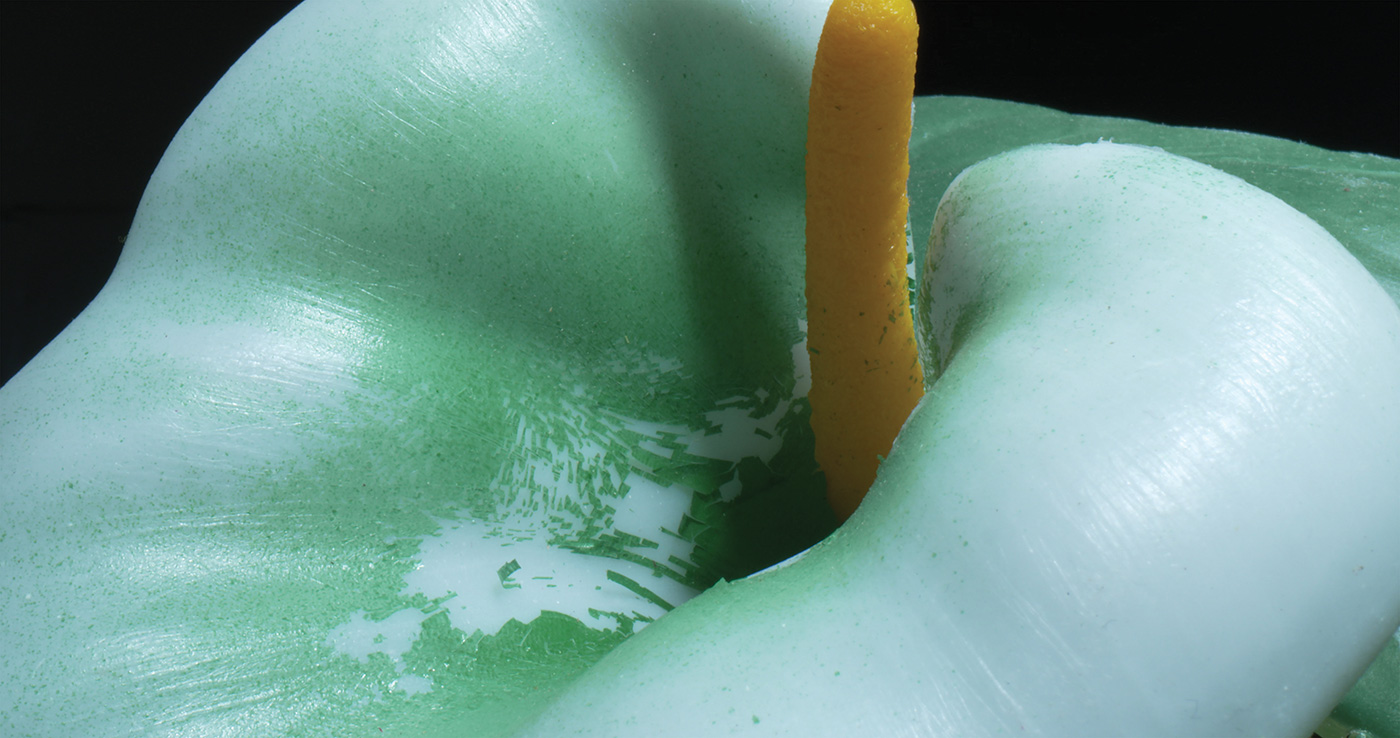
"A jarring auditory blip, and we are entered into a world of artifice. We slowly approach a bouquet before a black backdrop, partially wrapped in cellophane. A synthesized descending minor triad repeats below chaotic clicking tones; menacing, slowing, as we zoom and pan ever nearer. The flowers’ imitation becomes increasingly apparent: petals, stamens, and styles rendered through varying techniques of plastic production. A nylon weave assumes the shape of a petal, globs stand in for seeds, and stems are betrayed by marks of their fabrication in molds. As the camera moves even closer, the facsimiles break down. Degrading, flaking acrylic paint and halftone prints organize themselves into geometric abstractions. Extruded colored threads no longer signify trichomes but become expressive marks. Beneath the abstract, we find the abject. Wrinkled skin forms in the crevice of a panel of foam. Sheets, flecked with orange, pink, and red, quiver like ripped flesh. Former blossoms become organs, entrails, and orifices. At base, we arrive in a realm of dust and grime accumulating among simulated textures, appearing fungal, bacterial, parasitic. In Kim Schoen’s Pollinator, plastic, processed from crude oil, extracted from the anaerobic decay of plankton and algae, returns to biomorphic form, now undead." —Zachary Korol Gold
Kim Schoen’s work engages the rhetorics of display. Her absurdist, experimental approach across video installation, photography, and text explores the ways in which the commercial and personal inform and create one another. She takes on the unexamined ways that the commercial project operates on us—remaking the “sense” of what is given. Schoen works with “rhetorical” objects and language that try to persuade or convince us of something, and uses them as raw materials to say something new. Kim Schoen (b. 1969 Princeton) received her MFA in Photography from CalArts in 2005, and her MPhil from The Royal College of Art in 2008. Her work has been exhibited in venues such as MMoCA; BAM, Brooklyn (New York); Edith-Russ-Haus für Medienkunst, Kunstverein Springhornhof; Kleine Humboldt Galerie (Germany); Museo di Arte Contemporanea di Roma (Italy); Whitechapel Gallery, South London Gallery, and MOT International (London); LACMA, The California Museum of Photography, Moskowitz Bayse Gallery, Young Projects and Richard Telles Fine Art (Los Angeles). She is the recipient of international grants and residencies including AiR351 in Portugal, The Edith-Russ-Haus Stipendium in Germany and Cité Internationale des Arts in Paris. Her work is included in private and public collections, and has been written about in Artforum, Mousse, Art in America, The Los Angeles Times, and Hotshoe International.
Susanna Schoenberg
Catalogue : 2019Deep Interview | Performance multimédia | mov | couleur | 30:0 | Italie, Allemagne | 2018
Susanna Schoenberg
Deep Interview
Performance multimédia | mov | couleur | 30:0 | Italie, Allemagne | 2018
Deep Interview represents a conversational situation : not based on identities, but comparing different language systems. The subject of the conversation is going to emerge due to asking questions taken from two different (complementary) contexts: the one mirroring the systemic "need" for monitoring the need for a picture of the EU borders, the other focussing on corresponding unmonitored substances, the needs and perspectives of asylum seekers. The origin of the video is the plot of a performance based on asking questions and dedicated to practices of (machine-like) monitoring. The origin of the performance plot is a particular text technique suitable technique for unpleasant objects of investigation, which treats them as very literally. Of the so-called deep interview we only experience the questions. On a more abstract, level Deep Interview enbodies the desire to treat (and deconstruct) the law and its both argumentative and operational logic as an image, shaped in order to define phenomena and entities to be managed.
Part of the artistic production methods of the media artist Susanna Schoenberg are experimental videos and video installations, public actions and camera setups. Her media practise focuses on the idea of emergence (of reality and forms of reality), intermediality and the techno-image. The contingent waiving of technical and conceptual control can be part of her "realistic" (image giving) strategy. In the last years she has been producing works explicitly dedicated to (machine-like) monitoring, in particular of the monitoring of the European borders.
Catalogue : 2007Garage|Katze | Vidéo expérimentale | dv | couleur | 7:0 | Italie, Allemagne | 2005
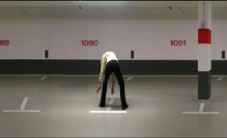
Susanna Schoenberg
Garage|Katze
Vidéo expérimentale | dv | couleur | 7:0 | Italie, Allemagne | 2005
Le plus long parking d?Allemagne utilisé comme métaphore métrique de l?histoire de la pensée ; une silhouette masquée qui court après son moi utilisée comme métaphore de la souveraineté du sujet ; les geste futiles de la mégère qui n?évolue pas et continue à n?en faire qu?à sa tête.
Susanna Schoenberg est née en 1967 en Italie et a grandi à Bolzano, ou Bozen en allemand. Elle a vécu et étudié à Milan mais s?est souvent rendue à Berlin. Depuis 1999, elle habite à Cologne en Allemagne. Elle a étudié les sciences sociales, les techniques cinématographiques et les arts médiatiques. Depuis 1990, ses productions artistiques sont principalement centrées sur la vidéo, la photographie et les installations. Dans sa production artistique, elle se concentre notamment sur les arts en rapport avec les media et plus particulièrement sur les installations pilotées par ordinateur ; la vidéo expérimentale ; le documentaire et la photographie.
Gianna Felicita Scholten
Catalogue : 2023At Night by Horse | Fiction expérimentale | hdv | couleur et n&b | 11:48 | Suisse | 2023
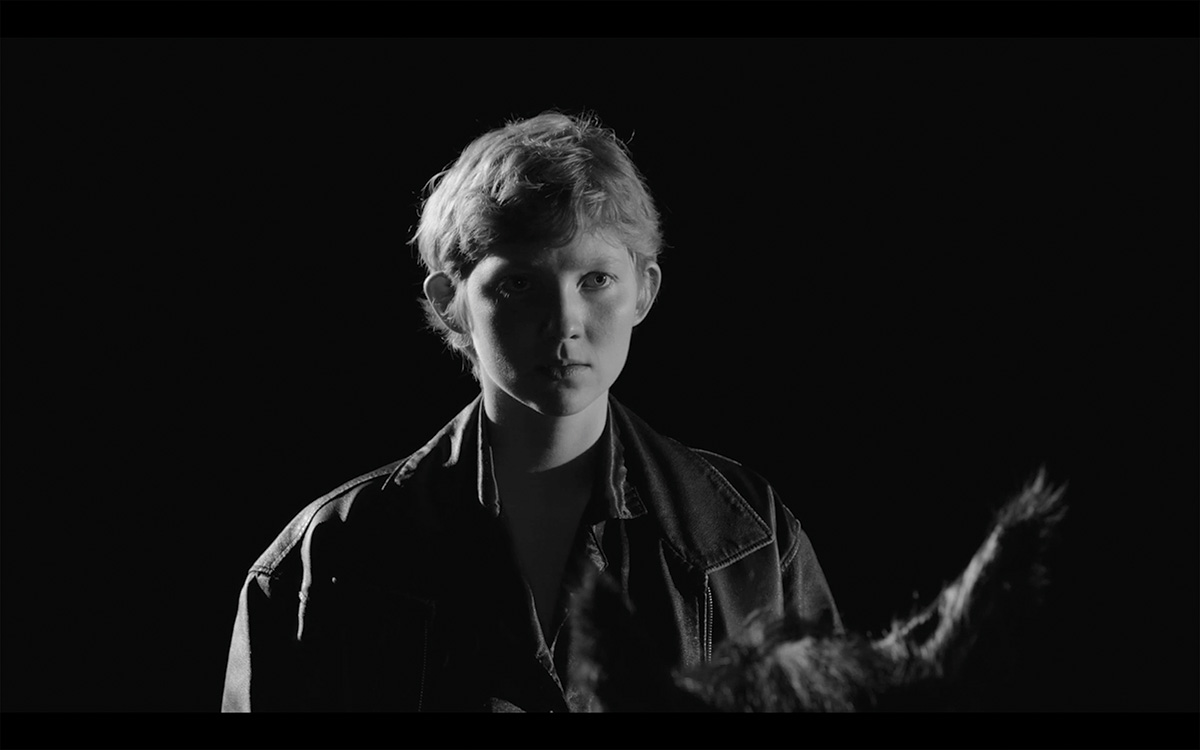
Gianna Felicita Scholten
At Night by Horse
Fiction expérimentale | hdv | couleur et n&b | 11:48 | Suisse | 2023
Micki rides across the night through a palm forest. With the quiet and the loneliness, the repressed heartbreak pushes to the surface and Cassi becomes real. Like two homopolar magnets charged with their tangled traumas, they fail to find each other this time once again. But at dawn the wounds heal. Cassi disappears and the last video is deleted. But you can't force goodbyes, because feelings are real.
Gianna Scholten is a writer and filmmaker from Switzerland and Germany. She graduated from the German Film and Television Academy Berlin (dffb) in 2020 and continued her studies at the Academy of Media Arts Cologne (khm). During her time at the khm, she dedicated herself to creating film projects and radio plays. Her work has been awarded the Prix Alice Guy Prize of the FID Marseille and the New Signs Award of the Film Fest Lago.