Catalogue > Liste par artiste
Parcourez la liste complète des artistes présentés dans le cadre des Rencontres Internationales depuis 2004. Utilisez le filtre alphabétique pour affiner vos recherches.
Lasse Lau
Catalogue : 2018Stem - Sound from the Tropical | Vidéo expérimentale | hdv | couleur | 33:25 | Danemark | 2017
Lasse Lau
Stem - Sound from the Tropical
Vidéo expérimentale | hdv | couleur | 33:25 | Danemark | 2017
In the middle of Lisbon between Avenue Liberdade and the Natural History Museum lays a little gem of a garden, The Jardim Botânico da Universidade de Lisboa. It was inaugurated in 1873. The garden’s crown jewel is its subtropical collections which has a unique microclimate that enables unique tropical plants to survive. STEM is a film about the migration of plants and the beginning of botanical gardens decay. Years of neglects of the Lisbon University Garden have created a romantic environment where the garden is growing wild. The film investigates the displacement in migration and morphology of plants. And investigates some of the post-colonial environmental ramifications of transfer into new subjectivities of the"other." The film came together as is a collaboration between the filmmaker and the German sound artist Max Schneider. Together they traveled Brazil to sound record 17 unique plants. The film features an interview with professor James Clifford, author of "The Predicament of Culture: Twentieth-Century Ethnography, Literature, and Art" (1988), "Routes: Travel and Translation in the Late 20th Century" (1997), and Returns: Becoming Indigenous in the Twenty First Century" (2013).
Lasse Lau est né au Danemark en 1974. Il vit et travaille actuellement à New York. Il a récemment remporté le Nordic:Dox Award (2018) pour son film « Lykkelaender ». Il a étudié au Media Art Department de la Funen Art Academy (Danemark), à la Hochschule der Künste de Berlin et au Whitney Museum of American Art Independent Study Program (New York). Dans son travail, il traite de questions socio-économiques, de la négociation de conflits et de la notion d’espace à travers le langage cinématographique. Lasse Lau cherche à utiliser l’esthétique comme une structure ouvrant sur de nouveaux chemins dialogiques. Le travail de Lasse Lau a été exposé dans un grand nombre de musées et de galeries, notamment au Westfälischer Kunstverein, à Münster (Allemagne), à la Hamburger Bahnhof (Berlin); au Danemark, au Aarhus Art Museum et à la Brandts Klædefabrik (Odense); il a également été exposé au Musée d’art contemporain de Zagreb (Croatie), à la Biennale de Turin, au Contemporary Museum de Baltimore (USA), et au MoMA PS1 (New York). Lasse Lau est le cofondateur du Kran Film Collective à Copenhague et membre du Camel Collective, collectif d’artistes new yorkais. « Stem - Sound from the Tropical» a été réalisé en collaboration avec Max Schneider, professeur d’art et de musique à la Hochschule für Grafik und Buchkunst Leipzig et co-fondateur de l’agence de design sonore Aconica.
Daniel Laufer
Catalogue : 2019Colour Memory | Vidéo expérimentale | hdv | couleur et n&b | 13:13 | Allemagne | 2016
Daniel Laufer
Colour Memory
Vidéo expérimentale | hdv | couleur et n&b | 13:13 | Allemagne | 2016
The protagonists in the film move through spaces like the desert, the city and the gallery space. All are production spaces of the film and combining different layers of time and contexts with each other. The Film follows the history of the gaze. The focus is on the phenomenon of the afterimage. This so-called phi-effect makes film sequences following a strong color stimulus appear in a complementary color. The effect is based on the fact that the retina continues to briefly perceive an image after the light stimulus and merges it with the following image. The sound sometimes refers to the previously perceived film still in some instances, letting the words speak at a different position. The brain requires a moment to connect what is heard with what is seen. Furthermore, the afterimage links different levels of time, the past with the present moment, which in the next instant is already the past again.
Daniel Laufer is an artist, filmmaker and curator, lives and works in Berlin. He has studied at the HBK-Braunschweig. Laufer is a recipient of the grant of the Arthur Boskamp Foundation for Space concepts, Stiftung Kunstfonds and the Berlin Senat among other awards.His exhibitions include: Artists Space, NYC; KM Gallery, Berlin; Galerie Kamm, Berlin, Kunstverein Harburger Bahnhof, Hamburg; Schaufenster, Kunstverein f. d. Rheinlande und Westfalen, Düsseldorf; Fridericianum, Kasseler Kunstverein, Kassel; KW Institute for Contemporary Art, Berlin; Jewish Museum Berlin, Kunstmuseum, Bonn; Van Gogh Museum, Amsterdam; Irish Museum of Modern Art, Dublin.
Matthew Lax
Catalogue : 2023A Tired Dog Is a Good Dog, Part One | Doc. expérimental | 4k | couleur | 20:0 | USA | 2022
Matthew Lax
A Tired Dog Is a Good Dog, Part One
Doc. expérimental | 4k | couleur | 20:0 | USA | 2022
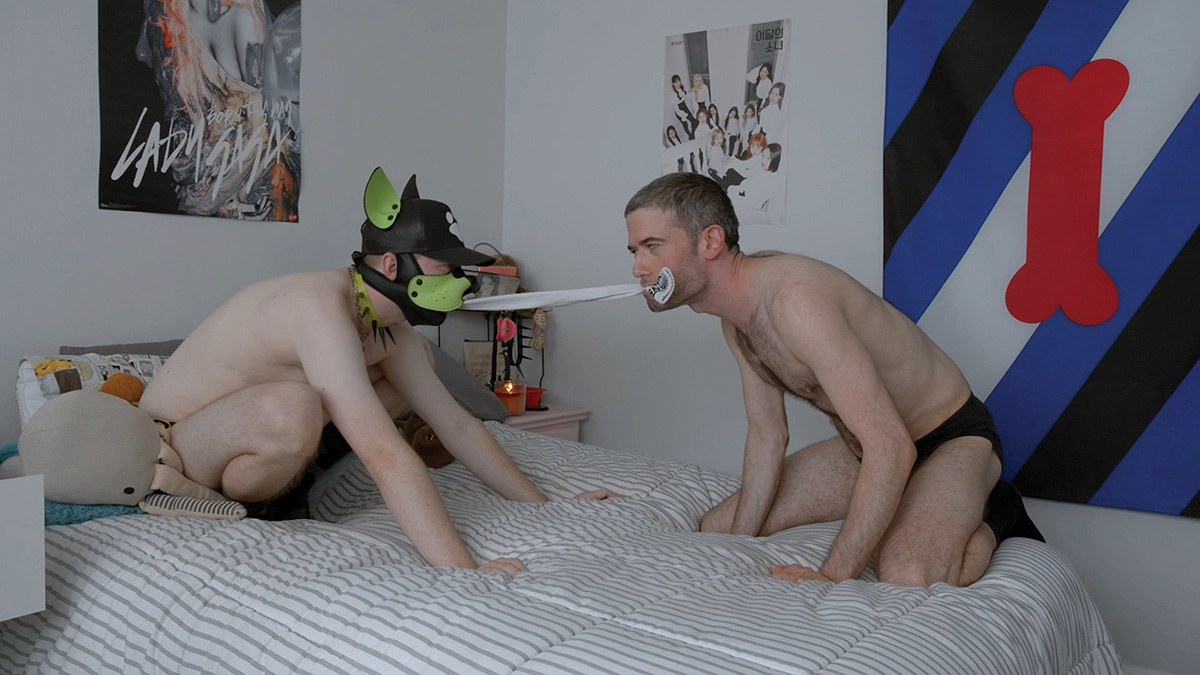
A quadruplet raised on a collie farm explores human-dog behaviors through queer “puppy play,” leading to nuanced discoveries of how people treat people “like animals.”
Lax’s films and video installations have screened and been exhibited at venues including Viennale (Austria), IHME Contemporary (Helsinki), MIX New York and MIX Brasil (São Paulo), table (Chicago), Los Angeles Municipal Art Gallery (LAMAG), Los Angeles Contemporary Archive (LACA), Everson Museum of Art (Syracuse, NY), REDCAT, Film Forum, Winnipeg Underground Film Festival, The Drawing Center (New York), and CROSSROADS (San Francisco), among others. Lax’s organizational projects include those held at Anthology Film Archives (NY), Fellows of Contemporary Art (LA), and Human Resources LA. Lax’s writing has appeared in print and online publications including MARCH Journal, Los Angeles Review of Books (LARB), ArtPractical, and Texte Zur Kunst), as well a catalogue contribution with the Lawndale Art Center (Houston, TX) and a limited edition zine with Inga Books (Chicago).
Catalogue : 2019Fabricated in the Actual Arctic (After Nanook) | Film expérimental | 16mm | noir et blanc | 3:10 | USA, 0 | 2018
Matthew Lax
Fabricated in the Actual Arctic (After Nanook)
Film expérimental | 16mm | noir et blanc | 3:10 | USA, 0 | 2018
A silent essay considers several key details of the production and legacy of Robert Flaherty`s seminal 1922 documentary, "Nanook of the North" (also known as, "A Story Of Life and Love In the Actual Arctic"). Critiquing notions around documentary and realism, the gaze, anthropology and institution, an image by an Inuk artist is discovered “missing†from the Museum of Modern Art (MOMA) collection.
Matthew Lax (b. Baltimore, Maryland, USA) is an artist, filmmaker and writer based in Los Angeles. His film and video work has been exhibited nationally and internationally in film festivals and art spaces including the Viennale (Austria), IHME Contemporary (Helsinki), MIX Brasil (São Paulo) and MIX New York, Los Angeles Municipal Art Gallery, Los Angeles Contemporary Archive (LACA) and the Everson Museum of Art (Syracuse, NY). He has organized curatorial projects with venues including Human Resources (LA), the Echo Park Film Center, Anthology Film Archives (New York, NY), etc. in addition to numerous pop-up exhibitions with various alternative spaces. His writing has appeared in various printed catalogs and publications including the Los Angeles Review of Books (LARB), Contemporary Art Review Los Angeles (CARLA), ArtPractical (San Francisco), and Art Observed (New York).
Oliver Laxe
Catalogue : 2009Suena la trompeta, ahora veo otra cara | | 16mm | couleur | 8:30 | Espagne, Maroc | 2007

Oliver Laxe
Suena la trompeta, ahora veo otra cara
| 16mm | couleur | 8:30 | Espagne, Maroc | 2007
Dans cette ?uvre, qui mélange mélancolie et intense tristesse, comme un jour nuageux, Oliver Laxe se confronte une fois encore à l'« Autre » et démontre que, au fond, nous pouvons être étrangers en Galice, de même qu?au Maroc ou à Paris. Sans aucun objectif prédéterminé dans le script, Laxe filme la simplicité du fait de regarder. Le récit n'est pas nécessaire, car toute forme de structure risquerait de faire s?évanouir la subtilité de la vie quotidienne. Avec un certain degré de quiétude lyrique et de nostalgie exotique, il fait le portrait, le long de séquences éphémères, d?un groupe d?ouvriers travaillant à la construction du site d?un des stades prévus pour ce qui était censé être Coupe du monde de football au Maroc en 2010. À l'arrière-plan, on discerne un paysage vert, sous des nuages gris, envahi par la structure en ciment du stade. Certains hommes sont en groupe, et d'autres marchent de leur côté.
Oliver Laxe est né à Paris en 1982. Il a vécu à La Corogne jusqu?à ses 18 ans et il a étudié la communication audio-visuelle à l'Université Pompeu Fabra de Barcelone. Il est membre de la plate-forme de cinéma expérimental « No.w.here » de Londres, où il réside depuis un an. Son projet de fin d?études, réalisé avec Enrique Aguilar « les cheminées ont décidé d?échapper » a été choisi pour le Festival de Cinéma de Gijon, a obtenu le prix du festival de Grenade et a été choisi pour l'Échantillon d'Arts Visuels de l'Injuve. Le Bureau de la Culture de Galice a financé son film « Paris #1 ». Il participe à un atelier de cinéma avec un groupe d'enfants socialement exclus, en collaboration avec notamment la Cinémathèque de Tanger. A Tanger il a également rodé sa pièce « La trompette sonne », inclus dans un film en l?honneur de Tarkovski, « Une journée dans la vie d'Andrei Arsenevitch ».
Lazare
Georgi Lazarevski
Catalogue : 2007Voyage en sol majeur | Documentaire | dv | couleur et n&b | 54:0 | France | 2006

Georgi Lazarevski
Voyage en sol majeur
Documentaire | dv | couleur et n&b | 54:0 | France | 2006
Aimé a quatre-vingt onze ans et s?est enfin décidé à entreprendre le grand voyage au Maroc qu?il projette depuis quarante ans. Son petit fils, réalisateur et photographe, l?accompagne. Un voyage tendre et amer, plein de bonheurs fugitifs, de regrets et d?occasions gâchées. Comme la vie.
Georgi Lazarevski est né en 1968 à Bruxelles. Diplômé de l?école Louis Lumière, il alterne la pratique de la photographie et du cinéma comme chef opérateur. Il obtient ainsi des prix pour ses travaux photographiques. Il réalise des courts et moyens - métrages documentaires pour des ONG : « Guerre et peigne » en 1996, dans un camp de réfugiés croate, « Visages », tourné à Gaza en 1997 ainsi que « L?un pour l?autre » tourné au Mali, à Gaza et en Bosnie.
Julia Lazarus
Catalogue : 2009the briefing center | Documentaire | dv | couleur | 40:0 | Allemagne | 2008

Julia Lazarus
the briefing center
Documentaire | dv | couleur | 40:0 | Allemagne | 2008
The Briefing Center vient documenter le ballet du corps politique pendant le sommet du G8 de 2007 à Heiligendamm. A l?intérieur de la zone de sécurité éloignant la foule avec un clôture longue de 11 km, la caméra observe les représentants de la presse, des forces de sécurité, du personnel de service, ainsi que les décisionnaires politiques. Par-delà la critique aux buts politiques du sommet, le film donne un aperçu de la mise en scène médiatique et montre que les mouvements des individus sont fixés par le protocole.
Née à Berlin, Julia Lazarus suit les cours de l?École Supérieure des Arts de Berlin et de l?Institut Californien pour les Arts à Los Angeles. Ses films ont été montrés dans de nombreux festivals et expositions. Ses films en 16mm sont distribués par Sixpackfilm à Vienne.
Otto Lazic-reuschel
Catalogue : 2025Me Entiendes? | Documentaire | hdv | couleur | 31:0 | Italie | 2023
Otto Lazic-reuschel
Me Entiendes?
Documentaire | hdv | couleur | 31:0 | Italie | 2023
The story of this film begins with Moha's journey eight years ago to Melilla. When I arrived in Melilla to make my first documentary, Moha was 12 years old and was one of the many boys who every night, for months, tried to sneak aboard and reach the Spanish coast in a few hours. By diving into this reality, I got to see the true face of the inhuman European migration policy. This experience deeply marked me and gave birth to two documentaries: 'Mañana, Inshallah' and 'Riski'. The latter focuses on little Mohamed and his life among the rocks in the port of Melilla. Shortly afterwards, we would both leave: me to finish my film and Moha to reach Europe. Once the editing of 'Riski' was finished, I managed to track him down, he was in Spain, to show him the short film. Over the years we kept in touch and in 2019 I decided to visit him at the centre where he was staying, in Sabadell. Meeting him after so many years was very emotional. Somehow the time spent in Melilla had marked us both, had bonded us by creating great mutual esteem and trust. Seeing each other again and developing our friendship outside of this city was a cathartic experience. I have great respect for him and feel very fortunate to be able to tell this story, aware also of the ethical and moral problems that this may entail. Being able to define my roles as director and friend in a subtle and honest way is a major challenge and responsibility.
Otto Lazi?-Reuschel was born in Trieste. In 2011 he moved to Berlin, where he currently lives. His short film "When I dance, the Earth trembles", a one-take film set in Berlin, was presented at the 24th Black Night Film Festival, while his graduation film "Do you get me?" was presented at the 54th Visions Du Reel. He has worked on several film sets as an assistant director, cinematographer and production manager. He speaks five languages fluently: Italian, Croatian, German, Spanish and English.
Stéphane Le Gall-viliker, Fahmi, Traoré, Preda,
Catalogue : 2010STORIE MIGRANTI | Documentaire | dv | couleur | 38:50 | France, Italie | 2009

Stéphane Le Gall-viliker, Fahmi, Traoré, Preda,
STORIE MIGRANTI
Documentaire | dv | couleur | 38:50 | France, Italie | 2009
Maxime Le Moing
Catalogue : 2021SALLE OBSCURE | Fiction | mov | couleur et n&b | 45:7 | France | 2020
Maxime Le Moing
SALLE OBSCURE
Fiction | mov | couleur et n&b | 45:7 | France | 2020
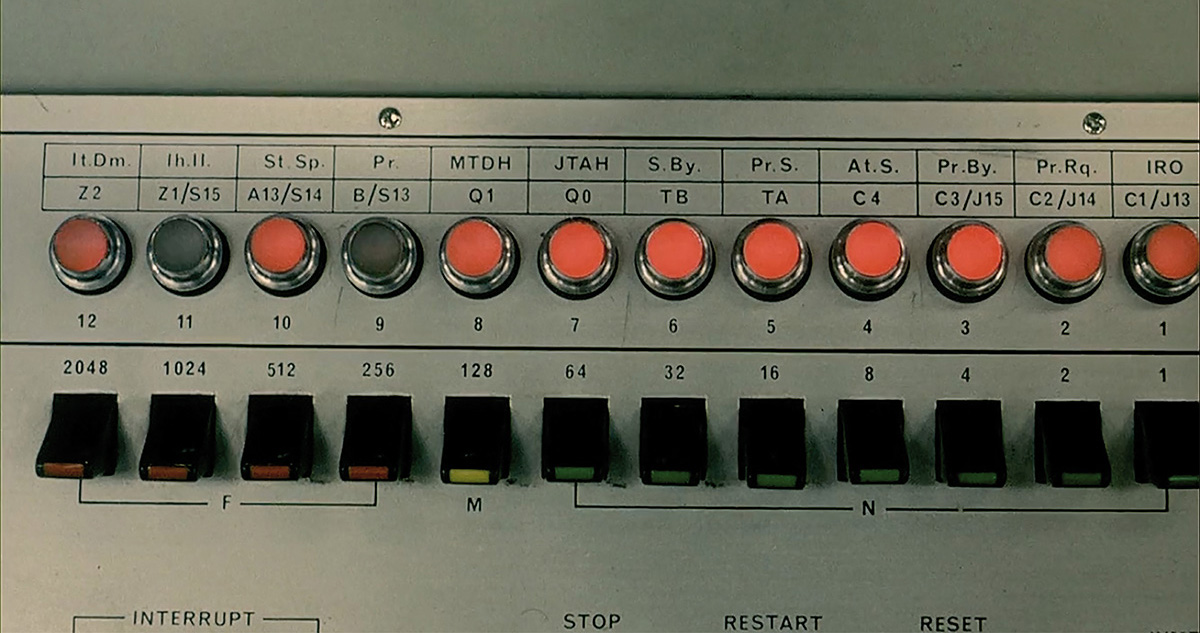
Recycler / Reprendre / Revoir / Refaire / Réadapter. Prenez un scalpel, coupez ces mots pour ne garder que le préfixe re-. Faites-en votre personnage principal, celui d’un détective. Placez-le parmi des mots macabres, des phrases sombres où la nuit ne cesse de pleuvoir. Une fois l’opération terminée, l’enquête peut commencer.
Maxime Le Moing respire à Metz (France). Depuis 10 ans, il est embauché à temps plein en tant que promeneur écoutant. Affilié à la pratique du maraîchage et de l'écriture sonore, il œuvre dans la radio, la poésie sonore, la performance musicale néo-animiste et le mash-up pour les oreilles. Ses créations sont ponctuées par les saisons: en hiver, il anime auprès du jeune publique des ateliers de poésies lettristes en leur enseignant le beat box; au printemps, il enregistre le son de la photosynthèse des plantes et élabore une thèse intitulée "La nature préfère la harsh-noise que la musique classique"; en été, il vagabonde avec sa trompette et sa mallette de bruiteur pour réanimer les espaces morts de la capitaloscène; en automne, il aménage des ronds-points, friches et petits bois pour remettre au goût la libre errance des rencontres sexuelles.
Duy Le Ngoc
Catalogue : 2025Cuôi giuong dây lên môt tiêng goi | Doc. expérimental | hdv | couleur | 14:56 | Viet nam | 2023
Duy Le Ngoc
Cuôi giuong dây lên môt tiêng goi
Doc. expérimental | hdv | couleur | 14:56 | Viet nam | 2023
Echoed in a memory-laden house are daily conversations between a mother and her two sons, all seemingly asleep. This autobiographical short, in a hybrid form, chronicles a personal memory from director Le Ngoc Duy's adolescence, using set design and reenactment to reconstruct his childhood home and featuring his mother’s voice as part of the cast.
LE Ngoc Duy (b. 2000) is a Vietnamese filmmaker and a member of A Sông Collective from Danang City. He was trained in filmmaking workshops by doc cicada and New Asian Filmmakers Collective in Cambodia. His works explore the subjects of family and homeland memories, queerness, and young adulthood, often set against historical backdrops and blending nonfictional and poetic elements within fictional narratives. "The House That Stays", Duy’s debut short film, was an official selection at Kaohsiung Film Festival, ZINEBI International Festival of Documentary and Short Film of Bilbao, Uppsala Short Film Festival, and Jogja-NETPAC Asian Film Festival. Currently, he is organizing and co-programming the Cinema Con Nha Ngheo project in Danang.
Le Pavillon
Catalogue : 2007Yumeji | Vidéo expérimentale | dv | couleur | 48:0 | France | 2004

Le Pavillon
Yumeji
Vidéo expérimentale | dv | couleur | 48:0 | France | 2004
Le film Yumeji (Pathway to dreams), a été tourné à l?occasion d?un workshop des résidents du Pavillon, laboratoire de création du Palais de Tokyo au Japon en mai 2004. C'est un film collectif qui synthétise à la fois l?expérience de l?exposition à Hiroshima et celle du voyage. Il se présente sous la forme d?un film interactif. Son arborescence permet le passage du film collectif vers des rêves individuels imaginés par chaque artiste.
Le Pavillon est le laboratoire de création du Palais de Tokyo à Paris. La promotion 2003-2004 était composée de Ziad Antar, Louidgi Beltrame, Davide Bertocchi, Sophie Dubosc, Johannes Fricke Waldthausen, Shiho Fukuhara, Agnieszka Kurant, Gerald Petit. Tout au long de l?année, Ange Leccia (directeur), Christian Merlhiot (responsable pédagogique), Jean-Luc Vilmouth (artiste invité) et Pascal Beausse (critique d?art invité) ont accompagné leur réflexion.
Daphné Le Sergent
Catalogue : 2026Silicon Islands and War | Doc. expérimental | mov | couleur | 37:0 | France | 2025

Daphné Le Sergent
Silicon Islands and War
Doc. expérimental | mov | couleur | 37:0 | France | 2025
A l’heure où l’IA connait un développement sans précédent, la technologie des semi-conducteurs est devenue stratégique dans l’échiquier mondial. Sans les semi-conducteurs, le développement des moteurs des intelligences artificielles ne peut avoir lieu. Sans les semi-conducteurs, pas d’armement de pointe, de mémoire numérique, ni même encore de capteur pour nos appareils photo numériques. Cet essai vidéo invite à considérer une autre histoire de la photographie, une histoire où la résolution de nos images monte en gamme à mesure que l’industrie asiatique (Japon, Taïwan, Corée du Sud) miniaturise les semi-conducteurs, gravés sur des plaques de silicium (silicon). Mais cette course en avant dans la technologie ne se comprend réellement qu’en regard de son contexte géopolitique de la zone Pacifique et la guerre économique entre la Chine et les US. Comment alors ne pas entrelacer le récit de l’évolution de nos images avec l’histoire de ces pays - intitulés ici Silicon Islands -, ainsi qu’avec leurs guerres passées et conflits actuels ? Au récit impersonnel des voix générées par IA, y répond celle d’un conteur créole. Ce dernier défie le gigantisme de la mémoire numérique et son flot démesuré d’images. Il la défie avec les outils de la mémoire orale : la poésie et le chant.
Daphné Nan Le Sergent mène un travail artistique et théorique sur les différentes spatialisations du sensible et sur une image comme forme de mémoire sensorielle dans les arts occidentaux et non-occidentaux. Ses projets artistiques explorent l’image photographique vis-à-vis de la chaîne de production de ses matériaux et des équilibres économiques et géopolitiques qui la maintiennent alimentée. En 2021, la vidéo L’image extractive propose une histoire alternative de la photographie argentique en lien avec celle de l’extraction minière de l’argent, de la fluctuation des cours boursiers et de la menace de tarissement du minerai.
Joao Leal
Catalogue : 2017Chasms | Vidéo | hdv | couleur | 8:34 | Portugal | 2016
Joao Leal
Chasms
Vidéo | hdv | couleur | 8:34 | Portugal | 2016
A researcher trying to cope with his research, while avoiding narrative. Does he know where he is walking himself into? Will he be able to come out of it? A film so unsuccessful in resisting narrative as it is in finding answers.
Practitioner and teacher. Participates in solo and group exhibitions since 2001. Won in 2005, ex-aequo, the "Pedro Miguel Frade" award, from the Portuguese Centre of Photography, with the work "Night Order’. PhD candidate at the University of South Wales in connection to the European Centre for Documentary Research. Has a degree in Audiovisual Communication Technology at the Polytechnic Institute of Porto, majoring in Photography. Worked in Sao Joao and D.Maria II Portuguese National Theatres, RTP television, ‘Casa da Musica’. Full time assistant professor in theDepartment of Image Arts P.Porto | ESMAD.
Joan Leandre
Catalogue : 2013In the Name of the Kernel Series - Magic Line | Animation | hdv | couleur | 22:25 | Espagne | 2010
Joan Leandre
In the Name of the Kernel Series - Magic Line
Animation | hdv | couleur | 22:25 | Espagne | 2010
An exhibition of HD video, digital print and text by Barcelona based artist Joan Leandre. As the second Gallery exhibition in the artist?s extensive history, In the Name of Kernel ! The Magic Line is the third installment of the In the Name of Kernel series, introducing Leandre?s critical practice of media interpretation and reverse engineering to a new audience. The first two films of the series toured internationally to venues such as Sonar Festival, Barcelona 2008, 3rd Moscow Biennial, Moscow, 2009, and Centre George Pompidou, Paris 2009.
"Media interpreter and member of the OVNI Archives since 1994. From 1994 to 1996 I worked on a series of media interruptions called MAP (Mega Assemble Project), Fundación Zero and Serial Monuments. From 1995-1997 I was involved in the Oigo Rom project, and later in 1998 in Brooklyn I was involved with the President Archives. In 1999, I began working again with mass entertainment software and started the projects retroyou (RC) and retroyou (nostalG), and continue to work on the series retroyou nostalg2 and the Black Boot Project. Other collective projects include Velvet Strike and the Archivos Babilonia.? J.Leandre
Catalogue : 2011In the Name of Kernel Series - Lonely Record Sessi | Vidéo | dv | couleur | 20:0 | Espagne | 2009
Joan Leandre
In the Name of Kernel Series - Lonely Record Sessi
Vidéo | dv | couleur | 20:0 | Espagne | 2009
Depuis 2006, le travail de Joan Leandre porte essentiellement sur l?analyse et la déconstruction de logiciels de jeux, de simulation ou d?entraînement militaire. « In the Name of Kernel ! The Magic Line » est la troisième installation de la série « In the Name of Kernel », nous introduisant dans la pratique critique de Leandre qui s?intéresse à l?interprétation des medias et à inverser cette ingénierie pour un nouveau public. « In the Name of Kernell » regroupe, en un cycle ouvert, ses dernières vidéos. Produites à partir de logiciels dont il modifie les paramètres elles transforment ?une machine à produire du réel en une machine à produire une illusion?. Elles proposent au spectateur une fiction narrative complexe dans laquelle il peut décoder les mécanismes de la fascination technologiques à laquelle nous sommes habituellement soumis, mécanismes qui vont ensuite conditionner notre perception du monde. C?est en ce sens qu?il faut considérer l??uvre de Joan Leandre comme une ?uvre subversive.
Joan Leandre vit et travaille à Barcelone. Il un interprète et un membre d? OVNI Archives(Observatoire de Vidéos Non Identifiées). depuis 1994. De 1994 à 1996, il a travaillé sur une série de piratage des medias intitulée MAP (Mega Assemble Project), Fundación Zero et Serial Monuments. De 1995 à 1997, il a collaboré au projet « Oigo Rom », et plus tard en 1998 à Brooklyn, aux « President Archives ». En 1999, il a commencé à travaillé est les logiciels de divertissement grand public et a commencé le projet « Retroyou (RC) and Retroyou (nostalG) », et il continue à travailler avec la série « Retroyou nostalg2 and the Black Boot Project ».D?autres projets collectifs ont été montés, comme « Velvet Strike » et « the Archivos Babilonia ». Joan Leandre est un interprète des médias, un archéologue de l?Internet. Il y fait des fouilles permanentes et collectionne des données. Il archive sur son propre site quantité d?informations qui sont « oubliées », sur le site d?une entreprise par exemple, ou, au contraire qui ne feront qu?une courte apparition avant de devenir confidentielles ou que leur lecture soit rendue impossible par une évolution technologique qui les rende muettes. Allant au-delà de la convivialité apparente de telle ou telle interface, il tend à faire émerger une prise de conscience de ce que la machine est capable de nous faire faire grâce à notre du pouvoir du conditionnement idéologique dans lequel nous plongent les images pour la compréhension du réel qui est le nôtre aujourd?hui. Depuis 2006, le travail de Joan Leandre réside essentiellement sur l?analyse et la déconstructionde jeux video, de logiciels de simulation ou d?entrainement militaire. Son travail a été montré au Sonar festival, Barcelone, au Transmediale, Berlin ; à la Whitney Biennial du Whitney Museum of American Art, New York, au Centre d?art contemporain Laboral, Gijon, à la biennale de Moscou, et au ZKM, Karlsruhe.
Catalogue : 2009In the Name of Kernel! Song of the Iron Bird | Vidéo expérimentale | 0 | couleur | 0:0 | Espagne | 2007

Joan Leandre
In the Name of Kernel! Song of the Iron Bird
Vidéo expérimentale | 0 | couleur | 0:0 | Espagne | 2007
Dans l'installation de Joan Leandre, Le kernel, qui est le coeur de la plupart des systèmes informatiques, devient le mythe autour duquel un événement symbolique se coagule, combinant la littérature de voyage, la tradition alchimique, la science fiction, le terrorisme et les théories de la conspiration, la programmation informatique, l?alpinisme, la modélisation 3D et le mapping par satellite, les hallucinations et les révélations. Joan Leandre explore l?imaginaire trouble d?un principe informatique fondamental, indifférent à son usage, militaire ou onirique. L?image elle-même, réalisée par manipulation informatique, change de statut. En même temps que des images, c?est la puissance aveugle du Kernel qui transparait, kernel au nom duquel tous les usages technologiques sont possibles. .
Joan Leandre est née en 1968. Elle vit et travaille à Barcelone. Elle est interprète média et membre des Archives OVNI depuis 1994. De 1994 a 1996, elle a travaillé sur la série d?interruptions média MAP (Mega Assembler Project), à la Fundación Zero et aux Serial Monuments. De 1995 à 1997, elle a participé au projet « Oigo Rom », et en 1998, elle a été associée aux President Archives de Brooklyn (USA). En 1999, elle a travaillé à nouveau avec les logiciels de divertissement de masse et a initié les projets « retroyou (RC) » et « retroyou (nostalG) » ainsi que « Black Boot Project » et la longue série, toujours en cours de réalisation, « retroyou nostalg2 ». « Velvet Strike » est un autre projet collectif auquel l'artiste a participé au cours de ces dernières années.
Catalogue : 2007OVNI | 0 | 0 | | 0:0 | Espagne | 2007

Joan Leandre
OVNI
0 | 0 | | 0:0 | Espagne | 2007
L'OVNI (Observatoire de la vidéo non identifiée) a été fondé en 1993 par les artistes Joan Leandre, Toni Serra et Rosa Llop à Barcelone. Les archives de OVNI présentent un caractère international et thématique, il s'agit de faciliter une critique de la culture contemporaine en usant de diverses stratégies telles l'art vidéo, le documentaire indépendant et l'archéologie des mass média. Les archives recueillent toute une constellation de travaux disparates dont le dénominateur commun est la libre expression et la réflexion sur les peurs et la place des individus dans les collectivités, construisant et conjuguant une vision multiple, des milliers de petites oeuvres approfondissent et explorent notre monde ou annoncent d'autres possibles. Un discours dont les valeurs principales sont l'hétérogénéité, la pluralité, la contradiction en lesquels la subjectivité se réalise. Pour ce discours, la subjectivité est le seul répulsif au clonage et à la répétition des mass médias corporatifs. Tout au long des différentes éditions, le caractère thématique de cette convocation s'est transformé à travers les différentes sélections des travaux en une lecture, un registre particulier de quelques uns des rêves et cauchemars de notre époque. Ainsi il a pu être vérifier comment le spectre des préoccupations est allé en se concentrant progressivement, participant d'un éventail très développé dans les premiers moments d'OVNI 1993-96 ( développer et explorer les limites du langage vidéo rattrapant la liberté formelle et la thématique de ses débuts), jusqu'à se concentrer sur de plus en plus de thèmes plus spécifiques : l'Identité contre les Médias (1997-98), la Communauté (2000), la Globalisation (2002), les Conséquences du 11 Septembre (2003), les Résistances (2005) ou le Rêve Colonial Zones Autonomes (2006).
L'artiste catalan Joan Leandre est membre d'OVNI (Observatoire de la vidéo non identifiée) depuis 1993. De 1994 à 1996 il travaille sur la série MAP (Mega Assemble Project), Fundacion Zero et Serial Monuments. En 1996, il est l'instigateur du projet Oigo Romo, subventionné par l' Instituto Universitario del Audiovisual qui procure un lieu au Mega Assemble Project MSN ? Adult Playground 1.0. En 1998, il s'implique auprès des President Archives de New York. En 1999, il commence le projet retroyou.org composé pour la série d'interruption de logiciel retroyou RC, retroyou nostal(G), retroyou nostalg2 et la mailing list autoreplicant http://ddtpv-txmx7-bbgj9-wgy8k-b9ghm.org. Ces dernières années il a réalisé de projets en collaboration avec Archivos Babilonia et Velvet Strike.
Catalogue : 2007Retroyou_nostal(g) | Installation multimédia | 0 | | 0:0 | Espagne | 2007

Joan Leandre
Retroyou_nostal(g)
Installation multimédia | 0 | | 0:0 | Espagne | 2007
?Retroyou_nostal(g)? est un projet de recherche logiciel dont le but est de transformer les programmes originaux en environnements simulés autogérés. Les conditions de quatre programmes de simulation de vol sont modulées de sorte qu?ils ne puissent quasiment plus être contrôlé par de vrais pilotes. Prix Ars Electronica 2006, Mention Honoraire Art Interactif
L'artiste catalan Joan Leandre est membre d'OVNI (Observatoire de la vidéo non identifiée) depuis 1993. De 1994 à 1996 il travaille sur la série MAP (Mega Assemble Project), Fundacion Zero et Serial Monuments. En 1996, il est l'instigateur du projet Oigo Romo, subventionné par l' Instituto Universitario del Audiovisual qui procure un lieu au Mega Assemble Project MSN ? Adult Playground 1.0. En 1998, il s'implique auprès des President Archives de New York. En 1999, il commence le projet retroyou.org composé pour la série d'interruption de logiciel retroyou RC, retroyou nostal(G), retroyou nostalg2 et la mailing list autoreplicant http://ddtpv-txmx7-bbgj9-wgy8k-b9ghm.org. Ces dernières années il a réalisé de projets en collaboration avec Archivos Babilonia et Velvet Strike.
Joan Leandre
Catalogue : 2010Magic Line | Vidéo | dv | couleur | 20:0 | Espagne | 2010

Joan Leandre
Magic Line
Vidéo | dv | couleur | 20:0 | Espagne | 2010
Gennady Lebedev
Catalogue : 2025Nothing's disturbed my sleep | Fiction expérimentale | 4k | couleur | 14:55 | Russie | 2023
Gennady Lebedev
Nothing's disturbed my sleep
Fiction expérimentale | 4k | couleur | 14:55 | Russie | 2023
After a painful breakup in February 2022, the protagonist moves into a rented apartment. As he tries not to go crazy, he films his everyday life and the world outside his window while strange things are happening around him.
Gennady Lebedev graduated from the general directing lab at the Moscow School of New Cinema.
Sonia Leber, David Chesworth
Catalogue : 2022Where Lakes Once Had Water | Vidéo | 4k | couleur | 28:14 | Australie | 2020
Sonia Leber, David Chesworth
Where Lakes Once Had Water
Vidéo | 4k | couleur | 28:14 | Australie | 2020
‘Where Lakes Once Had Water contemplates how the Earth is experienced and understood through different ontologies – ways of being, seeing, sensing, listening and thinking – that reverberate across art, Indigenous thought, science, ancient and modern cultures, and the non-human.’ Sonia Leber and David Chesworth travelled with a team of Earth and environmental scientists who are investigating changes in the climate, landscape and ecology over 130,000 years. Their journey took them to Australia’s Northern Territory, to spectacular yet challenging environments, from locations of long-term aridity to lush, green waterways. Where Lakes Once Had Water channels the experience, where Indigenous rangers, Elders and community members collaborate with scientists. Working across the ancient shorelines, everyone is receptive to the signs, signals and rhythms of the land. Meanwhile, non-human cohabitants continue their struggles for survival. Leber and Chesworth deploy video as a tool, scanning tree lines, erosions, termite mounds, and the effects of water, sun and fire. Their disquieting sound design encompasses natural and human-made sounds, and the hidden signals and energies that exist beyond human hearing. The project is a journey across audio-visual realms, scientific endeavour and Indigenous knowledge – a coalescence of efforts to understand the ancient land. "Where Lakes Once Had Water" was commissioned by the Australian Research Council Centre of Excellence for Australian Biodiversity and Heritage (CABAH) in association with Bundanon. It was filmed on the lands and waters of the Mudburra, Marlinja, Jingili, Elliot, Jawoyn and Larrakia communities in Northern Territory, with additional filming and editing on Barkandji, Dharawal, Djabugay, Yidinji and Wurundjeri Country. University of Wollongong Art Collection, Australia.
Australian artists Sonia Leber and David Chesworth are known for their distinctive video, sound and architecture-based installations that are audible as much as visible. Leber and Chesworth’s works are speculative and archaeological, often involving communities and elaborated from research in places undergoing social, technological or local geological transformation. Their works emerge from the real but exist significantly in the realm of the imaginary, hinting at unseen forces and non-human perspectives. Leber and Chesworth’s artworks have been shown in the central exhibitions of the 56th Venice Biennale: All The World’s Futures (2015) and the 19th Biennale of Sydney: You Imagine What You Desire (2014). Solo exhibitions include What Listening Knows, Messums Wiltshire, UK (2021) and the survey exhibition Architecture Makes Us: Cinematic Visions of Sonia Leber & David Chesworth, Centre for Contemporary Photography, Melbourne, Australia (2018) touring to Griffith University Art Museum, Brisbane (2019) and UNSW Galleries, Sydney (2019).
Sonia Leber, David Chesworth
Catalogue : 2018Earthwork | Vidéo | hdv | couleur | 5:0 | Australie | 2016
Sonia Leber, David Chesworth
Earthwork
Vidéo | hdv | couleur | 5:0 | Australie | 2016
Earthwork’s screen is positioned flat on the floor, facing upwards. The visitor, looking down, gets a bird’s-eye view of a suburban landscape in which there are destroyed buildings, damaged roads, fences, and gardens. The image suggests a world that has undergone massive disruption. It is unclear whether accident, entropic forces, or warfare has caused this result. Superimposed upon Earthwork’s devastated landscape is another smaller image that presents the viewer with an alternative framing the site. We see diagrams: symbols of what might be location coordinates, suggesting an ongoing search for boundaries, and an intention. The two images appear to be attempting to “ line-up ”, but this is never achieved. The title, Earthwork, references the American Land Art movement of the 1960s; Leber and Chesworth’s videowork further explores Robert Smithson’s concept of the “ non-site ”. A non-site is an artwork situated in a gallery that metaphorically represents a remote actual site. As Smithson suggests “ the site is evading you all the while its directing you to it ”.
Sonia Leber and David Chesworth are known for their distinctive installation artworks, using video, sound, architecture, and public participation. Developed through expansive research in places undergoing social change, Leber and Chesworth’s works are speculative and archaeological, responding to architectural, social, and technological settings.
Dwayne Leblanc
Dwayne Leblanc
Catalogue : 2023CIVIC | Fiction | dcp | couleur | 19:49 | USA | 2022
Dwayne Leblanc
CIVIC
Fiction | dcp | couleur | 19:49 | USA | 2022
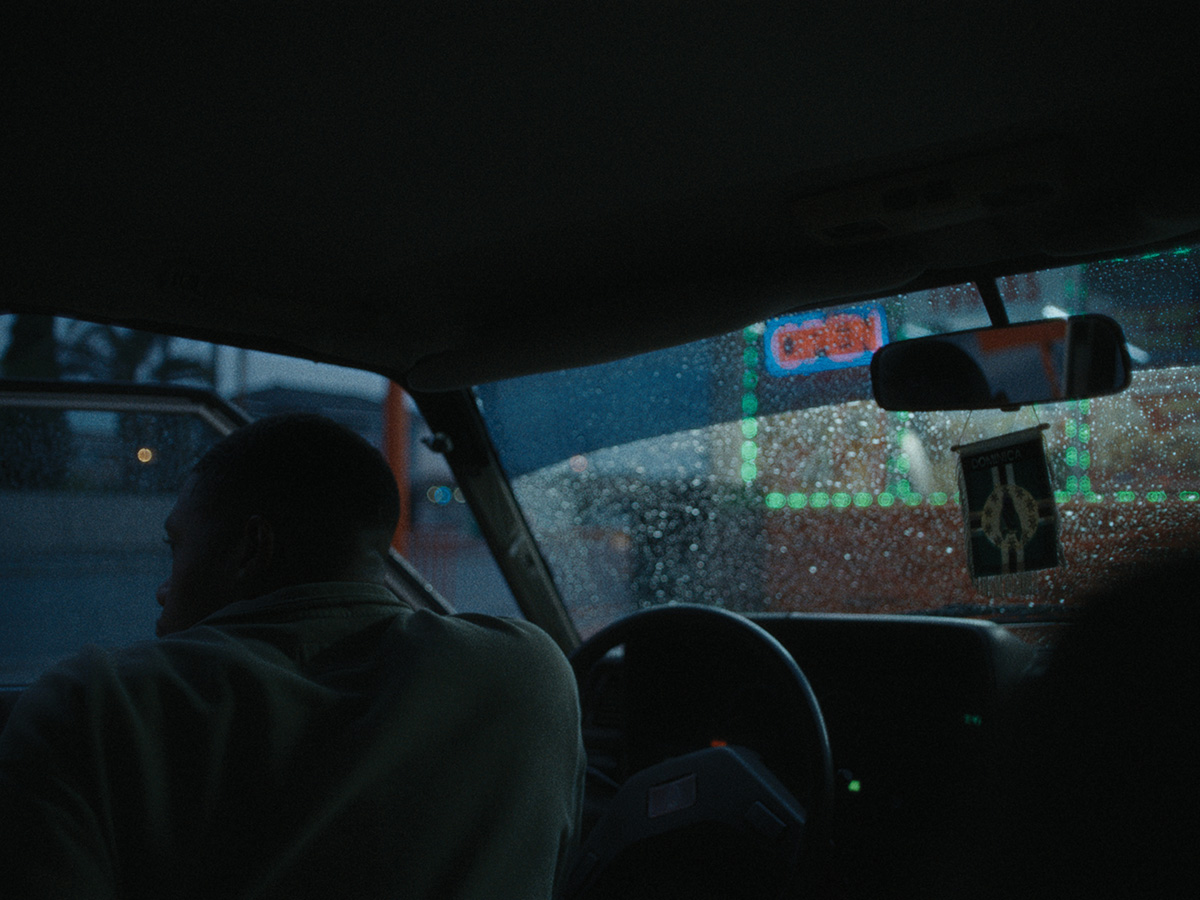
CIVIC is a short film that follows Booker on his first trip back home to South Central, L.A. after several years of self-imposed exile. Without any clear motive, or even a warning, Booker returns to the place that holds his origins and the people who shaped him. Framed almost exclusively inside of his car, CIVIC tracks Booker’s fleeting and fragmented encounters around his old streets. Booker spends most of his time with his childhood best friend, Tee. They ride around to liquor stores and lingering in parking lots after closing time. Closeness and distance ebbs and flows between them as they talk about their lives, old and new. The repaved ground between them allows Booker to dive deep into the past, seemingly letting go of the tension in the present. However, we soon realize Booker is avoiding his responsibility to his family members across this trip. Just as he plans his disembark from L.A., he has an unexpected encounter that helps to reframe his perspective in the world. CIVIC is an introspective film, giving life to the wordless exchanges, the mundane and the familiar shorthand of unfettered Black life.
Dwayne LeBlanc is a Los Angeles based, first generation, Caribbean-American artist and filmmaker. Primarily self taught, his practice focuses on themes of migration, visibility and dual identities. His debut narrative short film, Civic (2022), an introspective short film about homecoming, was awarded a production grant from Ghetto Film School and Netflix while simultaneously developed at Berlinale Talents 'Short Form Station.' Civic has been screened and awarded at international film festivals around the world, including International Film Festival Rotterdam, Clermont-Ferrand, New Orleans Film Festival, Atlanta Film Festival and Indie Memphis. LeBlanc was also named as part of the "future of cinema" at the 2023 New Directors / New Films festival in NY where Civic was screened at Lincoln Center and the Museum of Modern Art. LeBlanc is a MacDowell fellow and a member of the Writers Guild of America.