Catalogue > Faire une recherche
Résultats pour : nisic

Natacha Nisic
e
Doc. expérimental | 0 | couleur | 20:0 | France | 2010
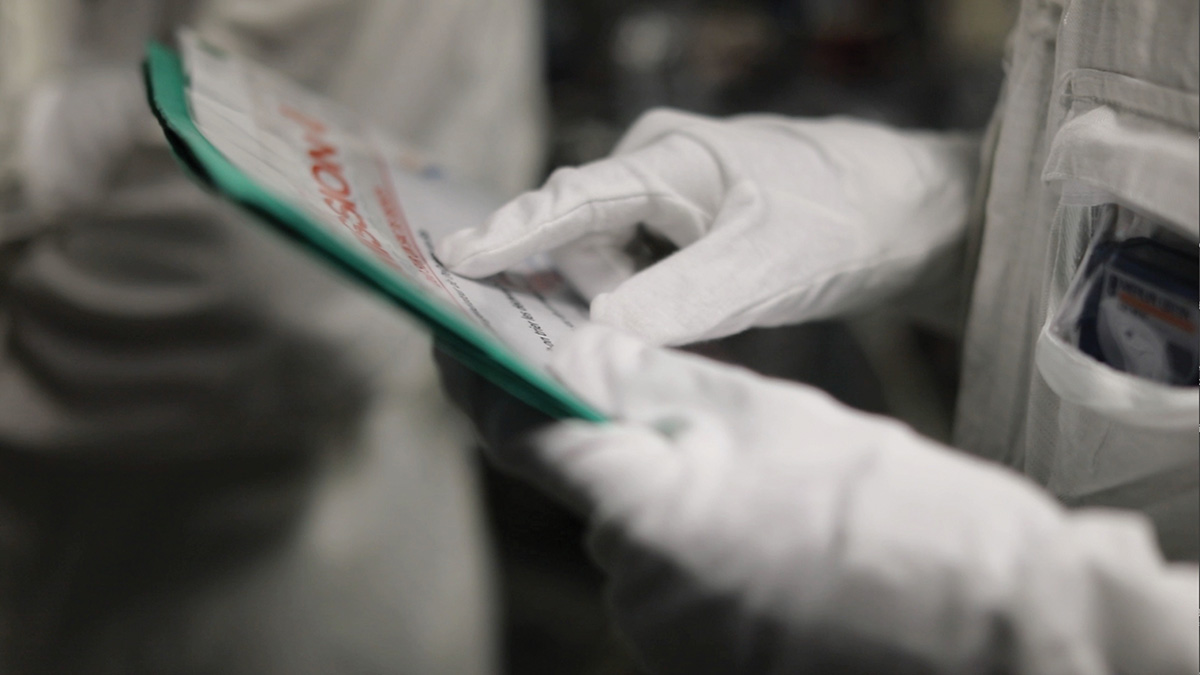
− e est le récit d`un voyage dans le nord du Japon à la recherche d`un territoire inaccessible : un territoire transformé, meurtri par un tremblement de terre d`intensité 6,7 sur l`échelle de Richter en juin 2008. La montagne déplacée, ouverte en quelques minutes par le choc violent des éléments, est une cicatrice ouverte d`une étrange beauté dont le sort reste indéterminé Cette cicatrice qui ne peut se refermer, reste un paysage d`une grande beauté, un grand canyon qui pourrait devenir un parc d`attraction, un « ecopark » qui attirerait les touristes, faisant de la catastrophe un argument de vente, .. − Nous survolons ce territoire, tentons d`y accéder malgré les barrages qui le clôturent. Ne peuvent y accéder que les camions des travailleurs à la reconstructions et les résidents reclus. Ceux qui ont vécu le tremblement de terre racontent et rejouent ces instants violents. Apprivoiser la catastrophe est une attitude culturelle japonaise. Si on ne peut apprivoiser le futur, on peut le prévenir.
Née en 1967 à Grenoble, Natacha Nisic poursuit des études d`art à l`ENSAD de Paris, et de cinéma à DFFB de Berlin et à la Femis. Son travail se situe à la frontière des différents supports de l`image en mouvement, Super 8, film et vidéo, mais aussi par la photographie et l`installation. Elle réalise de nombreuses expositions en France, Printemps de Cahors, Centre National de la Photographie, Le plateau-Frac Ile-de-France. Ses films ont été récemment présentés au Centre Georges Pompidou à Paris, K21, Düsseldorf, Metropolitan Museum of Photography, Tokyo, British Film Institute, Londres.

Natacha Nisic, en collaboration avec Ken Daimaru
Osoresan
Vidéo | hdv | couleur | 17:15 | France, Japon | 2018
OSORESAN Natacha Nisic & Daimaru Ken 3 channels installation, stereo sound, 17’, 2018 The Itako are women who train to become spiritual mediums in Northeast region of Japan and to evoke departed spirits for the living seeking to communicate with the dead. Most of them have visual disabilities and learn language and rites to describe a rich spiritual world entirely through oral communication. Our first meeting wit Nakamura Take took place in Hachinohe city in Jully 2015. Fiming a blind person is a challenge, in one hand, we would see what she would never share with us, and on the other hand, it seems that she « sees » things that we aslo don’t see. We met her two times in 2015 and in 2017. Each sequence was very short between clients who were regularely knocking at her door. Those fragments of her life, moments of remembering songs, rites and legends were too short to build up a large portrait. They became elements of a constellation we wanted to draw : balancing her humility and modesty versus the huge scale of the desaster which happened not so far fom a living region. Her way to travel in unknown countries of dead and spirits, using a treasure of words, notes, incantation, has been guiding own journey into the landscapes revealing the traces of the post catastrophy. (imprégnant par ses paroles chacune de nos visions des paysages que nous traversions). She told us the legend of «Oshirasama», the founding tail for Itakos, a cruel story of a father, a beloved daughter and a horse. As we crossed the city of Soma, we remembered the Horse Festival organized by the city just one year after the disaster. The horses are still there, waiting. The desire to make peace with the dead motivates each one visiting an Itako. What could help us to make our own peace with the heritage of the post catastrophy ? What kind of political individual gestures could face the large scale of political environmental decisons ? We still have to deal wih nuclear threat. As a symbol of fear, the mount Osoresan, a lansdcape of ashes, smoke and dark water, responds to the hyptnotic beauty of the fragmentation of alpha an beta rays displayed at the Rokkasho PR Center. Fear, to be acclimated must show a fascinating face, as Itakos used to be represented ; stranges, unreachable and dangerous figures of women. Witches. We discovered a touching, smily, opened woman. We realized that Take Nakamura is a monument of Japan history. Very precious, rare and fragile. With participation of Take Nakamura and Itakos of Osorezan Cast: Satoko Abe, Fumie Kubota, Yohei Kobayashi, Kyoko Takenaka, Mika Shigemori

Natacha Nisic
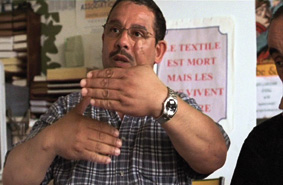
Le textile est mort mais les gens vivent encore
Doc. expérimental | 16mm | couleur | 11:6 | France | 2008
Natacha Nisic
Saint-Désir l'Exil
Vidéo | mov | couleur | 9:15 | France | 2020
Au coeur de Saint-Désir l'Exil se trouve une piscine. Au coeur de la piscine se trouvent les corps nocifs. A côté de la piscine, ma maman vit ses derniers instants sous le soleil.
Natacha Nisic,born in 1967 in France. Studies at Ecole Nationale Supérieure des Arts Décoratifs of Paris (1986-90) and at the Deutsche Film und Fernseh Akademie of Berlin (1989-91), and at the Fémis, Paris. Natacha Nisic continually explores the invisible, even magical relationship between images, words, interpretation, symbol and ritual. Her work interweaves links between stories, accounts of the past and the present, to reveal the complexities of the relationship between what is shown and what is hidden, the spoken and the unspoken. Her fixed and moving images function as substrata of memory, memory torn between its value as proof and its loss, and are all statements about the status of images and the possibilities of representation. She exposed in France, Japan, Italy, Germany, Spain, United Kingdom, Korea and Argentina. Her most notable personal exhibitions in Paris (France) are Haus/raus-aus (Le Plateau, Frac Ile-de-France), Effroi (Musée Zadkine), La porte de Birkenau (Mémorial de la Shoah) Nord, Carmel (Centre Georges Pompidou), and Echo (Galeries nationales du Jeu de Paume). Abroad : KW Complex (Atelier Hermès, Seoul, Korea), Trying to land (MACRO, Rome, Italy), Loop Barcelona (Dominique Fiat, Barcelone, Spain). She has participated in several group exhibitions in France and abroad, such as Regard fatigué (with Christophe Marchand-Kiss, Schloß Solitude, Stuttgart, Germany, 1998), Contemporary Utopia (Centre d’art contemporain Letton, Riga, LT, 2001), Tempered Ground (Museum of Garden History, Londres, UK, 2004), elles@centrepompidou, les artistes femmes de la collection du Mnam ( Centre Georges Pompidou, FR, 2009), Yebisu international festival for new vision tokyo (Metropolitan Museum of Photography, JP, 2010), and Immigrantes in Arte Contemporeano (Munfret, curator Diana Wechsler, Buenos Aires, AR, 2015). She won almost 10 grants, among the Arbeitstipendium (Senatsverwaltung für Wissenschaft, Forschung und Kultur, Berlin, Germany). She also stayed at the Villa Medici (Rome, Italy, 2007) and two times at the Villa Kujoyama Duo (Japan, 2001 ; 2016).
Natacha Nisic
Le textile est mort mais les gens vivent encore 1
Doc. expérimental | super16 | couleur | 5:47 | France | 2009
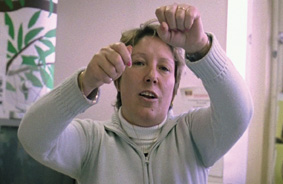
L`usine Desurmond à Tourcoing a fermé en 2004. C`était la dernière usine de filature de cette région. Les ouvriers se sont regroupés en association afin de faire valoir leurs droits et créer une communauté, au delà de la perte du travail. Les hommes puis les femmes ont reproduits la chaine et les gestes du travail à la chaine dans cette filature. Certains y ont travaillés en équipe de nuit pendant 35 ans.
Née en 1967. Ecole Nationale Supérieure des Arts Décoratifs de Paris, poursuit des études à la Deutsche Film und Fernseh Akademie de Berlin et à la Femis à Paris pour l`écriture de scénario. Elle réalise de nombreuses expositions et films où la question de l`image est mise en jeu. Elle utilise pour cela différents médiums : super 8, 16 mm, vidéo, photographie. Images fixes ou en mouvement fonctionnent comme substrat de la mémoire, mémoire tendue entre sa valeur de preuve et sa perte. Les différentes expositions personnelles comme au Plateau, Frac île de France, puis au musée Zadkine à Paris, sont des autant de prises de positions sur le statut des images et les possibles de la représentation.Ces oeuvres ont été montrées dans de nombreux pays, Allemagne, Espagne, Japon, Corée, canada, Argentine... Ses films sont diffusés sur Arte et au Centre Georges Pompidou à Paris. Pensionnaire de la Villa Kujoyama (2001) et Villa médicis (2007).
Natacha Nisic
Le textile est mort mais les gens vivent encore 2
Doc. expérimental | super16 | couleur | 5:20 | France | 2009
voir ouvrier 1
Voir ouvrier 1
Natacha Nisic
Et n'être que brume
Film expérimental | 0 | couleur | 15:0 | France | 2023
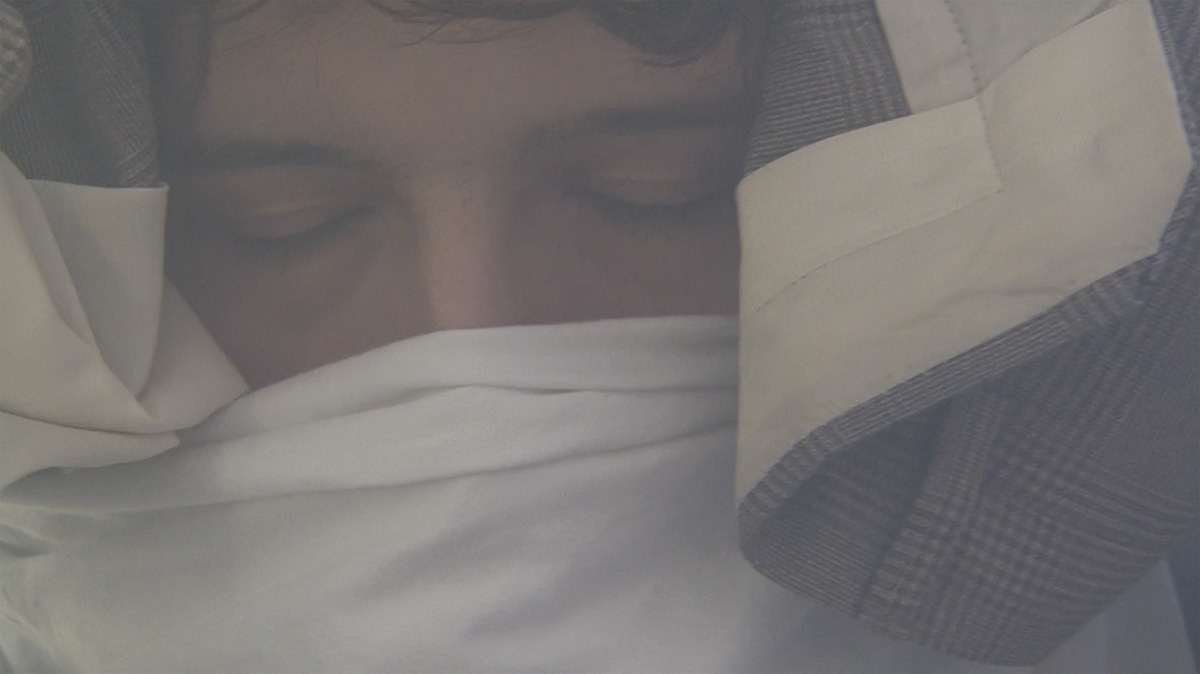
Dans la tour de la ville de Malakoff "Et n’être que brume » met en place le cadre expérimental d’une improvisation.Plongés dans les brumes, les êtres se révèlent. L’écran de la fumée permet une libération des affects car au sein du brouillard se logent les souvenirs, les torpeurs et les désirs. Le film est en hommage à la Crimée annexée depuis 2014 par la Russie.
Natacha Nisic is an artist and filmmaker. She weaves links between history, representation and memory and its implications in the political, social and cultural fields. She explores the invisible relationship between images, words, interpretation, symbol and ritual. Her work questions the nature of the image through different media: Super 8, 16MM, video, photography and drawing. She created The Crown Letter (2020), an international platform of women artists, in response to the Corona virus crisis. She directed “Rather Die Than Die” (2018) a documentary essay on the First World War and the art historian Aby Warburg as part of the commemorations of the Centenary of the First World War, and, for Arte, “Andrea’s Sky” (2014) on a Bavarian shaman initiated in South Korea. Natacha Nisic exhibits worldwide — recent exhibitions include, MNAV, Uruguay, 2023, Frise, Hambourg(2023), Leopold Hoesch Museum (2022), Centre Pompidou (2020), Sharjah Film Platform (2019), the Yebisu Film Festival, Tokyo (2018), the Media City Biennale in Seoul (2016), Bienal de la Imagen en mouvement in Buenos Aires, Munfret in Buenos Aires (2016). In 2014, about his highly acclaimed solo exhibition, Echo at the Jeu de Paume in Paris, the Art Press newspaper writes “His work offers a mediation on cultural differences, on the necessary struggle to consolidate memory against oblivion”. Natacha Nisic created the Children’s Memorial at the Shoah Memorial in Paris in 2005, questioning the question of the monument and its evolution over time. Nisic has obtained numerous scholarships and residencies, notably at the Villa Kujoyama, Tokyo in 2001 and 2016, at the Gyeonngi Creation Center, South Korea (2010) and at the Villa Medici, Rome in 2007. Education: Ecole Nationale Supérieure des Arts Décoratifs, Paris; Deutsche Film und Fernseh Akademie, Berlin; La Femis, Paris. Born in Grenoble, France, in 1967.