Catalogue > Search
Results for : Tout le catalogue
Felice D'agostino, Margherita Pisanu, Gaetano Crivaro
Rondò final
Experimental doc. | super8 | color and b&w | 51:0 | Italy | 2021
Un siècle d’images recherchées et retrouvées, fragments de celluloide, films de famille, bandes magnétiques, pixels. Un Saint martyr, un guerrier, Sant’Efisio, icône qui meut les gens. Un rite qui se répète hors du temps, qui porte le masque des dominations passées et présentes d’une île, la Sardaigne. Qu’est-ce qui nous échappe ? Qu’est-ce qui nous reste ? Question et réponse à la fois, fondement du montage, renouveau du passé dans un autre passé. Dans cette rencontre de regards décalés se renouvèle la fête dans la mémoire et dans le rêve, loin des lieux communs.
Gaetano Crivaro est un documentariste et vidéo-artiste qui vit à Cagliari. En 2009 il réalise son premier film “I LOVE BENIDORM” qui gagne le prix du publique au Festival DocumentaMadrid. En 2012 participe au film collectif "DEMONSTRATION", de Victor Kossakowsky. En 2013, son scénario STRETTO ORIZZONTE est finaliste au Prix Solinas. En 2014 crée le collectif L'Ambulante qui s’occupe de production, recherche, distribution cinématographique. Depuis 2015 le collectif lance le projet de recherche et d’expérimentation VideoRitratti et un projet de recherche sur la réutilisation des images préexistantes « Cinema di Seconda Mano » dans lequel il est né le film Rondò Final. Margherita Pisanu, chercheuse indépendante et documentariste, s’intéresse aux thématiques liées au droit et aux pratiques de transformation participatif de la ville mais aussi aux potentialités d’usage de langages audiovisuels dans l’interaction avec les territoires. En 2011 réalise son première film Good Buy Roma, sélectionné en nombreuses festivals. Elle a réalisé Hey Boys (2019), En Route (2018), Video Ritratti (série de court métrages documentaires réalisés dans différents territoires). En 2014 crée le collectif L'Ambulante qui s’occupe de production, recherche, distribution cinématographique. Avec l’Ambulante elle est engagée dans de projets expérimentaux sur le cinéma fondé sur les archives, avec une attention particulière aux aspects de la bande sonore. Le film "Rondò final" fait partie des ses projets là. Felice D’Agostino (1978) travaille depuis 20 ans comme réalisateurs, chef opérateurs et monteurs. Ses œuvres, presque toutes réalisées dans sa terre, la Calabre, avec Arturo Lavorato, ont été projetés dans beaucoup de Musé eset des festivals et ont reçu de nombreuses récompenses, dont le Prix Orizzonti à la 68° Mostra du Cinéma di Venise, Meilleur Documentaire au Torino Film Festival 2005, le prix Casa Rossa Doc au Bellaria Film Festival 2006 et une Mention Spéciale aux Nastri d’Argento 2012. Il vivent et travaillent entre Paris et l’Italie.
Vanja D'alcantara
La tercera vida
Documentary | dv | color | 47:0 | Belgium | 2005
Purificacion Crego is incarcerated since 11 years in the prison of Avila, at 100 km from Madrid. Today, she?s 29 years old. She?s two weeks away from leaving jail. La tercera vida is an encounter with this woman, in prison since she was 18, and who?s about to get back to freedom. It?s a closed door portrait, an intimate and spontaneous testimony during which the events of her past, her daily life in prison and her perspective on freedom are unveiled.
Jean-luc D'aleo, Lionel STOCARD
Modules Catalytiques
Création sonore | 0 | | 15:0 | France | 2003
"Création & utilisation d`éléments de diffusion mobile, dans un soucis de perte de repères spatiaux et d`immersion dans le son. Création sonore et composition pour des dispositifs électroacoustiques originaux Dans les oeuvres sonores habituelles, les éléments de diffusions, les haut parleurs, sont fixes. Le son se déplace d`une enceinte à l`autre par un effet de mixage. Dans le noir total, lors d`une écoute attentive, chacun est capable de définir approximativement la place des hauts parleurs dans l`espace. Il s`agit ici, de proposer des systèmes de diffusion mobile suggérant un autre mode d`écoute et de diffusion, intensifiant la perte de repères habituels à l`écoute d`une pièce musicale. Une proposition pour partir à la découverte de nouveaux espace, où l?imaginaire et le rêve nous entraîne vers l?impalpable. Une proposition d?élévation, de révélation de l?invisible, un commencement, qui recommence, inexorablement, sans révéler sa suite, laissant à chacun le soin de la trouver" http://membres.lycos.fr/stocard/installations.htm
Sebastiano D'ayala Valva
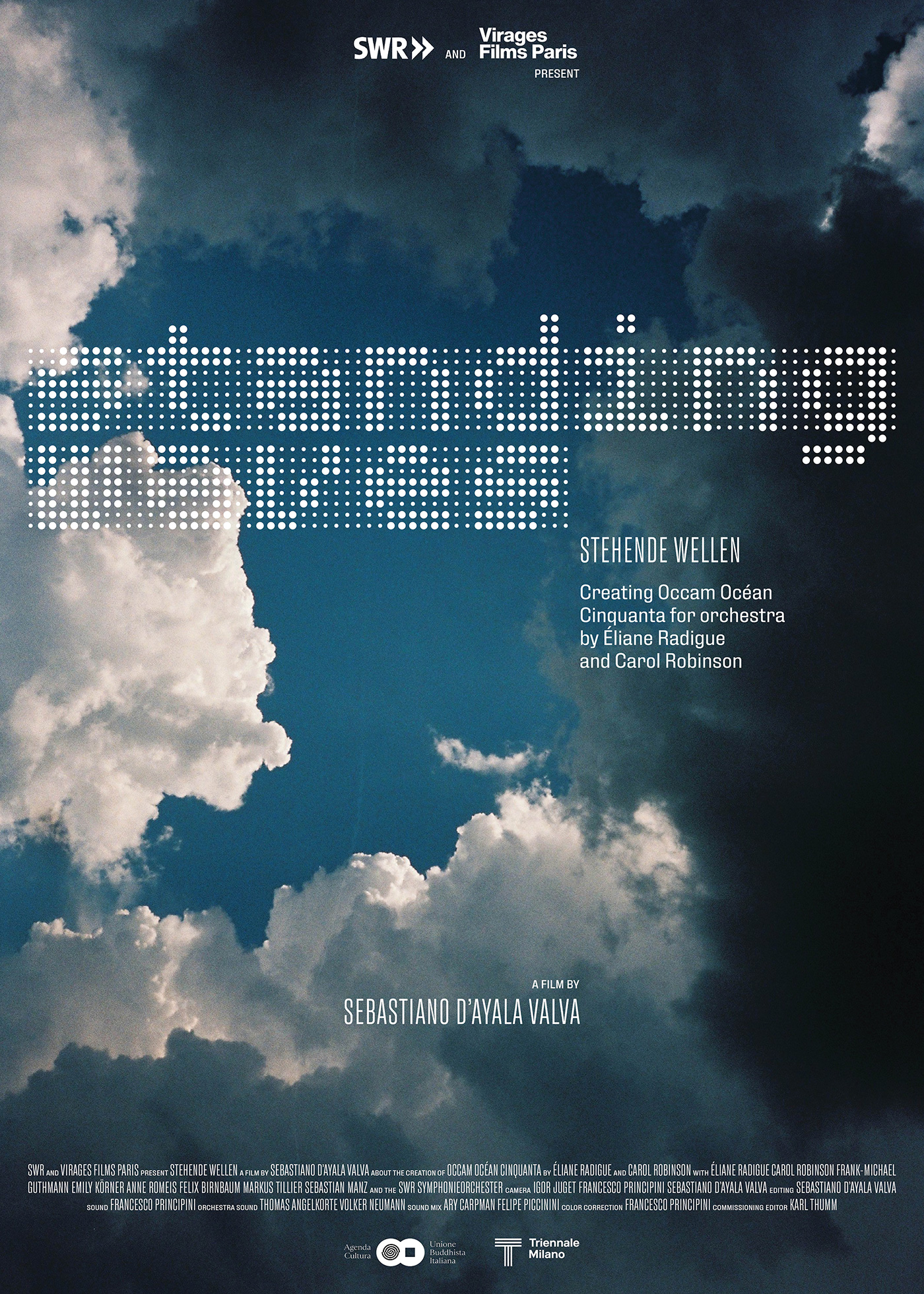
Standing Waves
Documentary | 4k | color | 47:26 | Italy, France | 2024
American composer Carol Robinson is in Germany to create a thirty-minute piece with the SWR Symphonieorchester in Stuttgart. The piece is co-signed by one of the pioneers of French electronic music, Eliane Radigue, who began to compose for acoustic instruments in 2005. Now in her nineties, Radigue barely leaves her Paris home, leaving Robinson to work alone with the German orchestra. But she’s confronted to the skepticism of the musicians, who dislike a central aspect of the project: that there are no written scores. The pair’s unorthodox music is expected to materialise during three days of intensive rehearsals, giving the orchestra a creative role it is unaccustomed to. Under the guidance of Robinson and the invisible but powerful aura of Radigue, the piece will find its definitive form at the Donaueschingen Musiktage, the oldest contemporary music festival in the world.
Sebastiano d’Ayala Valva (born 1978, London) is a British-Italian documentary filmmaker based in Paris. A graduate of the Institut d’Études Politiques (2003), he has written and directed numerous documentaries for French and European broadcasters since 2005. His work includes Transvestites Also Cry (2007), Angel (2009), Adapté(s) (2012), and Performants Autrement (2016). His debut feature, The First Motion of the Immovable (2018), was broadcast on ARTE and won several awards, including the Best First Appearance Award at IDFA and a Special Mention at the Turin Film Festival. He later directed Leo (2020), Farewell to the Father (2020), and Standing Waves (2023), a portrait of composers Éliane Radigue and Carol Robinson for SWR. His 2025 documentary Inclassables tells the story of elite athletes with Down syndrome.
Kurt D'haeseleer
Fossilization
Experimental video | s-vhs | color and b&w | 9:1 | Belgium | 2005
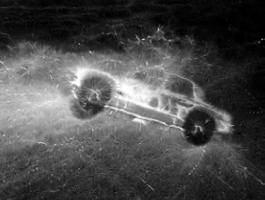
"For fossilization, d`Haeseleer used video as a kneading machine. Layers of images are moulded into a stickymess that absorbs and attractys everything it touches. It`s an apocalyptic endgame, starring several cars and some human remains and maybe even some wishful thinking on a moody. Rainy day."
Kurt D`HAESELEER was born in 1974 in Anderlech. He studied Audiovisual Arts at the Hogeschool Sint-Lukas in Brussels and Modern History in Leuven and in Vienna. Since 2001 he has been a member of the artist collective De Filmfabriek with realisation of several projects, for example live performances together with Tuk (aka Guillaume Graux) in the Beurrschouwburg in Brussels or the World Wide Video Festival Amsterdam.

Kurt D'haeseleer
Rock
Experimental video | dv | color | 7:6 | Belgium | 2007
Rock BE, 2007, 7`02? Underneath a water surface or in an underwater world, we can see people floating. They could be a concert audience; listeners to music by TUK perhaps, for which Rock serves as a music video. But they are lying still, floating, beyond their earthly existence. Mesmerizing noise accompanies them through a channel of a pixel-infected nature that swallows them up and spits them out in a parallel universe where an artificial landscape of rocks and stones unfolds along a sea. In the worlds of Rock, it is impossible to distinguish digital from analogue, virtual from real, natural from artificial.
Kurt D'haeseleer
_imovie_ [2] In between/shifting
Experimental video | dv | color | 13:52 | Belgium | 2004
_Imovie_[2] in-between/ shifting is the second video Opsomer made with the amateur software package ?iLife?, supplied with Apple computers. The video consists of photography of cities in Brazil and Senegal, which Opsomer visited. The photos of views from and onto high-rise buildings were later transferred to video in such a way that the urban structures appear to have been filmed right there on the spot. Nothing but the unnatural halted appearance of these images indicates we are in fact dealing with photography. During the film subtitles appear onscreen, constituting a video letter. The letter contains an investigation into the assimilation of Opsomer?s personal ambivalent impressions during her stays in the various cities.
ELS OPSOMER, *1968, lives and works in Brussels. She is a visual artist and graphic designer and for a couple of years she was an artist-in-residence at the Rijksacademie in Amsterdam. In collaboration with people like Johan Grimonprez, Herman Asselberghs and Ronny Vissers she realized a couple of multimedia installations. She draws from her constantly growing archive of urban images, puts together a commentary on and reinterpretations of global reality and at the same time she questions the contrast with the safekeeping of personal integrity in this reality.
Josef Dabernig
River Plate
Experimental film | 35mm | black and white | 16:0 | Austria, Italy | 2013
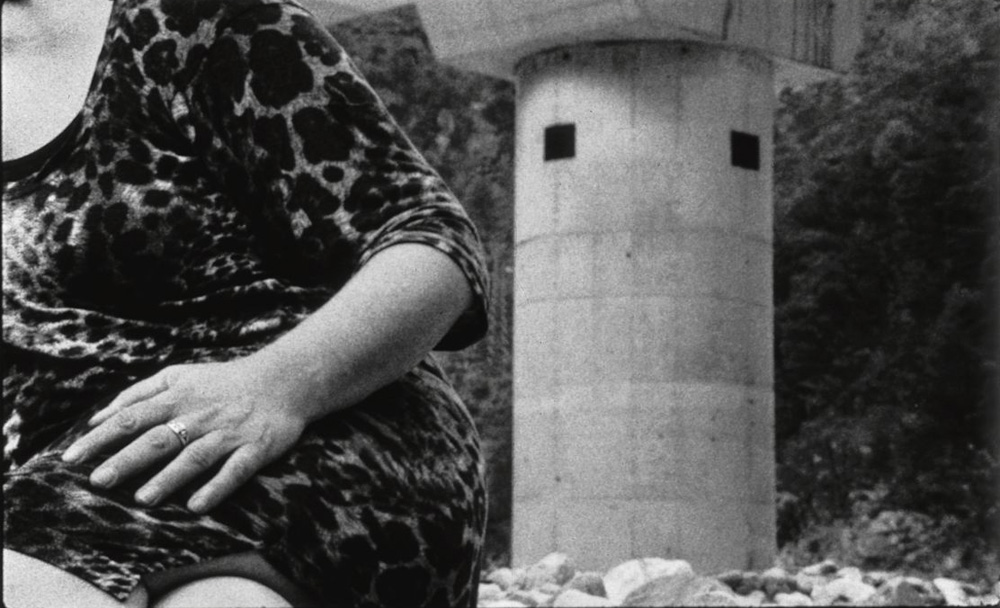
River Plate displays a micro society in a fragmented body-narration. Knees, shoulders, feet and bellies are signifiers of articulated human presence, revealing nothing else against a claustrophobic background of cement, stone and water.
Born 1956 in Kötschach-Mauthen, Austria. Visual artist, studied sculpture at the Academy of fine Aers, Vienna. Short films since 1994. Lives in Vienna Exhibitions include among others the 9. Gwangju Biennial (2012), the Venice Biennials (2003, 2001) and Manifesta 3, Ljubljana (2000). Film Festival participations at Locarno International Film Festival (2008, 2002), London Film Festival (2009), Mar del Plata International Film Festival (2011, 2007), Melbourne International Film Festival (2001), International Short Film Festival Oberhausen (2009, 2006), International Film Festival Rotterdam (2011, 2000), Toronto International Film Festival (2009, 2006) and Venice Film Festival (2011), where his short film Hypercrises has been nominated for the European Film Academy Award Monographs have been published by Kerber PhotoArt (2013), JRP|Ringier, Zurich (2008) and Verlag der Buchhandlung Walther König (2005).
Dagmar Dachauer
Competing for Sunlight: Ash
Video | 4k | color | 4:43 | Austria | 2017
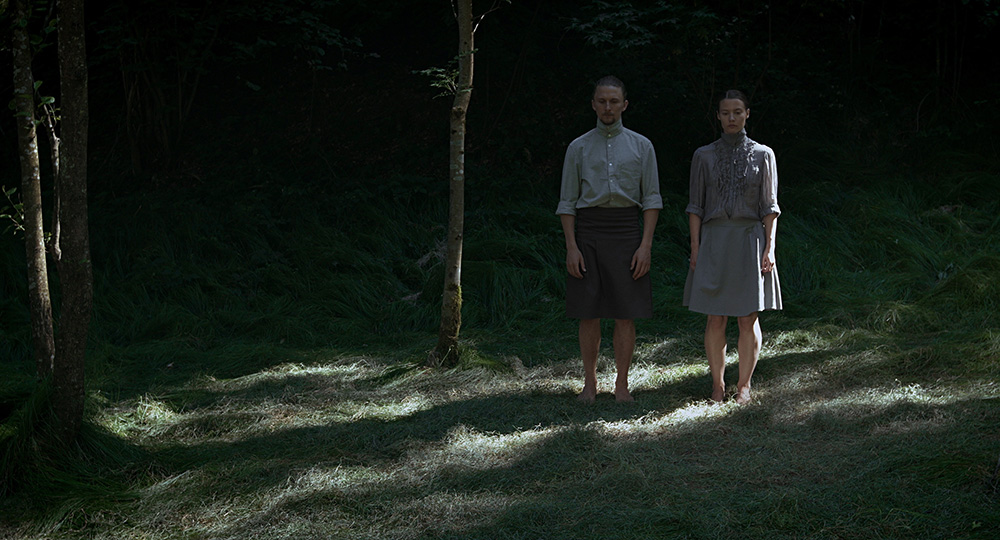
`Competing for Sunlight` is a Short Dance Film Series, featuring protagonists of a range of different tree species and Dance, telling individual short stories. “The death of a species, especially a species as significant as the Ash, punches a hole not only in nature, but also in our culture”. - George Monbiot Starting in the early nineties in Eastern Europe, an Asian fungus has gradually conquered the European continent, infecting almost all ash trees. The symptoms are very severe, many cases leading to the death of most trees. As aresult, it is assumed that the ash tree in Europe will soon be close to extinct. Choreographer and dancer Dagmar Dachauer was inspired by the sad faith of the European ash tree, and linked it to personal loss in her own life. Finis est cinis: Ash is what remains. Ash is a eulogy for the ash tree and for Prasthan Dachauer, who passed away in 2016.
Dagmar Dachauer is a dancer, choreographer and filmmaker born in Linz, based in Brussels. She grew up in a lonely house in the Upper Austrian forest, a place that continuously inspires her work. She has studied Dance at Amsterdamse Hogeschool voor de Kunsten as well as at P.A.R.T.S. in Brussels. She founded the Austrian art association UMFUG, in which she realizes dance and theatre performances as well as film projects with collaborators coming from various backgrounds such as Ecology, Cinema, Theatre, Music and Sound Design. Her solo works about the Viennese Waltz (“Wunderbare Jahre” and “Wie soll ich das erklären”), as well as her dance films have received several awards and are touring internationally.
Don Hai Phú Daedalus
Celilo Falls in Quarantine
Experimental doc. | 4k | color | 10:0 | USA | 2021
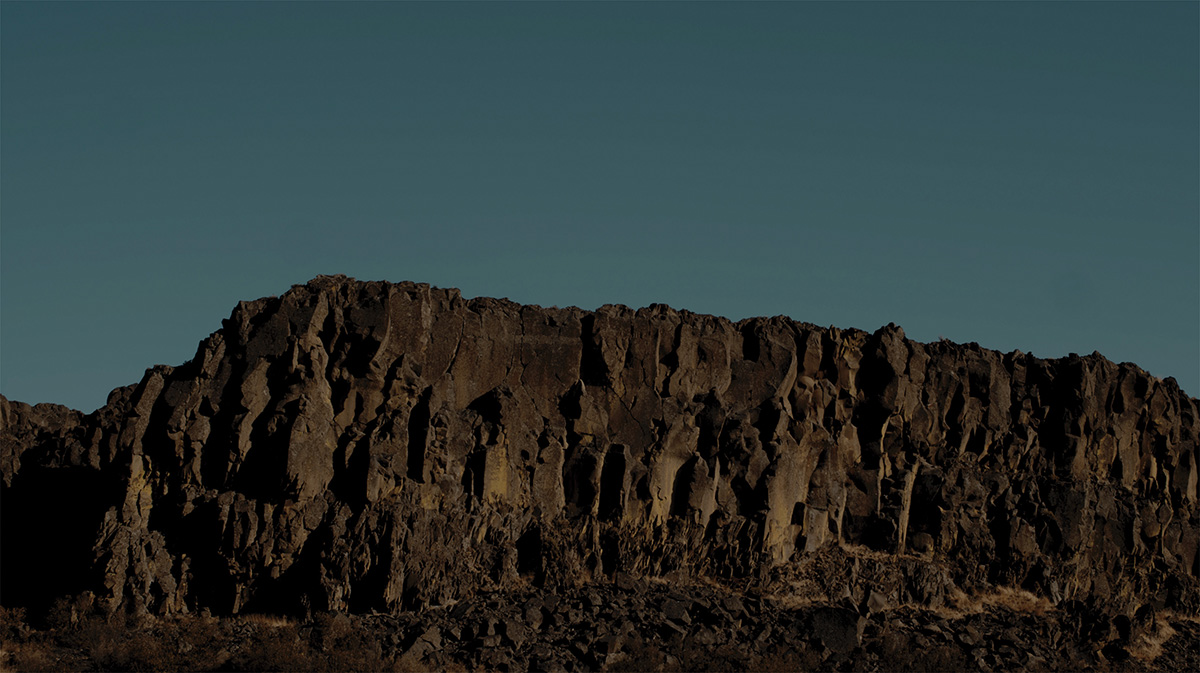
Celilo Falls is the oldest continuously inhabited community in North America, the site of a traditional fishery on the Columbia River. For 15,000 years, the cascading waters sustained the lives of many indigenous tribes. In 1957, the completion of the Dalles Dam–a massive hydroelectric generator–inundated the falls, displaced most of the families that subsisted at the site and obstructed the migrating salmon, white sturgeon and other anadromous fish. Today, only a few families reside at what is now a man-made lake. Shot from Horsethief Butte, an outcropping of basalt, we see the petroglyphs and pictographs created by indigenous people who once came here, communing here above the tumbling waters. An ethnographer records the spoken language–Chinookan–of the community just five years before they were displaced. The butte was carved out by the glacial activity of the last ice age, and stands in defiance to the signature winds wailing up the Columbia Gorge. This is a vignette of Celilo Falls during the 2020, SARS-COV-2 pandemic.
Don H?i Phú Daedalus (b. 1983) grew up in the shadow of the country's largest public observatory—an area so remote and sparsely populated that it served as the first plutonium-processing plant for the Manhattan Project. Shortly after the oldest human remains in North America were discovered near his hometown, Daedalus left to attend the University of Washington, where, coincidentally, the remains were to be held during the decade-long legal dispute between the Kennewick tribe and anthropologists. He lives and works in New York.
Tobias Daemgen
Duschszenarium
Experimental video | dv | color | 1:44 | Germany | 2007
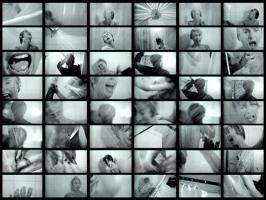
In der Videoarbeit "Duschszenarium" wird die lineare, filmische Abfolge der Einstellungen der Duschszene aus dem Film "Psycho" von Alfred Hitchcok durch das Element der Gleichzeitigkeit erweitert. Die ursprüngliche Struktur der aufeinanderfolgenden Schnitte wird aufgebrochen und ein Blick in die Mechanik der Szene wird geöffnet. Jede der Einstellungen behält ihre zeitliche Position innerhalb des Erzählstrangs aber bleibt nach ihrem Einsatz für die restliche Dauer des Clips als Loop erhalten. Durch die serielle, gleichzeitige Anordnung der Einstellungen bleibt es sowohl möglich dem Verlauf der Szene zu folgen als auch etwas über das Verhältnis und die Zeitlichkeit der Schnitte und Einstellungen zueinander im direkten Vergleich zu erfahren.
Tobias Daemgen, geboren 12.07.1980 in Braunschweig, 2001 bis 2008 Studium an der Fachhochschule Düsseldorf. Lebt und arbeitet in Düsseldorf.
Emanuele Dainotti
Cutting Edge
Experimental video | hdv | color | 3:31 | Italy | 2018
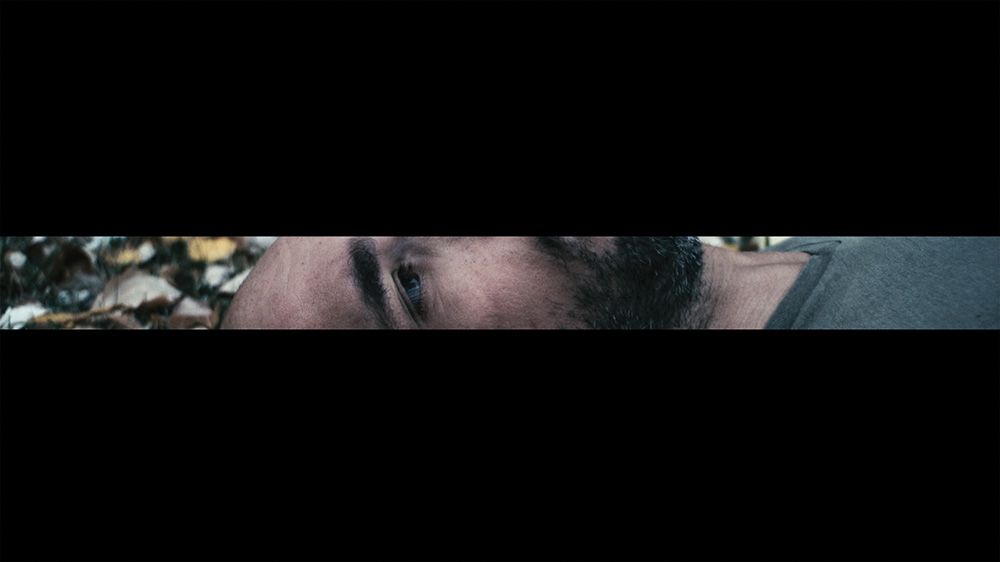
On 5 May 2004 the Fondazione Nicola Trussardi presents the piece Untitled (2004) by Maurizio Cattelan that is specifically conceived for one of the most significant spots in the Milano’s history: Piazza XXIV Maggio. Less than forty-eight hours after its installation, the bricklayer Franco De Benedetto destroyed the sculpture, which was to have remained up until June 6
Emanuele Dainotti (b. 1987 in Milano, Italy. Lives and works in Antwerpen, Belgium) is an artist and filmmaker. His videos and video installations have been shown and awarded in expositions and festivals such as Museum of the Moving Image (USA); Louvre Museum (France); FIVAC (Cuba); Museu de Arte Moderna do Rio de Janeiro (Brazil); CGAI (Spain); XIV Mostra internazionale del video d’autore Avvistamenti (Italy); VAFT (Finland), Salón Internacional de la Luz (Colombia); Festival Miden (Greece); Fonlad (Portugal), Hudson Valley MOCA (USA). In 2018 he won the "International Competition for the Intermedia Artwork" organized by the Academy of Fine Arts in Kraków, The Faculty of Intermedia and the Foundation for Development of Intermedia Artwork. In 2019 a jury presided by Anish Kapoor awarded him with the "Now You See Me award" at Louvre Museum in Paris.
Emanuele Dainotti
Prossimo
Experimental video | mp4 | black and white | 4:20 | Italy, Belgium | 2020
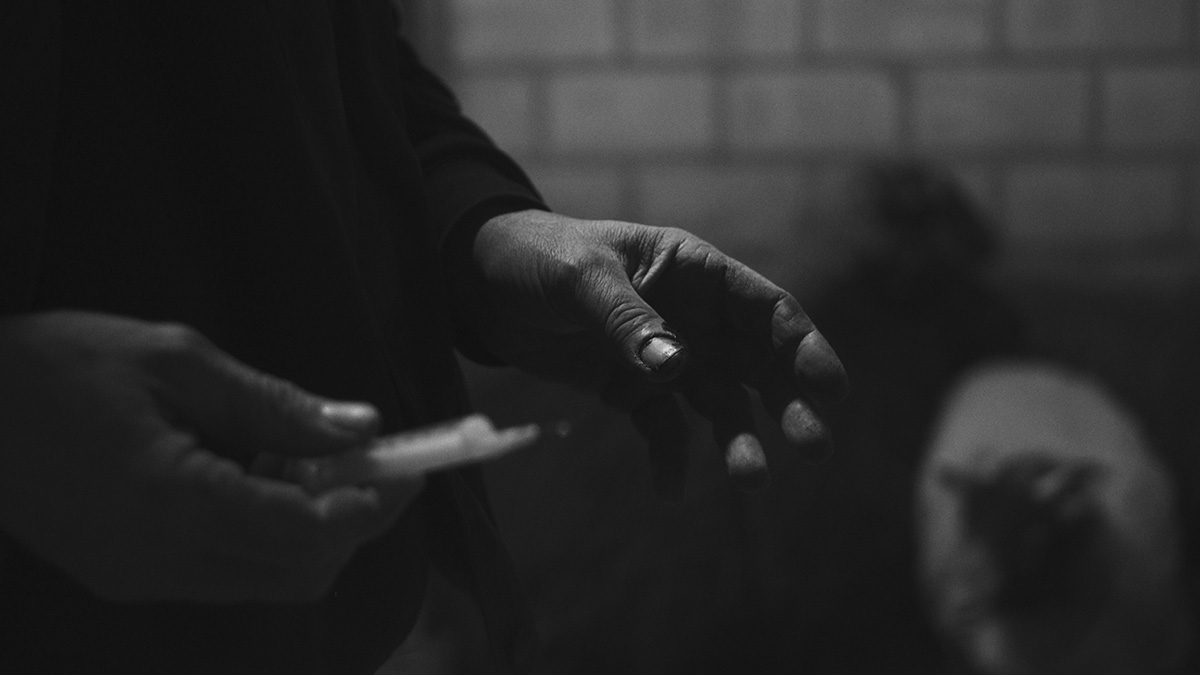
May 2020, Limburg (Belgium). A peasant family is vaccinating their animals.
Emanuele Dainotti (b. 1987 in Milano, Italy. Lives and works in Antwerpen, Belgium) is an artist and filmmaker. Recent exhibitions include: Museum of the Moving Image (USA); Louvre Museum (France); Reykjavík International Film Festival (Iceland); Rencontres Internationales Paris (France); Museu de Arte Moderna do Rio de Janeiro (Brazil); CGAI (Spain); Hudson Valley MOCA (USA); Museu Nacional de Arte Contemporânea (Portugal); Festival Miden (Greece); FIVAC (Cuba). In 2018 he won the “International Competition for the Intermedia Artwork” organized by the Academy of Fine Arts in Kraków, The Faculty of Intermedia and the Foundation for Development of Intermedia Artwork. In 2019 a jury presided by Anish Kapoor and Anda Rottenberg awarded him with the “Now You See Me award” at Louvre Museum in Paris. In 2020 he is among the artists of Loops Expanded, an international network, dedicated to exhibiting and researching the concept and the form of the Loop.

François Daireaux
Aires
Documentary | dv | | 54:0 | France, India | 2012
En assemblant des fragments collectés au fil de ses voyages, François Daireaux invente sa propre géographie sensible. Espace magnétique où dialoguent sans un mot les gestes, les mouvements et la matière, Aires est une expérience de perte de repères, un itinéraire au c?ur d?une sculpture vivante, d?un « Tout-monde. »
Né en 1966 à Boulogne-sur-Mer, François Daireaux vit et travaille à Paris. Il développe depuis une vingtaine d?années un art de l?installation qui intègre différents médiums : sculpture, photographie, vidéo ; conçus à partir d?expériences et de matériaux rapportés de ses nombreuses pérégrinations de par le monde. Loin de tout exotisme, en observateur minutieux, il s?attache aux gestes du travail comme à ceux de l?abandon, aux objets ouvragés ou laissés-pour-compte pour nous faire découvrir drames et merveilles au c?ur du quotidien. Depuis 2012, sa production d?artiste s?accompagne de la réalisation de films pour le cinéma et son travail commence à être découvert dans différents festivals européens. Documentaires sans dialogue, Daireaux manie dans ses films l?art du fragment pour nous entraîner dans des voyages immersifs au c?ur d?un réel incandescent.

Takuya Dairiki, Takashi Miura
Dairiki and Miura 3
Experimental doc. | digital | black and white | 60:51 | Japan | 2023
Dairiki and Miura talk and play in their neighborhood.
Co-directors, Takuya Dairiki and Takashi Miura, were born in 1980 in Osaka, Japan. They have been friends since childhood and started making films together for fun, doing everything by themselves – directing, script writing, photography, soundmaking, acting, editing, and art work. "Dairiki and Miura 3" is the fourteenth film they have co-directed.
Catherine Dalfin
Can you go quickly to the sun?
Experimental doc. | dv | color | 45:0 | France | 2008
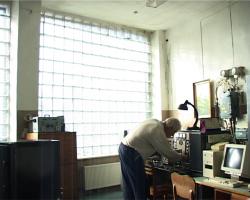
In Latvia, some people lived on an old military camp built in the middle of the forest by Soviet in order to accomodate an ultra radio telescope powerful to spy North America. Independence (in 1992) had not only positive effects on their life. More than ever, it is necessary for them to invent how make the life possible and pleasant.
Catherine Dalfin
L'âge du Bronze
Experimental doc. | dv | color | 6:20 | France | 2009
Sur une petite île au large de la Baltique, une idylle douce-amère entre l?homme qui tente de se faire une place et la nature qui n`en a cure.
"Dans le désordre, Catherine Dalfin a fait des études de lettres et d'histoire de l'art, s'est glissée à la radio pendant un certain temps, a croisé la route d'un collectif d'artistes, a été critique d'art pensant que ça valait la peine, a cru pouvoir participer à la création d'une revue et a finalement persévéré dans la vie après avoir touché une caméra." (Catherine Dalfin, juin 2009).
Catherine Dalfin
Passante
Experimental doc. | dv | color | 25:18 | France, Latvia | 2005
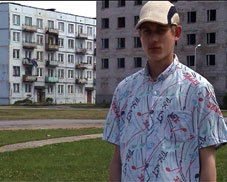
I had the idea of filming the passage of light in a past military area, on the shores of the Baltic Sea, in Liepaja Karosta. I very soon noticed that there was some diffuse presence, a continuous and ephemeral presence along the paths that would cross the district in all directions, and decided to include these strange passer-bys in the movie, wondering if they ever met.
Without any chronological order, studied literature and art history, made her way in radio for a moment, worked with a group of artists, has been an art critic because thought that it was worth it, believed that she could take part in the creation of a magazine and finally persevered in life after started to use video camera.

Charlotte Dalia
Speechloss
Experimental film | 4K | color | 15:0 | France | 2023
SPEECHLOSS is a film inhabited by isolated characters, out of sync and searching for direction. In an eerie seaside atmosphere, we come across a jogger, a bodybuilder, dogs and a strange giant organ. Speechloss is a progression of four scenes in which both the wind and a powerful desire to feel alive blow. For each of them is an abandoned AI, waiting to be activated.
Charlotte Dalia was born in 1993. She graduated from the Institut Supérieur des Arts de Toulouse. A visual artist, video maker and film director, her research focuses on both the formal and narrative effects of cinema. Steeped in the principle of the “cinémonde” theorised by Jean-Luc Nancy, she uses cinema as a repertoire of signs that “opens the inside onto itself.” She has taken part in numerous group exhibitions and has been invited to produce two solo shows. Continuing her investigations into the writings of reality through the forms of fiction, she trained in documentary writing with Ty Films and Films en Bretagne. She is currently developing ALMERICA, a project combining climate crisis and film sets, as well as writing a medium-length film following on from SPEECHLOSS, in order to pursue and expand its universe.

Walwin Dan
Second Unit
Experimental video | hdcam | color | 9:0 | Netherlands, United Kingdom | 2010
The title refers both to a fictional unit of soldiers and their role in detaining the men standing on the stones in the field, and also to the role of a team in commercial film production to the role of shooting material without the requirement of the main cast and crew. The presence of the camera in observing events, and the characters awareness of it, in front of and behind the camera, lends the video a functional aesthetic that suggests it is made for tactical or intelligence purposes, but is made complicated by the soundtrack, where all the extraneous sounds of the surroundings are audible apart from the dialogue, which further obscures its reading.
Dan Walwin studied Fine Art at Goldsmiths College, London, and begins a residency at the Rijksakademie van Beeldende Kunsten, Amsterdam in 2012. Recent presentations include European Media Art Festival, Osnabruck in 2011, Rencontres Internationales in 2010/11 and Festarte Video Art Festival (Museum of Contemporary Art, Rome) in 2010. A solo exhibition of his, tele-, begins in November 2011 at ZAAL5, Filmhuis Den Haag, Netherlands. More information can be found at www.danwalwin.co.uk
Walwin Dan
Water is a burned body
Video | dv | color | 11:45 | Netherlands, United Kingdom | 2009
Water is a burned body is an attempt to evoke a dystopia by economic means. A couple wake to find a boat colliding with wall of the flooded house they are in. The man goes to investigate, only to find the body of a woman, which he discards into the water. They set off in the boat into the open water, coming across an obstruction that puts an end to their attempts.
Dan Walwin is an artist working primarily in video, having studied Fine Art at Goldsmiths College, London, graduating in 2007. Recent shows include For the sake of the image at Jerwood Space, London, 2010, Verena Klary, Iwan van`t Spijker, Dan Walwin at Walden Affairs, The Hague, 2009, and Nature Untouched at Tou Vindu, Stavanger, 2007.