Catalogue > List by artist
Browse the entire list of Rencontre Internationales artists since 2004. Use the alphabetical filter to refine your search. update in progress
Jenni Toikka
Catalogue : 2023Prelude Op. 28 No. 2 | Experimental film | 16mm | color | 8:25 | Finland | 2022
Jenni Toikka
Prelude Op. 28 No. 2
Experimental film | 16mm | color | 8:25 | Finland | 2022
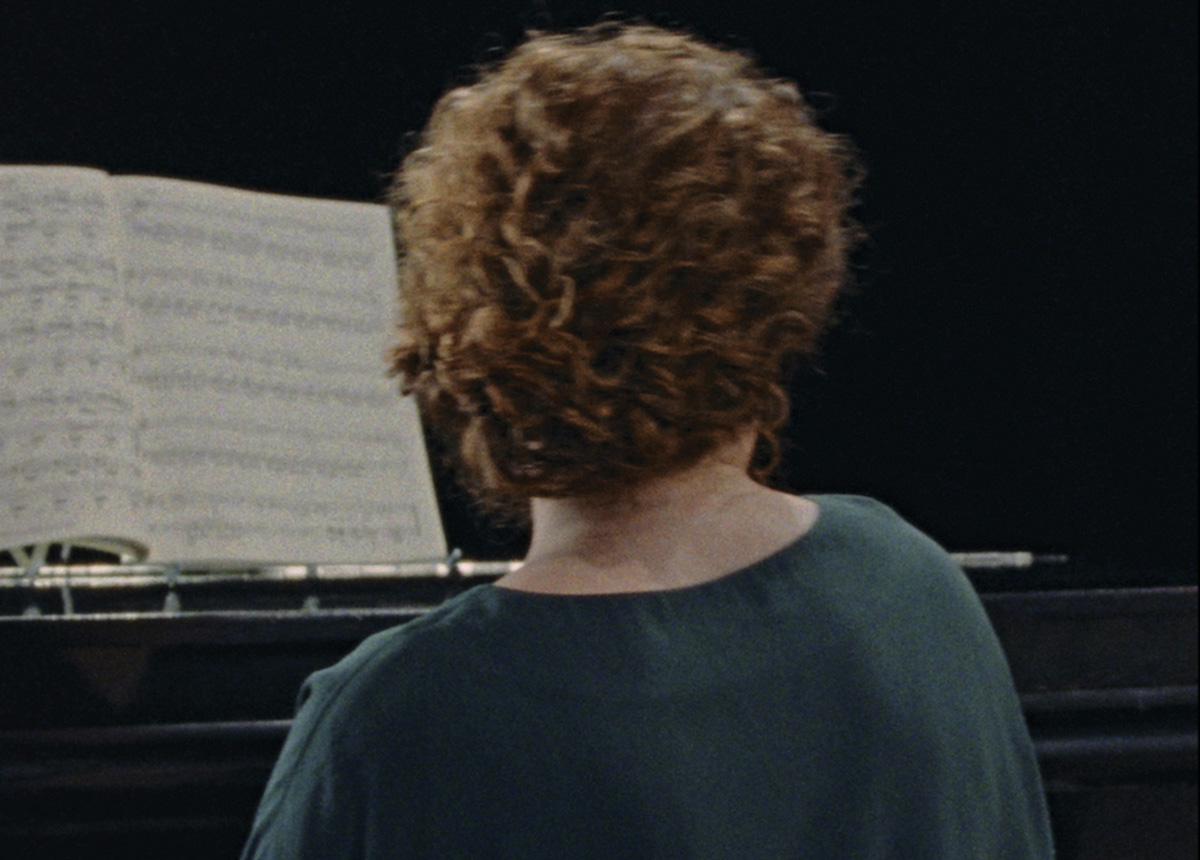
During a single long shot, we see two people taking turns playing the piano and listening alternately. The piece is the same on both times - Preludi Op. 28 No. 2 by Chopin - but when the performer changes, the interpretation of the song changes along with the perspective from which the song and its performance are viewed. The uninterrupted playing and single shot capture the event in one temporal moment, but as the camera moves and two people change places, time is equally layered. The performer becomes the listener and the listener becomes the performer. In one of the key scenes of Ingmar Bergman's Autumn Sonata (1978), the mother and daughter take turns playing the very same Chopin's Prelude. It is a piece that both are familiar with, so they are able to settle into the position of the other as they listen and watch the other play. A situation like this raises questions about the sense of reciprocity, simultaneity and synaesthesia. Could the roles become mixed from viewer and listener to the object of the gaze and listening? When watching the other playing, can you feel your own hands and fingers on the keys?
Jenni Toikka (b. 1983) is a Helsinki-based visual artist working predominantly with moving images. Toikka graduated from the Academy of Fine Arts, Helsinki in 2012. She has had several solo exhibitions in Helsinki including at Sinne, Forum Box and Kluuvi Gallery. In autumn 2019, her work was shown in the solo exhibition Reel at HAM – Helsinki Art Museum. Jenni Toikka’s video pieces have been seen internationally in group exhibitions and at festivals. Her work is represented in the collections of the Saastamoinen Foundation, Espoo Modern Art museum EMMA and the Museum of Contemporary Art Kiasma.
Jenni Toikka, Eeva-riitta Eerola
Catalogue : 2025W is for Waves | Experimental film | 16 mm | color | 9:53 | Finland | 2024
Jenni Toikka, Eeva-riitta Eerola
W is for Waves
Experimental film | 16 mm | color | 9:53 | Finland | 2024
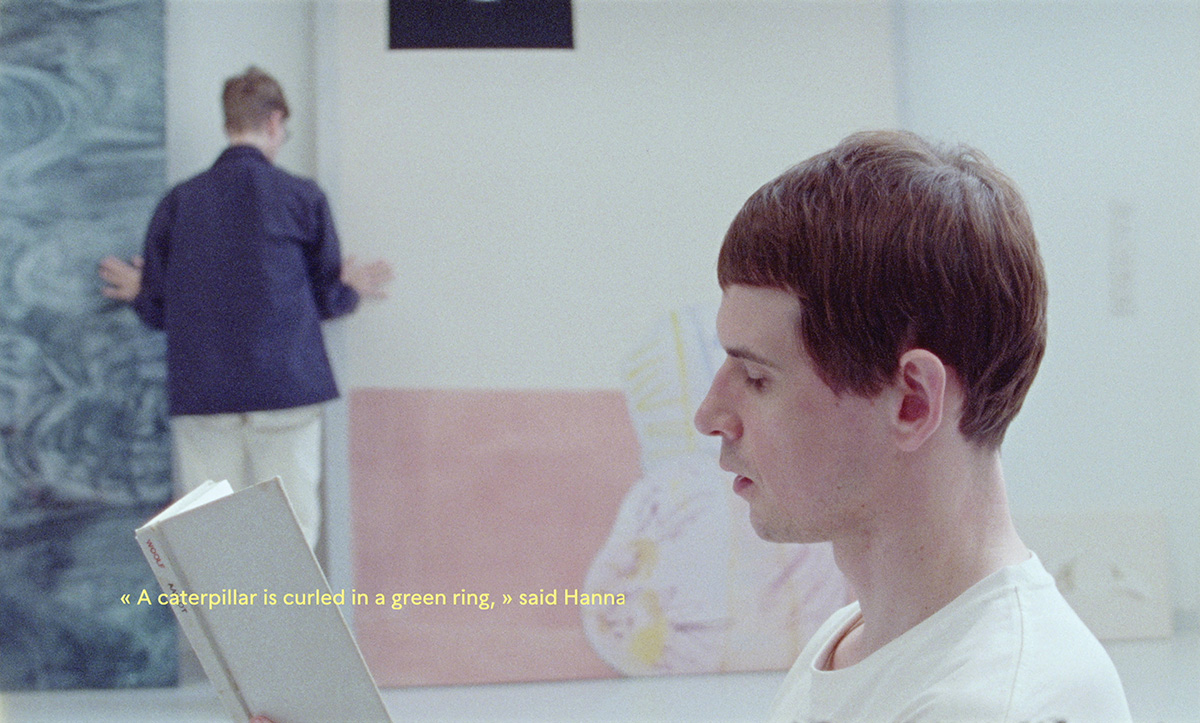
The film W is for Waves takes sisters, author Virginia Woolf and visual artist Vanessa Bell, as a starting point to explore the artistic process and examine the relationship between the visual and the literary. We see a choreography of two figures taking turns reading a book and moving with two large-scale paintings. The camera witnesses the actions and plays a subtle yet active role in altering the experience of space and visibility The film was shot on 16 mm film at Bell’s country house, Charleston, in East Sussex, and at Kalervo Kallio’s Artist Home in Helsinki. The text is adapted from Virginia Woolf's novel The Waves (1931), with some modifications.?
Jenni Toikka (b. 1983) is a Helsinki-based visual artist who graduated from the Academy of Fine Arts (FI) in 2012. Toikka has had several solo and group exhibitions in Finland and abroad, and her works have been shown at international film festivals. Her work is represented by different public collections such as the Museum of Contemporary Art Kiasma and the Saastamoinen Foundation. Alongside her own artistic work, Toikka has also worked in many artistic ensembles and she is one of the founding members and curators of Monitoimitila O. Eeva-Riitta Eerola (b. 1980) graduated from the Finnish Academy of Fine Arts in 2010 and has also studied at the École nationale supérieure des Beaux-arts de Paris. She has exhibited in several group and solo exhibitions in Finland and abroad, e.g. at Galleri Bo Bjerggaard, Copenhagen, in 2015 and Gallery Jaus, Los Angeles, 2014. Eerola's latest solo show, Locus, was seen at Helsinki Contemporary in January 2022. Eerola’s work is represented in a number of Finnish art and museum collections, such as those of the Museum of Contemporary Art Kiasma, Saastamoinen Foundation, Sara Hildén Art Museum, and the Wihuri Foundation. Eerola and Toikka have been working as an artist duo since 2016. Previous collaborative exhibitions have been exhibited at Turku Art Museum's Studio (2017), Hippolyte Studio in Helsinki (2018) and Maison Louis Carré in France (2019). The process-oriented and intuitive way of working and the montage-like combining of images and the use of juxtapositions define their work.
Eleni Tomadaki-balomenou
Catalogue : 2020The Chair | Animation | hdv | color | 0:39 | Greece, United Kingdom | 2019

Eleni Tomadaki-balomenou
The Chair
Animation | hdv | color | 0:39 | Greece, United Kingdom | 2019
A chair with breaking legs, a seat that cannot be stabilised, a place that is not guaranteed. The chair is a short animation made for the RCA degree show showreel by Eleni Tomadaki, 2019.
Eleni Tomadaki is a Greek artist based in London. Using moving image, performance and text, her work researches Scurgriness through intersecting fiction and reality. Eleni is a Masters graduate of Royal College of Art 2019, she has shown work at Tate St Ives, South London Gallery, Uppsala Art Museum and Assembly Point amongst others.
Yan Tomaszewski
Catalogue : 2022Gangnam Beauty | Experimental doc. | 4k | color | 23:11 | France | 2020
Yan Tomaszewski
Gangnam Beauty
Experimental doc. | 4k | color | 23:11 | France | 2020
English-born influencer Oli London are fascinated by South Korea and especially by Jimin, a member of worldwide famous K-pop band BTS. For years, they have spent a fortune on plastic surgery to look like him and become a K-pop star themself. Their personal journey is staged via a Korean tale about masks, taboo, and shamanism.
Yan Tomaszewski is a Franco-Polish filmmaker and visual artist trained at Beaux-Arts de Paris and at Le Fresnoy Studio national des arts contemporains. His often narrative projects combine research-based methodologies with visually seductive outcomes. His films were screened in such festivals as IDFA International Documentary Film Festival in Amsterdam (NL), FIFA Montreal (CA), FID Marseille (FR), Kasseler Dokfest (DE), Doclisboa (PT), and recently in a solo presentation for Prospectif Cinéma at Centre Pompidou in Paris (FR). He has had solo exhibitions at the Archaeological Museum in Krakow (PL), at the Musée de l’Air et de l’Espace in Le Bourget (FR) or the Middelheim Museum in Antwerp (BE). He has taken part in numerous group shows, notably at the MAK Center for Art and Architecture in Los Angeles (USA), at Artience Daejeon (KR), at the Fondation Hippocrène in Paris (FR), at the Centre Pompidou (FR), and at Manifesta 9 in Genk (BE). He has received grants from Ateliers Médicis, French Institute, DRAC, CNC-DICRéAM or the Vysehrad Fund. In 2019 he was nominated for Sciences Po Prize for Contemporary Art and in 2020 he was finalist of Studio Collector Prize and laureate of Allegro Prize.
Yan Tomaszewski
Catalogue : 2020The Good Breast and the Bad Breast | Documentary | 4k | color | 22:22 | France | 2019
Yan Tomaszewski
The Good Breast and the Bad Breast
Documentary | 4k | color | 22:22 | France | 2019
2002, Palm Springs, CA: an amazing Richard Neutra house is bulldozed by an individual who just bought it $2.5 million. Built in 1962, this "modernist jewel" sited on the green of a spectacular golf course in the middle of the desert, was designed to house an outstanding modern and contemporary art collection. Drawing on Neutra's interest in psychoanalysis and on rumors about the buyer’s personal vendetta, the film is an inquiry into our desire to protect and destroy beauty. Echoing Melanie Klein’s psychoanalytical theory, the house embodies the good breast protecting and nurturing creativity, while the buyer becomes the envious and destructive bad breast.
Pierre Tonachella
Catalogue : 2025Longtemps, ce regard | Experimental doc. | hdv | color | 0:0 | France | 2024
Pierre Tonachella
Longtemps, ce regard
Experimental doc. | hdv | color | 0:0 | France | 2024
Pierre Tonachella films not only to return to his childhood home in Essonne, but also to find in the work of cinema a raison d'être equal to that of the friends who stayed behind. A fragment from Schiller's letters, one of four literary excerpts that punctuate the film and provide a middle ground between the poetic and the political, suggests that return is a compass for aesthetic education. Far from sterile nostalgia, this compass points both to fidelity to origins and to a path for the future. For a long time, this vision has revived the collective, collaborative form of Jusqu'à ce que le jour se lève (presented at Cinéma du réel in 2018) after a film dedicated to his poet friend Théophile Cherbuin. Familiar faces are reunited, and each enters the film without introduction, through varied stagings that project shared memories onto the stage of the game, while the space left vacant by the biographical narrative is invested by words from other times and places. In praise of friendship, an intimate attachment to the land and a documentary on a proletarian, contemporary rurality, all come together in the exercise of an attentive, open, precise and free gaze. Closer in this respect to early Guiraudie or Creton than to Bruno Dumont, this vision echoes the words of Mahmoud Darwich: “This is the strength of poetry: there is no last poem. The horizon is open. The path to poetry is poetry. There is no last station, not even God. [...] If we knew what this poem was, we'd write it and be done with it.” (Text: Antoine Thirion)
Pierre Tonachella was born in 1988. He grew up in a village in Essonne, then studied philosophy and film theory in Paris before devoting himself to documentary filmmaking. His work blends the intimate and the political, and is often made with people close to his village. He also writes poetry.
Chelsea Tonelli Knight
Catalogue : 2009The Official | Video installation | dv | color | 6:30 | USA | 2007
Chelsea Tonelli Knight
The Official
Video installation | dv | color | 6:30 | USA | 2007
In the three-channel video installation ?The Official,? Chelsea Tonelli Knight explores fantasies of power within bureaucracy. Shot in the unremarkable private offices and corridors of the United Nations in New York, ?The Official? sets out to explore a male diplomat?s role within an idealized institution. What first appears to be a documentary or interview shifts into a fractured narrative in which a theater of authority and seduction is played out between the ?official? and his unidentified interviewer. Both characters enact a series of attitudes, displacing the tensions between institutional and intimate and questioning the ways they define one another.
Chelsea Tonelli Knight is a Chicago-based video and performance artist. She received her Master of Fine Arts from the School of the Art Institute of Chicago in 2007 and was a Fulbright Fellow to Italy in 2007. Knight has exhibited in the US and Europe including shows at the the Werkschauhalle Gallery, Spinnerei, Leipzig, the St. Louis Art Museum, the Centro Arte Moderna e Contemporanea della Spezia, Italy, and she and was a participant in the 2007 Istanbul Biennial.
Oliwia & Jerem Tonteri
Catalogue : 2010Unknown | Fiction | 35mm | color | 4:45 | France, Finland | 2008
Oliwia & Jerem Tonteri
Unknown
Fiction | 35mm | color | 4:45 | France, Finland | 2008
?Then I saw the face belonging to the voice that had spoken all night long.?
Oliwia Tonteri studies documentary film and Jerem Tonteri film editing at University of Art and Desing (UIAH), Helsinki.
Duro Toomato
Jaan Toomik
Catalogue : 2008HARE CHRISTMAS | Art vidéo | dv | color | 2:0 | Estonia | 2007

Jaan Toomik
HARE CHRISTMAS
Art vidéo | dv | color | 2:0 | Estonia | 2007
In the medieval Town Hall Square, in the heart of the Old Town of Tallinn stands a huge fir tree. Christmas is in the air. On the streets is the hustle and bustle of present buying and preparation. Around the tree itself is a Christmas market, a range of kitsch, purpose built, festive stalls almost filling the square with their decorative, superfluous bric-a-brac. Approaching faintly is the familiar sound of the Hare Krishna, those naives with their innocent philosophy who always bring a condescending smile to our faces, blissfully chanting their way through the city ? ?Hare Krishna - Hare Rama?. But as the sound approaches it becomes clear that the chant is not Hare Krishna but actually ?Hare Christmas - Hare Christmas?, and it is not our friends from the Krishna community but in fact a line of Santa Clauses in the familiar red attire and with flowing white beards, skipping along to the rhythm of the chant. A young girl is explaining to us her desire to do something good and worthwhile in the world. She wants to help others. She is kind. The sound of her voice is honest but we do not see the speaker ? what we see is an interior, a living place, if it can be called that. The slum, of an alcoholic, anti-social character, who it is hard to believe has any hope left or even cares anymore. The rooms are infested with cockroaches and flies. Heaps of decomposing rubbish strewn around. We can easily imagine the smell of the place. Two different worlds that at some point in time will collide.
Jaan Toomik
Catalogue : 2011OLEG | Fiction | | color | 20:0 | Estonia | 2010
Jaan Toomik
OLEG
Fiction | | color | 20:0 | Estonia | 2010
Patrick Topitschnig
Catalogue : 2017Carusel | Experimental doc. | 4k | color | 5:41 | Austria, Romania | 2015
Patrick Topitschnig
Carusel
Experimental doc. | 4k | color | 5:41 | Austria, Romania | 2015
With precisely composed filmic-tableaux and through minimal movements the work Carusel evokes the image of a post-apocalyptic playground, while somewhere outside or above various doomsday scenarios take their course. It is a setting of the Zeitgeist-phenomenon celebrated by our pop culture in graphic novels, computer games and television series in all of its enjoyment and pessimism. Carusel triggers trails of thought in-between mythical traditions and actual fear of the dark. In an elevator ride in one of the sequences, we eavesdrop a conversation of a family: Arguably, the rest of the world still standing. Carusel was shot in the damp caverns of a former Romanian salt mine which was reused as a bomb shelter in the second world war and is now refurbished as an erie underground amusement park. Though equipped with a carousel, ping-pong tables, a childrens’ playground and rowboats, the combination with large threatening steel structures and surreal light-objects still produce a gloomy atmosphere and ambience of fear. It seems that the mythical echos of the historically charged site are still abound, yet absurdly translated into an uncanny and bizarre „amusement park“. Marlies Wirth
Patrick Topitschnig is a Vienna based filmmaker and audio artist and also collaborates on theatre projects. After he finished his studies in Commercial Information Technology he studied Intermedia Art and Narrative Film in Vienna and Berlin under the likes of Bernhard Leitner, Erwin Wurm, Constanze Ruhm and Thomas Arslan. For his diploma in 2012 he produced the experimental video “Right to Hospitality”. He received several awards, such as the Fred Adelmueller Grant and the Ursula Blickle Preis for his video "Concision of the Whole" (2007) ("Zerschneidung des Ganzen"). In 2013 he was granted the STARTstipendium for video and media art (Austrian Federal Ministry for Culture and Arts). He works primarily with video and sound, often within installative contexts. His works center on direct physical experience and immediate reception of time, as well as on enduring and measuring the passing of time on a visual or on an acoustic basis. Permanent repetitions or continuous oscillations constitute a recurrent theme.
Tanin Torabi
Catalogue : 2025Until... | Video | 4k | color | 13:49 | Iran | 2022
Tanin Torabi
Until...
Video | 4k | color | 13:49 | Iran | 2022
"Until..." is a single-take video, captured using only the switch between the front and back cameras of an iPhone by the performers, and filmed during the 2022 "Woman Life Freedom" protests in Tehran, Iran. The video not only presents a highly intricate choreography for the camera, infused with the originality and urgency of what is deemed 'possible' in that specific situation, but also encapsulates the essence of unity, resilience, and purposefulness demonstrated by young artists responding creatively and courageously to an actual brutal situation in Iran.
Tanin Torabi is a multi-award-winning filmmaker and choreographer acclaimed for her innovative single-take short dance films in Tehran, described by critics as 'pushing the boundaries of screendance.' In 2021, Dance Magazine recognized her as one of the '9 Screendance Artists You Should Know.' Throughout the past decade, Tanin has showcased her films at over 200 film festivals and academic institutions globally, while also conducting workshops at universities and institutions like The Place London, Irish World Academy of Music and Dance, Villa Arson, ArtEZ Arnhem, Mov’in Cannes, and Tetralab Screendance. She has served on jury panels for prestigious festivals such as the Cannes Dance Film Festival and Dance Camera West, to name a few. Her recent accolades include the esteemed Cinedans Grand Jury Prize, ZED Festival’s Best Original Storytelling Prize, and the AVIFF Festival Jury Award for her 2023 film Until. Her 2017 film The Derive is one of the most frequently showcased dance films at festivals, winning many awards, including the Best Film Prize at the San Francisco Dance Film Festival, Dance Camera Film Festival, and Southampton Film Week. Tanin has previously received numerous awards in categories like Creative Vision, Best Artist Film, Best Inspirational Film, Best Inspiring Woman in a Film, Best Experimental Film, and Best Documentary. Juries have described her works as rebellious, without words but full of expression, inspiring, evoking the feeling of real life, emblematic and poignant, and empowering to women over the years. In 2024, she received a 7-month bursary from the Institut Français to conduct choreographic research at the Cité Internationale des Arts residency in Paris. She was also invited as an Associate Artist for Dance Limerick in Ireland to offer workshops to the University of Limerick and Dance Limerick's joint programs and conduct choreographic research. As a choreographer and performer, she has collaborated with numerous dance artists internationally, most notably with NYC-based choreographer Yoshiko Chuma since 2021 in her international shows. Currently, she is the artist-in-residence at Villa Arson, in collaboration with the Collège de France, engaging in the university's pedagogic programs, offering mentorship, and working on her screendance projects and writings. Tanin holds an MA in Contemporary Dance from the University of Limerick in Ireland and a BA in Sociology from BIHE.
Noam Toran, Onkar Kular
Catalogue : 2008Postponing the Inevitable | Fiction | 16mm | color | 16:0 | USA, United Kingdom | 2007
Noam Toran, Onkar Kular
Postponing the Inevitable
Fiction | 16mm | color | 16:0 | USA, United Kingdom | 2007
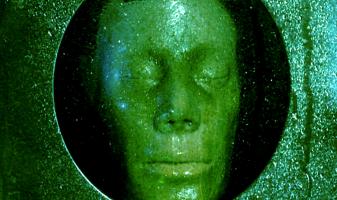
"Postponing the Inevitable" is a film presenting three distinct interpretations on the theme of near-death. Based on true stories, the film?s chapters "Falling", "Faking" and "Freezing" conceptually sit between traditional cinematic storytelling and an ambiguous space of visual representation, asking the viewer to interpret the clues provided: A garbage collector is photographed by a woman for an unknown purpose, a man walks backwards and forwards at the beach, a hospital contains a lone patient.
Born 1975 in Las Cruces, New Mexico, Noam Toran studied fine art and combined artist commissions with set designs for theatre and film before receiving an MA in design at the Royal College of Art in London. His work spans multiple disciplines and mediums, from film to installations to conceptual design, and focuses on the social, psychological and ethical implications of emerging technologies, mass culture, and celluloid media to photography. Toran?s work is exhibited, screened and published internationally, notably at the New York MOMA, the Luxembourg MUDAM, the CNAC Pompidou in Paris, and the Kulturhuset in Stockholm. He currently teaches at the Royal College of Art and lectures worldwide.
Jose Luis Torres Leiva
Catalogue : 2006Ningun Lugar en Ninguna Parte | Documentary | dv | color | 70:0 | Chile | 2004
Jose Luis Torres Leiva
Ningun Lugar en Ninguna Parte
Documentary | dv | color | 70:0 | Chile | 2004
?No Place Nowhere? can deal with many topics. It is a personal journey through image and time. It is the portrait of a marginal neighborhood. It is the encounter between reality and fiction. It is the constant search for a truth within in the documentary. It is a music rehearsal and the constant making of a film. It is a documentary more on questions rather than answers. A silent face, an empty highway, a winter scenery, the wind blowing the leaves in a tree, the sea, any given ordinary neighborhood to ?create by means of register? an unique truth for each person in the audience.
José Luis Torres Leiva is a Chilean young filmmaker born in 1975. With the short ?The Dead? he won the regional Fondart Award in 1998. Since then he has made a considering amount of shorts and independent videos. In the year 2003 he got a scholarship granted by Fundación Andes to the creation of the documentary ?No Place Nowhere?. He is currently working on what will be his opera prima in fiction filmmaking: ?The sky, the Earth and the Rain?, for which he got the Fundación Carolina 2003 scholarship for the development of Ibero-American filmmaking projects in Madrid, Spain; The Hubert Bals 2004 subsidy from the Rotterdam?s Film Festival for projects developments and an Honorable Mention for the project?s quality in the II Bal of the 6th Independent Filmmaking Festival, Buenos Aires, 2004. He recently finished the 35mm short ?Women Workers coming out of Factory? with the support of the Fondo de Fomento Audiovisual Nacional (FONDART) selected in several film festivals, like Toulouse, Huesca, Belo Horizonte, Sao Paulo, Drama (Grand Prix Best Short Film) Viña del Mar and Leeds. The documentary ?No Place Nowhere? has been selected in several Film Festivals, including: Barcelona DOCUPOLIS 2004 Documentaries International Festival, in the Opera Prima category, Rotterdam Film Festival, Rencontres de Toulouse, It?s all true documentary festival in Brazil, Vancouver, Canada, Viennale in Austria, etc. He was also awarded as Best Director in the VIII Santiago Documentaries Festival, FIDOCS 2004.
Fabiola Torres-alzaga
Catalogue : 2023The Uninvited | Experimental film | 4k | black and white | 12:2 | Mexico | 2023
Fabiola Torres-alzaga
The Uninvited
Experimental film | 4k | black and white | 12:2 | Mexico | 2023
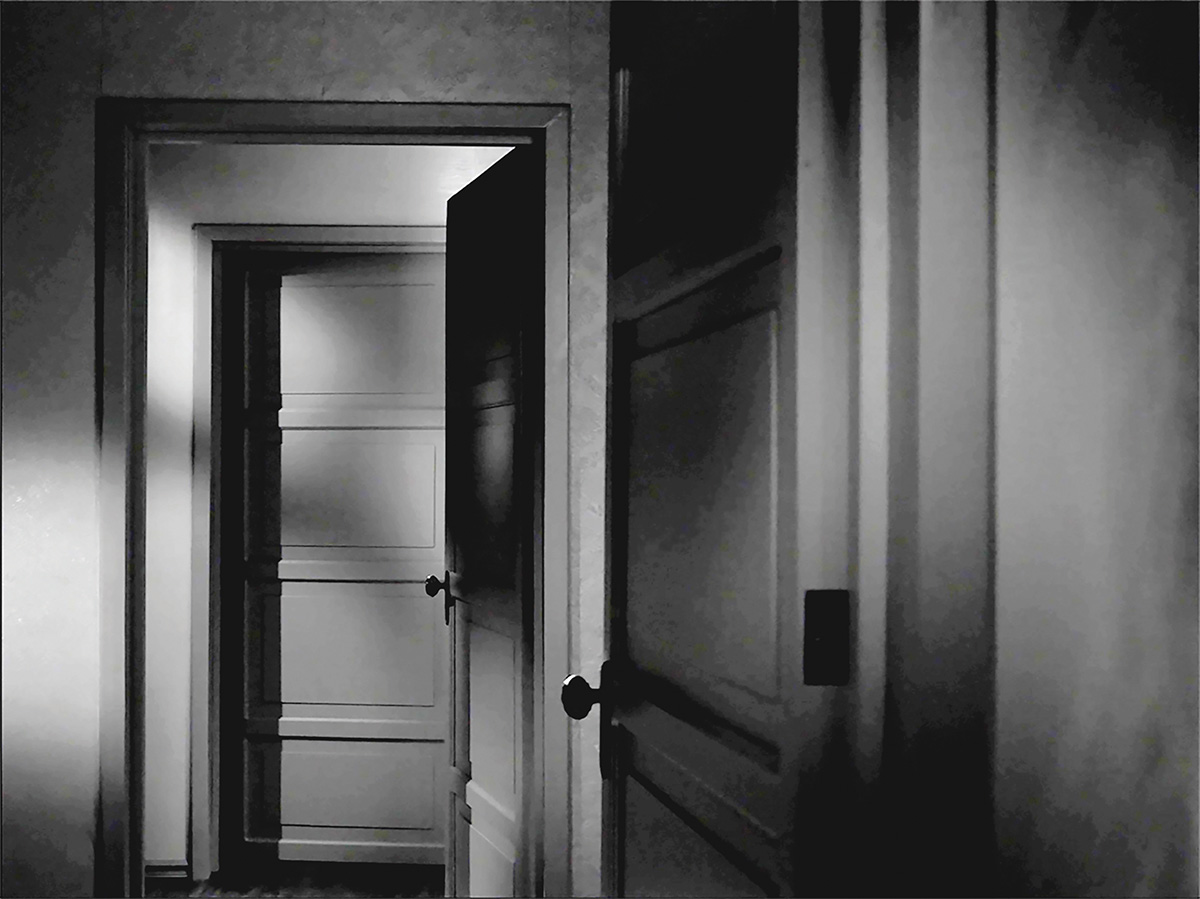
With no visible human presence, we move through the interior of a house. Like all houses, it contains spaces of darkness and corners hidden from view. That house, that interior, hides its flat background of ephemeral construction. We are inside a set built to the limits of the frame that films it. That house was only a fragment of what it appears to be. “The Uninvited” is a short film not about what there is, but about what there could be. Cinema is an apparatus of power over the representations shown therein and the bonds of continuity of a society. “The Uninvited” shows a house haunted by those absences, its blind spots and the violence of its limits and exclusion that its representations have meant.
Fabiola Torres-Alzaga is a Mexican artist working in contemporary art. She studied photography at “The active school of photography” and visual arts at “La Esmeralda” in Mexico City. She has been investigating focus and nearsightedness present in the act of gazing, and its repercussions in our socio-spatial relationships. I have a keen interest in cinema and its articulations of space and time, as well as stage magic and its defiance of logic. Both disciplines comprise the basis of my research. Through them, I seek to expand the scope of the visible, creating illusionary worlds that intrude into real space, counter-spaces that claim inclusive folds within the rigid limits of patriarchy to generate Other possible relations. Her work has been shows at MUAC (Mexico City, 2021), Lille3000 (France, 2019), the Biennal FEMSA (Zacatecas, 2018), the Anthology Film Archives (New York, 2018), the Biennal of Moving Images (Buenos Aires, 2018), the Paul Kasmin Gallery (New York, 2018), Videoex , Maison des Arts de Malakoff (France, 2016), the Polytechnic Museum of Moscow (Russia, 2015), MARCO (Monterrey, 2015), Museum of El Chopo (Mexico City, 2014), Museum of Modern Art (Mexico City, 2014), Laboratorio Arte Alameda (Mexico City, 2011), the Center for Contemporary Art (Tel Aviv, 2006) and Sala de Arte Público Siqueiros (Mexico City, 2004), among others. She has published “Historias de la noche” (Stories of the night, ESPAC, 2019) a book/project in dialogue with cinema curator Mara Fortes, and a solo catalogue “Fabiola Torres-Alzaga: In between acts” (Museo Universitario del Chopo, 2015), she´s currently a member of the Fonca’s Sistema Nacional de Creadores.
Total Refusal
Catalogue : 2023Hardly Working | Experimental doc. | 0 | color | 20:30 | Germany, Austria | 0
Total Refusal
Hardly Working
Experimental doc. | 0 | color | 20:30 | Germany, Austria | 0
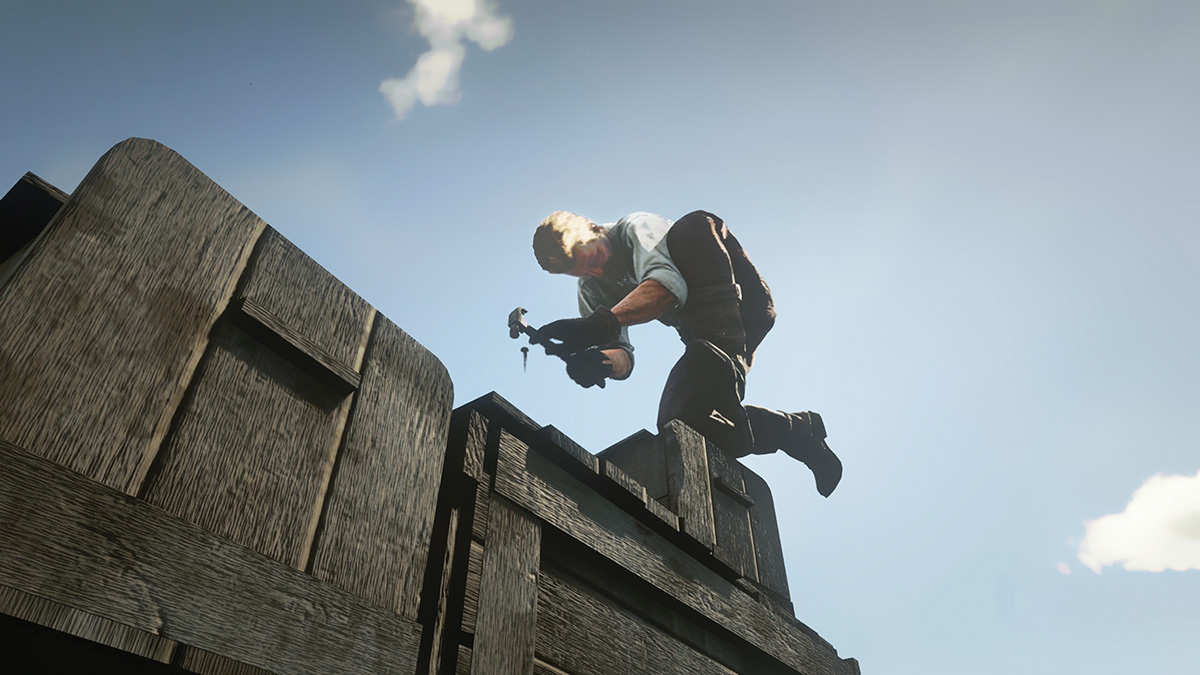
Hardly Working sheds a limelight on the very characters that normally remain in the background of video games: NPCs. They are non-player characters that populate the digital world as extras to create the appearance of normality. A laundress, a stable boy, a street sweeper and a carpenter are observed with ethnographic precision. They are Sisyphus machines, whose labour routines, activity patterns as well as bugs and malfunctions paint a vivid analogy for work under capitalism.
The pseudo-marxist media guerilla Total Refusal explores and practices strategies for artistic intervention in contemporary video games. It works with tools of appropriation and rededication of game resources. Their films and performances were presented among others at Berlinale ‘20, Locarno 22 and at the MoMA in NYC and they have received more than 46 international and national awards and honorary mentions. The current members of Total Refusal are: Susanna Flock, Adrian Jonas Haim, Jona Kleinlein, Robin Klengel, Leonhard Müllner & Michael Stumpf
Esther Toth
Catalogue : 2017Mémoires d'une infirmière | Experimental fiction | hdv | color | 20:25 | Hungary, France | 0
Esther Toth
Mémoires d'une infirmière
Experimental fiction | hdv | color | 20:25 | Hungary, France | 0
« Memoirs of a nurse », is the third part of a trilogy of video works featuring marionnettes in a hybrid of theater and film. The action takes place after death, in a « beyond » where psychoanalysis turns out to be obligatory and also an infinite process. Through the eyes of the protagonist : E, the film portrays how she and the different characters from her past life relate to psychoanalysis. She tries to figure out the meaning of love via transference towards the therapist, whom she perceives as a rescuing, reparative object. In order to pay for their daily post mortem sessions, through endless nights the characters have to work in a factory, which « produces » words on a circular conveyor belt. On the blurred line between dream and nightmare, utopia and dystopia, the film is a fond, but critical take on analysis. In the film, the psychoanalyst is portrayed by a marionette that looks like David Lynch, and a marionette resembling Larry David plays the receptionist at the post-mortem hall and the occasional analyst. Their dialog is an extract from the « Clinical diary « of Sándor Ferenczi.
Esther Toth was born in Budapest. She studied in the École Nationale Supérieure des Beaux-Arts in Paris, in the studio of Christian Boltanski. She received the Erasmus grant for the San Francisco Art Institute for the cinema section. She has spent several years studying the Stanislavski method in New York and Paris. But it was mainly her analytical work that motivated her, and upon which she directly drew her trilogy of films featuring marionettes. Did I dream you or did you dream me? (2010) was produced with the help of the Fonds de dotation d’Agnès b. The second part of the trilogy Sisters, a classic case (2012), was completed with the help of the Centre national du cinema et de l’image animée and Tomorrowland. These two films were projected at the Palais de Tokyo in Paris in 2013, followed by a debate with art critic Catherine Francblin. The third part of the trilogy Memoirs of a nurse (2015), was granted the help of the Fondation nationale des arts graphiques et plastiques and the Centre national des arts plastiques and will be projected in the Centre Pompidou in 2017.
Jalal Toufic, Graziella Rizkallah
Catalogue : 2023Hong Kong, China, Solaris | Experimental film | 0 | color | 10:0 | Iraq, Hongkong | 2023
Jalal Toufic, Graziella Rizkallah
Hong Kong, China, Solaris
Experimental film | 0 | color | 10:0 | Iraq, Hongkong | 2023
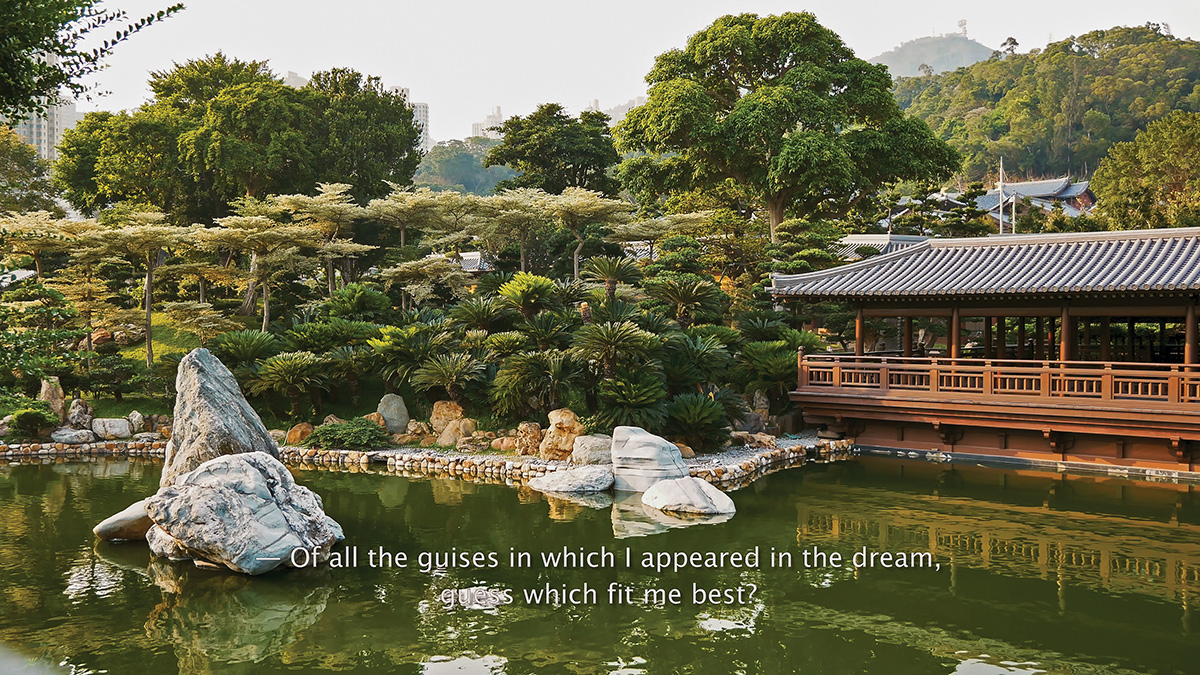
“Jalal, last night, I had a dream about our film.” “Which film?” “The one we are working on these days.” “Hong Kong, China, Solaris?” “Yes.” Can one have a dream where one’s deepest, unconscious wishes are fulfilled by Solaris or a Solaris equivalent, the extraterrestrial hyperintelligent sentient ocean of Tarkovsky’s film Solaris that fulfills such wishes? Yes, if one’s meta-wish is to have one’s unconscious wishes fulfilled in the manner Solaris does that rather than in the manner dreams do it (through such mechanisms as condensation and displacement). One should bear in mind though that, since dreams are wish fulfillments, Solaris or a Solaris equivalent would end up making one unable to dream, an insomniac, since it would render dreams superfluous. By dreaming about Solaris or a Solaris equivalent one would be dreaming about a place where one cannot dream, where there are no dreams.
Graziella Rizkallah is a Lebanese filmmaker. Her videos have been shown at Sharjah Biennial 11; San Francisco Museum of Modern Art; MAXXI; First Asia Biennial & 5th Guangzhou Triennial; 7th Bi-City Biennale of Urbanism\Architecture (Shenzhen); Times Art Center Berlin; Darat al Funun (Amman); and Beirut Art Center. Jalal Toufic is a thinker and a mortal to death. He was born in 1962 in Beirut or Baghdad and died before dying in 1989 in Evanston, Illinois. In addition to writing over ten books, he has made over ten films and videos, which include essay films and conceptual films; short films (7 minutes, 8 minutes, etc.), feature-length films (110 minutes, 138 minutes, etc.), and “inhumanely” long films (72 hours, 50 hours); videos that are standalone works as well as ones that are part of mixed media works; films that he shot and films in which all the images are from works by other filmmakers (Hitchcock, Sokurov, Bergman, etc.). His work has been shown in the 6th, 10th and 11th Sharjah Biennials; the 9th Shanghai Biennale; the 5th Guangzhou Triennial; MoMA PS1; San Francisco Museum of Modern Art; Centre Pompidou; ZKM; Kunsthalle Fridericianum; MAXXI; Witte de With; and Deichtorhallen Hamburg.
Muriel Toulemonde
Catalogue : 2013la théorie des vagues | Video | hdv | color | 20:0 | France | 2011
Muriel Toulemonde
la théorie des vagues
Video | hdv | color | 20:0 | France | 2011
La théorie des vagues est un film en trois mouvements, au fil desquels, à partir du motif de la vague, la question du passage de la perception à la représentation tente de se résoudre. Le film s?ouvre sur la description d?une maison tout au bord de l?eau, sur laquelle les vagues viennent éclater les jours de tempête. Ce lieu évoqué par la narratrice est celui où j?ai passé les deux premières années de ma vie. Hormis le récit que l?on m?en a fait, je n?en garde aucun souvenir, aucune image, même si je peux supposer qu?il a affecté mon mode de perception. C?est un autre lieu, le laboratoire de mécaniques des fluides de l?école centrale de Nantes, qui a réactivé la mémoire de cette maison au bord de l?eau, quarante ans après. Là, les vagues viennent s?écraser régulièrement sur les murs de béton d?un bassin à houle.
Muriel Toulemonde est née à Lille en 1970. Durant ses études à l?Ecole Nationale Supérieure des Beaux-arts de Paris et après, (DNSAP en 1997), elle bénéficie de plusieurs résidences à l?étranger : Milan (1991), Los Angeles (1994), Cologne (1999), Budapest (2001), Delphes (2004).
Giorgos Tourlas
Catalogue : 2006Sarcocoptes | Animation | dv | color | 4:0 | Greece | 2005
Giorgos Tourlas
Sarcocoptes
Animation | dv | color | 4:0 | Greece | 2005
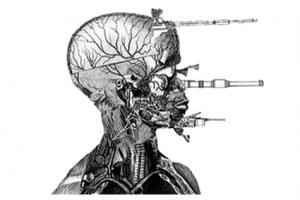
"Sarcocoptes" in greek, it means flesh cutters. This short film-videoart is an experimental animation. The human body transforms depending on the emotions. Persistence on the human head and its anatomy. Anatomy drawings mutate. Emotions and memories have actual flesh and struggle with the real flesh. A simple thought seems like a medical operation. Is organism closer to death or is he ready to rebirth? A lonely creature that diggs his mind to discover himself.
Giorgos TOURLAS was born in Athens in 1979. He is a graduate of the Athens? School of Fine Arts , where he studied in the laboratory of Rena Papaspyrou, from the year 1999-2000 up to 2003-2004. In the same faculty he studied mosaic and computers. Now, he is in Athens? School of Fine Arts, for postgraduate studies in Digital Art. In the University of Fine Arts of Valencia, in Spain, in 2002, he studied copper engraving (calcografico) and animation.