Catalogue > List by artist
Browse the entire list of Rencontre Internationales artists since 2004. Use the alphabetical filter to refine your search. update in progress
Plasmodium, Bob MILLER, Jim THOMSON
Catalogue : 2006Rethinking the Raven | Création sonore | 0 | | 60:0 | USA | 2004
Plasmodium, Bob MILLER, Jim THOMSON
Rethinking the Raven
Création sonore | 0 | | 60:0 | USA | 2004
"In a more Cagean mode, the sound collage "Rethinking the Raven" presents echo-treated field recordings of a suburban smart guy spouting increasingly ridiculous, palsied nonsense syllables into fast-food driveup intercoms. ("Sir, can you drive to the window so we can take your order, we can`t understand you.") The track is funny on a mean spirited Jerky Boys level, but also seductive, with the sound manipulations turning the baffled or bored utterances of the franchise employees into quasi-world music. One clerk`s digitally twinned "I don`t know/I don`t know (I don`t understand what you`re saying)" becomes poignantly melodic through repetition, resembling an eerie call-and-response chant. In "Dr. Octobongopus" a bored lounge MC introduces the stage act of a polyrhythmic, multi-armed, but basically lame bongo player in a routine that is pure deadpan surrealism."
"Plasmodium is Bob Miller (trumpets, flugelhorn, keyboards, sound manipulations) and Jim Thomson (drums, percussion, sound manipulations, and voice). Initially conceived in Richmond, Virginia in the year 2000 as an improvisational and experimental drum and trumpet duo, Plasmodium has since expanded its music into the realm of clairaudience-the perception of messages in thought forms from entities who exist in another realm--after experiencing supranormal hearing during their rehearsals. What they thought were static CB transmissions and AM radio signals coming through their amplifiers turned out to actually be a transmission of paranormal voices carrying various messages and bits and pieces of information. Determining that the tops of their heads and their respective musical equipment were acting as "channeling instruments," Plasmodium opened The Investigative Sonic Apparition Research Laboratories in the year 2000. Using a dizzying array of drum loops, keyboards, trumpets, diodes, crystals, mirrors, and audio-visual surveillance monitors finetuned to paranormal frequencies, Plasmodium gives the psychic phenomenon known as clairaudience a sound, so to speak, and they paint a "sound-surveillance" portrait of sonic apparitions that they channel in their laboratories. Their latest CD, Clairaudience, is the result the group`s adventures in the phenomenon of clairaudience between 2002 and 2004."
Platoniq, -
Cameron Platter
Catalogue : 2014YOU | Experimental video | dv | color | 15:59 | South Africa | 2012
Cameron Platter
YOU
Experimental video | dv | color | 15:59 | South Africa | 2012
A video made up of a collage of Pastor Chris Oyakhilome?s sermon on the ?Power of Thoughts? as well as use sources such penis extension advertisements, visionary fast food chicken outlets, sex websites, eternal happiness, instant cash, waterfalls, abdominal machines, life solutions international, dancing dolphins, mass builder, fireworks, slogans, sub-tropical bondage, and celestial landscapes; all directed in my crude, minimalist filmic technique. The video should be viewed as an expanded, absurdist, collage; part documentary and part commentary.
Cameron Platter was born in 1978, Johannesburg. Recent exhibitions include ?Imaginary Fact, Contemporary South African Art and the Archive?, 55th Venice Biennale; ?Impressions from South Africa, 1965 to Now,? Museum of Modern Art, New York; Le Biennale de Dakar 2010, Dakar, Senegal; ?Coca- Colonization,? Marte Museum, El Salvador; and ?Absent Heroes,? Iziko South African National Gallery. Platter fills the ordinary and marginal, with incendiary new meaning. Working from everyday experience with subjects overlooked or considered delinquent, sordid and lowbrow, he reconnoiters notions and concepts on the outside fringes of South Africa?s popular culture. His work appears in the permanent collection of MoMA, New York; The FRAC des Pays de la Loire, France; and the Iziko South African National Gallery. His work has been highlighted in The New York Times, The Wall Street Journal, Vice Magazine, NKA Journal of Contemporary African Art, Artforum, and Art South Africa.
Catalogue : 2011The Old Fashion | Video | dv | color | 16:7 | South Africa | 2010
Cameron Platter
The Old Fashion
Video | dv | color | 16:7 | South Africa | 2010
The Old Fashion, is an adventure in humour, love, loss and longing for something more? a mélange of The Third Man, an advertisement for Prince Barrack Hussein?s sports water/ penis combo, strip club dance montages, mysterious villains and co-conspirators, and a certain fast food restaurant on Asstropolis. It pays homage to movie remakes and sequels, franchise food, dumbed-down politics, and mundane beauty. It is a portrait of contemporary South Africa, through the eyes of a deranged cat dictator bent on world domination.
Cameron Platter (born 1978 Johannesburg) His work is an intoxicating vision of Good vs. Evil, documenting contemporary morality through the telling of simple stories drawn and appropriated from the media, TV, films, art, history, pornography, battle scenes, politics, music, and religion. His targets and influences include Lamborghinis, Kawasakis and beautiful women in fishnets; megalomania and the mass media; James Bond and Richard Pryor; corrupt politicians; penis extension machines and strip clubs; children?s stories, crime fiction and gangster films; Southern African woodcut and craft masters; tabloid horror stories; wildlife, real life and things falling apart? Mixing traditional and new mediums, Platter creates a tableau that is a sincere homage to historical themes, an ironical take on contemporary Africa, and an ultra primitive, anti-aesthetic view on what it means to be alive today in South Africa. Recent projects include: Hard Times Great Expectations, Whatiftheworld Gallery, Cape Town; I Am Lonelyness, Hilger Contemporary, Vienna; The Old Fashion, Volta NY, New York; Black Up That White Ass II, Youngblackman, Cape Town; Dak?Art, Biennale de Dakar, 1910-2010: Pierneef to Gugulective, South African National Gallery and Art 39 Basel, Switzerland. His work is included in the permanent collection of the Museum of Modern Art (MoMA) New York.
Michael Poetschko
Catalogue : 2015Zona (Fragment I und II) | Experimental fiction | hdv | color | 51:16 | Austria | 2012
Michael Poetschko
Zona (Fragment I und II)
Experimental fiction | hdv | color | 51:16 | Austria | 2012
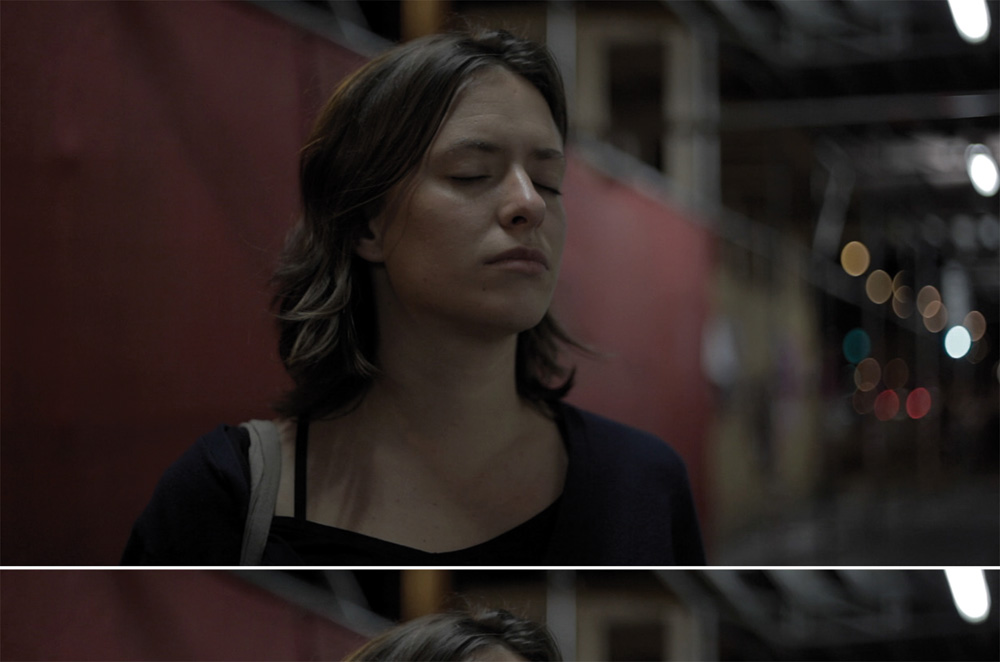
The topological narrative follows the routes of an itinerant photographer and a young philosophy student, their searching movements in-between the fractures and folds of the spatio-temporal fabric of the contemporary city. These fragments started with a rereading of Andrei Tarkovsky and the brothers Strugacky’s concept of the zone, as depicted in their late 1970s science fiction script Сталкер (Stalker). We suggest that the zone — a structure outside and closed off in Сталкер — has now entered the very heart of the urban fabric. We aim to explore the precarity, porosity and violence of this biopolitical space-time, as an immanent part of the city, our bodies and desires. The narrative presents itself as an open structure, in which staged miniatures, image and sound collages, dialogue, and different searching movements meet each other; open, rampant, unresolved and contradictory — oscillating constantly between poetic meditation and discourse, diversion and gravity, quotation and philosophical speculation.
Michael Poetschko explores narratives of living/laboring/traveling/resisting within post-fordist and transnational realities, working with experimental forms of filmmaking and installation. His work has been exhibited and projected internationally, most recently at the Wexner Center for the Arts in Columbus, the Uferhallen in Berlin and Temp Art Space in New York City.
Sascha Pohle
Catalogue : 2013Reframing the Artist | Video | hdv | color | 35:0 | Germany, Netherlands | 2010
Sascha Pohle
Reframing the Artist
Video | hdv | color | 35:0 | Germany, Netherlands | 2010
REFRAMING THE ARTIST deals with the stereotypical representations of visual artists in movies. The role of the artist both in fictional films and in biopics, classics of the twentieth century or recent popular films, is focused on the artist?s idiosyncratic behavior, his love affairs, his self-destruction associated with a mystification of his creative production or on encounters with other protagonists of the art world such as the collector, the art dealer, the model or the art student. Artists are almost solely painters, which reconfirms a predominant inadequate representation of visual artists in movies. In the video REFRAMING THE ARTIST fragments from approximately 50 different movies such as ?The Moderns? ?Surviving Picasso? or Vincent and Theo? are reset in the Dafen Oil Painting Village. Dafen, situated in Shenzhen, China, is the world`s largest producer of mass-produced handmade oil-on-canvas copy paintings supplying a global market. The video takes place in unmodified settings of the painters` own homes, studios, shops or galleries. There we see Dafen painters re-enacting movie scenes, in which they take over the role of a Picasso, a Van Gogh, a Pollock or several fictional artists, art collectors, critics, muses and lovers. In the ?Reframing the Artist? mass reproduction of oil paintings from Dafen and the recurrent use of artist stereotypes in the mass media film converge to a new narrative overlapping fiction and documentary. The Chinese painter is neither represented as a mere copyist nor does he apply to the notion of the ?original? artist according to our predominant definitions. REFRAMING THE ARTIST raises questions about authenticity in the context of global cultural exchange and it challenges the view of the ?exotic? Other, both the visual artist and the Chinese copy painter. The video is structured into five chapters: Artist and Authenticity, Artist and Market, Artist and Crisis, Artist and Student, Artist and Model. Painting props taken from the same original movies re-appear as copies in REFRAMING THE ARTIST.
Education 2002 B.A. Staatliche Hochschule für Bildende Künste (Städelschule), klasse Ayse Erkmen, Frankfurt am Main, DE 2007 Rijksakademie van beeldende kunsten, NL (Selected) solo exhibitions 2013 Rongwrong, Amsterdam, NL 2012 Art space Apguyeong, open in November en gecureerd door Ji Yoon Yang (De Appel CP 2008/09), Seoul, KR, (aanstaand) (exhibited works: Noire et Blanche + new production) 2012 Lothringer_13_Halle, gecureerd door Felix Ruhöfer, München, DE (exhibited works: Noire et Blanche, Statues Also Die, German Indian, Reframing the Artist, The Mad Masters) 2012 Gallery Weingrüll, Karlsruhe, DE (exhibited works: Noire et Blanche, Reframing the Artist, Statues Also Die) (Selected) group exhibitions 2013 ?Transfer Korea-NRW?, Kunsthalle Düsseldorf and Kunstmuseum Bonn, National Museum of Korea, Arko, (upcoming) - new production: Ornaments of Property 2012 Monitoring/ Kasseler Dokumentarfilm und Videofest, (upcoming), DE - Statues Also Die 2012 ?Generation Loss?, Green Papaya Art Projects, Manila, PHL 2012 ?Signals: For Real?, IFFR, 41st International Film Festival Rotterdam, gecureerd door Edwin Carels, NL - Reframing the Artist 2011 Museum der Moderne Salzburg, ?role models-role playing?, AUT - The Mad Masters 2010 Arti et Amicitae, Amsterdam, ?Villains and Heroes?, Sascha Pohle/Marco Pando, NL - German Indian 2010 Dafen International Contemporary Art Exhibition, ?Convection? Dafen Sub-Venue, Shenzhen Case Pavillion, 2010 Shanghai EXPO, CN - Reframing the Artist 2010 Taipeh International Art Center, Urban Nomad Video Art Section, TW - Reframing the Artist 2010 ?works?, basis, Frankfurt, DE 2008 PARA/SITE art space, ?Terminus?, gecureerd door Christina Li (De Appel CP 2008/09), Hong Kong - The Swimmer 2008 ?Beyond Paradise?, SMBA Stedeljik Museum Bureau Amsterdam, gecureerd door Delphine Bedel and Ayako Yoshimura , NL - The Swimmer 2008 ?Vertrautes Terrain?, ZKM - Center for Art and Media, Karlsruhe, gecureerd door Gregor Jansen and Thomas Thiel - German Indian 2008 Schirn Kunsthalle, Frankfurt am Main, DE, `All-Inclusiv A Tourist World - The Swimmer (Selected) Filmfestivals 2012 BIEFF, Bukarest, RO, Reframing the Artist 2012 58. Internationale Kurzfilmtage Oberhausen, DE, Reframing the Artist 2012 41st International Film Festival Rotterdam, NL, Reframing the Artist 2011 HomeShop, Jue Festival, Beijng, CN, Reframing the Artist 2009 Videonale 12, Bonn, DE, The Mad Masters¬ 2008 International Film Festival, 16th Curtas Vila do Conde, PT, If I were you ? LAS VEGAS NEW YORK BLACKPOOL, The Mad Masters 2008 37th International Filmfestival Rotterdam, NL If I were you ? LAS VEGAS NEW YORK BLACKPOOL Residencies 2006-2007 Rijksakademie van beeldende kunsten/Dutch Ministry of Education, Culture and Science, 2009 Meetfactory, Prague, CZ 2011 Incheon Art Platform, KR 2012 Changdong Studios, Seoul, KR (upcoming) Prices, Awards 2012 Principal Price, 58th International Short Film Festival Oberhausen, for Reframing the Artist, Netherlands, 2010 Fellowships/stipends 2011/12 The Netherlands Film Fund, research subsidy on DVD movie piracy 2011/12 Fonds BKVB, standard werkbudget for Noire et Blanche in combination with a residency in Incheon Art Platform, Korea 2010 Fonds BKVB, werkbudget for Detective project ? The Student of Prague 2009 Fonds BKVB, standard werkbudget for MeetFactory artist residency 2009 The Netherlands Film Fund, NL for Reframing the Artist 2008 Fonds BKVB, basis stipend, NL 2007 Hessische Kulturstiftung, DE, for The Mad Masters and If I were you ? LAS VEGAS NEW YORK BLACKPOOL 2006 DAAD, Berlin, DE 2006 Kunststiftung NRW, DE 2003 Kunststiftung NRW, DE, for Safety Hour 2003 Kulturstiftung Dresden der Dresdner Bank, DE, studio stipend `dynamo.eintracht`
Ben Pointeker
Catalogue : 2018Impassenger | Experimental video | hdv | color | 6:0 | Austria | 2017
Ben Pointeker
Impassenger
Experimental video | hdv | color | 6:0 | Austria | 2017
A cinematic poem shrouded in shadow and mist. An image of water whose surface reflects the surrounding light. The hands of a woman holding a purse in the gloom of a city street. A snow-covered mountain landscape with massive trees reached by a cable lift. Through the sensitive composition of the film, these seemingly banal images begin to speak and reveal an inner world, an inward dream landscape of anxiety, alienation, isolation, and desire. Entrancing poetry relies on a delicate grasp but it’s impossible to resist its inner magic. (Hubert Poul)
Ben Pointeker is a visual artist and filmmaker based in Vienna. His work often sets in between film and photography and is concerned with poetics, patterns of narrative cinema, the notion of time, ambiguous realities and fantasy. Previously based in The Netherlands he graduated from Piet Zwart Institute and won the Prix de Rome basic award. He is also a graduate of the University of applied arts Vienna and was artist in residence at Wiels in Brussels, in Shanghai and most recently at Bòlit in Girona in the framework of The Spur. He has exhibited at institutions such as Secession Vienna, Kunstpavillon Innsbruck, Contemporary Art Center Vilnius, Filmmuseum Amsterdam and major film festivals.
Catalogue : 2008. ..... .:.:...:::ccccoCCoooo:: | Experimental film | dv | color | 9:30 | Austria | 2006
Ben Pointeker
. ..... .:.:...:::ccccoCCoooo::
Experimental film | dv | color | 9:30 | Austria | 2006
One of the pragmatic solutions to the problem of how people will be able to find their way in a theatre or cinema are the small lights that, hidden in this place or that, show the audience where to step and where not, and where to choose a chair. Now imagine: complete darkness. Enter. Ask yourself to stop imagining and look at . ..... .:.:...:::ccccoCCoooo:: While looking at it, the question becomes: what is looking? At this point the guiding lights may come back with a vengeance. Usually we look in order to orient ourselves. Either in response or consequently, much arts is directed at disorienting ourselves. That leaves the question unanswered as to what looking is. Still, that is one of the key questions in Pointekers work. In order to be able to answer that question, Pointeker has to both steer away from, and connect to the average language of cinema ? and photography. The way in which he succeeds in doing that reminds one of concrete poetry. But this is not more than a reminder. Concrete poetry was by and large a response to something else: what we knew already. Dialectically, concrete poetry remained bound up with what we already knew. In terms of cinema, Pointeker somehow knows how to escape that route. He doesn?t show it, though. What he shows is what appears. We find ourselves in complete darkness. A light shines, some lights shine: a car makes its way. Let?s take that literally: ?a car makes its way?. This is not a car that is being used to get from here to there. Making light, the car makes a way. Other images follow: all make way. We look, caught in the light of what is being shown ? and we start to sense what looking is. (Frans-Willem Korsten)
Marie Poitevin
Catalogue : 2008Julien Blaine, l'éléphant et la chute | Experimental doc. | 16mm | color | 13:45 | France | 2006
Marie Poitevin
Julien Blaine, l'éléphant et la chute
Experimental doc. | 16mm | color | 13:45 | France | 2006
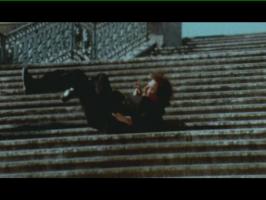
This film is about Julien Blaine. He is poet performer ; he writes, sceams, acts, performs,danses ? He acts out his poems as art, revealing the essence of his writings and his research to the public . Poet performer since 1962, today he is 62 years old. This film brings together two of his most well-known performances « la chute dans les escaliers de la gare Saint Charles » and his first « l?interview des éléphants. » The film is an interpretation of his creation, and his actions by his daughter, the director. It?s her take on his work ; a film in which she confronts the past and the present and invites the viewer to decipher, to feel and to make sense of the work.
After studying at the Beaux-Arts in Cergy/France and at the Fémis, I participated as a producer and camerawoman to many short films. I also directed many videos to go wih readings of poets as well as videos for a theatre company and musicians. I directed three movies about performance: Last Festival, Bye bye la perf and this one about Julien Blaine. I worked on the lights for the Alzhar theater company and for the band Diabolicus.
Fernanda Polacow
Catalogue : 2025Big Bang Henda | Experimental doc. | digital | color | 22:0 | Brazil, Portugal | 2023
Fernanda Polacow
Big Bang Henda
Experimental doc. | digital | color | 22:0 | Brazil, Portugal | 2023
Toppling statues and symbols, constructing new memories, framing the destroyed landscape, writing letters to the future, reversing power dynamics: BIG BANG HENDA is a documentary-poetry-manifesto about the work of Angolan artist Kiluanji Kia Henda. He takes us on a journey through his creations and reflections, which are at the forefront of anti-colonial thinking, urging us to consider how generations that grew up during or in the aftermath of the war reinterpret this event.
Fernanda is a screenwriter and director, living between Brazil and Portugal. She has been working in the intersections between Brazil, Portugual and the African Portuguese speaking countries and former colonies of Portugal for decades. Her first feature as a writer, Mosquito, was the opening film at the Rotterdam FF (2020) and won the Critics Prize at the São Paulo International FF (2020) besides touring dozens of festivals. Her second feature, The Last Summer, is currently in production after being selected for the Script Station at Berlinale 2023 and RACCONTI. She has been developing, writing, and directing for TV, streaming and cinema, and some of her works have received awards and nominations at the Brazilian Cinema Academy, New York TV&Film Festival, Hollywood Woman’s FF, among others. She is part of the Torino Film Lab 2023. She is a co-founder of MUTIM, a woman in film association in Portugal.
Esther Polak, Ivar Van Bekkum
Catalogue : 2017A Collision of Sorts | Experimental doc. | hdv | color | 17:0 | Netherlands, USA | 2017
Esther Polak, Ivar Van Bekkum
A Collision of Sorts
Experimental doc. | hdv | color | 17:0 | Netherlands, USA | 2017
In A Collision of Sorts, inhabitants of the City of Philadelphia, (Pennsylvania, US) go there way, as discontinuous moving dots on a flat surface. The world in which this film plays is Google Earth: an alienating landscape of almost seamlessly stitched-together satellite images of the familiar planet we humans are moving around on. On Google Earth, nothing moves. Buildings, bridges and cars seem warped and flattened and compete for attention with the black weirdness of their own shadows. A virtual camera shows this frozen flattened landscape, reconnoitring the cityscape of the city. Meanwhile we hear sounds and voices. People and animals are down there, crossing the country. It is them who share a physical reality: we hear very intimately their breath, the rustling of clothes, traffic, their vehicles. They travel from one place to another giving the suggestion of a destination. They talk about encounters, visual, economic, political, social and personal but never the main characters seem to meet. Until a bad dream of one of them seems to come true.
Esther Polak and Ivar van Bekkum work together as artist-couple under the name PolakVanBekkum. Routed in the history of the Dutch realistic landscape depiction, they express personal experiences of moving and space. Their projects are often informed by collaborations with participants, be it humans, animals, or even the rays of the sun. Their work has been shown at amongst others: FID Marseille, Transmediale Berlin, Ars Electronica Linz, ZKM Karlsruhe, Media-Lab Prado Madrid; INIVA London, IMAL Brussels, Rento Brattinga | Galerie Amsterdam, Pixelache Helsinki, Lagos, Biennale Marrakech, Philadelphia and Los Angeles. 2016 Special Mention for the film Once We Get There Riga 2015 Expanded Media Preis For Network Culture at Stuttgarter Filmwinters - for “The Mailman’s Bag” 2005 Golden Nica for Interactive Art at Ars Electronica together with Ieva Auzina, with MILKproject. Esther Polak studied at the Rijksakademie for visual Arts in Amsterdam and the Royal Academy of Visual Arts in The Hague, NL Ivar van Bekkum studied journalism at the School for Journalism, Kampen, NL
Catalogue : 2016Once We Get There | Experimental film | hdv | color | 49:50 | Netherlands, USA | 2015
Esther Polak, Ivar van Bekkum and Esther Polak
Once We Get There
Experimental film | hdv | color | 49:50 | Netherlands, USA | 2015
This film introduces an alienating yet familiar landscape of satellite images, tracks and sound. We follow the minute by minute movements and sounds of animals and machines, the chatting of people in Philadelphia. Although we constantly hear reality, we experience the movements within an abstract, two dimensional world of satellite photography. Without any crew present, the protagonists recorded their trajectories, sounds and private readings of the streets, allowing the filmmakers to access their experiences only afterwards. The film positions the audience as unwitting voyeurs. The meditative approach questions our contemporary techno-society, where social connectivity and eavesdropping coexist and balances between empathic co-traveling and voyeurism. The film resulted from a 7 month “Art in Public Space/Percent For Art” residency of Dutch visual artists Esther Polak and Ivar van Bekkum in Philadelphia.
Esther Polak and Ivar van Bekkum work together under the name PolakVanBekkum. Their work focusses on landscape and mobility. Routed in the history of the Dutch realistic landscape depiction, they engage with new technologies like GPS and data collection, to express individual experiences of spaces like the contemporary city and countryside. They search for changing ways to be in landscapes and how this influences the human understanding of space and the stories we tell to explain our lives. Besides the digital and technological innovative, they use very concrete means of visualisation, like drawings in sand or light, which makes their work very tangible and direct. Their projects are often informed by collaborations with participants, be it humans, objects, or even the rays of the sun. They have worked and exhibited internationally, at Transmediale Berlin, Ars Electronica Linz, ZKM Karlsruhe, London, IMAL Brussels, Rento Btattinga | Gallery Amsterdam, Museo for Image and Sound Sao Paolo, Nairobi, Lagos, Marrakech, Paris, Philadelphia and Los Angeles. In 2005 Esther Polak did receive a Golden Nica for interactive Art at Ars Electronica together with Ieva Auzina, for their MILKproject. Esther Polak is educated at the Rijksacademie in Amsterdam. Ivar van Bekkum is educated as journalist.
Esther Polak, Ivar van Bekkum and Esther Polak
Catalogue : 2017A Collision of Sorts | Experimental doc. | hdv | color | 17:0 | Netherlands, USA | 2017
Esther Polak, Ivar Van Bekkum
A Collision of Sorts
Experimental doc. | hdv | color | 17:0 | Netherlands, USA | 2017
In A Collision of Sorts, inhabitants of the City of Philadelphia, (Pennsylvania, US) go there way, as discontinuous moving dots on a flat surface. The world in which this film plays is Google Earth: an alienating landscape of almost seamlessly stitched-together satellite images of the familiar planet we humans are moving around on. On Google Earth, nothing moves. Buildings, bridges and cars seem warped and flattened and compete for attention with the black weirdness of their own shadows. A virtual camera shows this frozen flattened landscape, reconnoitring the cityscape of the city. Meanwhile we hear sounds and voices. People and animals are down there, crossing the country. It is them who share a physical reality: we hear very intimately their breath, the rustling of clothes, traffic, their vehicles. They travel from one place to another giving the suggestion of a destination. They talk about encounters, visual, economic, political, social and personal but never the main characters seem to meet. Until a bad dream of one of them seems to come true.
Esther Polak and Ivar van Bekkum work together as artist-couple under the name PolakVanBekkum. Routed in the history of the Dutch realistic landscape depiction, they express personal experiences of moving and space. Their projects are often informed by collaborations with participants, be it humans, animals, or even the rays of the sun. Their work has been shown at amongst others: FID Marseille, Transmediale Berlin, Ars Electronica Linz, ZKM Karlsruhe, Media-Lab Prado Madrid; INIVA London, IMAL Brussels, Rento Brattinga | Galerie Amsterdam, Pixelache Helsinki, Lagos, Biennale Marrakech, Philadelphia and Los Angeles. 2016 Special Mention for the film Once We Get There Riga 2015 Expanded Media Preis For Network Culture at Stuttgarter Filmwinters - for “The Mailman’s Bag” 2005 Golden Nica for Interactive Art at Ars Electronica together with Ieva Auzina, with MILKproject. Esther Polak studied at the Rijksakademie for visual Arts in Amsterdam and the Royal Academy of Visual Arts in The Hague, NL Ivar van Bekkum studied journalism at the School for Journalism, Kampen, NL
Catalogue : 2016Once We Get There | Experimental film | hdv | color | 49:50 | Netherlands, USA | 2015
Esther Polak, Ivar van Bekkum and Esther Polak
Once We Get There
Experimental film | hdv | color | 49:50 | Netherlands, USA | 2015
This film introduces an alienating yet familiar landscape of satellite images, tracks and sound. We follow the minute by minute movements and sounds of animals and machines, the chatting of people in Philadelphia. Although we constantly hear reality, we experience the movements within an abstract, two dimensional world of satellite photography. Without any crew present, the protagonists recorded their trajectories, sounds and private readings of the streets, allowing the filmmakers to access their experiences only afterwards. The film positions the audience as unwitting voyeurs. The meditative approach questions our contemporary techno-society, where social connectivity and eavesdropping coexist and balances between empathic co-traveling and voyeurism. The film resulted from a 7 month “Art in Public Space/Percent For Art” residency of Dutch visual artists Esther Polak and Ivar van Bekkum in Philadelphia.
Esther Polak and Ivar van Bekkum work together under the name PolakVanBekkum. Their work focusses on landscape and mobility. Routed in the history of the Dutch realistic landscape depiction, they engage with new technologies like GPS and data collection, to express individual experiences of spaces like the contemporary city and countryside. They search for changing ways to be in landscapes and how this influences the human understanding of space and the stories we tell to explain our lives. Besides the digital and technological innovative, they use very concrete means of visualisation, like drawings in sand or light, which makes their work very tangible and direct. Their projects are often informed by collaborations with participants, be it humans, objects, or even the rays of the sun. They have worked and exhibited internationally, at Transmediale Berlin, Ars Electronica Linz, ZKM Karlsruhe, London, IMAL Brussels, Rento Btattinga | Gallery Amsterdam, Museo for Image and Sound Sao Paolo, Nairobi, Lagos, Marrakech, Paris, Philadelphia and Los Angeles. In 2005 Esther Polak did receive a Golden Nica for interactive Art at Ars Electronica together with Ieva Auzina, for their MILKproject. Esther Polak is educated at the Rijksacademie in Amsterdam. Ivar van Bekkum is educated as journalist.
Wiktor Polak
Catalogue : 2011Blisko | Art vidéo | dv | color | 5:49 | Poland | 2008
Wiktor Polak
Blisko
Art vidéo | dv | color | 5:49 | Poland | 2008
?Blisko? (?Close?) ? about alienation in the big city. The artificial light inside the night trams creates a new reality.
I was born in 1979. Between 1998 and 2004, I studied at the Władysław Strzemiński Academy of Fine Arts in Łódź. In 2004, under the tutelage of prof. Grzegorz Przyborek, I obtained the certificate and title of Master of Fine Arts in asvertising photography. Since 2003, I have also participated in multimedia workshops held by prof. Konrad Kuzyszyn and Łukasz Ogórek, MFA. I was a post-graduate, free participant there. Since that time, my interests hav revolved around film and video. In 2007, I went on a three-month scholarship to France, organised by the Strasbourg Klub, the City of Strasbourg as well as the CAAC.
Renata Poljak
Catalogue : 2021Porvenir | Experimental doc. | 4k | color | 12:10 | Croatia | 2020
Renata Poljak
Porvenir
Experimental doc. | 4k | color | 12:10 | Croatia | 2020
Dreaming of better lands, from generation to generation, because of poverty, hunger and wars, we voyage across the seas. Geography is destiny. Do our bodies retain the memories of our grandfathers; are memories of running away in search of better lands imprinted on our bodies? 'Porvenir' means 'future' in Spanish. Porvenir is the only town in Tierra del Fuego, at the bottom of the world, founded by Croatian immigrants at the beginning of the 20th century.
Renata Poljak (Split, 1974) is a visual artist and filmmaker. She graduated from the Arts Academy in Split, Croatia in 1997 and obtained an MA at École Régionale des Beaux-Arts (Film and Video Department) in Nantes, France in 1999. Her works have been shown at numerous national and international solo and group exhibitions, biennials and film festivals. She received many grants and awards, including the T-HT award – one of the most important contemporary arts awards in Croatia, in 2012. Her residencies include San Francisco Art Institute, Museum Quartier Vienna, Art In General, New York, Cité Internationale des Arts and Recollets in Paris and many others. Her films were screened at the Prospective Cinema at Centre Georges Pompidou, Paris, in 2010 and Palais de Tokyo, Paris, in 2012.
Ulrich Polster
Catalogue : 2006Frost (I) | Art vidéo | dv | color | 5:51 | Germany, Russia | 2003
Ulrich Polster
Frost (I)
Art vidéo | dv | color | 5:51 | Germany, Russia | 2003
Léonard Pongo
Catalogue : 2026Tales From The Source | Experimental video | mov | color | 38:19 | Belgium, Congo (RDC) | 2024
Léonard Pongo
Tales From The Source
Experimental video | mov | color | 38:19 | Belgium, Congo (RDC) | 2024
Tales from the Source offers a gaze on the landscapes of the Democratic Republic of Congo to translate a sense of its unfathomable power, diversity and knowledge. The scenery is presented as a character acting as a living entity and inhabited by the symbolism of Congolese traditions. The visual approach borrows techniques from multispectral imaging, resulting in an otherworldly experience with surreal lights and colour. Combined with an original musical composition by Bear Bones, Lay Low, we enter into a sensory dialogue with the landscape, an intelligent, ageless being in constant transformation that challenges our perception.
Léonard Pongo (b. 1988, Liège, Belgium) is a visual artist and filmmaker who lives and works between Belgium and the Democratic Republic of Congo. Pongo's work explores the complexities of perception, and representation while challenging conventional portrayals of the DRC with a focus on traditional narratives and symbols, and their connection to the land. Initially trained as a photojournalist, Pongo's artistic journey began in 2011 when he traveled to the DRC to cover the presidential elections. This experience profoundly transformed his approach to photography, shifting from objective documentation to a more subjective and experiential mode of expression. His family and local communities challenged his initial perspective, encouraging him to develop a more nuanced and intimate portrayal of Congolese life. Pongo is renowned for his mixed-media installations that integrate textiles, photography, diverse printing techniques, and moving images. His work draws deeply from Congolese cosmologies and oral traditions, particularly embracing the concept that "not everything is visible." Using specialized techniques including full-spectrum photography that captures wavelengths beyond human vision, he reveals aspects of landscapes and experiences typically hidden from view. His long-term project "The Uncanny" (2011-2017) explores daily life in the DRC through evocative black-and-white imagery that creates a dreamlike atmosphere, while "Primordial Earth" (2017-ongoing) focuses on the land using color photography, textiles, and video installations to evoke a sense of spirituality and interconnectedness. His latest film, "Tales from the Source" (2021-2024), extends his focus on traditional narratives, focusing on the luba cultures and highlighting the intertwined nature of culture and environment. Pongo's collaborative approach involves working closely with communities across the DRC, drawing inspiration from their knowledge, stories, and traditions and creating visuals that align with the lineage of Luba traditions by creating contemporary forms connected to ancestral concepts and visions. His work has been exhibited internationally at prestigious venues including the Bozar Centre for Fine Arts in Brussels, the Tate Modern in London, the Dakar biennale in Senegal, and the Nasher Museum of Art at Duke University. In 2023, his first monograph "The Uncanny" was published by Gostbooks, and in 2025 he was selected as one of ArtReview's "Future Greats" by photographer Roger Ballen.
Urszula Pontikos
Catalogue : 2010CHINA'S WILD WEST | Documentary | 16mm | color | 10:50 | Poland, China | 2008

Urszula Pontikos
CHINA'S WILD WEST
Documentary | 16mm | color | 10:50 | Poland, China | 2008
Every winter the Yurungkash River in western China dries up, revealing an expanse of river-worn stones. There, hidden within the rock, lies a buried treasure forty times more valuable than gold?jade. Hundreds of people gather in the riverbeds, endlessly scrabbling at rock in search of a jewel they are unlikely to find. Still, the small glimmer of hope prevails over weary backs and frozen figures. As we watch the countless poverty-stricken men and women in unrequited pursuit, we are perhaps left to ponder our own failed quests for diamonds in the rough, as well as the extraordinary?and quixotic?measures we`ll resort to in pursuit of wealth.
A graduate of the National Film & Television School, Urszula is a Polish-born, London-based cinematographer/director and stills photographer. With a continuing career in feature film drama she is also currently developing a feature length documentary which tackles similar issues to ?China?s Wild West?, but this time across several continents.
Zahra Poonawala
Mohammad Poori
Catalogue : 2026No One Came From Afar | Experimental fiction | 4k | color | 15:0 | Germany | 2025

Mohammad Poori
No One Came From Afar
Experimental fiction | 4k | color | 15:0 | Germany | 2025
Levi, a young craftsman, drifts through the city streets with a restless sensitivity. He wanders day and night through dimly lit bars, pulsing clubs, and silent playgrounds, crossing paths with friends, strangers, animals, and even inanimate objects along the way. Each encounter is fleeting, each moment fragmented. Levi listens, touches, remembers—yet nothing fully coalesces in his grasp. Through Levi’s quiet journey, the film explores the trauma of displacement and the uncanny ways it warps memory and perception. Time loses its shape as past and present blur into a multitude of overlapping narratives. Voices, smells, and sensations from different moments merge together—at times overwhelming, at other times hyper-specific. As Levi seeks to feel and understand amid this blur, the film quietly meditates on the act of observation itself and on the emotional resonance of longing and transience. No one came from Afar was created during the director’s own exile in Germany. It draws upon the different yet emotionally similar experiences of displacement shared by the filmmaker and the lead actor, Levi Hartmann. This personal context subtly shapes the film’s perspective, grounding its poetic exploration of longing and transience in lived reality.
Mohammad Poori (b. 1987, Sari, Iran) is a filmmaker and curator based in Hamburg and currently a Master student in Film and Time-Based Media at HFBK. His work focuses on collective trauma, exile, and the politics of memory, with particular attention to how narratives are fragmented and reactivated under conditions of displacement. He is a recipient of the Neue Kunst in Hamburg travel grant (2024–25) and will be a fellow of the MAK Schindler Scholarship Program at the Mackey Apartments in Los Angeles (2026–27).
Penka Popova
Catalogue : 2006On the 16-th of February 2005 | Art vidéo | dv | color | 11:8 | Bulgaria | 2005
Penka Popova
On the 16-th of February 2005
Art vidéo | dv | color | 11:8 | Bulgaria | 2005
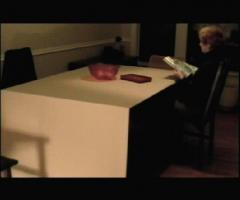
"On the 16-th of February 2005" video work resembles a time-based painting depicting (documenting) a woman sitting by a table. At first sight, the sight looks completely still. The image awakens curiosity and contemplation as to what really happens as time moves forward. Consequently, the viewer could clearly determine that objects change locations, however the process of their movement remains unnoticeable. In the end time moves ?faster?, revealing some of the surrounding space and the author in the process of videotaping what is happening in front of her eyes. The video footage has not been altered in order for me to reach the "stillness" effect; it is completely true to the real site and time.
I was born and raised in Plovdiv, Bulgaria. I started my fine art education at my age of twelve with painting and drawing lessons. I graduated the College of Theater and Fine Arts, Plovdiv, Bulgaria in 1991. Later I studied at the National Academy of Fine Arts, Sofia, Bulgaria, majoring in Stage Design in the class of Professor Svetoslav Kokalov. I concentrated mainly on classical playwrights such as Sophocles, Shakespeare and Chekhov. In 2001 I graduated the MFA Photo and Digital Imaging program at The Maryland Institute College of Art, Baltimore, USA, class of Professor William Larson and media theorist Timothy Druckrey. My current work investigates the limits of perception, attempting to express in different forms the presence of the hidden/invisible. Since 2001 I live and work in Chicago, Illinois.
Pere Portabella
Catalogue : 2011La tempesta | Experimental doc. | 35mm | color and b&w | 3:0 | Spain | 2003
Pere Portabella
La tempesta
Experimental doc. | 35mm | color and b&w | 3:0 | Spain | 2003
Naked bodies are buffeted by water accompanied by the music Il Temporale from the opera La Cenerentola and the overture to Il Barbiere di Siviglia both by Gioacchino Rossini. The film is part of a show by Carles Santos: El compositor, la cantante, el cocinero y la pecadora (The composer, the Singer, the Cook and the Sinner).
Ever since the 1960s, Pere Portabella involved himself in the movements against the Franco dictatorship and in support of liberties. In 1977, he was elected senator in the first democratic elections, and took part in the drafting of the Spanish constitution (1978). Since 2001, he has chaired the Fundación Alternativas. Before working as a director, with Films 59, he produced some of the most emblematic spanish films: Los golfos (1959) by Carlos Saura, El cochecito (1960) by Marco Ferreri and Viridiana (1961) by Luis Buñuel wich provoked a scandal that obliged him to move to Italy. In 1964, he wrote the screenplay for Il momento della verità with Francesco Rosi. He began directing in 1967 with No compteu amb els dits followed by his first feature-length film, Nocturno 29 (1968). Vampir-Cuadeduc (1970) is a key work in his filmography, togheter with Umbracle (1972), represents a phase of radical rupture with the production of those years and marked him as one of the most original forces in underground and avantgarde cinema of the time. After Informe General of 1976 he only returned to directing in 1989, with Pont de Varsòvia. In 2001, his films became part of the collection of the Barcelona Museum of Contemporary Art (MACBA). In 2002, he was the only Spanish artist to be invited to Documenta 11 in Kassel. In 2008, the Museum of Modern Art of New York (MoMA) acquires a copy of Vampir-Cuadecuc and Die Stille vor Bach (2007).
Catalogue : 2011Miró l?altre | Experimental doc. | 16mm | black and white | 12:0 | Spain | 1969
Pere Portabella
Miró l?altre
Experimental doc. | 16mm | black and white | 12:0 | Spain | 1969
As publicity for the exhibit Miró L`altre, organized by the Colegio de Arquitectos de Catalunya in 1969, the Board commissioned Pere Portabella to film Miró painting the "poster" for the exhibit on the ground floor windows of the building. Portabella was not interested in simply filming a testimonial documentary. However, he said he would do the film if after the exhibit Joan Miró himself, with the help of the cleaning staff erased his own painting. Joan Miró accepted the idea without a doubt. The complicity between the film maker and the painter is evident in the filming.
Ever since the 1960s, Pere Portabella involved himself in the movements against the Franco dictatorship and in support of liberties. In 1977, he was elected senator in the first democratic elections, and took part in the drafting of the Spanish constitution (1978). Since 2001, he has chaired the Fundación Alternativas. Before working as a director, with Films 59, he produced some of the most emblematic spanish films: Los golfos (1959) by Carlos Saura, El cochecito (1960) by Marco Ferreri and Viridiana (1961) by Luis Buñuel wich provoked a scandal that obliged him to move to Italy. In 1964, he wrote the screenplay for Il momento della verità with Francesco Rosi. He began directing in 1967 with No compteu amb els dits followed by his first feature-length film, Nocturno 29 (1968). Vampir-Cuadeduc (1970) is a key work in his filmography, togheter with Umbracle (1972), represents a phase of radical rupture with the production of those years and marked him as one of the most original forces in underground and avantgarde cinema of the time. After Informe General of 1976 he only returned to directing in 1989, with Pont de Varsòvia. In 2001, his films became part of the collection of the Barcelona Museum of Contemporary Art (MACBA). In 2002, he was the only Spanish artist to be invited to Documenta 11 in Kassel. In 2008, the Museum of Modern Art of New York (MoMA) acquires a copy of Vampir-Cuadecuc and Die Stille vor Bach (2007).
Catalogue : 2011Mudanza | Documentary | betaSP | color | 20:0 | Spain | 2008
Pere Portabella
Mudanza
Documentary | betaSP | color | 20:0 | Spain | 2008
Catalogue : 2011Miró forja | Experimental doc. | 16mm | color and b&w | 24:0 | Spain | 1973
Pere Portabella
Miró forja
Experimental doc. | 16mm | color and b&w | 24:0 | Spain | 1973
The film was conmissioned by the Galeria Maeght to commemorate the Joan Miró exhibit organized by the French Minsitry of Cultural Affairs in the Grand Palais in Paris that opened on May 17, 1974. The film, that took five days to shoot, shows the smelting and casting process of the work known as Puertas Mallorquinas by Joan Miró. The filming team travelled to the foundry owned by the Parellada family in Llinars de Munt. The bronze sculptures weigh 1200, 800 and 650 kilos respectively and were cast in one piece in a kiln specially constructed for the occasion.
Ever since the 1960s, Pere Portabella involved himself in the movements against the Franco dictatorship and in support of liberties. In 1977, he was elected senator in the first democratic elections, and took part in the drafting of the Spanish constitution (1978). Since 2001, he has chaired the Fundación Alternativas. Before working as a director, with Films 59, he produced some of the most emblematic spanish films: Los golfos (1959) by Carlos Saura, El cochecito (1960) by Marco Ferreri and Viridiana (1961) by Luis Buñuel wich provoked a scandal that obliged him to move to Italy. In 1964, he wrote the screenplay for Il momento della verità with Francesco Rosi. He began directing in 1967 with No compteu amb els dits followed by his first feature-length film, Nocturno 29 (1968). Vampir-Cuadeduc (1970) is a key work in his filmography, togheter with Umbracle (1972), represents a phase of radical rupture with the production of those years and marked him as one of the most original forces in underground and avantgarde cinema of the time. After Informe General of 1976 he only returned to directing in 1989, with Pont de Varsòvia. In 2001, his films became part of the collection of the Barcelona Museum of Contemporary Art (MACBA). In 2002, he was the only Spanish artist to be invited to Documenta 11 in Kassel. In 2008, the Museum of Modern Art of New York (MoMA) acquires a copy of Vampir-Cuadecuc and Die Stille vor Bach (2007).
Catalogue : 2011Miró Tapís | Experimental doc. | 16mm | color and b&w | 22:0 | Spain | 1973
Pere Portabella
Miró Tapís
Experimental doc. | 16mm | color and b&w | 22:0 | Spain | 1973
The film was commissioned by the Galeria Maeght for the Joan Miró exhibit organized by the French Ministry of Cultural Affairs in the Grand Palais in Paris that opened on May 17, 1974. The film was shot in six days in Montroig del Camp (the Miró country home) and in Tarragona during the process of elaboration of an original tapestry for eight months using 1200 kilos of wool and 600 kilos for the warp. The tapestry was 6 meters wide and 11 meters long and weighed a total of 3,500 kilos. A special loom had tobe built to weave it. The day the twin towers of the World Trade Center in New York were attacked, September 11, 2001, the tapestry was hanging in the hall of the one of the towers and was destroyed along with it.
Ever since the 1960s, Pere Portabella involved himself in the movements against the Franco dictatorship and in support of liberties. In 1977, he was elected senator in the first democratic elections, and took part in the drafting of the Spanish constitution (1978). Since 2001, he has chaired the Fundación Alternativas. Before working as a director, with Films 59, he produced some of the most emblematic spanish films: Los golfos (1959) by Carlos Saura, El cochecito (1960) by Marco Ferreri and Viridiana (1961) by Luis Buñuel wich provoked a scandal that obliged him to move to Italy. In 1964, he wrote the screenplay for Il momento della verità with Francesco Rosi. He began directing in 1967 with No compteu amb els dits followed by his first feature-length film, Nocturno 29 (1968). Vampir-Cuadeduc (1970) is a key work in his filmography, togheter with Umbracle (1972), represents a phase of radical rupture with the production of those years and marked him as one of the most original forces in underground and avantgarde cinema of the time. After Informe General of 1976 he only returned to directing in 1989, with Pont de Varsòvia. In 2001, his films became part of the collection of the Barcelona Museum of Contemporary Art (MACBA). In 2002, he was the only Spanish artist to be invited to Documenta 11 in Kassel. In 2008, the Museum of Modern Art of New York (MoMA) acquires a copy of Vampir-Cuadecuc and Die Stille vor Bach (2007).
Catalogue : 2011Miró, Aides l?Espagne | Documentary | 16mm | black and white | 8:0 | Spain | 1969
Pere Portabella
Miró, Aides l?Espagne
Documentary | 16mm | black and white | 8:0 | Spain | 1969
The Colegio de Arquitectos de Catalunya commissioned Pere Portabella to make this film for the Joan Miró retrspective exhibit in 1969. There wew heated discussions on whether it would be rudent to screen the film during the exhibit. Portabella took the following stante: "either both films are screened or ther don`t screen any" and, finally, both Miro l`Altre and Aidez l`Espagne were shown. The film was made by combining newsreels and film material from the Spanish Civil War with prints by Miró from the series "Barcelona" (1939-1944). The film ends with the painter`s "pochoir" known as Aidez l`Espagne.
Ever since the 1960s, Pere Portabella involved himself in the movements against the Franco dictatorship and in support of liberties. In 1977, he was elected senator in the first democratic elections, and took part in the drafting of the Spanish constitution (1978). Since 2001, he has chaired the Fundación Alternativas. Before working as a director, with Films 59, he produced some of the most emblematic spanish films: Los golfos (1959) by Carlos Saura, El cochecito (1960) by Marco Ferreri and Viridiana (1961) by Luis Buñuel wich provoked a scandal that obliged him to move to Italy. In 1964, he wrote the screenplay for Il momento della verità with Francesco Rosi. He began directing in 1967 with No compteu amb els dits followed by his first feature-length film, Nocturno 29 (1968). Vampir-Cuadeduc (1970) is a key work in his filmography, togheter with Umbracle (1972), represents a phase of radical rupture with the production of those years and marked him as one of the most original forces in underground and avantgarde cinema of the time. After Informe General of 1976 he only returned to directing in 1989, with Pont de Varsòvia. In 2001, his films became part of the collection of the Barcelona Museum of Contemporary Art (MACBA). In 2002, he was the only Spanish artist to be invited to Documenta 11 in Kassel. In 2008, the Museum of Modern Art of New York (MoMA) acquires a copy of Vampir-Cuadecuc and Die Stille vor Bach (2007).
Catalogue : 2011No al no | Experimental doc. | 35mm | color | 3:0 | Spain | 2006
Pere Portabella
No al no
Experimental doc. | 35mm | color | 3:0 | Spain | 2006
Carles Santos plays one of his pieces on the piano. This film was made for the exhibit on Carles Santos ¡Visca el piano! held at the Miro Foundation in the summer of 2006.
Ever since the 1960s, Pere Portabella involved himself in the movements against the Franco dictatorship and in support of liberties. In 1977, he was elected senator in the first democratic elections, and took part in the drafting of the Spanish constitution (1978). Since 2001, he has chaired the Fundación Alternativas. Before working as a director, with Films 59, he produced some of the most emblematic spanish films: Los golfos (1959) by Carlos Saura, El cochecito (1960) by Marco Ferreri and Viridiana (1961) by Luis Buñuel wich provoked a scandal that obliged him to move to Italy. In 1964, he wrote the screenplay for Il momento della verità with Francesco Rosi. He began directing in 1967 with No compteu amb els dits followed by his first feature-length film, Nocturno 29 (1968). Vampir-Cuadeduc (1970) is a key work in his filmography, togheter with Umbracle (1972), represents a phase of radical rupture with the production of those years and marked him as one of the most original forces in underground and avantgarde cinema of the time. After Informe General of 1976 he only returned to directing in 1989, with Pont de Varsòvia. In 2001, his films became part of the collection of the Barcelona Museum of Contemporary Art (MACBA). In 2002, he was the only Spanish artist to be invited to Documenta 11 in Kassel. In 2008, the Museum of Modern Art of New York (MoMA) acquires a copy of Vampir-Cuadecuc and Die Stille vor Bach (2007).
Catalogue : 2011Play Back | Experimental doc. | 16mm | black and white | 8:0 | Spain | 1970
Pere Portabella
Play Back
Experimental doc. | 16mm | black and white | 8:0 | Spain | 1970
Playback is presented as a short rehearsal in a double sense. It is a satellite of the constellation of works that Portabella dedicates to the analysis of the "materiality" of aesthetic and cultural languages (Vampir-Cuadecuc and Miró l`Altre among others can also be understood in this manner). At the same time, he analyzes the rehearsals that Carles Santos carries out for the playback recording of a film on the work of Antoni Gaudi. The choir of the Gran Teatro del Liceu of Barcelona reads fragments from Wagner`s Tannhauser, Lohengrin and the Valkyries. The film was shot in the theater "Lluïsos de Gràcia".
Ever since the 1960s, Pere Portabella involved himself in the movements against the Franco dictatorship and in support of liberties. In 1977, he was elected senator in the first democratic elections, and took part in the drafting of the Spanish constitution (1978). Since 2001, he has chaired the Fundación Alternativas. Before working as a director, with Films 59, he produced some of the most emblematic spanish films: Los golfos (1959) by Carlos Saura, El cochecito (1960) by Marco Ferreri and Viridiana (1961) by Luis Buñuel wich provoked a scandal that obliged him to move to Italy. In 1964, he wrote the screenplay for Il momento della verità with Francesco Rosi. He began directing in 1967 with No compteu amb els dits followed by his first feature-length film, Nocturno 29 (1968). Vampir-Cuadeduc (1970) is a key work in his filmography, togheter with Umbracle (1972), represents a phase of radical rupture with the production of those years and marked him as one of the most original forces in underground and avantgarde cinema of the time. After Informe General of 1976 he only returned to directing in 1989, with Pont de Varsòvia. In 2001, his films became part of the collection of the Barcelona Museum of Contemporary Art (MACBA). In 2002, he was the only Spanish artist to be invited to Documenta 11 in Kassel. In 2008, the Museum of Modern Art of New York (MoMA) acquires a copy of Vampir-Cuadecuc and Die Stille vor Bach (2007).
Catalogue : 2011Uno de aquellos | Experimental doc. | 35mm | color | 5:0 | Spain | 2009
Pere Portabella
Uno de aquellos
Experimental doc. | 35mm | color | 5:0 | Spain | 2009
Marianela Portillo, Ignacio Iasparra, Marianela Portillo, Stecconi Bruno, Nicolas Dominguez Bedini and Guillermo Ueno
Catalogue : 2016Sinuosos y dorados médanos | Experimental doc. | hdv | color | 61:14 | Argentina | 2015
Marianela Portillo, Ignacio Iasparra, Marianela Portillo, Stecconi Bruno, Nicolas Dominguez Bedini and Guillermo Ueno
Sinuosos y dorados médanos
Experimental doc. | hdv | color | 61:14 | Argentina | 2015
11 years happens in Medanos, a town of 5,000 inhabitants of the Province of Buenos Aires, an unprecedented event. A group of boys and girls with artistic interests, decided to get together and organize actions to not migrate. From cooking pig in a field, until the sale of raffles to pay future expenses Médanos Cultural Center, they began with their own initiatives. This group takes one of the greatest works of political activism in the Argentine art scene, show that you can work in a class without having to constantly look outside is one of the objectives of the documentary. When we learned that for various reasons the last "Spring Season" would take place was born the idea of making a documentary film project the history of Medanos and traveled Group. Record the lives and experiences of a generation that cultural alternatives proposed for years and also show how they live some historical villagers who were able to access and frequent. Who create Winding & golden Médanos: Ignacio Iasparra, Marianela Portillo, Stecconi Bruno, Nicolas Dominguez Bedini and Guillermo Ueno, we think of a documentary sketch experience local cultural management. That assumed a commitment to its people. Through self-management and the pursuit of aesthetic deliver.
Guillermo Ueno, Buenos Aires 1968 Photographer, Video maker. Between 1999 and 2015 he showed his work in Gallery Benzacar .Belleza y felicidad. Malba .Mamba .Macro. Museum of Contemporary Art Niteroi, Brazil. Cultural Center Medanos .Vasistas Gallerie, Montpellier , France. FNA . Printed Matter , NY. Argentine Consulate NY. Museum of Contemporary Art Santiago de Chile. Catena Gallery. Gallery TL OAS , Washington. He published regularly in Purple , Purple Journal, Les Chronicles Purple, iD magazine , Lápiz Japonés, Masterbox , Hawaii, Otso. Director of photography and camera Hachazos Andrés Di Tella , 2011 , 327 cuadernos Andrés Di Tella 2015 . Davidovski (one day in Medanos ), 2015 . Co-direction (Sergio Subero ) Alter Sapukai ! Bafici 2012. Sinuosos y dorados Médanos 2015 , with Ignacio Iasparra , Marianela Portillo, Bruno Stecconi and Nicolas Dominguez Bedini .
Clément Postec, Delwaulle Pauline
Catalogue : 2012Linescape | Documentary | dv | color | 30:0 | France | 2010
Clément Postec, Delwaulle Pauline
Linescape
Documentary | dv | color | 30:0 | France | 2010
A border divides Bosnia-Herzegovina into two autonomous and dependent entities. We go in search of this line but gradually, the marks of its presence come disturb the investigation..
Clément Postec was born in 1986 and lives in Paris. He studied Cinema at Sèvres High School. In 2007, he obtains a Modern Litterature and a Cinema degrees at the University of Paris 3 - Sorbonne Nouvelle. He spends a year in the department of Film Studies at the University of Kent, in Canterbury (UK), then comes back to Paris for a Master in Cinematographic Studies. Simultaneously, he directed a short movie, "A propos d'e.", exploring contemporary dance forms. He regularly practices video, less as a definitive object than as the laboratoty of his film projects (www.etcaeteraprod.org). Graduate of the Political Studies Institute of Strasbourg (Politics and Cultural Management), he is currently assistant for "pointligneplan". Pauline Dewaulle was born in 1988 and lives in Paris. Interested in cinema, whe made a few super 8 films, among them "Portrait de Jean Rolin" (commissioned by the Musée Portuaire of Dunkerque and the DRAC Nord-Pas-de-Calais) and "La Bête à Rêves". She takes part in several workshops, in particular with Jean-Charles Fitoussi about the directing of a short film. In 2006, she enters the Ecole Nationale Supérieure des Arts de Paris-Cergy, where she produces drawings and animations. She also takes part in numerous projects, including "Je m'appelle Hélène" by Hélène Motteau and, as a cameraman, "Le dernier Voyage de Maryse Lucas" by Artus de Lavilléon and David Ledoux.