Catalogue > List by artist
Browse the entire list of Rencontre Internationales artists since 2004. Use the alphabetical filter to refine your search. update in progress
Udval Altangerel
Catalogue : 2023The Wind Carries Us Home | Experimental doc. | mov | color | 11:11 | Mongolia | 2022
Udval Altangerel
The Wind Carries Us Home
Experimental doc. | mov | color | 11:11 | Mongolia | 2022
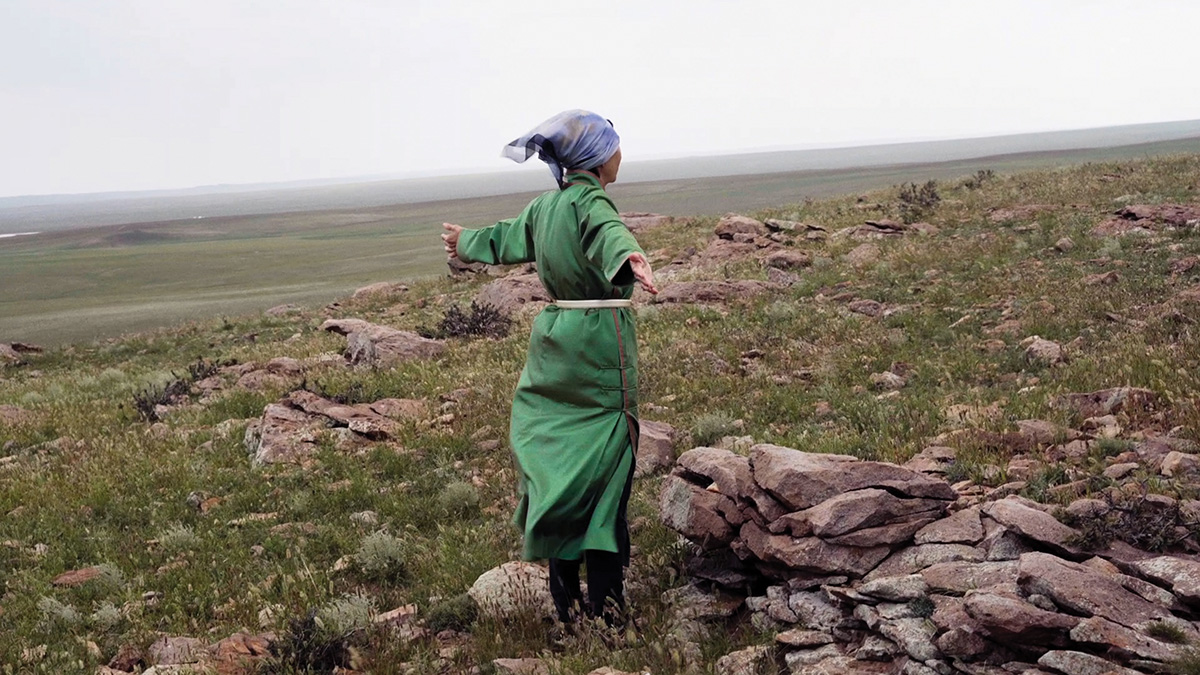
Through rituals of birth and death, the filmmaker and her family reconnect with their ancestral land in the Gobi Desert.
Udval Altangerel is a Mongolian filmmaker based between Ulaanbaatar and Los Angeles. In her work she explores the themes of personal and national histories, language, and (home)land. Her work has screened at Locarno Film Festival, Images Festival, Alchemy Film & Moving Image Festival, and Tacoma Film Festival, where she received Honorable Mention for Best Documentary Short Film. She was selected to participate in Locarno Open Doors and the Flaherty Film Seminar. Udval received her MFA in Film Directing from California Institute of the Arts.
Fabian Altenried
Catalogue : 2021Amygdala | Fiction | 4k | color | 29:39 | Germany | 2020
Fabian Altenried
Amygdala
Fiction | 4k | color | 29:39 | Germany | 2020
Thistles blossom in the dead of winter, cow’s eardrums burst, poisoned milk comes out of their udders – in a remote mountain village the world is coming apart. Nature’s intangible attacks hit the Haberer’s farm at its core. In the midst of the inflammatory struggle for the interpretation of the mysterious events, the peasant family fears more and more desperately for their naked survival.
Fabian Altenried, *1987, director, producer, author, studied fine arts in Düsseldorf, philosophy in Berlin. Managing director of Schuldenberg Films. Fabian focusses on films with a political, critical & social approach that seek an unusual, artistic form.
Catalogue : 20181000 Smiles Per Hour | Experimental fiction | 4k | black and white | 15:0 | Germany | 2016
Fabian Altenried
1000 Smiles Per Hour
Experimental fiction | 4k | black and white | 15:0 | Germany | 2016
1000 Smiles Per Hour follows a androgynous jester for one day and one night through a decaying sea side town. Drifting across the outer edges of a concrete landscape, a twilight meeting engenders a precious moment of connection for the melancholy performer, amid the coldly apathetic city limits.
Fabian Altenried (*1987) is a director, writer and producer. He studied visual art at the Art Academy in Düsseldorf and philosophy in Berlin. Since 2013 he is part of the Berlin based independent production company Schuldenberg Films. His conceptual approach stems from his engagement with post-structuralism, identity and gender theories, performativity, theories of animality, and post-ideological leftism. Fabian has been an artist in residence of Gargonza Arts in 2013, a participant of Feature Expanded 2016 and Berlinale Talents 2017. His works have been supported by the FFA, werkleitz e.V., the Arts Foundation of North Rhine Westphalia, the Stiftung Kunstfonds, the Mondriaan Fonds et al. and have been shown at the Berlinale, the Sarajevo Film Festival, in Edinburgh, Rotterdam, and many other festivals and shows globally.
Alterazioni Video
Catalogue : 2016Ambaradan | Experimental fiction | hdv | color | 33:10 | Italy, Ethiopia | 2014
Alterazioni Video
Ambaradan
Experimental fiction | hdv | color | 33:10 | Italy, Ethiopia | 2014
Omo Valley, Ethiopia: a region where tribes villages are reduced to human zoos to entertain the honeymooners tourism industry. International corporation have land-grabbed most of the indigenous territory for massive cotton field plantations. The Omo river is been recently closed by the biggest dam of Africa, leaving two hundred thousand tribe people facing food shortages and forced resettlement. With no land where to hunt, no river where to fish , tribes lives depends on the show they are able to perform daily in front of tourists. The fate of the region is written. The one of the tribes depends on their performative skills We went there and after meeting with one tribe we asked them to imagine their future in a cinematic epic way. This was basically the script. We weren’t that surprised when they came up with a futuristic techno pop idea of themselves. We formed a tribal girl band and began filming. We recorded with the tribe the music under the shadow of one of the few trees left standing by the plantation workers. We built a bar together and threw a party, remixing our own notion of partying with their celebratory rituals. It’s been a participative creative process that generated an unique original experience.
Alterazioni Video is a group of four artists founded in Milan in 2004 and now based in New York and Berlin.The members of the group are Paololuca Barbieri Marchi, Alberto Caffarelli, Andrea Masu and Giacomo Porfiri. Their work is been exhibited internationally in museum and art institutions like: the Disobedience Künstlerhaus Bethanien, Berlin 2005, 52nd International Art Exhibition Venice Biennale 2007, Manifesta 7 Rovereto 2008, Shenzhen & Hong Kong Bi-city Biennale of UrbanismArchitecture 2009, 21x21, Fondazione Sandretto Re Rebaudengo Turin 2010, Maxxi Museum, Rome 2010, Performa 09 and 11 New York, MoMA PS1 Performance Dome New York 2012, Freak Out, Greene Naftali Gallery, New York 2013, PAC Milan 2014, Hamburger Bahnhof Museum Berlin 2015 and among others. In the last five years the collective has been producing a series of 10 docu-feature films called TurboFilm, TurboFilm is a filmic system or methodology, that relate to the ongoing, generationally marked reconfiguration of experience in daily life and social relations, in labor, the economy, and politics. It aims to raise questions on problematic topics through a transversal multi-format production that can circulate through different media platforms.
Ella Altman
Catalogue : 2026Je n'AI jamais rencontré quelqu'un comme toi | Experimental fiction | dcp | color | 20:26 | France | 2024

Ella Altman
Je n'AI jamais rencontré quelqu'un comme toi
Experimental fiction | dcp | color | 20:26 | France | 2024
Hava (Eve) and Jeanne, two actresses on a film set, are training an AI as they explore the initial stages of intimacy with each other. Within a loop of genuine and staged desire, Hava tempts Jeanne to see together the AI's reflection.
Ella Altman (b. 1993, Tel Aviv) is a filmmaker, video artist, and musician based in Paris. A graduate of Le Fresnoy – Studio national des arts contemporains, she explores the intersections of intimacy, language, and technology. Her work often blends autobiographical elements with fiction, examining how relationships and perception are shaped through emotional, cinematic, and algorithmic mediation. Her recent film Je n’AI jamais rencontré quelqu’un comme toi (2024) received the Video Prize from Les Amis du Fresnoy and was nominated for the 2025 Hans Purrmann Prize. Previous works include LOVER (2023) and The Holocaust Is Over, Bitch (2019). She is a member of the Conseil d’administration of the Société des Réalisatrices et Réalisateurs de Films (SRF), where she serves as the referent for the Ethics & Inclusion working group. Altman currently lives and works in Paris, where she is developing her first feature film.
Luís Alves De Matos
Catalogue : 2023A Casa de Dentro Carlos Nogueira | Documentary | 0 | | 62:0 | Portugal | 2022
Luís Alves De Matos
A Casa de Dentro Carlos Nogueira
Documentary | 0 | | 62:0 | Portugal | 2022
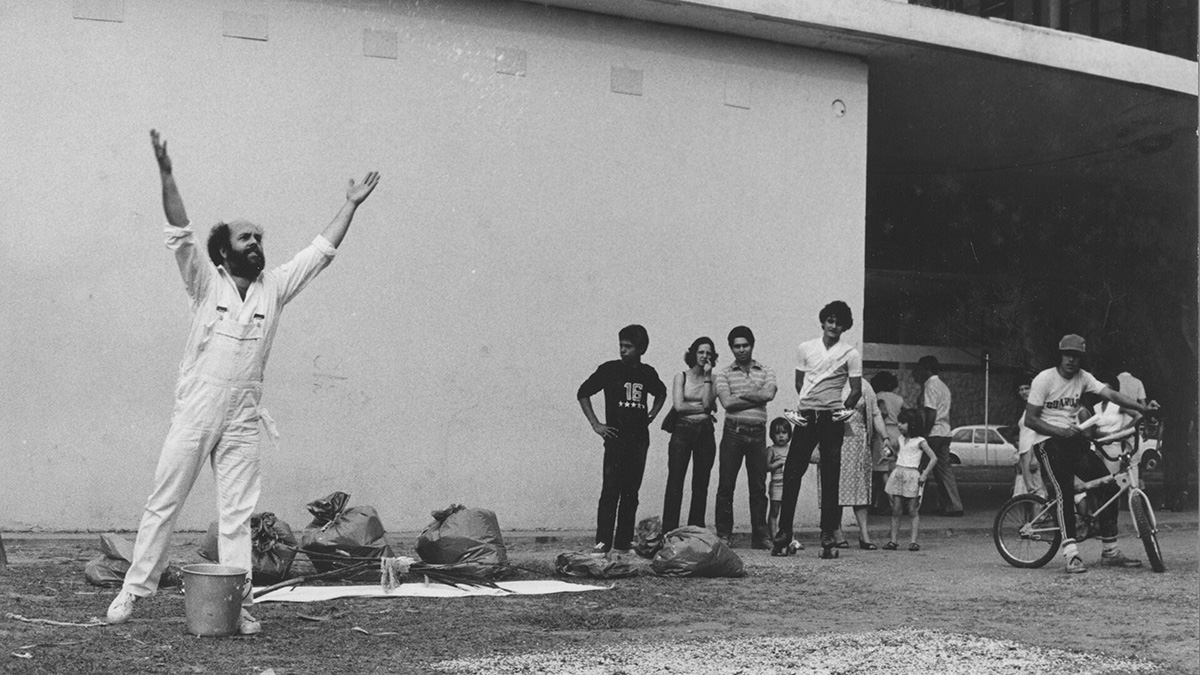
This documentary addresses the work of visual artist Carlos Nogueira – a multidisciplinary artist, and one of the leading contemporary Portuguese creators. It sheds light not only on his work, but also on his close relationship with his living and working space.
With a degree in filmmaking from the Escola Superior de Teatro e Cinema, Lisbon, since 1993, Lui?s Alves de Matos has collaborated in different contemporary creative projects. He then went on to make a number of documentary films about Portuguese artists. In 2001 he founded Amatar Filmes, continuing with the independent production and directing of documentaries in the field of art, as well as experimental films.
Ricardo Alves Jr, Ricardo Alves Jr
Catalogue : 2016TREMOR | Fiction | 35mm | color | 14:0 | Brazil | 2013
Ricardo Alves Jr, Ricardo Alves Jr
TREMOR
Fiction | 35mm | color | 14:0 | Brazil | 2013
One day in a man’s life. He is looking for his wife, he is looking for some answers, he is looking for life.
Ricardo Alves Jr (1982) was born in Belo Horizonte. With his films "Material Bruto" (2006), "Convite para Jantar com o Camarada Stalin" (2007), "Permanências" (2010) e “Tremor" (2013), participated in several national and international festivals such as: Semaine de la Critique du Festival de Cannes, Festival del film Locarno, Oberhausen, Rotterdam, Havana, Bafici-Buenos Aires, Festival de Brasília do Cinema Brasileiro, Janela Internacional de Cinema do Recife, São Paulo International Short Film Festival, The Rio de Janeiro International Short Film Festival, FestCurtasBH, Vídeo Zone - International Video Art Biennial in Israel, VideoBrasil - Festival de Arte Eletrônica. Being exhibited at the Museu Centre Pompidou, in Paris, and the Museo Reina Sofia, in Madrid by the Encontres Internationales Paris/Berlin/Madrid. In 2013 had a retrospective of his films at the Cinémathèque Française in Paris (Cinéma de poche : La Collection brésilienne) and at the Cine Esquema Novo- Expandido in Porto Alegre. He won the award for Best Director of short film at the editions 40º and 46º of the Festival de Brasília do Cinema Brasileiro. As editor, edit the long “Pinta”, by Jorge Alencar, and “Avanti Popolo”, by Michael Wahrmann, debut in the Festival Internazionale del Film di Roma, where received the Award of Best Film of the Premio CinemaXXI. In the theater directed “Discurso do Coração Infartado” a solo of Silvana Stein; contemplated with the Award Miryan Muniz da Funarte, seasons performing in the cities of Belo Horizonte, São Paulo e Brasília. In 2014 co-directed with Grace Passô, “Sarabanda" performed by Mostra Bergman- Instante de Eternidade of the Fundação Clovis Salgado. Currently working on the post-production of “Elon Rabin não Acredita na Morte” contemplated by Hubert Bals Fund Award of script development; besides participating the laboratories Buenos Aires Lab (BAL), FIDlab-Plateforme Internationale de Soutien à la Coproduction and New Cinema Network – Rome Film Festival’s International Project Workshop.
Ricardo Alves Jr
Catalogue : 2012PERMANÊNCIAS | Experimental doc. | hdcam | color | 34:0 | Brazil | 2010
Ricardo Alves Jr
PERMANÊNCIAS
Experimental doc. | hdcam | color | 34:0 | Brazil | 2010
From the inside the air is heavier
Ricardo Alves Jr was born in Belo Horizonte, Brazil. Graduated in Film Direction at Universidad del Cine in Buenos Aires, Argentina. His first work, the short movie "Material Bruto" (Raw material), received over 10 awards at international festivals, besides being selected for the "Video Zone" at the International Video Art Biennial of Israel and VideoBrasil. "Convite para jantar com camarada Stalin" (Invitation to dinner with Comrade Stalin, 2007), Ricardo`s second work, won the award for Best Experimental Short Film at the International Short Film Festival of Rio de Janeiro; Best Short Film, Best Director and Photography at the 40th Film Festival of Brasilia, plus Special Mention "Film of Tomorrow" at the International Festival of Short Films, in Belo Horizonte. He?s participated in over 30 international film festivals such as Oberhausen, Rotterdam, Karloy Vary, Paris Cinema, Munich, and Torino Film Festival. In 2011 Ricardo released his third film entitled "Permanences", official selection at Cannes Critic?s Week.
Ricardo Alves Junior
Catalogue : 2011Convite para jantar com o camarada Stalin | Fiction | 16mm | color | 10:0 | Brazil | 2007
Ricardo Alves Junior
Convite para jantar com o camarada Stalin
Fiction | 16mm | color | 10:0 | Brazil | 2007
Two elderly sisters spend their last days together. Between dreams and death, Olga and Marilu await a dinner guest.
Ricardo Alves Júnior was borned in Belo Horizonte, Brazil. Graduated in Film Direction, at Universidad del Cine in Buenos Aires, Argentina. His first work, the short movie "Material Bruto" (Raw material), received over 10 awards at festivals in Bolivia, Brazil and Portugal, besides being selected to the "Video Zone" at International Video Art Biennial of Israel and VideoBrasil. "Convite para jantar com camarada Stalin" (2007), Ricardo's second work, won the award for Best Experimental Short Film (International Short Film Festival of Rio de Janeiro); best short film in 16mm, best direction and photography in the 40th Film Festival of Brasilia, and won the special mention "Film of Tomorrow" in the International Festival of Short Films, in Belo Horizonte. Participated in 20 international film festivals such as Oberhausen Film Festival, Rotterdam Film Festival, Karloy Vary Film Festival, Paris Cinema, Munich International School of Film and Torino Film Festival.
Michele Amaglio
Catalogue : 2015Treviso Centrale | Experimental doc. | hdv | color | 13:8 | Italy | 2014
Michele Amaglio
Treviso Centrale
Experimental doc. | hdv | color | 13:8 | Italy | 2014
The project Treviso Centrale stems from a desire to represent and interpret the territory of Treviso in the north-east of Italy. A territory that deals with the consequences of a heavy exploitation of the land for the sake of industrialization and economic wealth but also that deals with the relationship between the human presence and the man-altered landscape. In Treviso Centrale the subjects try to engage with this wounded landscape, non-places, with the attempt to re-appropriate them. This engagement becomes forced, unnatural, because of the impossibility to relate with places that have lost their social and inner function. Treviso Centrale becomes then a journey into these contrasts, into this everyday struggle between economic and social space.
Michele Amaglio (b.1993) is an Italian photographer based in Brighton (UK) currently studying at the University of Brighton, BA (Hons) Photography at his third year. From the early workshops with the Italian photographer Marco Zanta, Michele Amaglio grew an interest on architectural photography and urban landscape starting questioning the contrasts between past and presence within the landscape. His work is focused on the relationship between human being and space, between landscape and existentialism. Across different projects his attempt to represent the social space questions the alienation from the every-day life. Among the main influences of his work, Henri Lefebvre, Albert Camus and Jean Beaudrillard.
Alzakout Amel
Catalogue : 2021Purple Sea | Documentary | dcp | color | 67:0 | Germany | 2020
Alzakout Amel
Purple Sea
Documentary | dcp | color | 67:0 | Germany | 2020
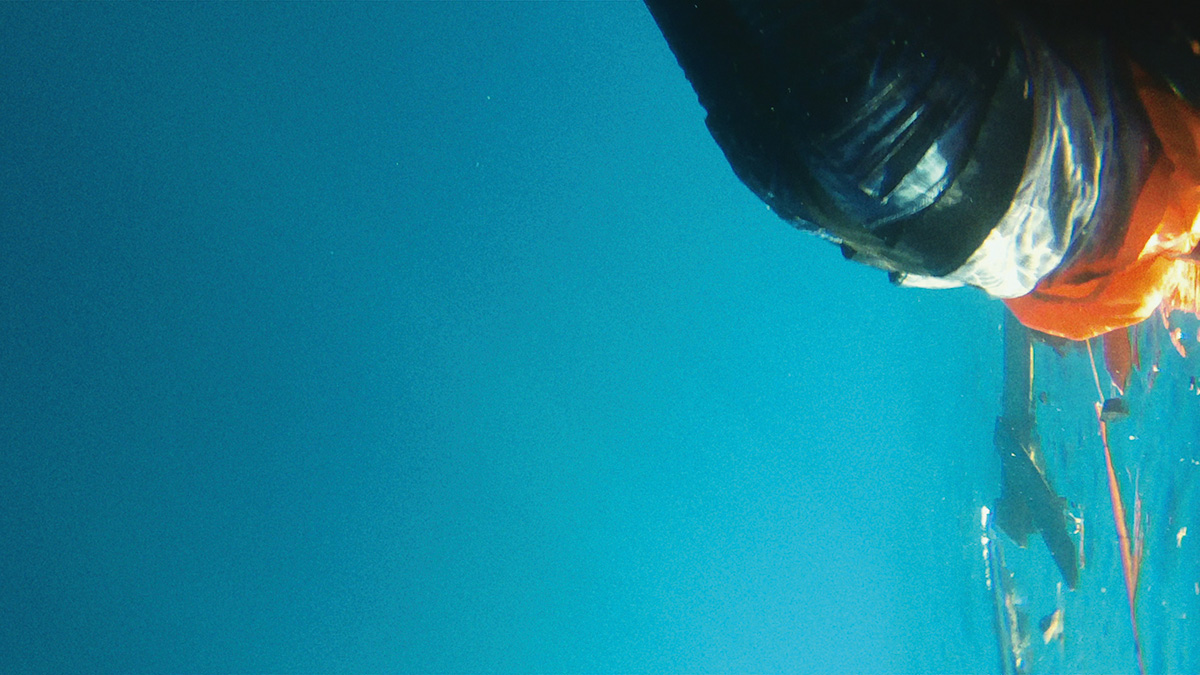
I see everything,” she says, as if it was a curse. Brilliant sunshine, clear blue skies. The sea is calm, framed by a piece of railing. Buzzing voices. A peaceful moment if it weren’t for the fact that the sea is standing upright, vertical, like a waterfall. A rush of images, twirling, upside down, jolting. People in the boat, in the water, screams, life jackets, emergency whistles. Fluorescent orange, geometrical shapes cast by the sun. There’s no horizon anymore, no sky, no up or down, only deepness and nothing to hold on to. Even Eme’s flow comes to a halt, contracting into the brutal present. She is filming and speaking. To him, to herself, to us, perhaps. Floating legs in sweat pants, jeans, thronged together. A blouse with butterflies, it looks like their wings are flapping in the water. The snake-like belt of a coat, a crumpled-up plastic cup, a pack of cigarettes. Fuck you all! She speaks, she rages, and she films to beat being tired, being cold, the fact that help isn’t coming. To beat dying, just for something to remain.
Amel Alzakout, born 1988 in Syria, is an artist and film maker based in Leipzig. Between 2010 and 2013 she studied journalism at Cairo University, Egypt. In 2017 she participated with other artists in the video installation TRUST US in the 3rd Herbstsalon at the Maxim Gorki Theater Berlin. Between 2017 and 2018 she studied art at Weißensee Art Academy in Berlin, currently she is studying media art at the Academy of visual art (HGB) in Leipzig, Germany. In 2018 she won together with her co-director Khaled Abdulwahed the Film Prize for International Cooperation Germany/Arab World by the Robert Bosch Foundation with the feature length film PURPLE SEA produced by pong film. It’s her first directing. Khaled Abdulwahed, born 1975 in Syria, is an artist, photographer and filmmaker based in Leipzig. Between 1996 and 2000 he studied Fine Arts and Graphic Design at Adham Ismail art school in Damascus, Syria and at Frederick University in Nicosia, Cyprus. Between 2002 and 2008 he exhibited his artworks in the Middle-east and Europe. Between 2011 and 2013 he directed and produced video artworks which were screened in many art spaces, festivals, universities and TV channels over the world. In 2015 he was invited to Berlinale Talents. In 2018 his short film BACKYARD celebrated its world premiere and won the CNAP (National Centre for Visual Arts) award at FID Marseille.
Ulf Aminde, Anwar Al Atrash,Fadi Aljabour, Marwa Younes Almokbel, Aram Al Saed, Mira Debaja, Amel Alzakout, Mohamad Halbouni, Dyaa Naim, Ramin Parvin, Nour Nasred
Catalogue : 2019TRUST US | Video installation | hdv | color and b&w | 3:25 | Germany | 2017
Ulf Aminde, Anwar Al Atrash,Fadi Aljabour, Marwa Younes Almokbel, Aram Al Saed, Mira Debaja, Amel Alzakout, Mohamad Halbouni, Dyaa Naim, Ramin Parvin, Nour Nasred
TRUST US
Video installation | hdv | color and b&w | 3:25 | Germany | 2017
TRUST US 2017, Video Installation Very often journalists are contacting us to write a story about `refugees` in the context of higher education, their living in Berlin, or simply because they`re looking for some “traumatized†characters for their stories. We usually reject these requests. But this time we received an award of a multinational company and it came with a sum that we urgently needed in order to continue our programme. This time they wanted to produce a video, a one shot sequence. They seemed nice, but their task was to produce emotional images featuring the bodies of the refugee students, underscored by the voice of the white professor contextualising their movements and giving meaning to the frames. We told them this is not how it`s going to work. No one wanted to provide their Ìbodies Ì to fill those frames of narration. They said: „TRUST US, it will look good“ Finally we agreed: THEY WOULD FILM US while WE WOULD FILM THEM. We decided to edit the material WE shot and combine it with texts spoken by us, relating to the week long discussions we`ve shared. The whole thing became an installation shown at 3. Herbstsalon, Maxim Gorki Theater.
The *foundationClass was established at weißensee academy of art berlin in 2016. Its aim is to provide equal access to formal art education for people who have fled or migrated to Germany. It tries to create a social space where everyone’s resources are acknowledged and validated and where new formats of skill sharing and knowledge transfer can be developed. Ultimately, the *foundationClass wants to question the norms, conventions, and the habitus of art institutions and the industry as a whole. Situated within the institution but rejecting to embody it, the *foundationClass scrutinizes the art academy as a powerful site of knowledge production. Refusing to be integrated into an economy of difference, we aim to formulate strategies that position us outside of the grid of representation. Together we want to find answers to the question of how an art school of the future would look like if it genuinely recognised migration as an essential societal factor. As a collective the *foundationClass contributed TRUST US as a multichannel video installation to the 3. Berliner Herbstsalon, a festival for contemporary art by the Maxim Gorki Theater.
Ulf Aminde
Catalogue : 2007Welcome Home | Video installation | dv | color | 12:0 | Germany, Belgium | 2006
Ulf Aminde
Welcome Home
Video installation | dv | color | 12:0 | Germany, Belgium | 2006
Just imagine: you're shopping in IKEA and suddenly you're asked to take part in a film. This is what happened to more than a hundred customers in the IKEA store in Wilrijk, Belgium, where Aminde was on location for two weeks to film "Welcome Home". In the ready-made scenes - the student's room, the rustic living room, the designer interior - the customers could improvise at will in specified situations. There was a great willingness to participate among the would-be actors. We see people sleeping, cooking, sitting down? "Welcome Home" is a compilation of humorous scenes based on the confrontation of artificiality versus authenticity, man versus the market. IKEA functions as a clearly recognizable setting for these scenes and conjures up all sorts of associations and reflections. However, Aminde doesn't make any explicit statements on consumerism and globalization. To him it's more important to simply let the people play and allow us to watch.
Ulf Aminde (was born in 1969, Germany) lives and works in Berlin as a video artist. His work was exhibited in Centre Culturel de Suisse (Paris), Friedericianum (Kassel), and Kagami (Paris), to name but a few. In 2004 he had a solo exhibition "Survival of the Fittest in Wolfsburg", and in 2006 his work was shown at the Berlin Biennale. Ulf is mostly interested in the socio-emotional mechanisms of capitalist society. Instead of merely recording, he seeks out the participation of people or groups with a social stigma, people that cannot or will not participate in our welfare society. Ulf does not condemn nor complain, but his work shows these people in such a way that our common perception of them is shattered, or at the very least becomes more nuanced.
Ulf Aminde
Tal Amiran
Catalogue : 2008Untitled (band in a studio) | Art vidéo | dv | color | 2:23 | United Kingdom | 2006
Tal Amiran
Untitled (band in a studio)
Art vidéo | dv | color | 2:23 | United Kingdom | 2006
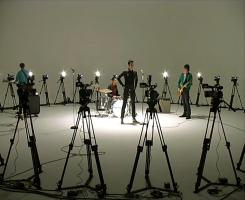
A rock band is filmed in a studio during the making of a music video. The set for the video consists of numerous video cameras with their lights on, arranged in a circle. The circle of lights forms a ring and within that ring the band is situated. In the second scene, a performer comes in and out of the frame as he plays his guitar frenetically. The last scene shows the band waiting, looking bewildered. At the centre of the work is the uncertainty we feel in regard to what we see, as the footage documents a real activity which at the same time remains inexplicable. The video is silent. Sound and music are a central and inseparable part of a rock band?s performance, and as such, the muted sound instigates an uncanny experience and conveys a new reading to the scenes. The camera/observer is placed in a neutral standpoint, dictating a sense of detachment and alienation. The relationship between documentary and fiction, stillness and movement, euphoria and melancholy, and sound and silence, are at the core of this work.
Born Tel Aviv, Israel. Tal Amiran is both a video artist and a professional musician and is currently a member of signed punk rock London band Vatican DC. In 1989 he completed his Fine Art studies in Thelma Yellin school of Art in Tel Aviv, Israel, with a Certificate of Excellency. In 2006 he graduated from Chelsea College of Art and Design London, with a First Class Honours in BA Fine Art (New Media). Since graduating, Amiran`s video works have been shown extensively: The International Video Art Festival in Iceland, The 12th International Media Art Biennale in Poland, `The Bigger Picture` in Manchester UK, ?Future Map? ? University of the Arts? new talents showcase, amongst others. Amiran lives and works in London, UK
Cristina Amiran, Khalil Charif
Catalogue : 2008AVENUE | Art vidéo | dv | color | 3:16 | Brazil | 2006
Cristina Amiran, Khalil Charif
AVENUE
Art vidéo | dv | color | 3:16 | Brazil | 2006
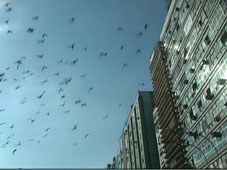
During the process of investigation of relationships between cinema, photography, and video art, the authors have been working global-local themes. Presenting in this video a one-shot view of Copacabana (empty of people and cars) like a flying journey into an avenue.
Cristina AMIRAN was born in Rio de Janeiro in 1960, and lives and works there. She has a B.A. in Visual Communication (1988) and has studied art at the Escola de Artes Visuais do Parque Lage (2003-2005). Khalil CHARIF, also from Rio de Janeiro (1967), has an A.A degree in Art History (2004) and is a B.A. in Architecture (1995); and has attended EAV Parque Lage (2003-2005) as well. They have been working independently and in group projects. Their exhibitions include: "Lusovideografia", Oi Futuro, Rio de Janeiro, 2007. "VideoLab Coimbra 2006", TAGV / Universidade de Coimbra, Portugal, 2006. "Posição 2004", EAV Parque Lage, Rio de Janeiro, 2004.
Andrew Amorim
Catalogue : 2019The Future Stands Still, But We Move In Infinite Space | Video installation | 4k | color and b&w | 46:48 | Brazil, Uganda | 2017
Andrew Amorim
The Future Stands Still, But We Move In Infinite Space
Video installation | 4k | color and b&w | 46:48 | Brazil, Uganda | 2017
Shot on location in Kampala, Uganda, the film combines narratives connected to the symbolism surrounding the sport of boxing. From the very personal and intimate relationship between the artist and a boxer in a sparring match, to a story about the black heavyweight as a gallant and politicised figure in the historical match-up between Sonny Liston and Floyd Patterson. The film also diverts into several off-topic sequences; showing a group of stunt bikers during an euphoric highway performance, tracing history through a tree planted on October 9th 1962, the day Uganda gained independence from Britain, and visiting the former Gaddafi National Mosque. The Mosque was renamed to `The Uganda National Mosque` in 2013 after pressure from the new Libyan administration, following the US led intervention in Libya in 2011, and the death of Colonel Gaddafi. The title of the work originates from Rainer Maria Rilke's Letters to a Young Poet (1929). Rilke addresses existential themes, profoundly probing the quest for individuality, the significance of death, and reflection on the experience of time as death approaches. His work invoke images of mankind`s anxiety and alienation in the face of an increasingly scientific, industrial, reified world.
Andrew Amorim (b. 1983, Belém, Brazil) lives and works between Bergen, Norway and Kampala, Uganda. He graduated from the Bergen Academy of Arts and Design in 2016. Recent solo exhibitions include The Future Stands Still but We Move in Infinite Space at Bergen Kjøtt, Bergen (NO); Lest We Perish at Entrée x Independent Hq, Harlem, New York (US); Lest We Perish, K4 gallery, Oslo (NO); After Touch, Space 4235, Genova (ITA) and Material Light (with Numi Thorvarsson) at Bergen Kjøtt, Bergen (NO). His work has also been included in the exhibitions The Future Stands Still but We Move in Infinite Space, OSL contemporary, Oslo (NO); After the Exhibition, Hordaland Art Centre, Bergen (NO); The Young Lions, Preus Museum, Horten (NO); The National Juried Spring Exhibition, Melk, Oslo (NO); eõ, NoPlace, Oslo (NO) and I: project space in Beijing (CHN). Â
Annabelle Amoros
Catalogue : 2015La Maison des Lilas | Experimental fiction | hdv | color | 17:32 | France | 2014
Annabelle Amoros
La Maison des Lilas
Experimental fiction | hdv | color | 17:32 | France | 2014
Thought out, filmed and edited like a dream, Lila`s House offers a fantastic and surreal vision, where logic and narrative structure are bent to encourage unconsciousness and intuition.
Annabelle Amoros was born in 1987 in France. After studying at the Art school of Metz she followed courses at the photography school in Arles between 2011 and 2014. During this time she was awarded a grant by the Alsace Region wich allowed her to go to the United States in order to develop a photography and video project. Then she went to the Aalto University of Art Design and Architecture in Helsinki, Finland as an exchange student where she followed a video course with Hannu Karjalainen and edited her first video Welcome to My World. After this first experience moving images became the center of her work. She combines video cinema and photography and tries to erase the limit between reality and fiction. For each project she immerses herself during several weeks in the inhabitants` lives in order to film their environment. She mostly uses ambient light to transform the landscapes and to stage each person into a character. Finally she reorganizes her rushes in order to create a new environment based on her imagination and inspired by the works of David Lynch, Alec Soth, David Clearbout amongst others.
Catalogue : 2014Welcome to My World | Video | dv | color | 9:25 | France, USA | 2013
Annabelle Amoros
Welcome to My World
Video | dv | color | 9:25 | France, USA | 2013
La vidéo Welcome to My World représente Woolstock un petit village, extrêmement isolé au centre des .États-Unis, dans l?Iowa. Comme dans beaucoup d?autres lieux de ce type, il ne se passe rien. Les habitants sont enfermés dans un quotidien calme, épuré, et serein, mais peut être aussi ennuyeux et répétitif. Les scènes sont tournées dans des paysages contemplatifs. Elles représentent des atmosphères nocturnes et crépusculaires, éclairées par la lumière incertaine des lampadaires et nous plongent dans un univers étrange, où nous attendons quelque chose que nous ignorons et qui nous échappe.
Annabelle Amoros est née en 1987 à Creil. Après avoir suivit une formation à l`École Supérieure d`art de Metz, elle poursuit aujourd`hui ses études à l`École Nationale Supérieure de la Photographie d`Arles. Suite à quelques voyages l`ayant menée au centre des États-Unis, en Finlande, en Laponie, sans oublier la France, elle ne cesse d`observer et de s`imprégner de la vie quotidienne des gens installés dans des petits villages très isolés. Elle tente de transformer les habitants en personnages et de créer des univers sous tension à partir d`un quotidien où il ne se passe presque rien. Par l`outil photographique ou vidéographie, elle ne cesse d`interroger ses images autour de la dualité réalité-fiction.
Marta Anatra
Catalogue : 2023Progresso Renaissance | Experimental doc. | 16mm | color | 20:0 | Italy | 2019
Marta Anatra
Progresso Renaissance
Experimental doc. | 16mm | color | 20:0 | Italy | 2019
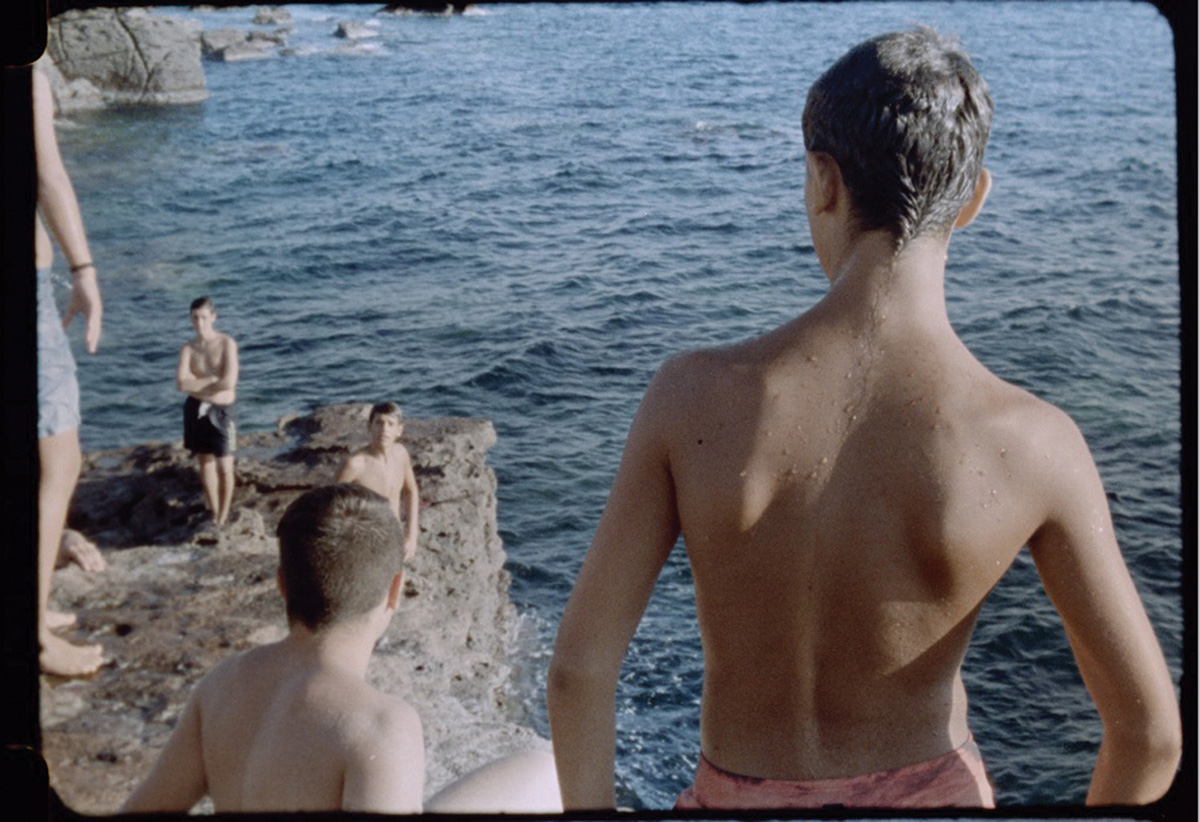
Portovesme, Sardinia. Images of a past summer. The waves of the sea crash ceaselessly on the rocks. A group of boys ride their bikes to the beach, passing abandoned industrial buildings that once heralded a new age. In this cross-genre film made up of archive footage and 16mm recordings, the time between 1969 and the present seems to merge. In a region in which development has come to a standstill, the group of boys symbolizes a whole generation.
Visual artist, editor and filmmaker, I trained as a painter at the Accademia di Belle Arti of Florence. I live and work in Marseille where I followed a Master in Documentary Film at the University of Aix-Marseille, I also trained at the Grenada Visual Centre in Manchester and at the ISRE in Nuoro with David and Judith McDougall. Seminal in my work on 16mm film are the Film Flamme-Polygone Etoilé collective and the Laboratoire L'Argent of which I am co-founder. My independent films have been screened at international festivals such as Berlinale, NYCIFF, Festival des Peoples, Film Femmes Mediterranée, SIEFF and ISREAL.
Thom Andersen
Catalogue : 2011Get Out of the Car | Experimental doc. | 16mm | color | 34:0 | USA | 2010

Thom Andersen
Get Out of the Car
Experimental doc. | 16mm | color | 34:0 | USA | 2010
From the director of "Los Angeles Plays Itself" comes another city symphony exploring Los Angeles' gentrification through a thoughtful montage of façades and a playful excursus through its musical history.
Thom Andersen
Catalogue : 2016The Thoughts That Once We Had | Experimental doc. | hdv | color and b&w | 108:0 | USA | 2015
Thom Andersen
The Thoughts That Once We Had
Experimental doc. | hdv | color and b&w | 108:0 | USA | 2015
Film history can be written in many ways. One of the more speculative takes is due to the French philosopher Gilles Deleuze, and it is his famous two-volume `Cinéma I-II` that the American essayist Thom Andersen has adapted as a collage of extracts from hundreds of films. And even though there are both cult hits and canonised classics among them, we are light years from a traditional introduction to the bumpy history of cinema. Who would have thought, for example, that you could create a colour theory about black-and-white films? Deleuze draws new and unexpected connections across the film medium`s one hundred year history, and the poetically named `The Thoughts That Once We Had` draws lines between the dots that the French thinker had at the time. Just like Andersen`s magnum opus `Los Angeles Plays Itself`, his new essay is a cinematic whirlwind that blows through the history of the moving image without showing consideration for chronology. A film for everyone who is bitten by the cinephile bug – and for those who share a healthy enthusiasm for the infinite potential of both the film medium and the mind.
Thom Andersen (born 1943, Chicago) is a filmmaker, film critic and teacher. He attended Berkeley in the early 1960s and then returned to his hometown of Los Angeles to attend USC School of Cinematic Arts, where he studied with Arthur Knight and eventually assisted on Knight`s project The History of Sex in Cinema. While at USC Andersen met long-time friend and collaborator Morgan Fisher, who assisted on Andersen`s student film Melting, a portrait of a sundae. He regularly attended local screening series including shows by the Trak Film Group and Movies `Round Midnight and famously wrote about an unpopular screening of Andy Warhol`s Sleep. After USC, Andersen attended UCLA and completed his experimental documentaries Olivia`s Place and Eadweard Muybridge, Zoopraxographer. During the 1970s, his films screened at Los Angeles` Theatre Vanguard and Berkeley`s Pacific Film Archive. He was the programmer for LA Filmforum in Los Angeles during the late 90`s. Andersen`s film Los Angeles Plays Itself won the National Film Board Award for Best Documentary at the 2003 Vancouver International Film Festival, was voted best documentary of 2004 by the Village Voice Critic`s Poll, and was voted one of the Top Ten Films of the Decade by critics at Cinema Scope. In 2010 he completed Get Out of the Car, a portrait of signs and abandoned spaces set to Los Angeles music. In spring 2012, Andersen took part in the three month exposition of Whitney Biennial. He has taught at the SUNY Buffalo and Ohio State University. He currently teaches film theory and history at the California Institute of the Arts.
Thom Andersen
Catalogue : 2015The Tony Longo Trilogy | Video | hdv | color | 14:1 | USA | 2014
Thom Andersen
The Tony Longo Trilogy
Video | hdv | color | 14:1 | USA | 2014
"While remastering Los Angles Plays Itself, I re-edited a number of clips, including The Takeover (Troy Cook, 1995), a grungy, sordid straight-to-video film remarkable only because executive producer Michael Woods and star David Amos had in 1990 planned and carried out the murder of Horace McKenna, Woods's partner in the operation of a chain of strip clubs around Los Angeles - a crime echoed in the movie. After repeated viewings, I noticed a miniature tragedy (or black comedy) spread out over the first sixty minutes. Its protagonist is Waldo the bouncer, the victim of ruses and sucker punches, whose multiple failures lead him to one final heroic attempt to make amends. This is his story."
Thom Andersen has lived in Los Angeles for most of his life. In the 1960s, he made short films, including Melting (1965), Olivia’s Place (1966), and --- ------- (1967, with Malcolm Brodwick). In 1974 he completed Eadweard Muybridge, Zoopraxographer, an hour-long documentary film about Muybridge’s photographic work: It was restored by the UCLA Film and Television Archive in 2013. In 1995, with Noël Burch, he completed Red Hollywood, a critical video essay about the film works created by the victims of the Hollywood Blacklist. Their work on the history of the Blacklist also produced a book, Les Communistes de Hollywood: Autre chose que des martyrs, published in 1994. In 2003 he completed Los Angeles Plays Itself, a three hour-long movie about the representation of Los Angeles in movies. It was voted the Best Documentary of 2003 in the Village Voice Film Critics’ Poll. He completed Get Out of the Car, a short 16mm portrait of Los Angeles. In 2012, he directed Reconversão, an HD video about the work of Portuguese architect Eduard Souto Moura, the winner of Pritzker Prize in 2011. He has taught at the California Institute of the Arts since 1987.