../_CATALOGUE 2002-2003
 

Sara ROSSI : Elck (Ognuno)
Art vidéo | dv, dvd | couleur | 00:07:00 | écriture: Sara Rossi | image: Mimmo Cortina, Sara Rossi | son: Riccardo Castaldi | montage: Sara Rossi c/o Stalker - Milano | mixage: Riccardo Castaldi, Sara Rossi | acteurs: Ernesto Bimbi, Giuliano Boldrini, Luca Bonelli, Silverio Fabiani, Silvana Pampanini | assistant: Chiara Maffei | costumes: Caterina Gatti | coproduction, soutien: Comune di Manciano (GR), GAM Torino | Italie | 2002

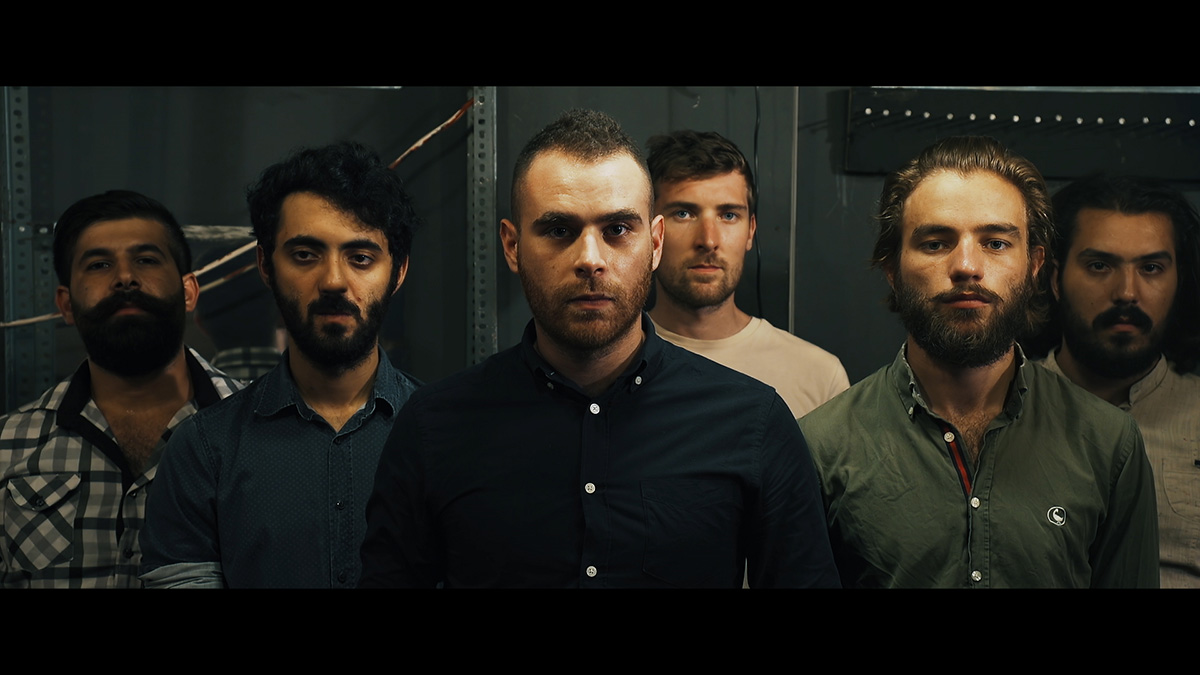
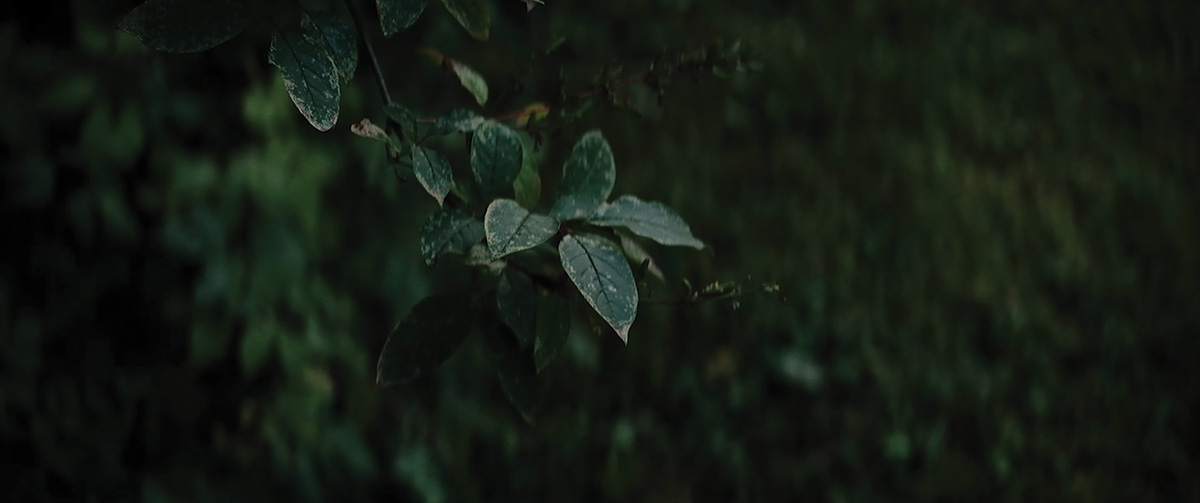
(c) photo: Sara Rossi


L'artiste réinterprète, sur un fond toscan, "Elck", le vieux sujet déjà traité par Brueghel dans une de ses gravures. Cette interprétation soulève la métaphore paradigmatique de certaines valeurs associées. D'abord, la plus évidemment "artistique" : ces images évocatrices propres aux peintres. Ensuite, le côté "littéraire", qui tourne autour de l'altération spéculative de la personnalité de Everyone (Monsieur Tout le monde) - un vieil homme obsédé par sa petite personne et par ses propres intérêts, coincé dans des limites qu'il a lui-même établies - et son opposé - Nobody (Monsieur Personne) - un jeune et humble fermier ébloui par tout ce qui l'entoure, un héros populaire qui vole les riches pour donner aux pauvres.


Vor einen toskanischen Hintergrund reinterpretiert die Künstlerin das alte, bereits in einer Grafik Brueghels behandelte Thema des "Elck". Diese Interpretation enthüllt die paradigmatische Metapher bestimmter, miteinander verbundener Bedeutungen. Zunächst die offensichtlichste, die künstlerische Seite des Werkes, also die bedeutungsreichen Bilder selbst. Hinzu kommt aber auch die literarische Seite, die sich mit der etwaigen Veränderung der Persönlichkeit von "Jedermann" beschäftigt. "Jedermann" ist ein alter von sich selbst eingenommener Mann, der feststeckt in den von ihm selbst geschaffenen Begrenzungen. Ihm steht der junge und neugierige Held "Niemand" gegenüber, ein bescheidener Farmer, der sich von allem was ihm begegnet verzaubern lässt und die Reichen bestielt, um es den Armen zu geben.


An old subject, the "Elck", from an engraving by Brueghel, is reinterpreted by the artist against a Tuscan background, but there also arises the paradigmatic metaphor of a range of associated values. First of all, the most clearly 'artistic", the evocative, painterly images. In the second place, the "literary" level that turns around on the speculative alteration of the personality of Everyone - an old man engrossed in his own persona and his own private concerns, closed within the narrow confines which he himself has constructed - and his contrary - Nobody - a youth, wide-eyed at that which surrounds him' a humble farmer, a popular hero who robs the rich to give to the poor.


___ Note biographique


Née à Milan, Sara Rossi travaille sur la vidéo, la photographie et les installations. Elle a exposé seule pour la première fois en 1997, dans la Galerie Le Case d'Arte, à Milan ; en 2001, elle a également exposé seule aux galeries A. Nicola, à Turin et Zero, à Piacenza. Depuis 1997, ses œuvres sont exposées dans des lieux publics et des musées en Italie mais aussi à l'étranger (Europe et Etats unis). Parmi ses expositions collectives : Magic, VTO, Londres 2002 ; exIT, Sandretto Re Rebaudengo Fondation, Turin 2002 ; Quattro Venti, Manciano (GR) 2002 ; Expanded clip, Anthology Film Archives, New York, Etats Unis ; Boom - Espresso, Ex Manifatture Tabacchi, Firenze 2001 ; Pandaemonium, The Lux Centre, Londres, Royaume Uni 2001 ; Tempo, Passagen - Linkoping Konsthall, Linkoping, S 2000.


Sara Rossi wurde in Mailand geboren. Sie arbeitet mit Videofilmen, Fotografie und Installationen. 1997 stellte sie zum ersten Mal selbständig ihre Arbeiten in der Galerie "Le Case d'Arte" in Mailand aus. Auch 2001 hatte sie eigene Ausstellungen in "A. Nicola" in Turin und in "Zero" in Piacenza. Seit 1997 werden ihre Werke an öffentlichen Orten und in Museen in Italien ebenso wie im Ausland (Europa und USA) ausgestellt. Zusammen mit anderen Künstlern stellte sie unter anderem aus: Magic, VTO, London 2002 ; exIT, Sandretto Re Rebaudengo Fondation, Turin 2002 ; Quattro Venti, Manciano (GR) 2002 ; Expanded clip, Anthology Film Archives, New York, USA ; Boom - Espresso, Ex Manifatture Tabacchi, Firenze 2001 ; Pandaemonium, The Lux Centre, London, Großbritanien 2001 ; Tempo, Passagen - Linkoping Konsthall, Linkoping, S 2000.


Sara Rossi, born in Milan, works with video, photography and intallations. In 1997 she did her first solo show at the Gallery Le Case d'Arte in Milan; in 2001 she has two solo shows at the Galleries A. Nicola, Turin and at Zero, Piacenza. Since 1997 her work have been shown in public spaces and museums in Italy and abroad (Europe and USA). Her group shows are (selection): Magic, VTO, London 2002; exIT, Sandretto Re Rebaudengo Fondation, Turin 2002; Quattro Venti, Manciano (GR) 2002; Expanded clip, Anthology Film Archives, New York, US ; Boom - Espresso, Ex Manifattura Tabacchi, Firenze 2001 ; Pandaemonium, The Lux Centre, London, UK 2001; Tempo, Passagen - Linkoping Konsthall, Linkoping, S 2000.


___ Prix et récompenses / Prizes and acquisitions/ Preise und Auszeichnungen

2002
- New York Prize. Columbia University, New York - Italian Ministry of Foreign Affairs.
- Elck (Ognuno), video: GAM, Gallery of Contemporary Art, Turin, I.
2001
- Passi, video installation: Palazzo Forti, Museum of Modern and Contemporary Art, Verona, I.
2000
- Smog, video: Park TV, Amsterdam, NL.
___Vidéographie / Videography / Videografie

1997/2002
- Era, Video, Duration: 3':30", Year: 2002.
- Elck (Ognuno), Video, Duration: 7':15", Year: 2002.
- Oz, Video, Trilogy duration: 4':30", Year: 2001.
- Oz 1, Video, Trilogy duration: 1':30", Year: 2001.
- Oz 3, Video, Trilogy duration: 1':30", Year: 2001.
- Oz 9, Video, Trilogy duration: 1':30", Year: 2001.
- Mab, Video installation, Mab - 1° video duration: 3':30", loop., Mab - 2° video duration: 2', loop., Year: 2001.
- Maia, Video, Duration: 3', Year: 2001.
- Polvere, Video, Duration: 8', Year: 2000.
- Nadir, Videoinstallation: 4 videoprojections on sospended wings: base 1mt, 1 projection on the flor base 4 mt. Materials: 5 videprojectors, 5 videoreeders (VHS/S VHS/DVD), 4 TNT wings, nylon; the installation it is supported by the musical contribution of some DJ's (Gino dal Soler and others at Link in Bologna, Sturm'n'drang at India in Rome). Duration: 5 loop of 1 hour each. Year: 1999. Special project for Linkproject, Bologna.
- Act, Video, Duration: 12', Year: 1999.
- Smog, Video, Duration: 3', Year: 1999.
- Passi, Video and video installation, Duration: 4', Year: 1998.
- Coconut, Video, Duration: 2':30", Year: 1997.
- CZ, Video, Duration: 13', Year: 1997.

___ Ouvrages / Books / Bücher

- Exit, edited by Francesco Bonami, Oscar Mondadori, Milano 2002.
- Art now in Italy, a project by Sergio Risaliti, curated by Luca Cerizza, Stefano Chiodi, Gianfranco Maraniello, edited by Palazzo delle Papesse and Electa, Milano 2000 (English/Italian).

___ Catalogues / Catalogues / Kataloge

- Terraferma, edited by Riccardo Caldura, with texts by the artists, catalogue of the show at Candiani Cultural Centre , Edizioni Charta, Milano 2001.
- Sara Rossi, with text by Luca Cerizza (Impressions), and by Nicoletta Leonardi (On incompleteness: notes on the dialectic between absence and presence), catalogue of the shows: Maia and Mab, edited by Galleria Antonella Nicola, Torino and Zero, Piacenza 2001 (English/Italian).
- Pandaemonium - Biennal of moving images 2001, the Lux Centre, Magic and loss, a cura di Cristiana Perrella e Luca Cerizza, the Lux Gallery, London 2001 (english - back cover: CZ, Sara Rossi).
- P.S.1 Italian Bureau Selections 1998-2000, with texts by: Chiara Bertola, Laura Cherubini, Carolyin Christov - Bakargiev, Mario Codognato, interview by Mario Codognato, catalogue of the show at the Pistoletto Fondation, Castelvecchi Arte Edizioni, Roma 2000 (English/Italian).
- Molteplicittà, curated by Bartolomeo Pietromarchi, Adriano Olivetti Fondation/ Contemporary art Editions, Roma 2000.
- Pathologiae, catalogue of the show at the Modern Art Museum of Bozen, with texts by: Marisa Vescovo, Mariuccia Casadio, Francesco Marchioro, Francesca Pasini, Letizia Ragaglia, Edited by Museion, Bolzano 1999 (German/Italian).
- La coscienza luccicante curated by Paola Sega Serra Zanetti and Maria Grazia Tolomeo, Incursione, curated by Andrea Lissoni, Lorenzo Michelli and Paola Sega Serra Zanetti, catalogue of the show at Palazzo delle Esposizioni of Rome, Gangemi Editore, Roma 1998.
- Invideo '98 - luoghi non comuni/Uncommon Places, video d'arte e di ricerca/Experimental and Art video, catalogue of the show at Triennale of Milan, Charta Editions, Milano 1998 (English/Italian).
- Generazione Media, edited by Francesca Alessandrini, Sonia Campagnola, Paolo Darra, Laura Ghirardelli, Federica Rossi, The Milan City Council Editions, Milano 1997.

___ Articles et revues / Articles and reviews / Artikel und Zeitschriften

- Sara Rossi, by Daniela Palazzoli, Kult n° 05 may 2002.
- Quattro Venti, Interni n° 521 maggio 2002.
- Quattro Venti, Tema Celeste n° 91 maggio - giugno 2002.
- Quattro Venti, Flash Art n° 233 aprile - maggio 2002.
- Quattro Venti, Airone n° 252 aprile 2002.
- Pandaemonium 2001, by Chiara Zampetti, Tema Celeste n° 85 may - june 2001 (With english texts).
- Sara Rossi, Maia, Galleria Antonella Nicola - Torino, Mab, Zero - Piacenza, review by Sonia Campagnola, Flash Art n° 227 april - may 2001.
- WalkieTolkie, Maura Biava/Sara Rossi, Cross - second n° 5 april 2000.
- Il medioevo della nuova comunicazione, by Salvatore Lacagnina, Tema Celeste n° 78 march-april 2000.
- Pathologiae, by L. Meneghelli, Flash Art n° 218 october - november 1999.
- Molteplicittà/Multiplicity, by Adachiara Zevi, L'architettura n° 528 october 1999 (With english texts).
- A forma di stanza, by Mariuccia Casadio, Casa Vogue supplementary issue n° 584 Vogue Italia april 1999.
- Dizionario delle artiste italiane, by Francesca Pasini, Flash Art n° 217 summer 1999.
- L'immagine é zero (ma la sete é tutto..)/Image is zero (but thirst is all..), by Luca Cerizza, Cross 0° C n° 1 genuary - march 1999 (With english texts).
- Le Grand Tour, by Luca Cerizza, Numero Zero, Periodico del Palazzo delle Papesse, Centro Arte Contemporanea di Siena, fall 1998.
- Photoshopping, by Luca Cerizza, Flash Art n° 205 summer 1997.

___ Sites web / Web pages / Webseiten

http://www.museion.it/html/it_rossi.html
http://www.undo.net/molteplicitta/rossi.htm
http://www.undo.net/subway/sararossi
http://www.park.nl/catalog/1showrec.php3?940
http://www.undo.net/generazionemedia/rossi.htm


___ Autre texte


Dans une vieille église toscane en ruine sont amassés des tas d'outils, emballages et autres objets ayant un sens symbolique d'appartenance ou encore des objets inutiles. Dans ce décor, trois personnages sont sur scène : Everyone, Melancholy (Monsieur Mélancolie) et Minstrel (Monsieur Ménestrel). La caméra alterne entre une vue d'ensemble de toute la scène et la concentration sur des détails précis. Pendant ce temps, le narrateur, nerveux, se tient au milieu de la scène et indique une image représentant Nobody. Melancholy l'écoute tout en enroulant de la laine. Petit à petit, les nombreux visages de Everyone montent sur scène. La voix du ménestrel est couverte par des sons décousus prononcés par Everyone. Ces sons sont continus - se faisant parfois plus intenses, parfois plus clairs - pour, finalement, disparaître graduellement et laisser place au chant du fermier/Melancholy.


In den Ruinen einer alten toskanischen Kirche sind Berge von Werkzeugen, Verpackungen und anderen Gegenständen aufgehäuft, Symbole des Besitzes ebenso wie vollkommen nutzlose Dinge. Vor diesem Hintergrund agieren drei Akteure: "Jedermann", "Melancholie" und ein Spielmann. Während die Kamera abwechselnd die gesamte Szenerie und Details fokussiert, verweilt der nerveuse Erzähler in der Mitte der Bühne und zeigt auf ein Bild "Niemands". An seiner Seite steht "Melancholie" und wickelt im Zuhören einen Wollfaden auf. Nach und nach kommen die zahlreichen Gesichter "Jedermanns" auf die Bühne. Die Stimme des Spielmannes wird überdeckt von den zusammenhangslosen Lauten "Jedermanns". Diese Laute dauern an, mal lauter mal schwächer werdend, um schließlich allmählich zu verstummen und Platz zu lassen für den Gesang des Farmers/"Melancholie".


Inside of the ruins of an old Tuscany church are hoarded piles of tools, packages and other objects with the symbolic meaning of property and vain things. There, three characters are on stage: Everyone, Melancholy and Minstrel. While the camera alternatively frames the total scene or focuses in on select details, the story-teller churns restlessly in the middle of the scene, indicating an image that represents Nobody. By his side, Melancholy listens while rolling up wool. Gradually appearing on the scene are the numerous figures of Everyone. The voice of the minstrel is overlaid with the unconnected sounds uttered by Everyone. These sounds continue - sometimes more, sometimes less abstract - eventually fading out to be replaced by the song of the farmer/Melancholy.


_retour haut de page_/
 
Information | Programme | Catalogue | Réseau | Soutien | Contact