Catalogue 2025
Below, browse the 2025 Rencontres Internationales catalogue, or search the archives of the works presented since 2004. New video clips are routinely posted and the images and text are regularly updated.
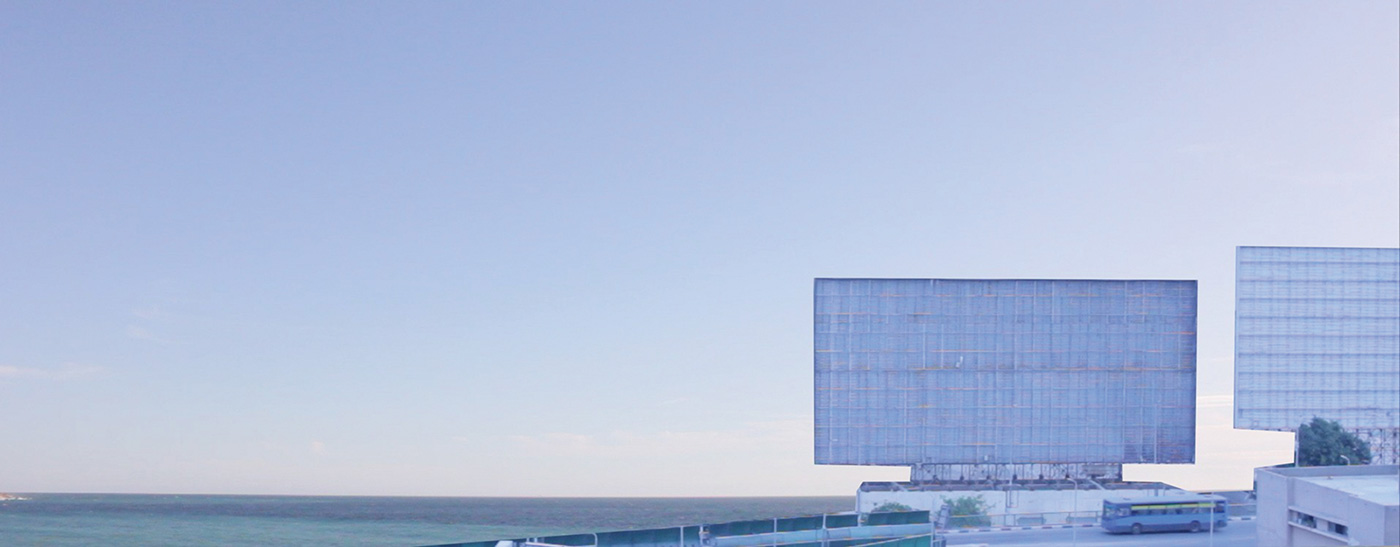
Mohamed Abdelkarim
Gazing...Unseeing
Experimental fiction | mov | color | 7:50 | Egypt | 2021
The video speculates a future scenario demonstrated in a climate fiction narrative. The narrative is based on a pseudo interview with an imagined fugitive in a post-disaster era. Through different positions, ideological turns, and economic sovereignty, the interview imagines the future of the greens, governments, and private sectors in a post-flood city. The landscape and fiction narrative complicates the relationship between infrastructure, privatization, ecology, surveillance, and migration.
Abdelkarim is a visual artist, performer and cultural producer. After completing his M.A. at ECAV/Edhea, Switzerland, 2016 he turned towards producing text-based performances and became committed to performative practices based on multidisciplinary research, employing and reflecting on narrating, singing, detecting, doing, fictioning, and speculating. In Abdelkarim's performative works, the script bears witness to the research experience. The emphasis is on the process, as a reflection on production and cultural genealogy. This process is open-ended, and non-linear. His current umbrella project focuses on the agency of the landscape as a witness to "a history we missed and a future we have not yet attended" His performances have been included in Guild Master of Cabaret Voltaire, Manifesta 11, Zurich, 2016; Sofia Underground Performance Art Festival, Bulgaria, 2016; Photo Cairo 6th, Contemporary Image Collective (CIC), Egypt, 2017; Live Works Performance Act Award Vol. 5, 37° Edizione Drodesera, Trento, Italy, 2017; At the Crossroads of Different Pasts, Presents and Futures, Fondazione Sandretto Re Rebaudengo, Turin, Italy, 2018; Interazioni Festival, Rome, Italy, 2022; and Festival Internazionale della Performance, Performative 04, at MAXXI L'Aquila, 2024. As part of his performative practice, he established "Live Praxes", a performance encounter that includes workshops, seminars, and performance nights.
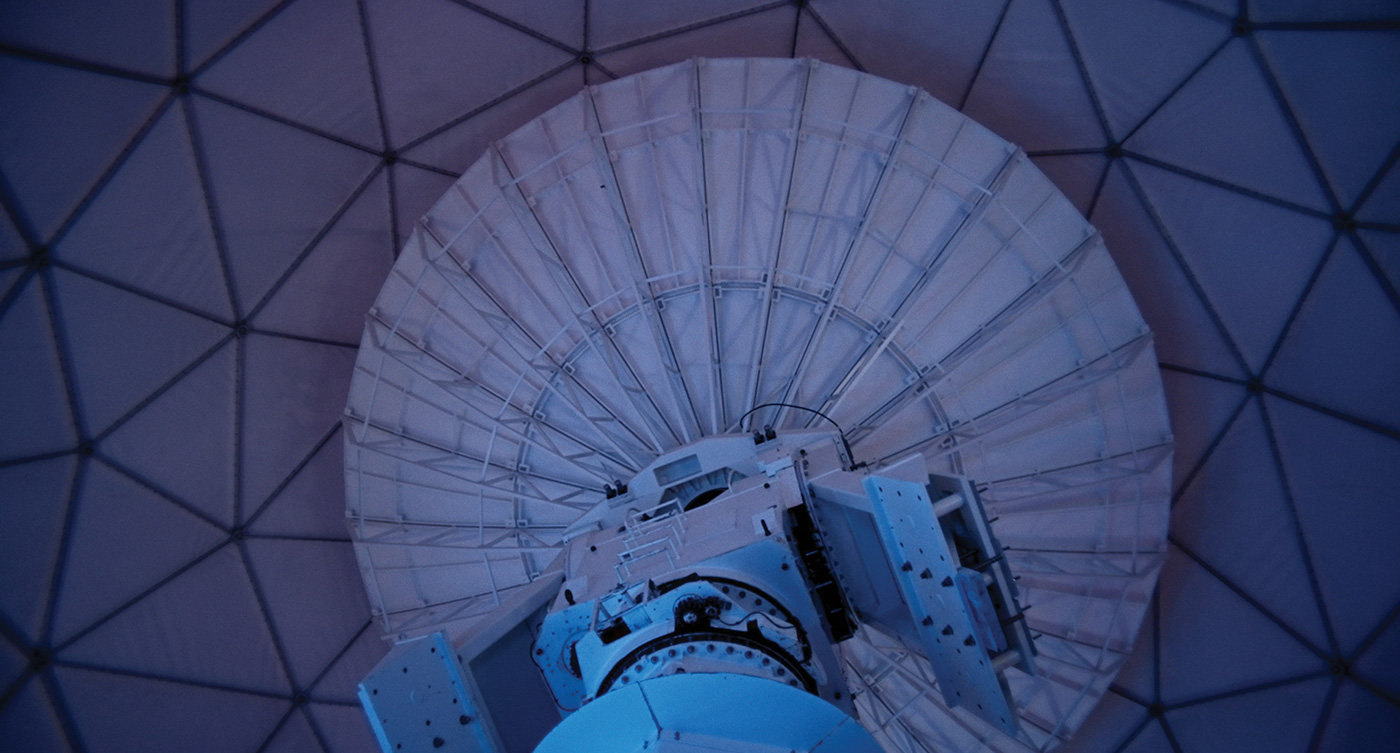
Astrid Ardagh
Ishavsringen
Documentary | dcp | | 20:36 | Netherlands, Norway | 2024
In 2022, a major Russian cyberattack left the Norwegian islands of Bjørnøya and Hopen cut off from the world. On Air traces how a small group of Norwegian radio amateurs stepped in to re-establish contact, revealing the vital role of analog technology in an increasingly fragile digital society. Seen through the curious eyes of extraterrestrial anthropologists, the film explores how Morse code and radio signals may one day safeguard our hyperconnected world.
Astrid Ardagh is an artist and filmmaker from Engeløya in Northern Norway, with a bachelor’s degree in moving images from Gerrit Rietveld Academy in Amsterdam. Her site-specific works delve into the interconnections between people and their environment in a rapidly changing world. By merging her interest in anthropology with aesthetic storytelling, her films become immersive and sensory experiences that transcend traditional human-centred perspectives. Ardagh's short films have been screened at acclaimed festivals such as Clermont-Ferrand and Kortfilmfestivalen in Grimstad, as well as galleries and art museums such as Kristiansand Kunsthall, the Eye Film Museum and the Stedelijk Museum in Amsterdam.
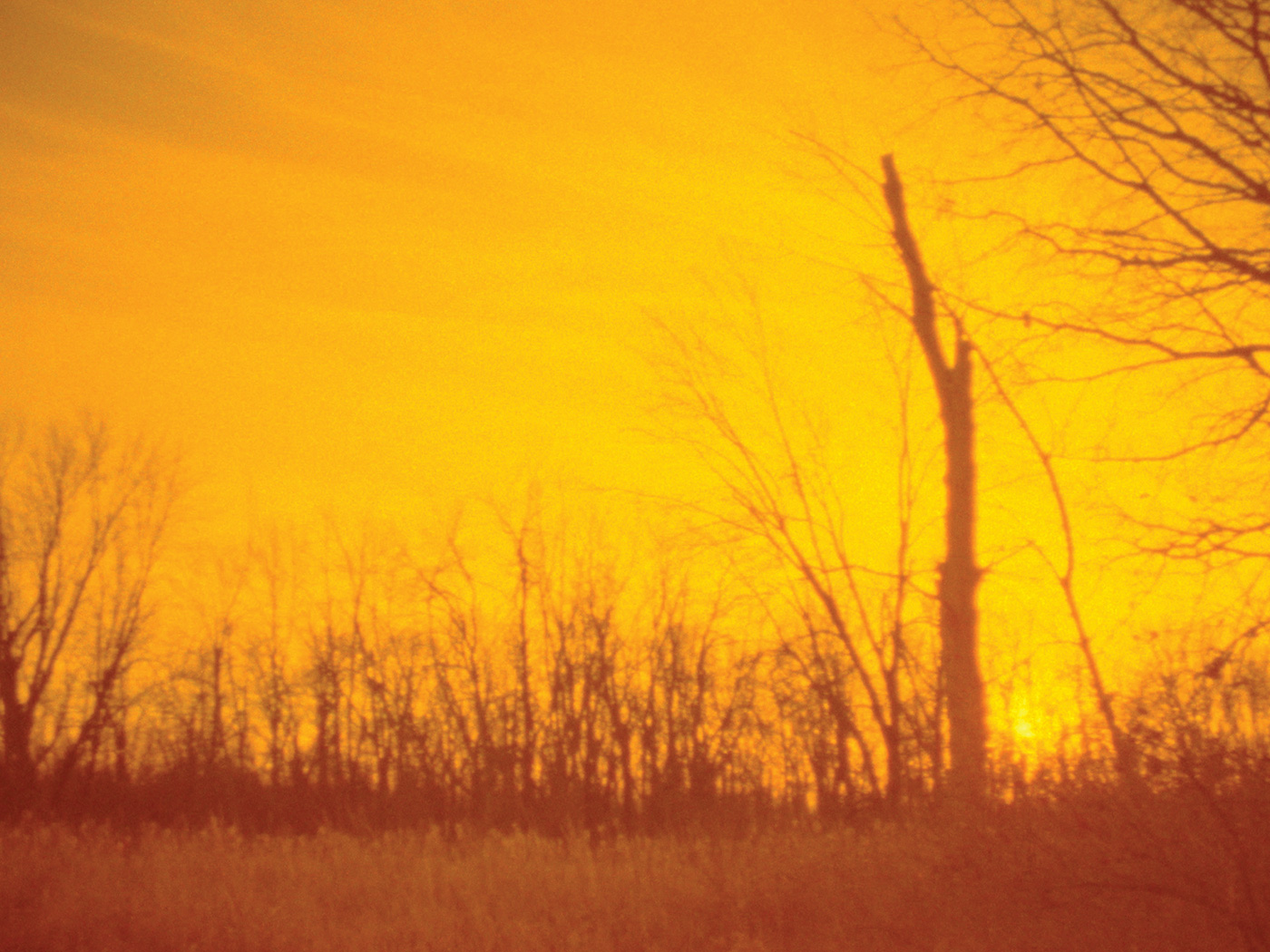
Benjamin Balcom
The Phalanx
Experimental doc. | 16mm | color | 13:30 | USA | 2025
Letters from the Ceresco community trace the fragility of harmony, the dream of life in association, the frictions that give way to fracture. Members of the phalanx drift apart, lingering in private corners, suspended in speculative time.
Ben is a filmmaker and educator based in Milwaukee, Wisconsin, where he is a professor of Film, Video, Animation, and New Genres at the University of Wisconsin–Milwaukee. His most recent films explore the histories and afterlives of radical social ideals and communal living. These projects combine archival research and various modes of filmmaking to reflect on alternative ways of living. Drawing from speculative fiction, critical theory, and utopian poetics, his work often revisits the sites of now-defunct experimental schools and intentional communities, using cinema as a space for both research and imagination. Featuring landscapes both real and imagined, these films engage collective memory while speculating on futures beyond the limits of capitalism. Earlier in his practice, Balcom worked with abstraction, introspection, and formal experimentation, exploring the tensions between perception and communication, and probing the materiality of film itself. These threads continue to inform his evolving approach to nonfiction and poetic cinema. Balcom’s films have screened internationally at venues and festivals including the Museum of the Moving Image, International Film Festival Rotterdam, European Media Arts Festival, IndieLisboa, Media City Film Festival, and Ann Arbor Film Festival. He has received awards from Onion City, Athens International Film + Video Festival, and Ann Arbor. In 2023, he was a research fellow at the Center for 21st Century Studies. He also co-founded Microlights Cinema, a microcinema that ran from 2013 to 2023, dedicated to bringing experimental film and video art to audiences in Milwaukee.


Francisco Baquerizo Racines
La Quema (del Planeta “B”)
Video | 4k | color | 20:50 | Ecuador | 2025
La Quema (del Planeta “B”) is a video installation that reflects on the 1624 burning and sacking of Guayaquil by the Nassau Fleet through the lens of Ecuador’s current vernacular practices—most notably año viejo, a popular custom in which effigies are collectively burned during New Year’s celebrations. This mestizo ritual resists linear narratives, offering instead an Andean zig-zag perspective on renewal through repetition. The crafting of these effigies embodies Guayaquil’s vibrant popular culture and capitalist-driven desires, while paradoxically creating space for (political) protest. In a context where sustaining artistic practices remains precarious, this tradition has also given rise to informal economies. Artists Joshua Jurado and Diego Cuesta—both based in southern Guayaquil—were invited to construct a año viejo in the shape of a galleon, inspired by the Dutch East India Company (VOC) vessel Amsterdam. Paraded through the city before being set alight, the sculpture marked 400 years since the original event, confronting historical cycles through collective action and vernacular symbolism. Filmed during one of Guayaquil’s recent peaks in violence—tied to extractivist legacies—the project brings together two temporal perspectives shaped by the same hegemonic system. La Quema (del Planeta “B”) stands as a pointed question to that very system—one that has shaped our bodies, ethics, and desires in service of capital.
Francisco Baquerizo-Racines (b. 1993, Quito, Ecuador) Currently living and working in the Netherlands. Baquerizo-Racines holds an MA in Fine Arts from HKU University of the Arts Utrecht (2022) and a BA in Visual Arts from PUCE (2017). His work has been shown across Ecuador, South America, and the Netherlands, with projects held in the MACBA archive and supported by the Mondriaan Fonds. In 2025, his film installation La Quema (del Planeta “B”) premiered at the 54th International Film Festival Rotterdam (IFFR).

Yosr Ben Messaoud
Envol
Video | hdv | color | 4:12 | Tunisia, France | 2024
In the dim light, the hand emerges like a fragment of presence, suspended between appearance and disappearance. It becomes a sensitive territory, brushed by a silent intimacy, unfolding like an open landscape, a place that welcomes what passes through without ever fully allowing itself to be grasped. The video then becomes a space of slowing down, where the gaze encounters a partial yet inhabited presence, crossed by a world in motion.
Yosr Ben Messaoud is a visual artist working between France and Tunisia. She is currently studying at the École des Beaux-Arts de Paris, after completing a degree in contemporary art and the humanities at the University of Vincennes. Her work includes video, photography, drawing, and installations, as well as hybrid forms that move between these different modes of expression. The variety of operative forms conveys an aesthetics of openness and suspension, where one is called upon to become a bridge, to welcome alterity in order to allow a new form of communion to emerge. In her practice, she examines questions related to the displacement of narratives and their survival, beginning from the intimate, through the creation of dispositifs conceived both as systems of reception, containers of experience, and circuits of narration—structures that become inhabited by what surrounds them. The axes shift incessantly between lived experience and affective facts, collected images and those that persist, the intimate and the collective voice, in order to reflect on the human condition—understood not as humanity at the centre of the world, but as part of its sensitive order, material, and social


Younes Ben Slimane
Images De Tunisie
Experimental doc. | 0 | color and b&w | 14:39 | Tunisia | 2025
Images de Tunisie reclaims and recontextualizes archival footage from 1940s newsreels produced by Les Actualités Françaises, combining it with new images filmed at the same sites, among the architectures that still remain.
Younès Ben Slimane is a Tunisian visual artist and filmmaker. He graduated in architecture from the National School of Architecture and Urbanism in Tunis before completing postgraduate studies at Le Fresnoy – Studio National des Arts Contemporains (FR). His work has been showcased at the Mucem in Marseille (FR), the Biennale de l’Art Africain Contemporain in Dakar (SN), the Museum of Contemporary Art in Skopje (MK), the Institut du Monde Arabe in Paris (FR), the Beirut Art Center (LB), ETH Zurich – gta exhibitions in Zurich (CH), the Versailles Architecture Biennale in Versailles (FR), the Art Explora Museum Boat, and the Wexner Center for the Arts in Ohio (US), the Zaha Hadid Foundation in London (UK) and the Galeria de Arte Cinemática in Vila do Conde (PT). His films have been selected for international festivals including the Locarno Film Festival (CH),CPH:DOX (DK), Black Star Film Festival (US), DokuFest (XK), EXiS Seoul, (KR) and Prismatic Ground New York (US), among others. He has received numerous awards, including Loop Barcelona Award (2022, ES). His work is part of art collections, including the Museum of Contemporary Art of Barcelona (MACBA) Print and Kadist Paris–San Francisco.
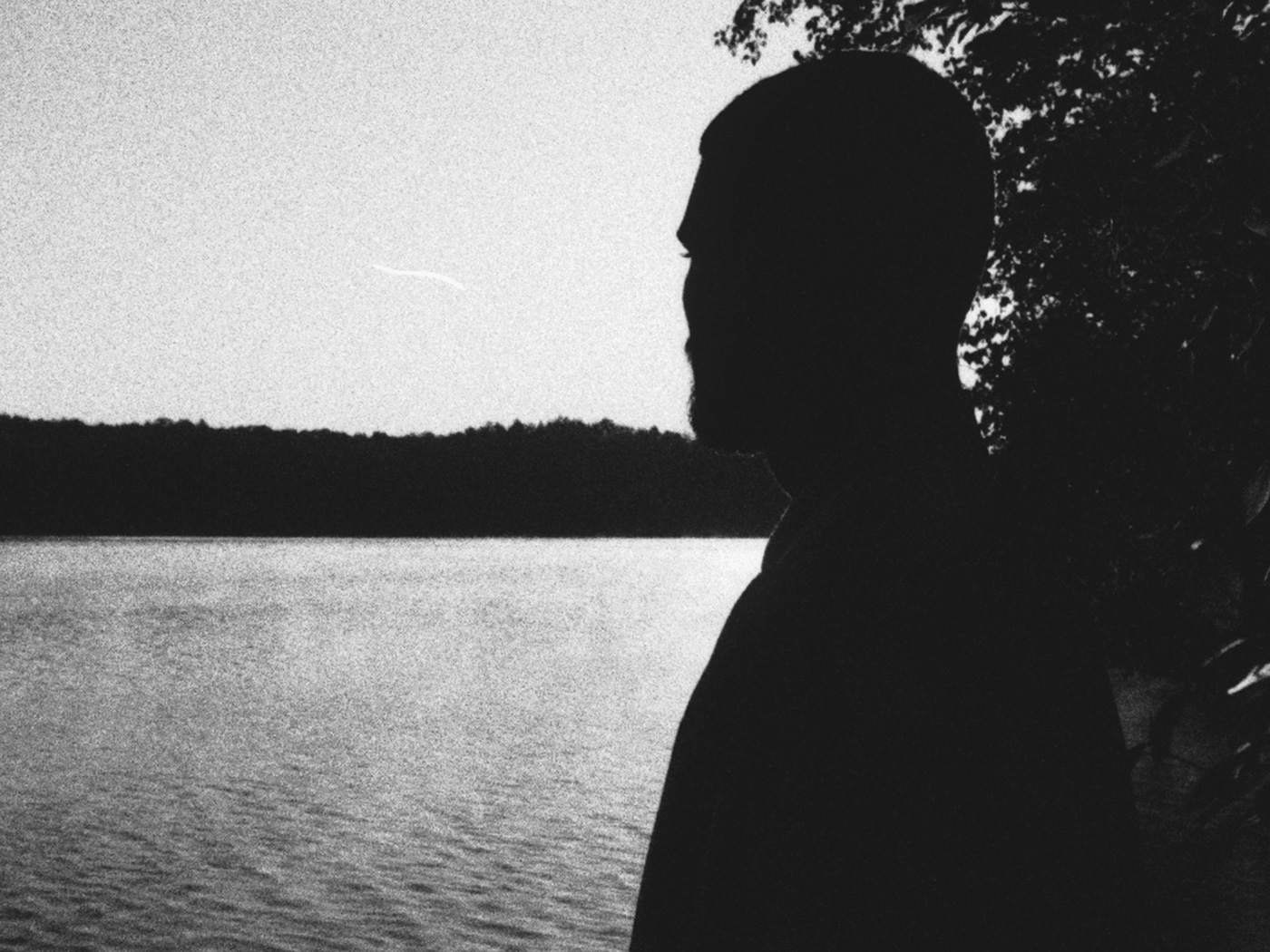
Samy Benammar, Mohamad Awad
Adieu Ugarit
Documentary | 16mm | black and white | 15:45 | Canada | 2024
In 2012, Mohamed had seen his best friend shot dead by an armed militia on the outskirts of Damascus, Syria; the blood spilled in the lake contaminated his memory. Ten years on, the reflections on the Laurentian waters revive Mohamed's trauma. I ask him if he'd like to dredge up the memories, repair the pain by retreating for a few days to the most distressing calm he can find. He talks about death, immigration and anger. We wonder how and why we should recount this story.
Samy Benammar is a filmmaker, photographer, and art critic based between Montreal and Marseille. Drawing from his Algerian roots and working-class upbringing, his work blends a reflective documentary approach with tactile experimentation. He seeks a form of visual reconciliation while underscoring the irreparable fractures left by fantasies of the past. Often hovering on the edge of disappearance, his images explore the tension between physical and imagined space, between memory, identity, and stone. He has served on the editorial boards of Hors Champ, 24 images, and Panorama-cinéma, and is currently pursuing a PhD on colonial photography in the Aurès region of Algeria.
Alisa Berger
RAPTURE I - VISIT
Experimental doc. | 4k | color | 18:22 | Germany, France | 2024
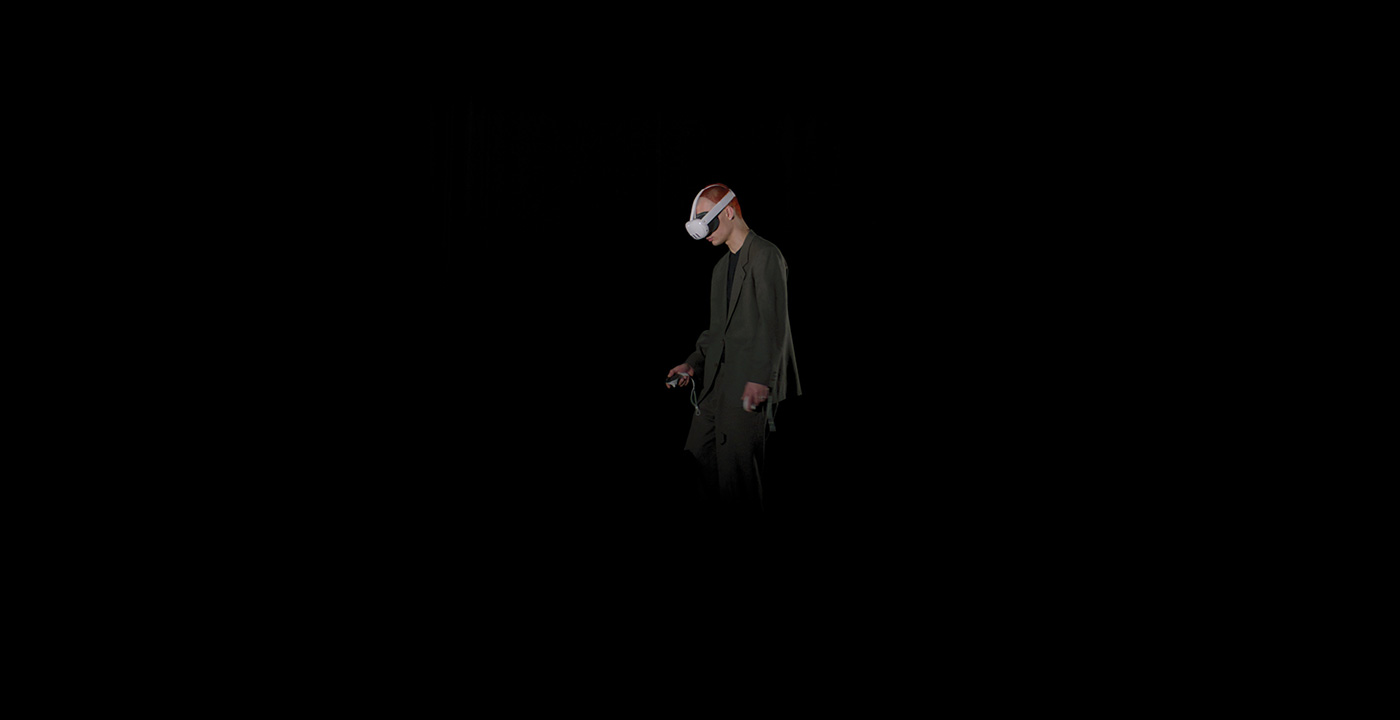
RAPTURE I - VISIT piece follows Ukrainian Vogue dancer Marko as he emotionally confronts his abandoned and inaccessible apartment in Donbas, Ukraine, a region affected by ten years of war. The apartment is recreated using a 3D scan of original photographs, offering a digital reconquest of the space as Marko visits it through VR for the first time since 2018.
Alisa Berger was born 1987 in Makhachkala (Republic of Dagestan, Russia) and raised in Lviv (Ukraine) and Essen (Germany). She studied film and fine arts at the Academy of Media Art Cologne (KHM) and at the Universidad Nacional de Colombia Bogotá. With her 2017 KHM diploma film, she was nominated for the Max Ophüls Prize and for the FIRST STEPS Award of the Deutsche Filmakademie. She was also the recipient of the Best Film Award for New Directors at Int. Film Festival Uruguay and the Screenplay Award of H.W. Geißendörfer. 2018 - 2022 she lived in Tokyo and studied Butoh. Her work often deals with a search for the spiritual, non-rational drive in our world, cultures whose practices of knowledge acquisition are related to religious ideologies, mortuary cults or futuristic concepts of these beliefs.
Mohamed Bourouissa
Généalogie de la violence
Fiction | dcp | color | 15:15 | France | 2024
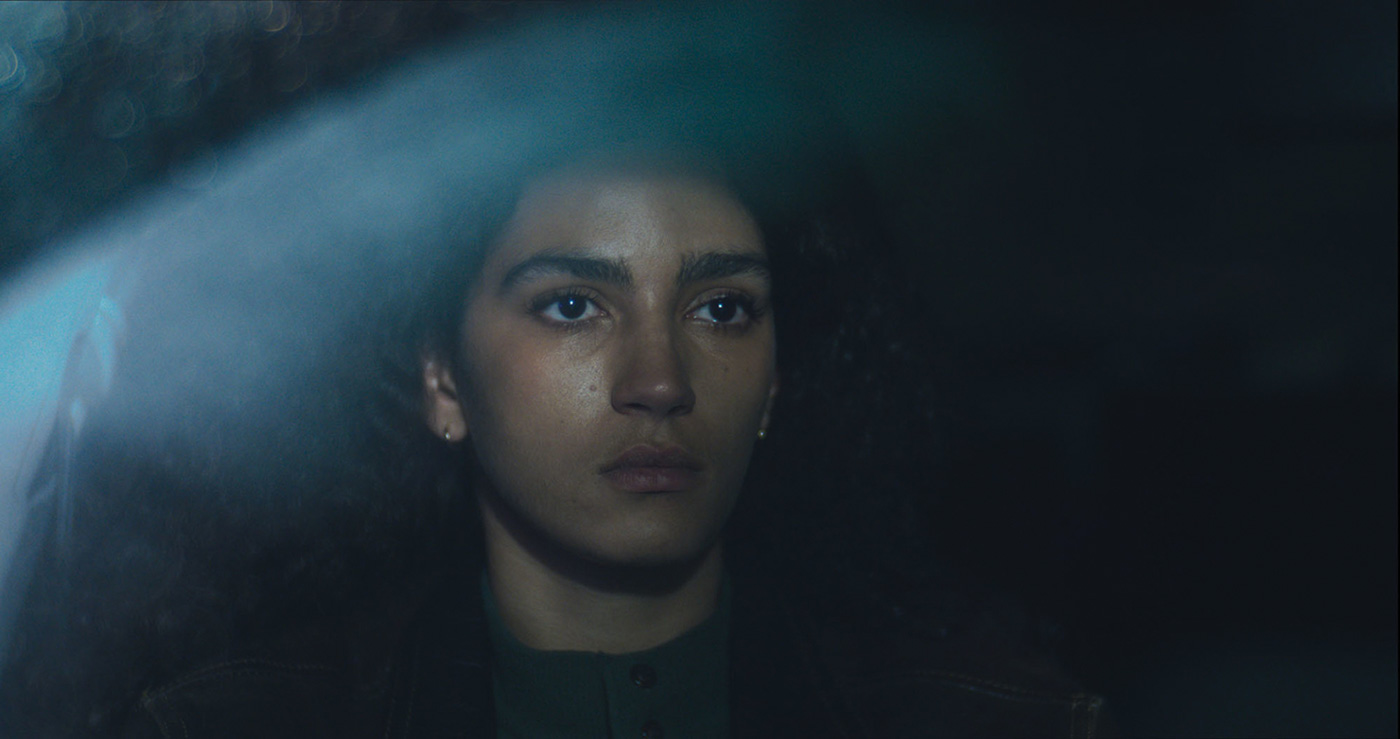
Imagine a film about police brutality, with no brutality. A film where nothing happens, yet you’re left baffled. Invisible violence, disguised under lawful humiliation. Domination wrapped in polite protocols. I started talking about making this short film back in 2018, but the idea of it was haunting me probably since the late 90s, when I started being constantly stopped by the police for “random identity checks”. I felt a certain urgency to tell this very personal story. With the series of sculptures in cast aluminium that can be read as an esquisse to Généalogie de la Violence wider project, Mohamed Bourouissa aims to convey the intimate sensations that a formal procedure can induce, the traces that a systematic judicial practice can leave, both on and in the body. These sculptures represent moments of palpation during body searches. They evoke a tension between body parts and the hands that palpate it and reveal a point of contact between social bodies and a state body. The artist reveals an intimate experience of what the notion of control imposes in terms of bodily dispossession. The interiority of this experience is reflected by the void in the works. Through them, Mohamed Bourouissa represents an emotional dynamic that involves the enactment of two male bodies, highlighting the power dynamics and domination by one body over another.
Mohamed Bourouissa was born in 1978 in Blida (Algeria), and lives and works in Gennevilliers. He is represented by the Mennour, Paris and Blum Los Angeles galleries. Exhibited in 2010 by the Palais de Tokyo and the Musée d’Art Moderne on the occasion of Dynasty, an original association between the art center and the Musée de la Ville de Paris to highlight a new generation of French artists, Mohamed Bourouissa has since exhibited in numerous museums and international biennials (Rencontres internationales de la photographie d’Arles ; Musée d’Art Moderne de la Ville de Paris; Centre Pompidou, Paris; New Museum, New York; Barnes Foundation, Philadelphia; Stedelijk Museum, Amsterdam; Frankfurt am Main; Bal, Paris; Haus der Kunst, Munich; Biennales de Sydney, Sharjah, Havana, Lyon, Venice, Algiers, Liverpool, Berlin; Milan Triennale… ). Mohamed Bourouissa’s work is included in numerous public and private collections (Centre Pompidou, Paris; SF Moma, San Francisco; LACMA, Los Angeles; Pinault Collection; Fondation Louis Vuitton, Paris; The Israel Museum, Israel…).

Niklas Buescher
Center
Experimental fiction | 16mm | color | 20:0 | Germany | 2024
A day at the Sony Center complex in Berlin. Two people meet in a chiropractor’s waiting room. They are both tired. Meanwhile, the building is under permanent construction.
Niklas Buescher studied fine arts at the Gerrit Rietveld Academie in Amsterdam. He graduated in 2019 with his first short film. In 2021, he began studying directing at the German Film and Television Academy in Berlin. Since then, he has made several fictional short films, each portraying a different site of the city.
Mladen Bundalo
Every time you leave, you are born again
Documentary | mp4 | color | 25:0 | Bosnia & Herzegovina, Belgium | 2025
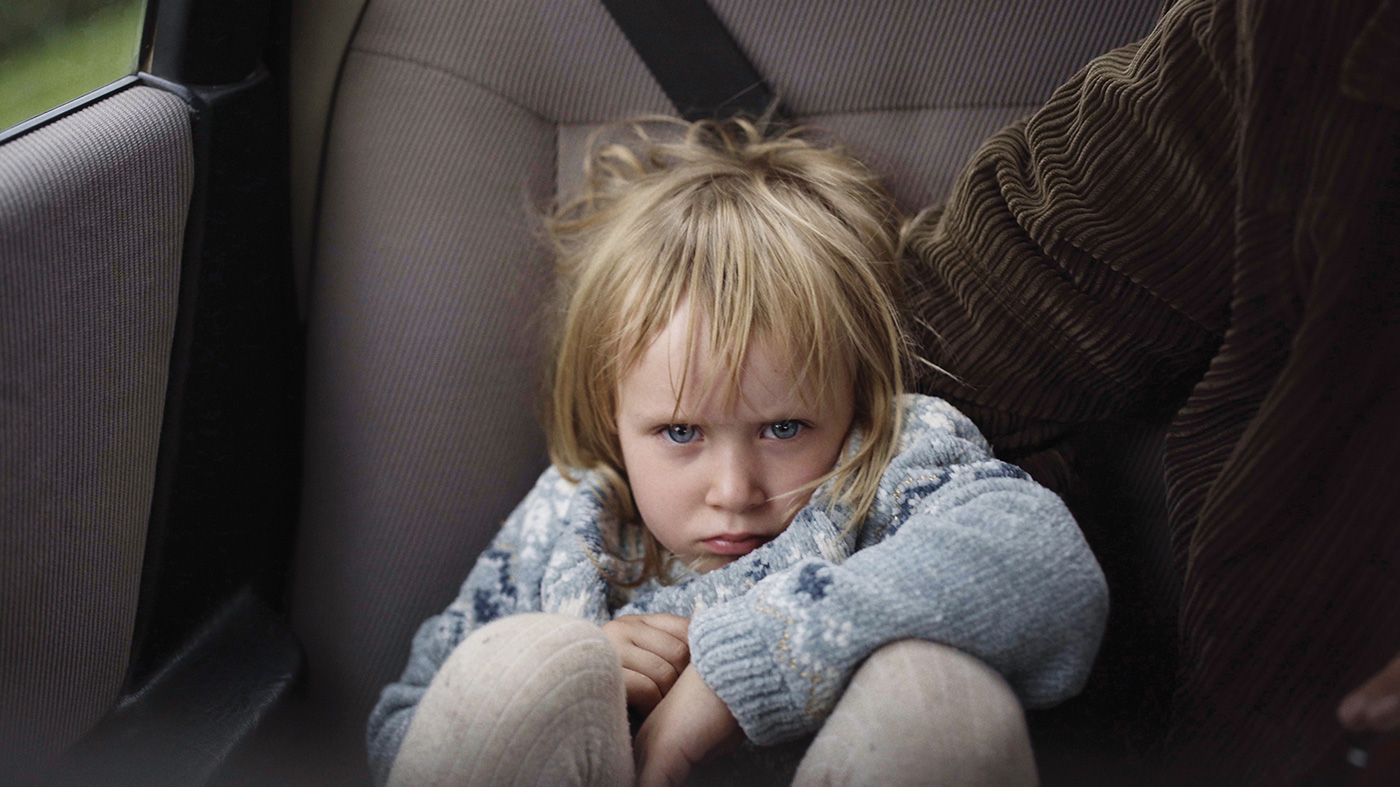
The hypnotic and purring sound of a bus engine resonates, accompanied by the rumble of the vehicle's interior. The voice, close and intimate, leads us into an inner monologue. We are on our way to Prijedor, the author's hometown in Bosnia and the place of his perpetual departures. Before arriving there, we must first learn to inhabit departure as a space in which we can grow and be reborn.
Mladen Bundalo (born in 1986, Prijedor) is an interdisciplinary artist, filmmaker, and author of Bosnian origin, currently based in Brussels. His essay-films explore themes of belonging and the human condition in the context of migration, diaspora, and periods of uncertainty and crisis.

Anouk Chambaz
Di Notte
Experimental film | 16mm | color | 8:10 | Switzerland, Slovenia | 2025
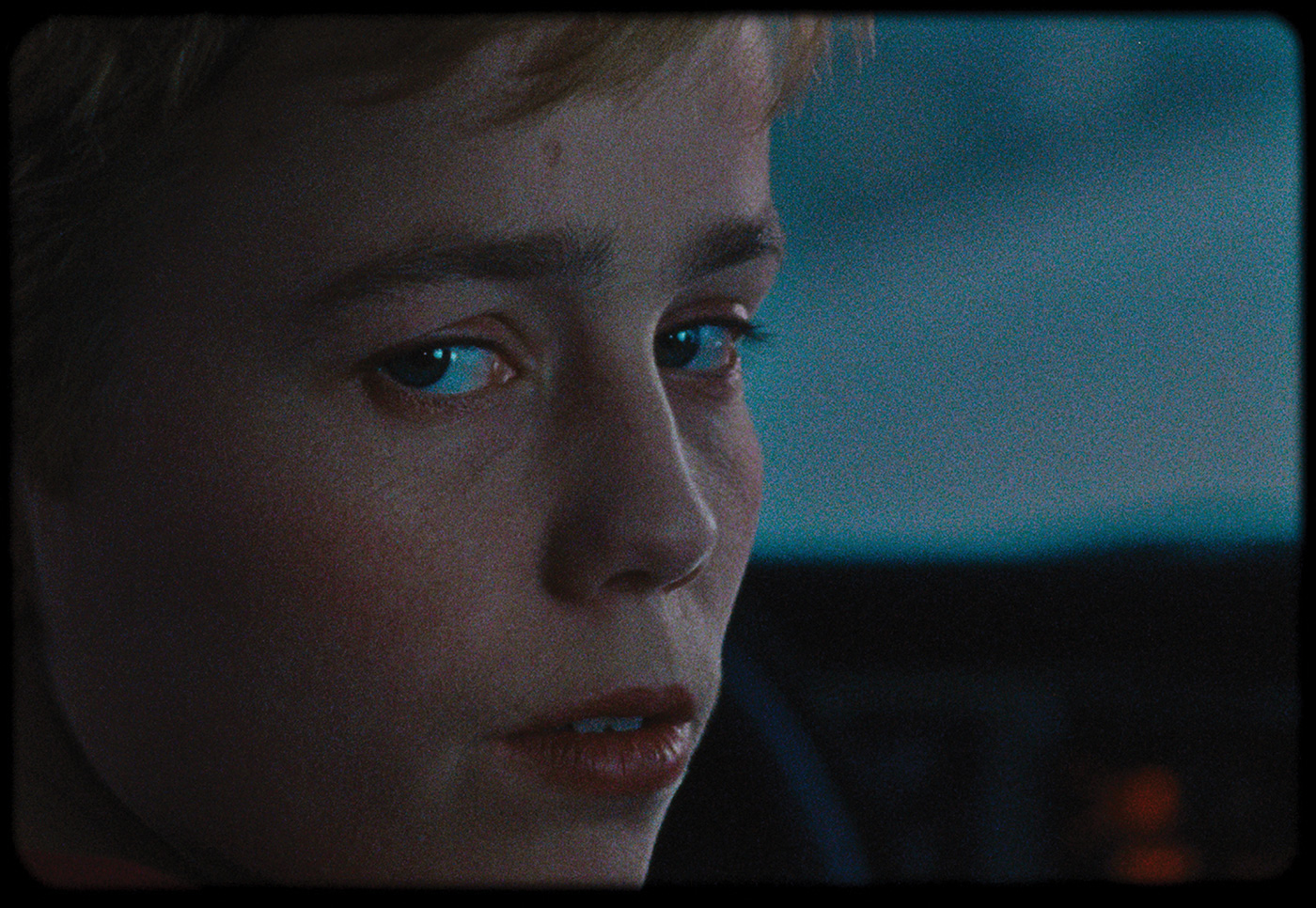
It’s almost night on the mountain. A solitary car moves along the road. At the wheel, someone starts singing a strange lullaby
Anouk Chambaz (Renens, 1993) works with moving images, exploring the thresholds between spaces, dreams, and individuals. She holds a degree in cinema from ECAL, Lausanne, and in philosophy from La Sapienza, Rome. She received the Combat Prize (video) in 2022, and special mentions at the Francesco Fabbri Prize in 2023 and the Rio de Janeiro International Film Festival in 2024. In 2025 she is finalist for The Talent Prize.
Antoine Chapon
Al Basateen
Documentary | dcp | color | 24:41 | France | 2025
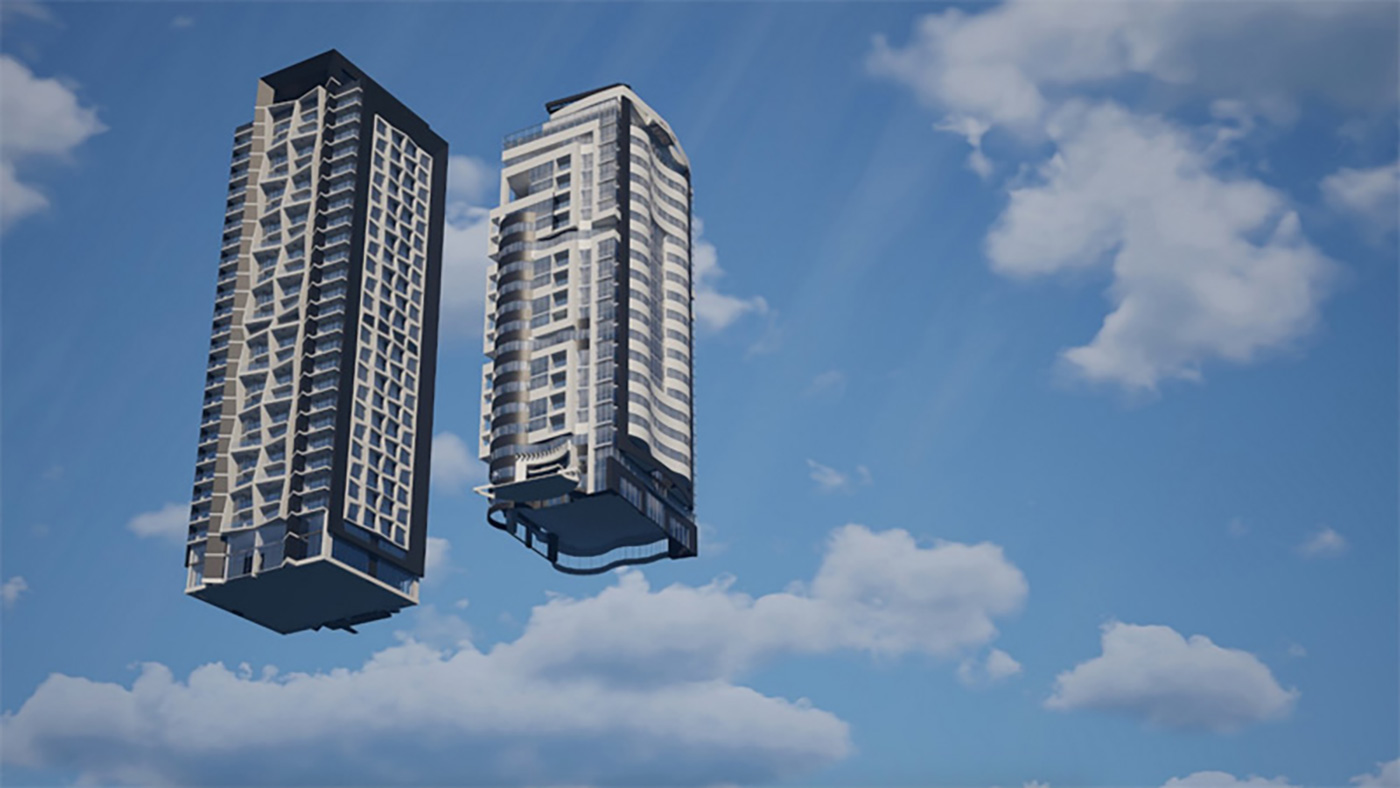
In 2015, the Basateen al-Razi district of Damascus was razed to the ground as punishment for the population’s uprising against Bashar al-Assad’s regime. This area is set to be replaced by Marota City, a modern and connected district featuring 80 skyscrapers. Ten years later, having lost everything, two former residents reflect on their neighborhood, where their homes and the oldest orchards in Damascus once stood. Through their testimonies and the repurposing of regime-produced 3D animations, memory is awakened and resists this deliberate erasure.
Antoine Chapon (b. 1990, France) is a filmmaker and multidisciplinary artist. His work creates hybrid forms using cinema, CGI animation and archives. His first short film "My Own Landscapes" premiered in Visions du Reel where it won the Best Short Film Award. It was then selected in more than 40 festivals, such as Sundance, Telluride, Palm Springs, Sarajevo and Premiers Plans. His work has been showcased at ZKM|Karlsruhe, Centre Pompidou, the 17th Venice Architecture Biennale and the Singapore Art Museum. He is a Berlinale Talents alumnus and he is currently writing his first feature documentary.
Juliette Corne
Izioum
Documentary | mov | color | 4:18 | France, Ukraine | 2025
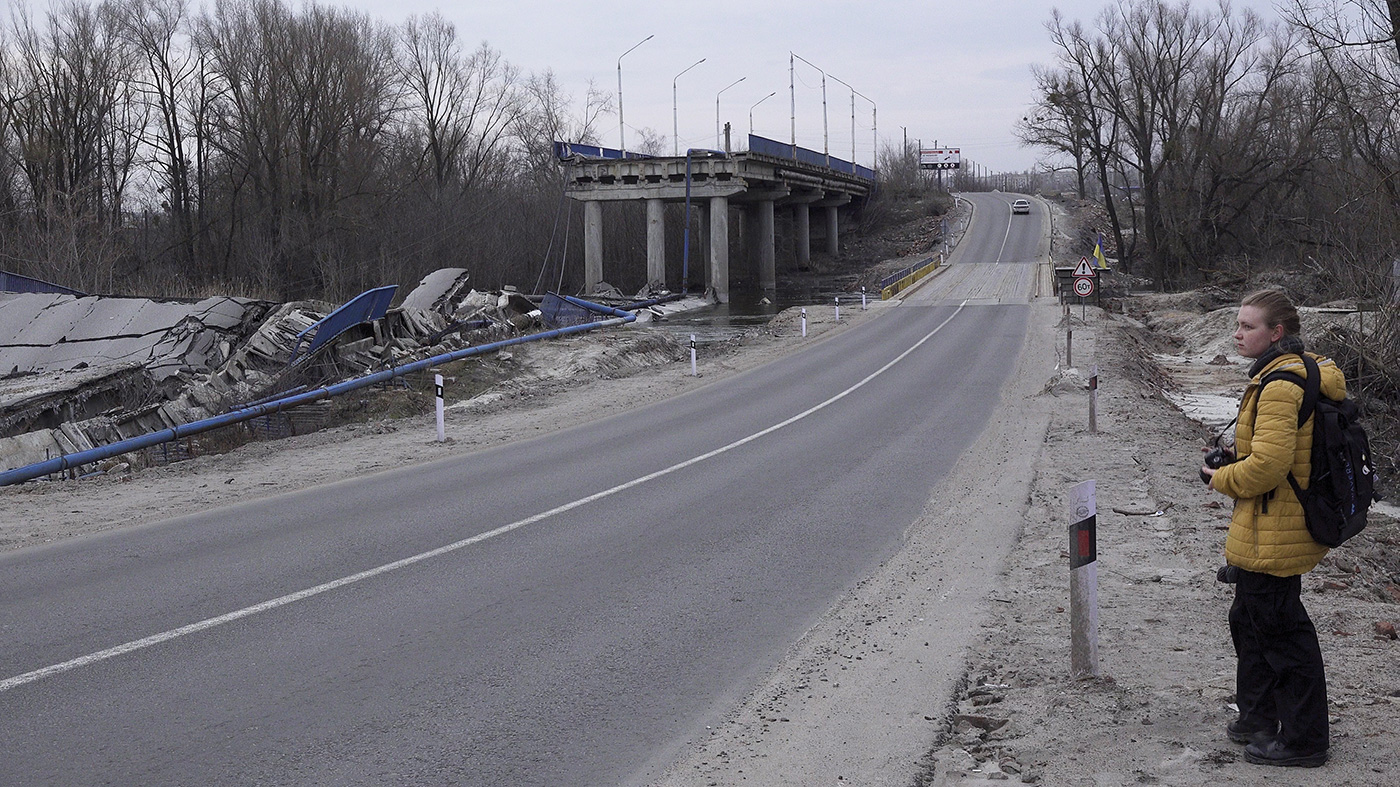
The central square of Izium, a few months after the city’s liberation. A hesitant camera pans over the traces of war, while residents resume their daily lives.
Juliette Corne holds a national higher diploma in visual arts from the Beaux-Arts de Paris. Her work navigates between contemporary art and cinema, exploring contemporary socio-political events and their consequences on representations and intimacy. Committed to revealing the mechanisms that lead to the normalization of violence, she captures, through her films, installations, and photographs, moments of life that continue despite horror and war. Zoé Monti
Denis Côté
Jours avant la mort de Nicky
Experimental fiction | dcp | color and b&w | 19:30 | Canada | 2024
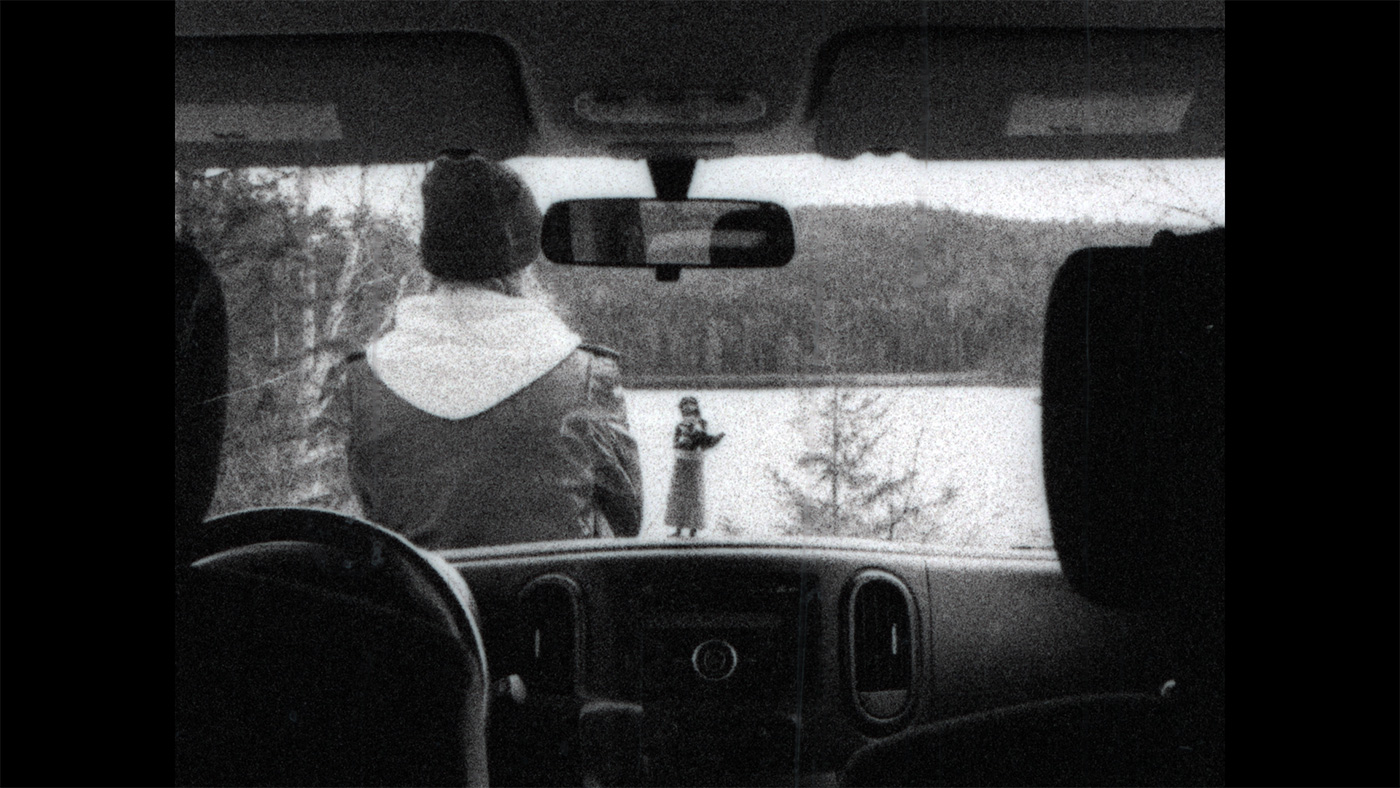
Hinter the wheel of his small car, Nicky seems to be on a mission. The roads fly by, but the thoughts in his head remain unfathomable and desperate. A meal, the discovery of a rifle, chance encounters: the mystery remains unsolved.
In the 1990s, he directed around fifteen short films, then worked as a journalist and film critic before directing his first feature film, Les états nordiques, in 2005. His fourth feature film, Carcasses (2009), was presented at the Directors' Fortnight in Cannes, while Curling won honours at the Locarno Festival in 2010. Vic+Flo Saw a Bear (2013) won the Silver Bear at the Berlinale in Germany for its innovation. He has presented four feature films in the Official Competition at the Berlinale. Denis Côté's unique films have been shown at hundreds of film events and have been the subject of some forty retrospectives around the world.


Charlotte Dalia
Speechloss
Experimental film | 4K | color | 15:0 | France | 2023
SPEECHLOSS is a film inhabited by isolated characters, out of sync and searching for direction. In an eerie seaside atmosphere, we come across a jogger, a bodybuilder, dogs and a strange giant organ. Speechloss is a progression of four scenes in which both the wind and a powerful desire to feel alive blow. For each of them is an abandoned AI, waiting to be activated.
Charlotte Dalia was born in 1993. She graduated from the Institut Supérieur des Arts de Toulouse. A visual artist, video maker and film director, her research focuses on both the formal and narrative effects of cinema. Steeped in the principle of the “cinémonde” theorised by Jean-Luc Nancy, she uses cinema as a repertoire of signs that “opens the inside onto itself.” She has taken part in numerous group exhibitions and has been invited to produce two solo shows. Continuing her investigations into the writings of reality through the forms of fiction, she trained in documentary writing with Ty Films and Films en Bretagne. She is currently developing ALMERICA, a project combining climate crisis and film sets, as well as writing a medium-length film following on from SPEECHLOSS, in order to pursue and expand its universe.

Eline De Clercq, Anne Reyniers
Gesamthof / A Lesbian Garden
Experimental film | mov | color | 15:0 | Belgium | 2021
This short film talks about the Gesamthof / A lesbian garden, an art-nature project in Antwerp between the walls of an old monastery. In this audiovisual time document, we follow a guided tour by Eline De Clercq, the driving force of the garden project. The garden provides an entry point to talk about diverse topics such as colonialism in botany, the ambiguity of naming, the social expectations of women and the search for a lesbian identity. This garden is inspired by the books of ecofeminists and other writers, like Donna Haraway, Robin Wall Kimmerer, Jamaica Kincaid, Virginia Woolf and many others. The collaboration between the two artists Anne and Eline started in the Gesamthof, where the two first met, and continues today in various gardens.
Anne Reijniers (1992, Belgium) is a filmmaker based in Antwerp. Her collaborative practice questions colonial history, the occupation of public space and the ethics of collaboration. Anne holds a Master's degree in Audiovisual Arts from LUCA School of Arts in Brussels and KASK in Ghent. Her collaborative films, made with Collectif Faire-Part, have been screened in several national and international film festivals and exhibitions. With the film Faire-part, she won several awards, including at the Montreal International Documentary Festival, the Congo International Film Festival, and the Brussels Art Film Festival. Eline De Clercq (1979, Belgium) in Antwerp I have a studio next to a monastery garden where I cared for the Gesamthof from 2019 to 2025. Trained as a painter I expand my practice in other mediums like gardening, film, writing, ceramics. I like to work in collaboration with other artists and often create community related events like the Homesick Tea Gathering. Several of my projects focus on antiracial and anti-misogynist topics, with extra care for intersectional realities. Since 2022 I work as an artistic researcher at the Royal Academy of Fine Arts Antwerp.
Abri De Swardt
Kammakamma
Video installation | 4k | color | 16:54 | South Africa | 2024
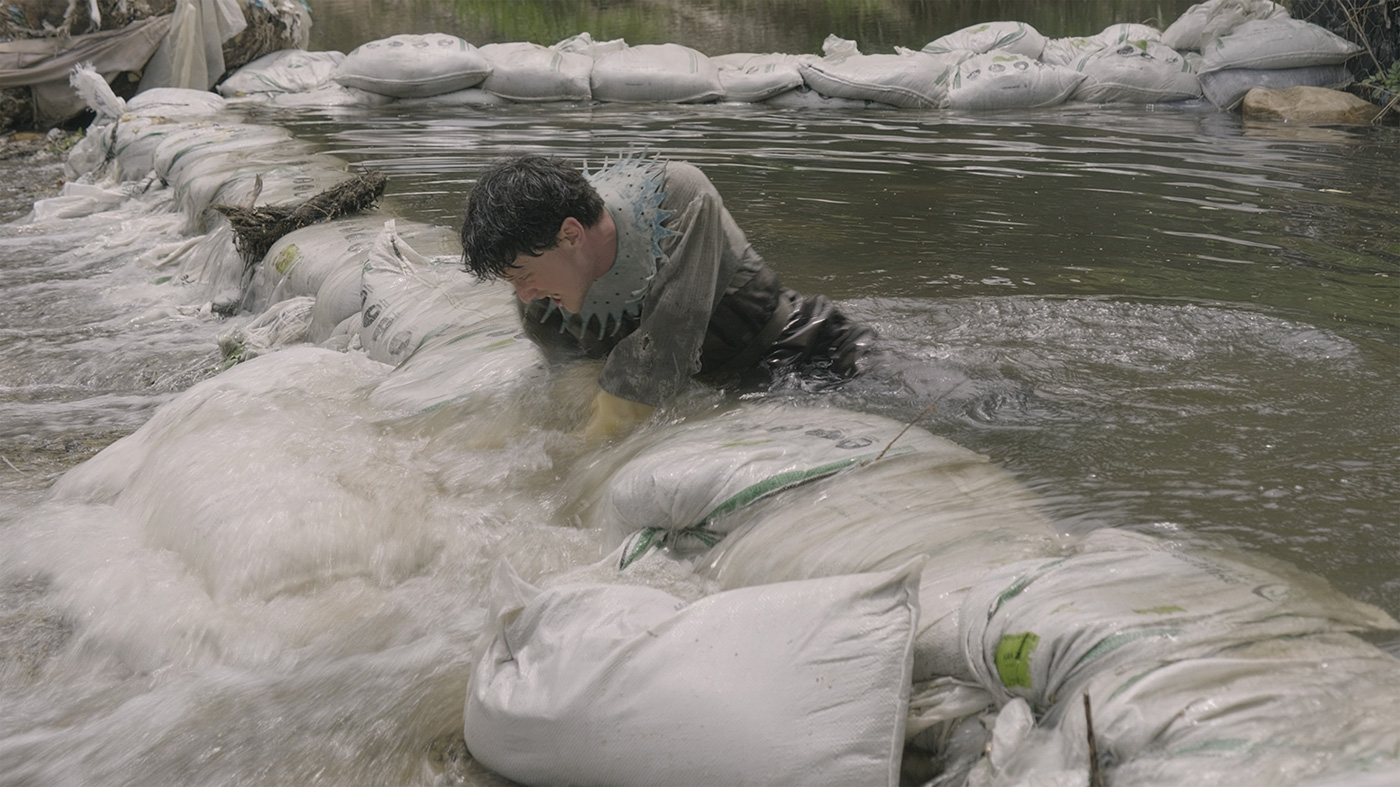
If the river’s mouth could speak, what would it say? Enacting the possibility of river mouths as storytellers and historiographers, Kammakamma is the opening episode of the second work in a moving-image trilogy exploring the Eerste River in South Africa as witness and carrier of submerged narratives. Its title evokes slippages between the Khoekhoe terms for water (//amma) and similitude (khama), with 'kamma' absorbed into Afrikaans as 'make believe.' Through three interconnected chronicles by Abri de Swardt, poet Ronelda S. Kamfer, and historian Saarah Jappie, the river becomes a saturation point for understanding climate and catastrophe. In this episode, De Swardt probes a founding myth of Afrikanerdom through Hendrik Biebouw, a teenage idler who in 1707 attacked a Dutch East India Company watermill at the river, drunkenly declaring himself an “Africaander” – then a term reserved for enslaved, manumitted, or indigenous peoples. Biebouw’s declaration is inextricable from the river where it was spoken, from wine as settler-colonial agent, and from the instability of language itself. Recast in purgatory, he sifts sand from sandbags mined around the river mouth back into the blocked confluence of the Eerste and Plankenbrug Rivers, his delirious oratory jumbling Afrikaans, Dutch, German, and Malagasy. Interludes filmed after flooding show the river as both wild and engineered, while tableaux drawn from swimming and life-saving manuals foreground burden and suffocation. Through double synchronisation De Swardt frames perception itself as intoxicating disorientation.
Abri de Swardt (b. 1988, Johannesburg) is an artist based in Johannesburg, South Africa. Working across video, photography, sculpture, and performance, De Swardt’s practice challenges the ongoing effects of settler-colonial whiteness and masculinity in Southern Africa, and perceptions of queerness as ‘unnatural’ and ‘unAfrican’, through joining historiography with fiction, auto-ethnography, ecology, desire, and the fantastical. De Swardt’s work has been exhibited, performed, and screened at the Norval Foundation, Cape Town; Kunstverein Braunschweig; Goldsmiths Centre for Contemporary Art, London; Rupert Museum, Stellenbosch; National Gallery of Art, Vilnius; Institute of Contemporary Arts, London; and The Centre for the Less Good Idea, Johannesburg, amongst others. Solo exhibitions include POOL x Field Station, Cape Town (2024); POOL, Johannesburg (2018); MOT International Projects, London (2013); and blank projects, Cape Town (2011). De Swardt has undertaken residencies at Rupert, Vilnius; Hordaland Kunstsenter, Bergen; and the Nirox Foundation, Cradle of Humankind. In 2022, he was awarded a Social Impact Arts Prize and nominated for the Foam Paul Huf Award. He holds an MFA in Fine Art from Goldsmiths, University of London, and is currently a 2025–2026 artistic fellow at Braunschweig Projects, Hochschule für Bildende Künste Braunschweig.

Bea De Visser
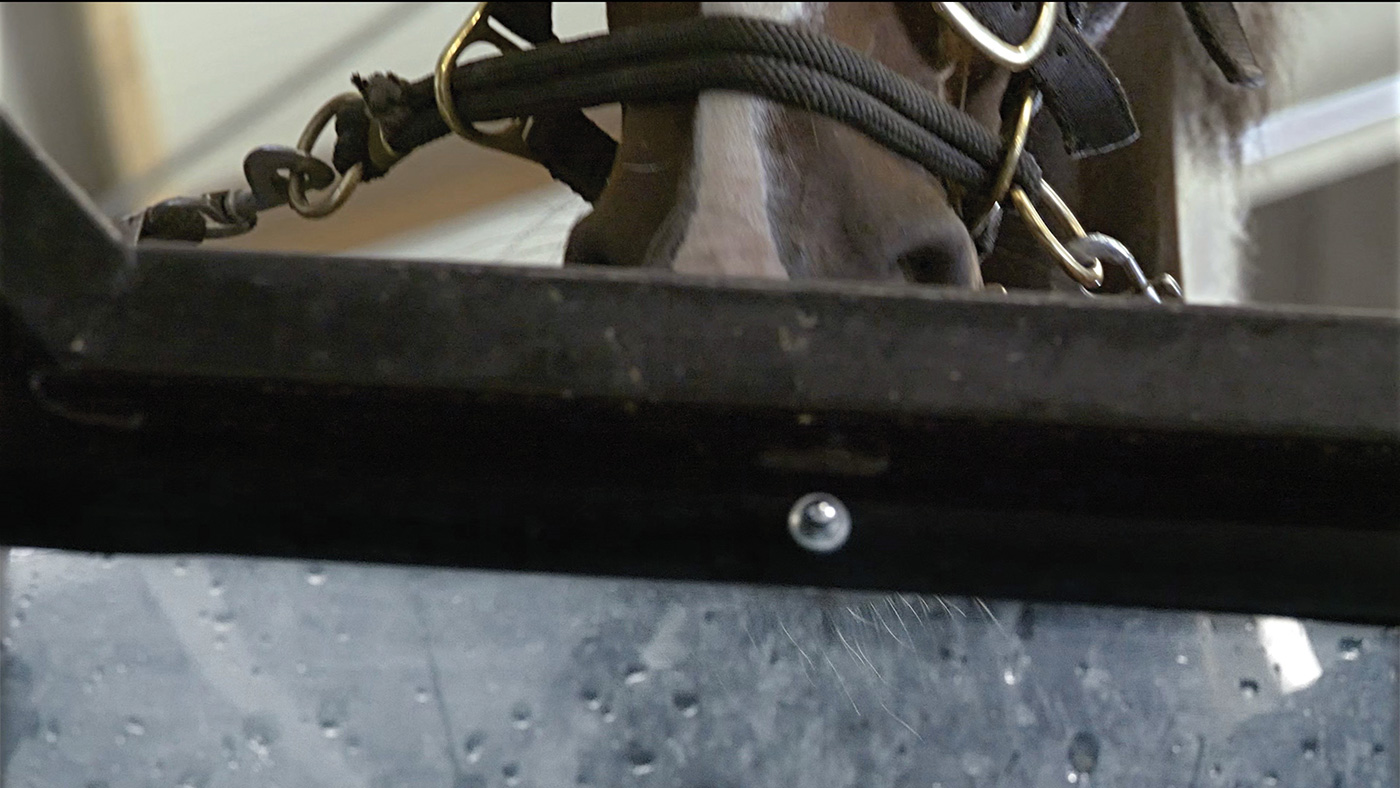
The Sonic Gaze
Multimedia installation | 0 | color | 6:10 | Netherlands | 2025
A horse is placed in an enclosed space on an aqua trainer treadmill, doubly enclosed by only the sound of splashing water. We hear much more than we see due to the recorded frequencies and the ambient range of the horse's hearing. Through pitch compression, specialized recording equipment and sound recordings far from the set, the horse's auditory experience has been made audible to humans. Its result is an acoustic representation of the animal's subjective perspective. Through the horse's sonic filter, we hear a different world, yet equally real, than the one we see on screen. While we watch with our human gaze, we hear the horse's complex sonic reality.
Bea de Visser is known for her film art, installation work and sound performances. Her work can best be described as a digital media-based practice -from the perspective of a painter and storyteller who sees the world through different lenses. AnimaIs are a recurring motif in her work. Her latest works focus on non-anthropocentric storytelling. She mixes fiction with the everyday and emphasizes structures of power, dominance and control. Her work seduces the viewer through a rich audiovisual language, exploratory in its narrative. Bea de Visser comes from a background of painting and a study electro acoustic sound. She initially began her career as a sound and performance artist in the trendy club scene and artist’s spaces, early 1980-ies. Bea de Visser attended the Rijksakademie van Beeldende Kunsten in Amsterdam (1993-1995).
Arthur Debert
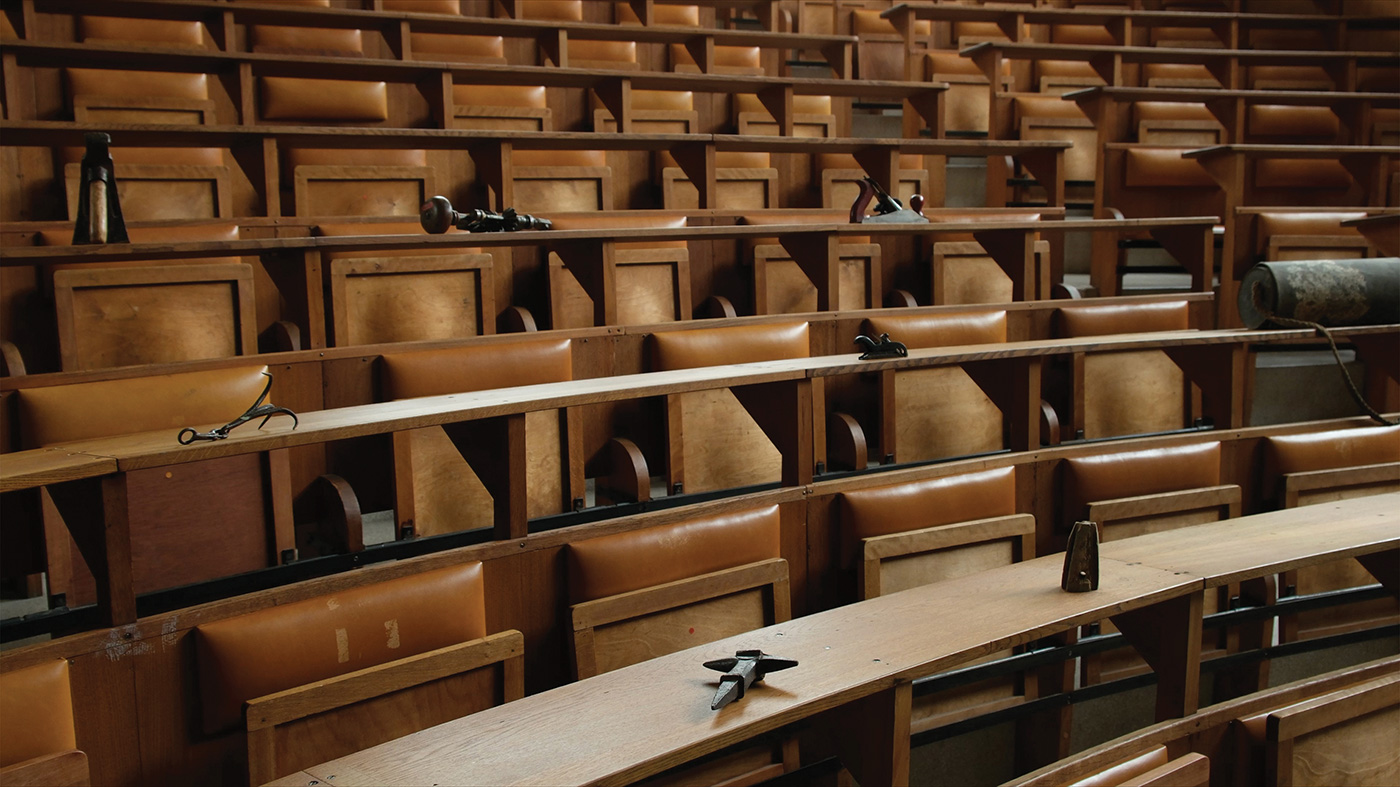
La Conférence des Instruments Savants
Experimental video | 4k | color | 9:1 | France | 2024
In a wooden amphitheatre built in 1933 for the study of animals and plants, a group of ancient tools attend a lecture. The talk seems to be about animals and their movements, but the tools gradually come to understand that it’s about the living beings that have given them their names and sometimes even their shapes.
Born in Paris in 1990, Arthur Debert lives and works between Nancy and Berlin. Arthur Debert’s protean practice is rooted in collective work and exchange. Anchored in a contextual approach, his work takes shape through travel, encounters and multiple collaborations. Central to these exchanges is the question of the transmission and survival of knowledge. Objects encountered in the field are seen as both witnesses and bearers of epistemological narratives to be deciphered. To reveal the different cultural layers sedimented within them, the artist disrupts their temporal linearity through shifting spatial settings and collective activations. Installations, videos and editions then fix the ephemeral, indeterminate state of the resulting lived experiences. Arthur Debert is a graduate of the École de l’Image in Épinal (2011), the École Supérieure d’Art de Lorraine in Metz (2013) and participated in the École Offshore in Shanghai (2014-2015), a research program of the École Nationale Supérieure d’Art et de Design in Nancy. His work has been shown at Centre Dürrenmatt Neuchâtel (2025), Triennale de la Jeune Création (Luxembourg, 2013 and 2021), Koraï (Cyprus, 2023), Ann Arbor Film Festival (Michigan, 2022), Berlin Art Prize (2018) and Berlin Independent Film Festival (2023).

Stéphane Degoutin, Gwenola Wagon
Apple
Experimental film | mov | color | 4:0 | France | 2025
Everything is Real shows the reddest apples, the greenest call centers, the server rooms with the most cables, the smiliest employees, the delivery drivers with their most beautiful parcels, the most efficient volunteers, the biggest mountains of waste - but pushes them to the extreme of stereotyping: insensitively, stereotypes go to extremes.
Stéphane Degoutin is an artist and researcher. His work explores “dark systems,” the structures that often go unnoticed yet organize our lives: from air conditioning to international airports, from music for houseplants to urban infrastructures. He undertakes a form of reverse engineering of these hidden logics, in order to imagine other ways of thinking and acting. Gwenola Wagon is an artist and researcher. She is a University Professor and teaches at the Sorbonne School of Arts at Paris 1 University. Through installations, films, performances and books, she imagines alternative and paradoxical narratives for thinking about the contemporary digital world.